17 Dark Blue Bedrooms Ideas That Feel Elegant and Moody

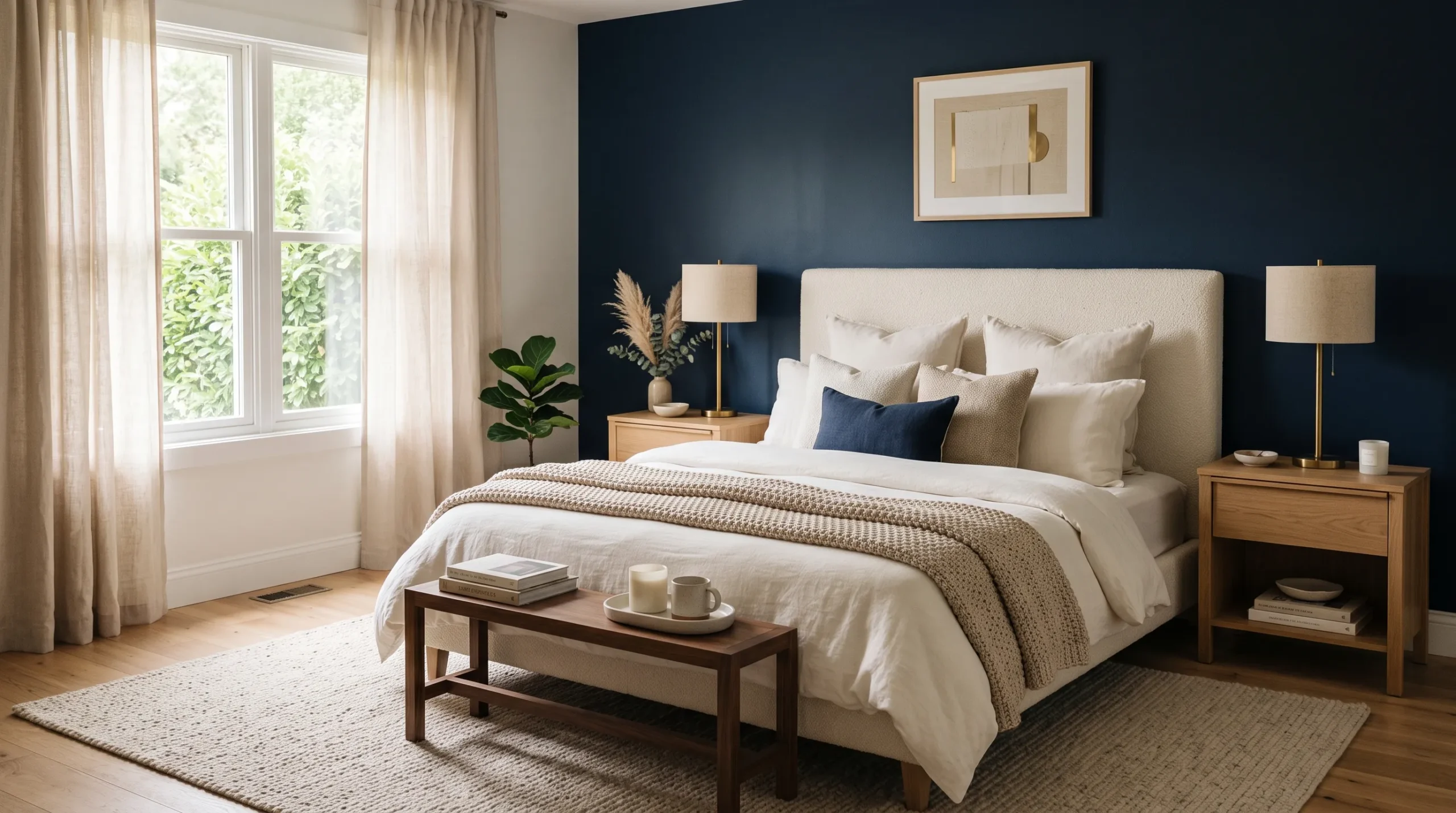
A dark blue bedroom can feel dramatic, cozy, and surprisingly sophisticated. Dark blue bedrooms ideas can help you create a restful space with rich color and plenty of personality.
From navy accent walls and velvet headboards to warm wood, soft linen, and elegant brass lighting, there are plenty of ways to bring deep blue into a bedroom without making it feel too dark. The key is finding the right balance between richer shades and lighter textures. Whether you want a simple update or a more complete bedroom makeover, these ideas offer practical inspiration for creating a space that feels polished, comfortable, and personal. You’ll find easy details worth saving and trying in your own home.
1. Navy Accent Wall
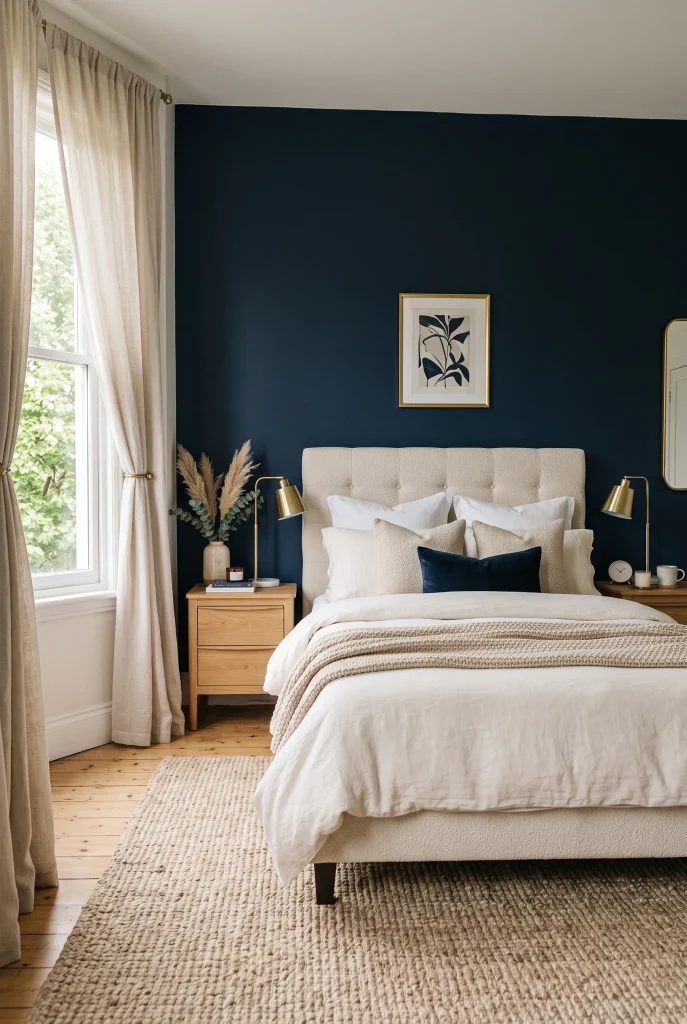
- Creates a strong focal point without overwhelming the entire room.
- Makes lighter bedding and furniture stand out beautifully.
- Works well when a bedroom feels plain or visually flat.
- Warm wood and soft textiles help balance the darker wall.
A deep blue accent wall can make a bedroom feel instantly richer without changing every piece of furniture. Choose navy, midnight, or ink blue for the wall behind the bed, then balance it with warm white bedding and natural wood accents. The darker backdrop gives the bed a stronger focal point and makes lighter fabrics stand out beautifully. This approach works especially well when the room feels plain or visually flat. Keep the remaining walls lighter, add layered lighting, and use a textured rug to soften the contrast while keeping the overall look polished.
The beauty of a navy accent wall is that it creates drama while keeping the makeover relatively simple. Instead of painting the entire room, focus on one wall and let that deeper color anchor the furniture arrangement. A wood bed frame, cream curtains, and soft beige textiles can prevent the space from feeling too heavy. Add artwork with muted tones rather than bright colors so the wall remains the visual star. If the bedroom receives limited daylight, test the paint in both daytime and evening light first, because deep blues can shift noticeably depending on the room’s lighting.
2. Velvet Headboard
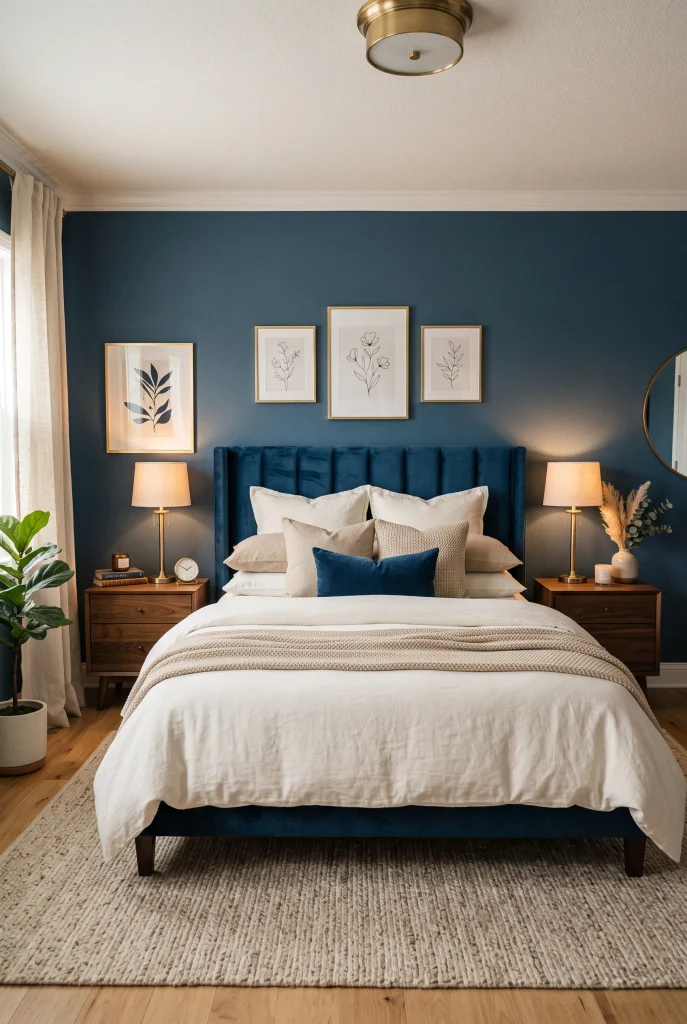
- Adds softness and luxury without requiring elaborate furniture.
- Gives the bed a defined, finished focal point.
- Velvet texture catches light and creates visual depth.
- Simple surrounding decor keeps the headboard from feeling excessive.
Velvet becomes especially striking when paired with deep blue because its soft surface catches light and adds dimension. A navy or royal blue velvet headboard can instantly make a simple bedroom feel more refined without requiring elaborate furniture. Pair it with crisp white sheets, warm beige pillows, and brushed brass accents for balance. The result feels luxurious but still comfortable enough for everyday living. A tall upholstered headboard also helps visually frame the bed, which can make the room feel more finished even when the surrounding decor stays minimal.
A velvet headboard works best when the rest of the room gives its texture room to breathe. Keep nearby furniture simple, using light oak, walnut, or painted pieces that complement rather than compete with the rich upholstery. Layer the bed with linen, cotton, or boucle fabrics to create contrast against the velvet’s sheen. Warm bedside lamps can highlight the fabric after sunset, while daylight reveals its depth during the morning. For smaller bedrooms, choose a streamlined headboard with moderate height so the dramatic material adds personality without making the wall feel crowded or visually overwhelming.
3. Blue and Walnut
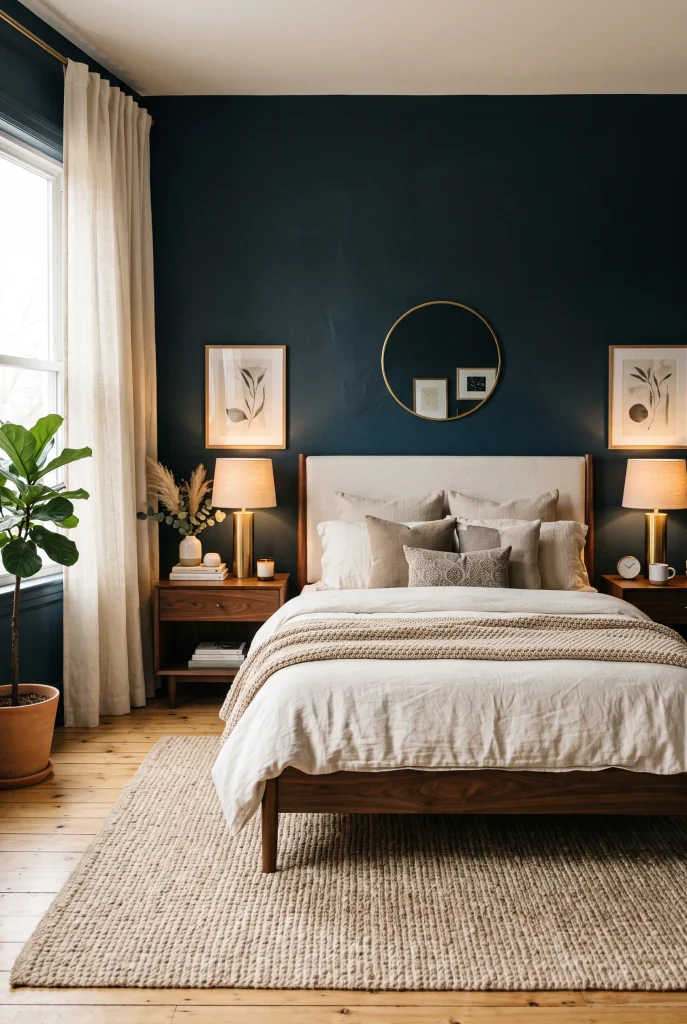
- Adds warmth to balance the richness of deep blue.
- Creates contrast without relying on bright decorative colors.
- Walnut furniture brings natural texture and lasting character.
- Repeating wood tones helps the room feel visually connected.
Few combinations feel as naturally sophisticated as deep blue and warm wood. A walnut bed, nightstands, or dresser can bring enough warmth to keep a dark blue bedroom from feeling cold. Choose blue through the walls, bedding, curtains, or a combination of smaller elements, then repeat the wood tone around the room for visual connection. The contrast creates depth without needing many decorative accessories. This pairing is also practical because natural wood can handle everyday use well, making it a smart choice for bedrooms that need to look beautiful while still feeling comfortable and lived-in.
The balance becomes even better when you introduce soft neutral fabrics between the blue and walnut finishes. Think cream bedding, oatmeal curtains, beige rugs, and woven baskets that soften the stronger colors without making the room look washed out. Keep metal accents warm, such as aged brass or bronze, to complement the wood naturally. If the furniture already has a strong grain, avoid adding too many competing patterns. Let the rich blue and walnut do most of the visual work, creating a bedroom that feels grounded, elegant, and inviting rather than overly decorated.
4. Dark Blue Bedding

- Adds rich color without committing to dark walls.
- Makes an otherwise neutral bedroom feel more dramatic.
- Layered fabrics keep the darker bedding soft and inviting.
- Easy to change when you want a different seasonal look.
Dark blue bedding is one of the easiest ways to bring a richer mood into a bedroom without reaching for paint. A navy duvet or quilt can become the main color anchor while cream sheets and lighter pillows keep the bed looking fresh. This approach is especially useful for renters or anyone who wants to experiment before making a permanent change. Mix cotton, linen, or quilted textures so the darker shade feels layered rather than flat. A soft beige throw at the foot of the bed can add warmth and make the whole arrangement feel more relaxed.
For a polished result, keep the deepest blue concentrated around the bed and use quieter colors elsewhere. Light wood nightstands, warm white curtains, and a neutral rug can prevent the bedding from dominating the entire room. Add one or two smaller blue accents, such as a decorative pillow or artwork, to connect the color throughout the space. This approach works particularly well in neutral bedrooms because it creates a noticeable transformation with very little effort. When you want to refresh the room later, simply switching the duvet can completely change the atmosphere.
5. Moody Blue Walls

- Creates a cozy cocoon effect around the entire room.
- Makes warm neutrals appear brighter and softer.
- Works beautifully with layered lamps and low lighting.
- Matte paint can make the darker color feel sophisticated.
Painting all the walls a deep blue can turn a bedroom into a cozy retreat with a more immersive feeling. Rather than making the room automatically feel smaller, a carefully chosen dark shade can visually blur the boundaries between walls and corners. Balance the intensity with cream bedding, warm wood, and soft fabrics so the room remains comfortable instead of gloomy. A matte or eggshell finish usually gives the color a sophisticated appearance without creating distracting reflections. This is particularly effective in bedrooms where the goal is to create a restful atmosphere that feels separate from brighter areas of the home.
Lighting becomes important when every wall carries a dark color. Use multiple sources instead of depending on one ceiling fixture, including bedside lamps, wall sconces, or a softly shaded floor lamp. During the day, natural light can highlight the blue undertones and surrounding textures. At night, warmer bulbs can make the walls feel enveloping and intimate. If you are unsure about painting the entire room, test a large sample first and observe it at different times. Deep blue can look dramatically different in morning daylight, cloudy conditions, and warm evening lighting.
6. Brass Accent Lighting

- Warm metal helps soften the intensity of deep blue.
- Wall sconces free valuable space on small nightstands.
- Focused lighting makes the bed area feel intentional.
- Matching brass details can tie the room together.
Brass lighting can make a dark blue bedroom feel warmer almost instantly. Against a navy wall, brushed or aged brass creates a soft contrast that feels elegant without becoming flashy. Try matching bedside sconces above each nightstand, or use small brass table lamps for a simpler update. The warm metal reflects the light gently and gives the darker color more dimension after sunset. This is a useful trick when a bedroom feels visually heavy because the lighting introduces warmth exactly where it is needed while keeping the overall palette calm and sophisticated.
Keep the rest of the finishes restrained so the brass details feel intentional rather than scattered. A walnut nightstand, cream bedding, and beige rug provide enough warmth without competing with the lighting. If you already have several metal finishes, repeat one brass tone in small details such as drawer pulls, a mirror frame, or a decorative tray. Layered lighting can make a bigger difference than adding more accessories. A few carefully positioned fixtures can highlight the bed, soften the walls, and create a welcoming evening glow without filling the room with unnecessary decor.
View: 21 Emerald Green Bedroom Ideas That Feel Bold & Moody
7. Blue Paneled Wall

- Adds architectural character without needing busy wall decor.
- Vertical panels can make the ceiling feel taller.
- Painting the molding and wall the same blue creates a seamless look.
- Works especially well behind the bed as a focal point.
A paneled wall gives deep blue color an extra layer of architectural interest. Instead of relying on paint alone, add simple vertical or rectangular molding and cover the entire feature wall in the same rich blue shade. The matching color makes the design feel cohesive while the raised panels create subtle shadows throughout the day. Behind the bed, this treatment can replace a large artwork or oversized headboard. It works particularly well in bedrooms that lack architectural details, giving the space a custom-designed appearance without requiring an elaborate renovation or a large collection of decorative pieces.
Keep the panel pattern proportional to the size of the room so the wall feels elegant rather than busy. Narrow vertical panels can emphasize height, while wider rectangular molding gives a more traditional appearance. Pair the wall with simple bedding in ivory, cream, or soft gray to let the texture remain visible. Warm lighting placed on either side of the bed will highlight the panel shadows at night. If you prefer a quieter look, skip additional wall art and allow the blue molding itself to become the main decorative feature.
8. Navy Canopy Bed
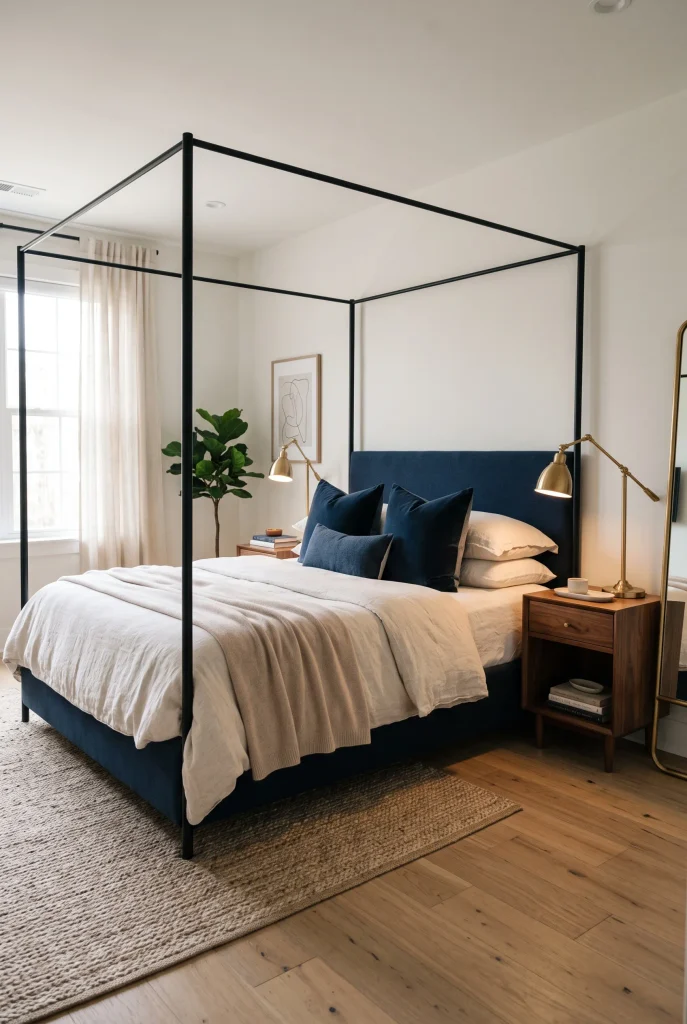
- Creates a dramatic focal point without painting every wall.
- A slim frame keeps the canopy from feeling bulky.
- Soft neutral bedding balances the darker structure.
- Drapery can add privacy and a more intimate atmosphere.
A navy canopy bed can turn an ordinary bedroom into a striking retreat with one strong piece of furniture. Choose a slim black or dark wood frame and introduce navy through the upholstered headboard, bedding, or lightweight canopy fabric. The vertical structure naturally draws attention upward, making the room feel more intentional and visually layered. Keep the surrounding furniture simple so the bed remains the centerpiece. Cream linen, warm beige, and natural wood can soften the darker elements, creating a comfortable balance between dramatic styling and everyday practicality.
For a more relaxed look, leave the canopy frame open and use only a few fabric panels rather than fully enclosing the bed. Lightweight curtains in ivory or muted blue can add softness without making the space feel heavy. Place matching lamps on the nightstands to create symmetry and emphasize the bed’s architectural shape. If the room is compact, select a narrow canopy frame with clean lines and avoid oversized furniture nearby. The goal is to create height and atmosphere while preserving enough open space for the bedroom to feel comfortable and easy to move through.
9. Blue Linen Layers
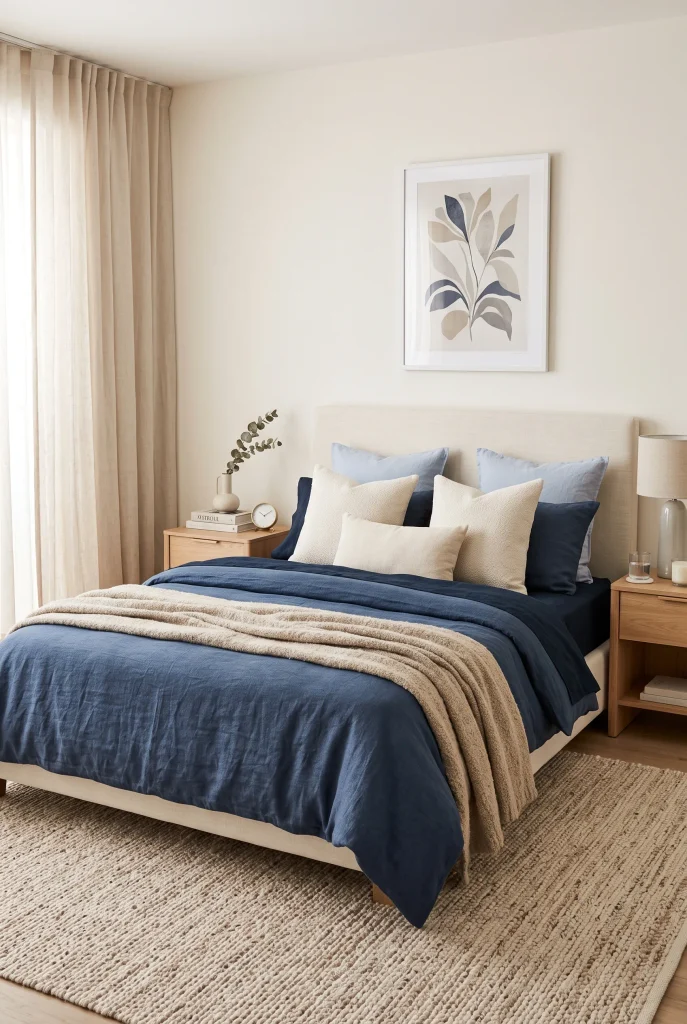
- Linen gives deep blue a softer, more relaxed appearance.
- Layering several blue tones prevents the bed from looking flat.
- Natural fibers add texture and everyday comfort.
- Neutral accents keep the overall palette balanced.
Linen is a simple way to make deep blue feel softer and more approachable. Instead of using one solid navy layer, combine indigo, slate blue, muted blue-gray, and cream across the duvet, sheets, and pillows. The subtle differences in tone create depth while the natural texture keeps the bed from looking overly formal. This works especially well when you want an elegant bedroom that still feels relaxed enough for everyday life. A slightly rumpled linen duvet can also make the space feel more inviting rather than perfectly staged or overly polished.
Build the bedding from lightest to darkest shades so the arrangement feels balanced. Start with cream or white sheets, add a muted blue layer, then finish with a deeper indigo duvet or quilt. Bring in a beige or oatmeal throw for contrast and repeat one blue tone in the curtains or artwork. Keep patterns minimal because linen texture already provides plenty of visual interest. This layered approach can make a dark palette feel surprisingly airy, especially when natural daylight enters through sheer curtains and highlights the different fabric textures across the room.
10. Blue and Cream Palette

- Cream tones soften the richness of deep blue.
- Creates contrast while keeping the room visually calm.
- Light fabrics help maintain an airy daytime feel.
- Repeating cream accents makes the darker palette feel balanced.
Deep blue and cream create a classic bedroom combination that feels dramatic without becoming too dark. Use navy on the walls, headboard, or larger textile pieces, then introduce cream through bedding, curtains, rugs, and upholstered furniture. The lighter shade reflects available daylight and gives the room visual breathing space. This contrast also makes the blue appear deeper and more sophisticated. For bedrooms that need a cozy mood but still receive plenty of daylight, this pairing offers an easy middle ground between a bright neutral room and a completely dark color scheme.
To make the palette feel layered rather than stark, combine several warm neutrals instead of relying on one shade of white. Ivory bedding, oatmeal cushions, beige curtains, and a light natural rug can create subtle variation while keeping the focus on the blue. Add light oak or walnut furniture depending on how much warmth you want. Keep decorative patterns understated, using stripes or small geometric details sparingly. The finished room should feel restful during the day and cozy at night, with enough contrast to give the darker color presence without allowing it to overpower the space.
11. Dark Blue Curtains
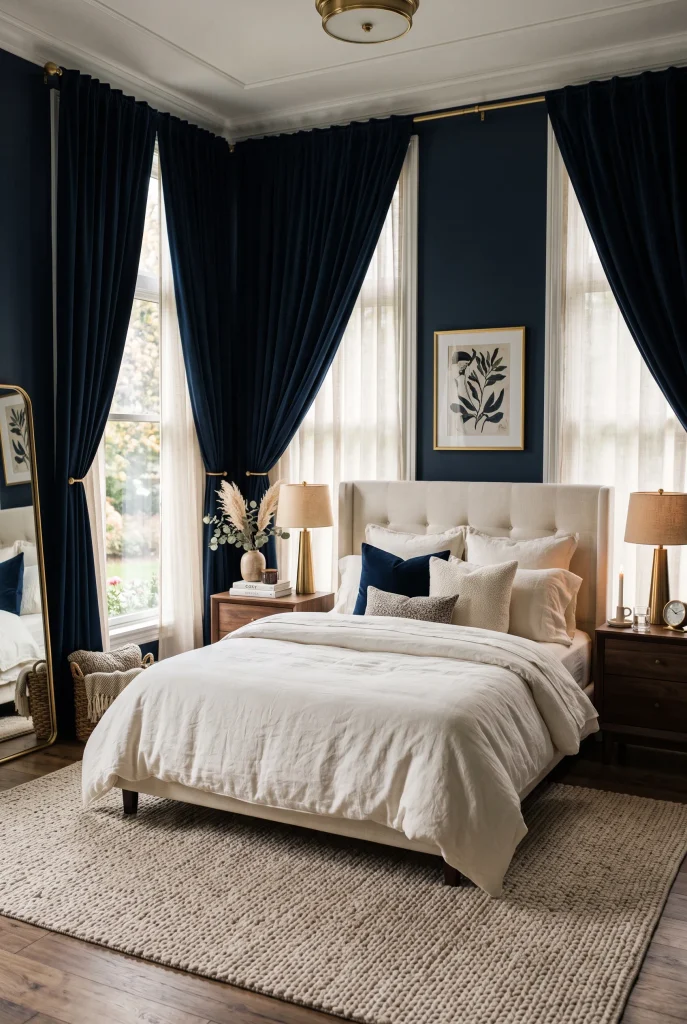
- Floor-to-ceiling curtains can emphasize ceiling height.
- Dark fabric adds depth without permanently changing the walls.
- Sheer inner panels keep daytime light soft and usable.
- Matching blue details can visually connect the room.
Dark blue curtains can introduce substantial color without requiring a permanent wall makeover. Full-length navy drapes framing a window create vertical lines that can make the ceiling appear taller while adding softness around the room’s edges. Choose a substantial fabric such as linen blend or velvet depending on the desired level of formality. If the bedroom receives strong sunlight, lined curtains can also improve light control and privacy. This makes the idea decorative as well as functional, especially in bedrooms where you want a darker atmosphere for sleeping without making the entire space feel enclosed.
For the most polished effect, hang the curtain rod several inches above the window frame and extend it beyond the sides so the fabric can frame the opening properly. Add sheer ivory panels underneath if you want filtered daylight during the day. Repeat the navy in one or two smaller elements, such as a lumbar pillow or artwork, rather than matching every accessory. Warm wood, cream upholstery, and brass lighting can keep the darker curtains from feeling too heavy. The result is a bedroom that feels layered, private, and intentionally styled.
12. Midnight Blue Ceiling
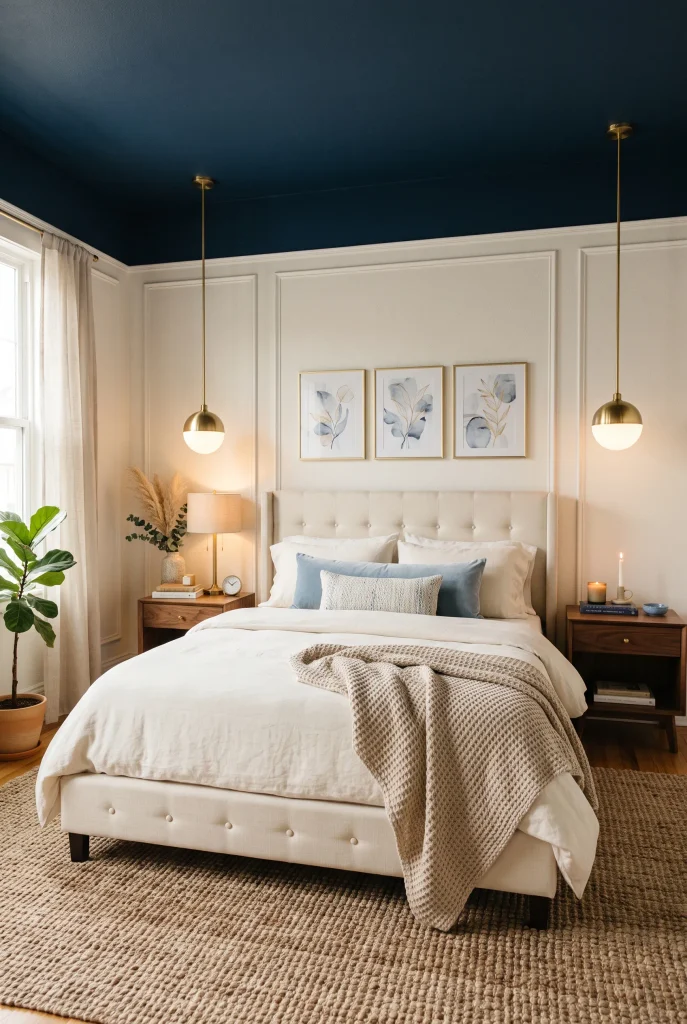
- Creates an unexpected focal point above the bed.
- Keeps the walls lighter while introducing dramatic color.
- Works beautifully with warm pendant or flush-mount lighting.
- Best balanced with pale bedding and understated furniture.
A midnight blue ceiling offers a more unexpected way to bring drama into the bedroom while keeping the walls light. The darker surface draws the eye upward and can create a cozy, cocoon-like feeling around the bed. This works particularly well in rooms with warm white walls, cream upholstery, and natural wood furniture because the ceiling becomes a distinct design feature without making the entire room feel dark. Choose a matte finish to minimize glare and let the color feel rich and sophisticated. The effect is especially beautiful after sunset when warm lighting reflects softly upward.
Because the ceiling already makes a strong statement, keep the rest of the room relatively restrained. A simple pendant, flush-mount fixture, or small chandelier can become part of the composition without competing with the color. Use pale bedding and a neutral rug to keep the lower half of the room visually light. If the ceiling feels too bold, paint only the area above the bed as a smaller feature. Test the shade under both natural and artificial light before committing, since overhead color can noticeably affect the room’s overall mood.
13. Blue Gallery Wall
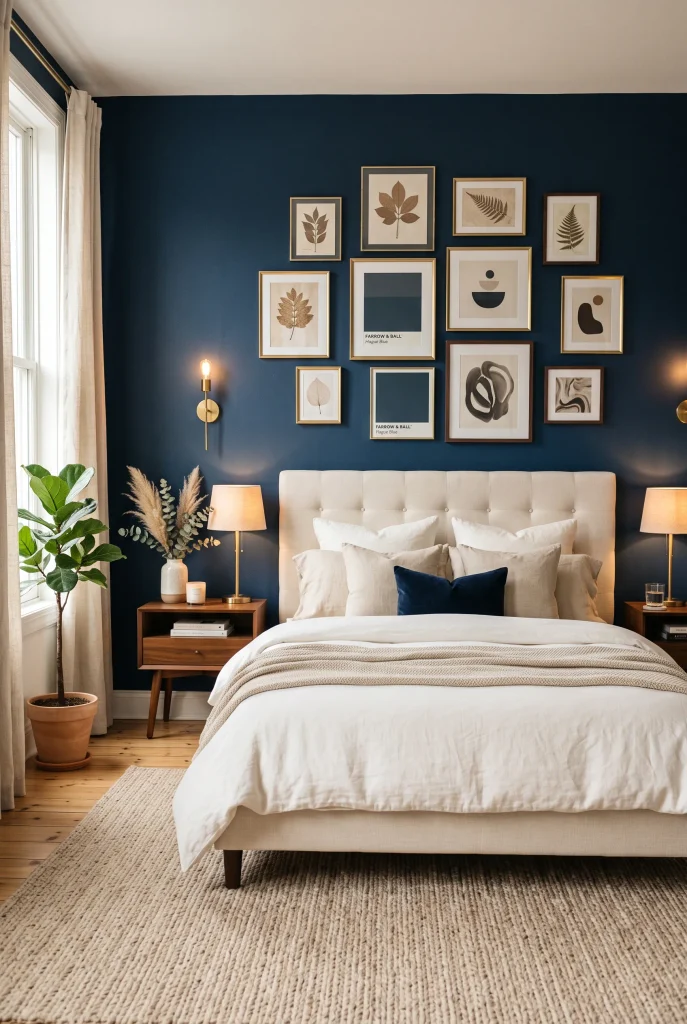
- Gives a dark wall personality without adding more paint colors.
- Neutral artwork keeps the gallery from looking visually chaotic.
- Matching frames can make different prints feel cohesive.
- A balanced arrangement works well above a wide bed.
A gallery wall can bring personality to a dark blue bedroom while keeping the color palette sophisticated. Choose artwork with cream, beige, muted green, charcoal, or warm brown details so the pieces complement the deep background rather than compete with it. Botanical prints, simple abstracts, and vintage-inspired artwork all work beautifully here. Arrange the collection above the bed or on an adjacent wall, keeping enough negative space around the frames. The contrast between the rich blue backdrop and lighter artwork creates a focal point that feels collected rather than overly coordinated.
Before hanging anything, lay the artwork on the floor and experiment with spacing and proportions. This simple step makes it easier to create a balanced arrangement without unnecessary holes in the wall. Use similar frame finishes, such as natural wood, black, or aged brass, to connect different artwork styles. Keep the largest piece near the center and build outward with smaller prints. If the room already has several patterns, choose quieter artwork. The goal is to add character and visual interest while allowing the deep blue wall to remain an important part of the overall design.
14. Plush Blue Rug
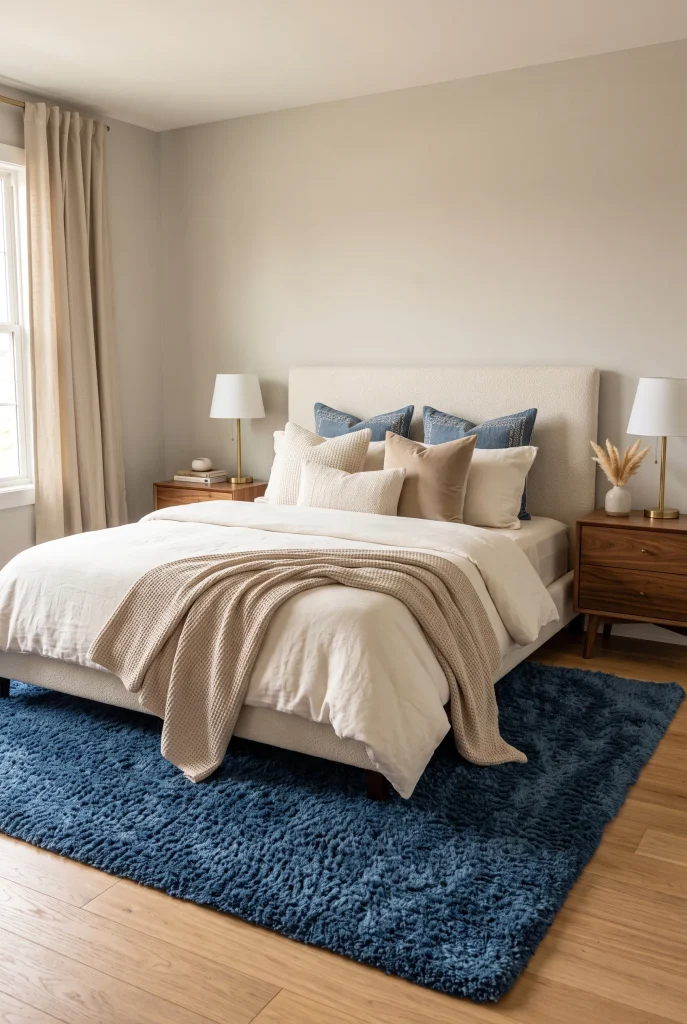
- Adds softness and warmth underfoot.
- Helps connect blue accents across a lighter room.
- Defines the sleeping area in an open layout.
- A textured pile adds depth without extra patterns.
A plush blue rug can ground a bedroom while bringing deep color closer to the floor. This is especially useful when the walls and larger furniture pieces are neutral but the room needs a stronger focal color. Place a generously sized rug under the bed so it extends beyond both sides and toward the foot. The soft texture creates comfort underfoot while the darker shade visually anchors the furniture. For an elegant result, choose a solid or subtly patterned design instead of a busy print, especially if the bedding already includes multiple textures.
The rug can also help unify separate blue elements throughout the room. Repeat a similar shade in a throw pillow, artwork, or small decorative object rather than trying to match everything exactly. Warm wood furniture and cream textiles provide enough contrast to keep the floor from feeling too dark. If the bedroom is small, choose a rug large enough to sit beneath the main furniture grouping rather than using several small mats. A single substantial piece usually creates a cleaner visual effect and makes the room feel more intentional and comfortable.
15. Indigo Accent Chairs
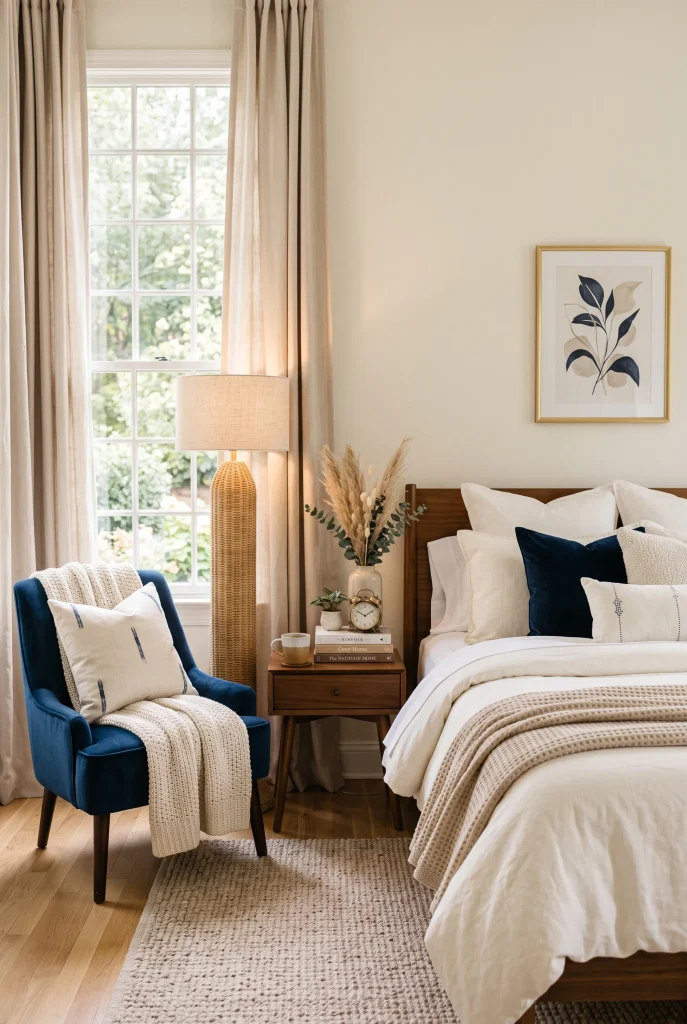
- Creates a comfortable sitting area without overwhelming the bedroom.
- Gives unused corners a clear purpose.
- Upholstered seating introduces color and softness together.
- A small side table makes the corner more functional.
An indigo accent chair can transform an empty bedroom corner into a useful and inviting retreat. Place one near a window, beside a dresser, or in an unused corner with a small side table and reading lamp. The chair introduces deep blue at a lower visual level, which can balance darker walls or bedding without making the entire room feel saturated. Choose a rounded or softly upholstered silhouette if the bedroom already has strong straight lines. This small seating area can become a practical place for reading, getting dressed, or simply setting down a morning coffee.
Keep the chair comfortable enough for actual use rather than choosing it only for appearance. A textured upholstery such as linen, boucle, or velvet can add another layer of interest while staying within the bedroom’s color palette. Pair it with a neutral cushion and a small wood or brass side table for contrast. If space is limited, select a compact slipper chair without arms. Giving an unused corner a clear purpose can make a bedroom feel more complete, even when the overall furniture layout remains simple.
16. Blue Accent Pillows
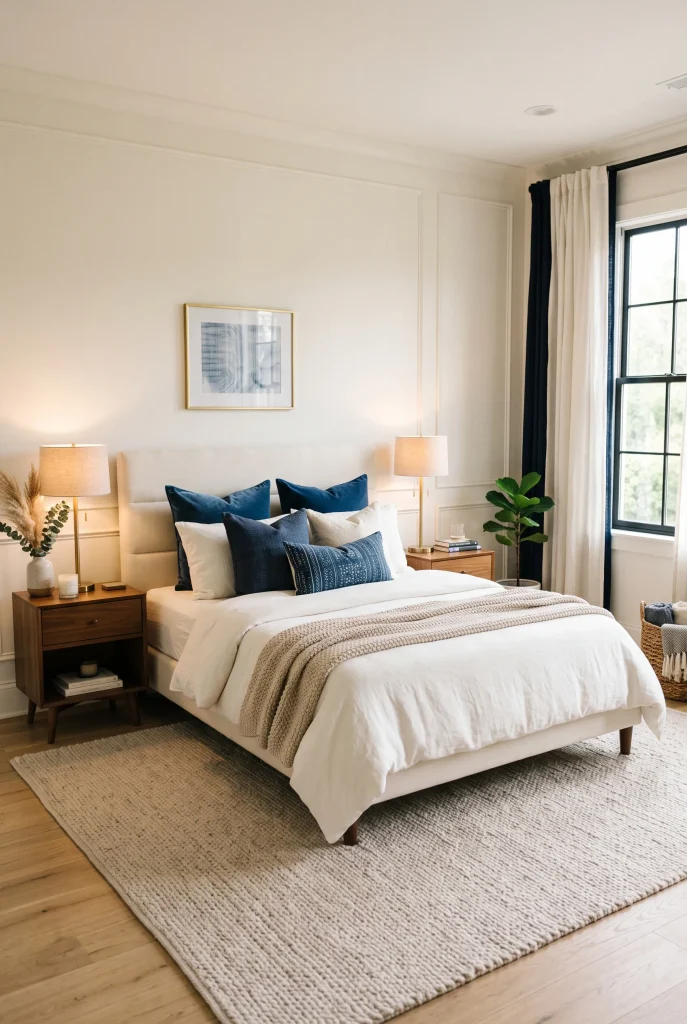
- Adds deep color without requiring a major bedroom makeover.
- Different blue textures create depth and visual interest.
- Easy to update when you want a seasonal refresh.
- Neutral bedding keeps the darker accents from feeling heavy.
Accent pillows offer an easy way to introduce deep blue when you want a flexible bedroom update. Start with a neutral foundation of cream, ivory, or beige bedding, then layer navy and indigo pillows in different shapes and textures. A combination of linen, velvet, cotton, or woven covers can make the bed feel rich without adding too much color. This approach works particularly well when you are not ready to repaint the walls or replace furniture. It also allows you to experiment with darker tones before committing to a larger design change.
For a finished arrangement, use a few larger pillows at the back, followed by smaller decorative cushions and one longer lumbar pillow at the front. Avoid making every piece the same shade of blue; slight variations create a more natural layered effect. Repeat one blue tone elsewhere through artwork, a throw, or a small rug so the bed does not feel disconnected. When the seasons change, simply replacing a few covers can refresh the entire room. It is a low-effort update that can make neutral furniture feel much more intentional.
17. Layered Blue Textures
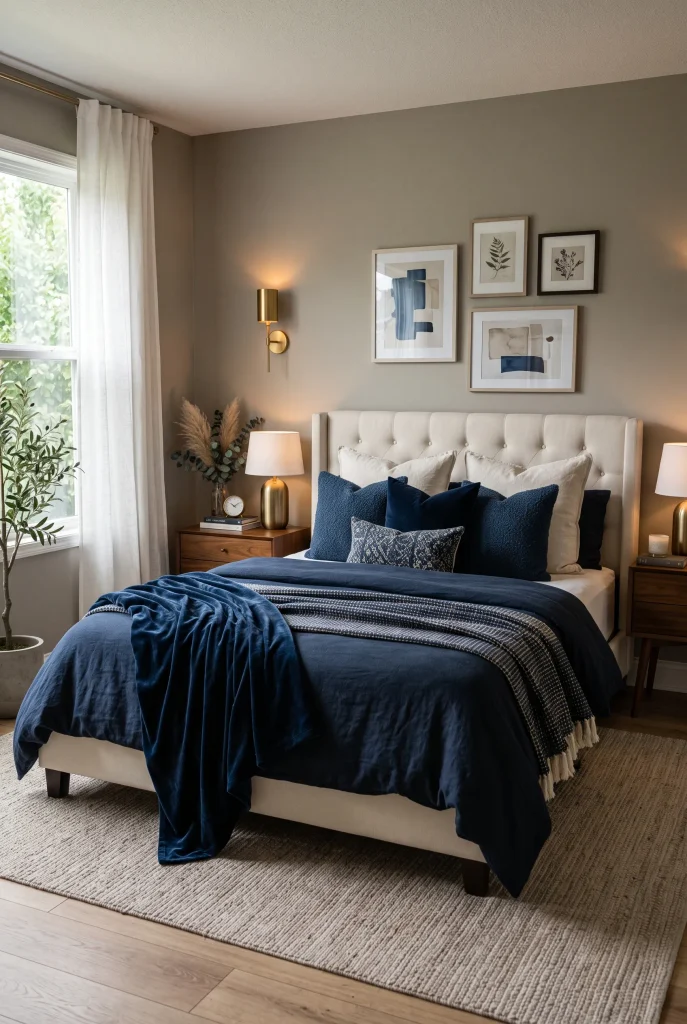
- Mixing textures keeps dark colors from appearing flat.
- Soft fabrics make the room feel warmer and more inviting.
- Layering works without adding many decorative objects.
- Combining matte and slightly reflective surfaces creates depth.
Layering different textures is one of the easiest ways to make a deep color palette feel sophisticated instead of flat. Combine a linen duvet with a velvet throw, boucle cushions, woven accents, or a soft knitted blanket. Each material catches light differently, giving the room subtle variation even when the color palette stays focused on navy and indigo. This approach is especially helpful in bedrooms with darker walls because texture prevents the deeper shades from blending into one heavy visual block. The result feels cozy, dimensional, and comfortable rather than overly dramatic.
Think about texture across the entire room instead of concentrating everything on the bed. A woven rug, linen curtains, upholstered headboard, and natural wood furniture can create a balanced sensory palette. Keep the colors relatively controlled so the materials remain noticeable. Warm lighting will highlight velvet and woven surfaces beautifully in the evening, while daylight reveals differences between matte and softly reflective fabrics. Thoughtful texture often makes a bigger impact than adding more accessories. A few well-chosen materials can give dark blue bedrooms ideas a polished, lived-in quality without unnecessary clutter.
Conclusion
Deep blue can completely change the feeling of a bedroom, adding richness, depth, and a cozy sense of escape. The best dark blue bedrooms ideas balance the darker color with cream fabrics, warm wood, soft lighting, and layered textures. You do not need to redesign everything to create the effect. Start with bedding, curtains, lighting, or one statement wall, then build from there. Small changes in color and texture can make a room feel much more finished. Save this post on Pinterest, try your favorite idea, and share it with someone planning a bedroom refresh.