21 Kitchen Cabinet Organization Ideas to Maximize Space
A cluttered kitchen cabinet can make even a spacious kitchen feel frustratingly small. The right storage changes can completely transform how your kitchen looks and works.
These kitchen cabinet organization ideas show simple ways to use overlooked space, improve access, and keep everyday essentials neatly arranged. From pull-out shelves and drawer inserts to vertical dividers and smart corner storage, each idea is designed to help you get more from the cabinets you already have. You do not need a full kitchen remodel to make a noticeable difference. Small changes can create better routines, clearer surfaces, and a calmer space. As you explore these ideas, look for the ones that solve the specific storage problems you deal with every day.
1. Pull Out Shelves
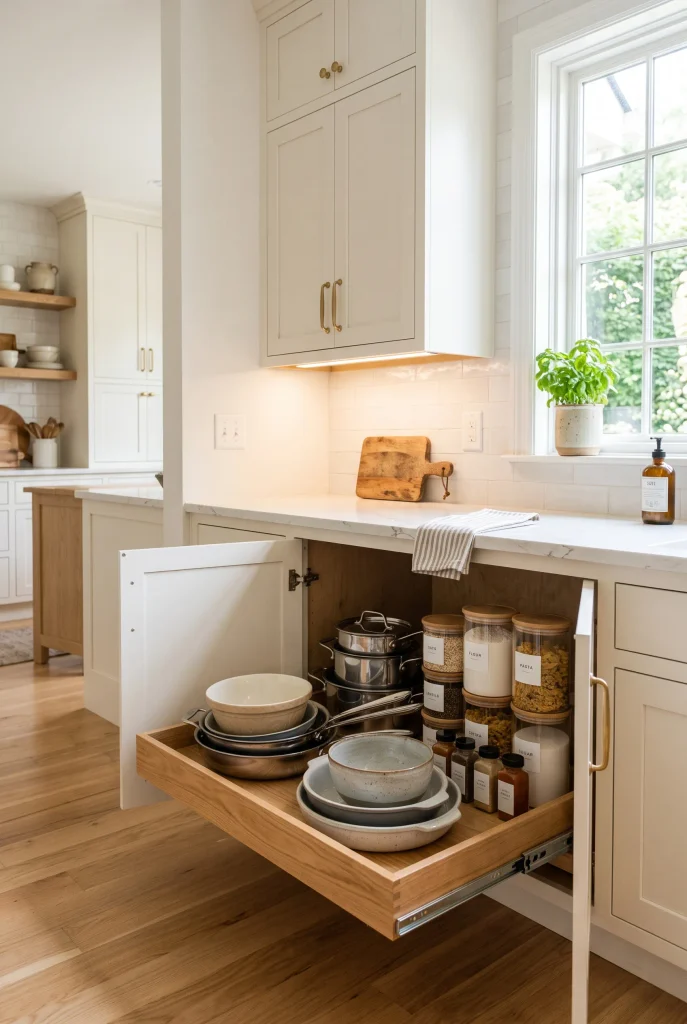
- Makes deep cabinets easier to reach and use.
- Brings hidden items into clear view.
- Reduces digging through crowded shelves.
- Works especially well for heavy cookware and everyday dishes.
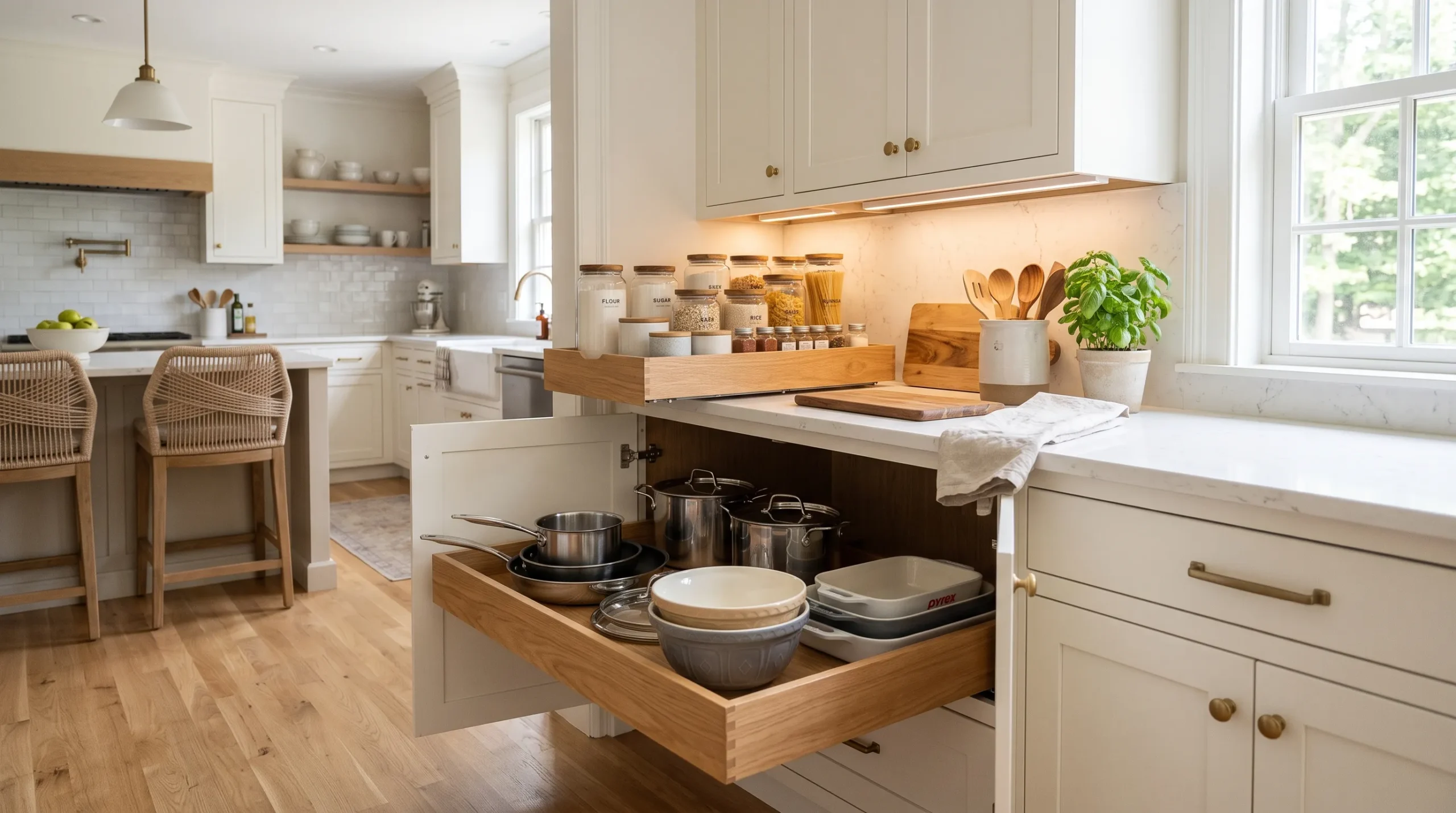
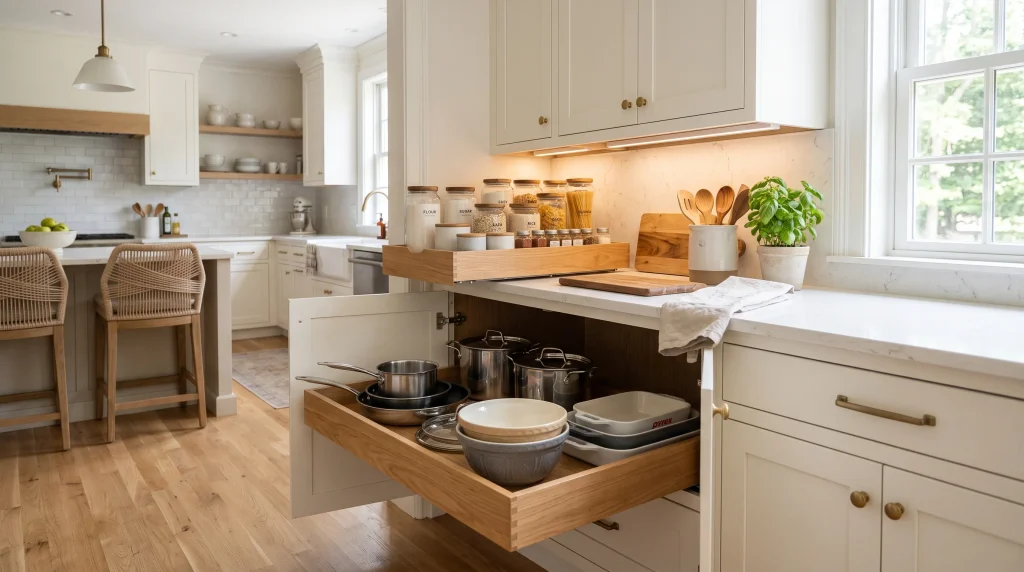
Pull-out shelves can make a deep cabinet feel completely different because everything comes forward instead of disappearing into the back. They create an easy way to reach pots, pans, mixing bowls, or small appliances without moving several items first. This setup is especially helpful in lower cabinets where bending and reaching can become frustrating. Choose sturdy shelves that glide smoothly and leave enough clearance between each level. Keeping frequently used pieces toward the front also makes daily routines faster while giving the cabinet a cleaner, more intentional appearance.
A well-planned pull-out system can turn awkward storage into one of the most useful parts of the kitchen. Instead of stacking everything tightly, group similar items together and give each shelf a clear purpose. For example, one level can hold cookware while another stores baking supplies or serving dishes. This approach improves kitchen cabinet organization because every item has an obvious place. It also makes it easier to notice when something is missing or needs replacing. For a polished look, use matching containers or simple dividers to keep smaller pieces from shifting as the shelves move.
2. Shelf Risers
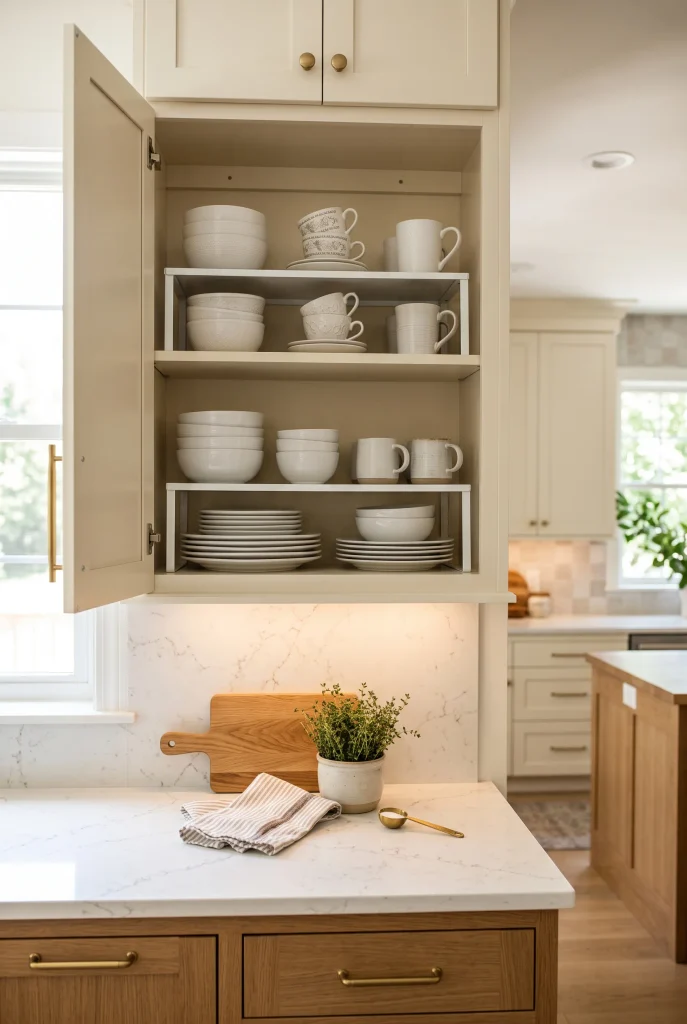
- Creates extra vertical storage without remodeling.
- Keeps plates and bowls easier to see.
- Prevents short stacks from wasting cabinet height.
- Adds structure to open, spacious shelves.
If your cabinets have plenty of vertical space but still feel crowded, shelf risers are a simple fix worth trying. These small platforms create an extra level inside a cabinet, allowing plates, bowls, mugs, or serving pieces to sit neatly above one another. The biggest advantage is visibility: instead of stacking everything into one tall pile, you can see more of what you own at a glance. Choose risers that match your cabinet width and leave enough room underneath for comfortable access. This small adjustment can make everyday storage feel surprisingly more efficient.
Shelf risers work particularly well when cabinet shelves are tall and adjustable options are limited. Place heavier dishes on the lower level and lighter pieces above for easier handling. You can also use different heights to accommodate mugs, small bowls, or decorative servingware without creating an uneven stack. Simple vertical changes often make cabinets feel less cluttered without requiring expensive organizers. For an attractive finish, stick with neutral materials such as white, wood, bamboo, or clear acrylic. The result is a cabinet that looks tidy while making better use of every inch of available space.
3. Door Storage
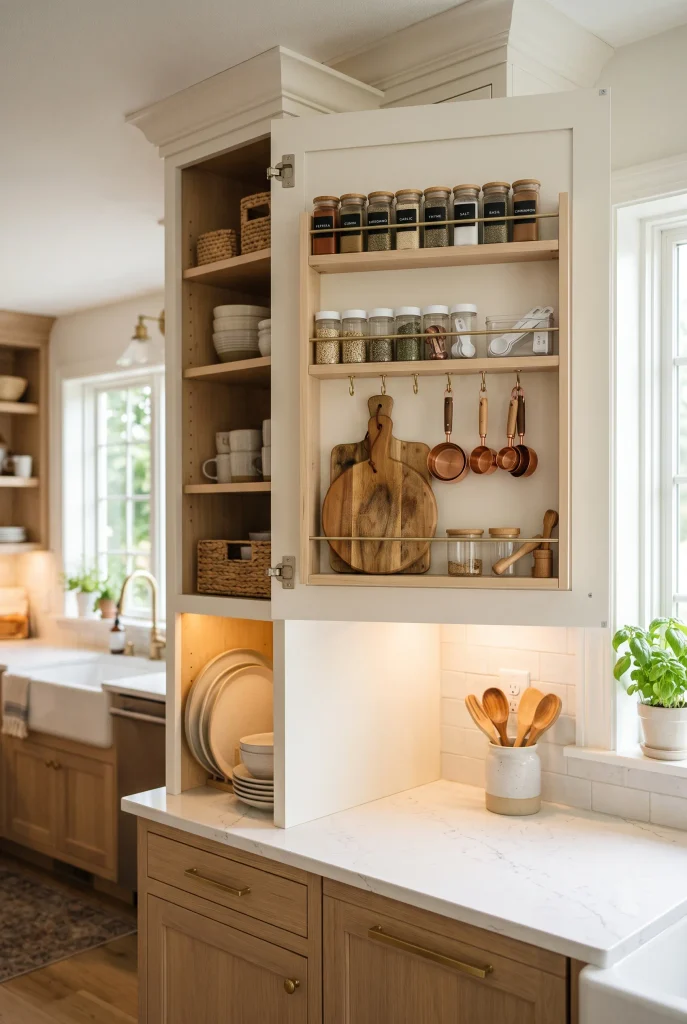
- Turns unused cabinet doors into practical storage.
- Keeps small essentials visible and easy to grab.
- Frees shelf space for larger kitchen items.
- Works well for narrow cabinets and tight layouts.
The inside of a cabinet door is easy to overlook, but it can become valuable storage with the right organizer. Slim racks can hold spices, measuring cups, cutting boards, pot lids, wraps, or cleaning supplies without taking up the main shelf area. This is especially useful when cabinet interiors are already full. Choose a door-mounted system that is lightweight and shallow enough to close properly. Keeping similar items together also prevents the door from becoming another cluttered zone. With a thoughtful setup, this forgotten surface can add useful storage without changing the cabinet layout.
Door storage is most effective when you match the organizer to the items you actually reach for every day. A narrow rack near the prep area can keep spices within easy reach, while a deeper door basket might hold food wraps or small kitchen tools. Avoid overloading the hinges, and check the cabinet manufacturer’s recommendations before installing heavier hardware. This kind of setup supports better kitchen cabinet organization by moving smaller items out of crowded shelves. It also creates a cleaner visual layout, making the main cabinet space easier to arrange and maintain over time.
4. Vertical Dividers
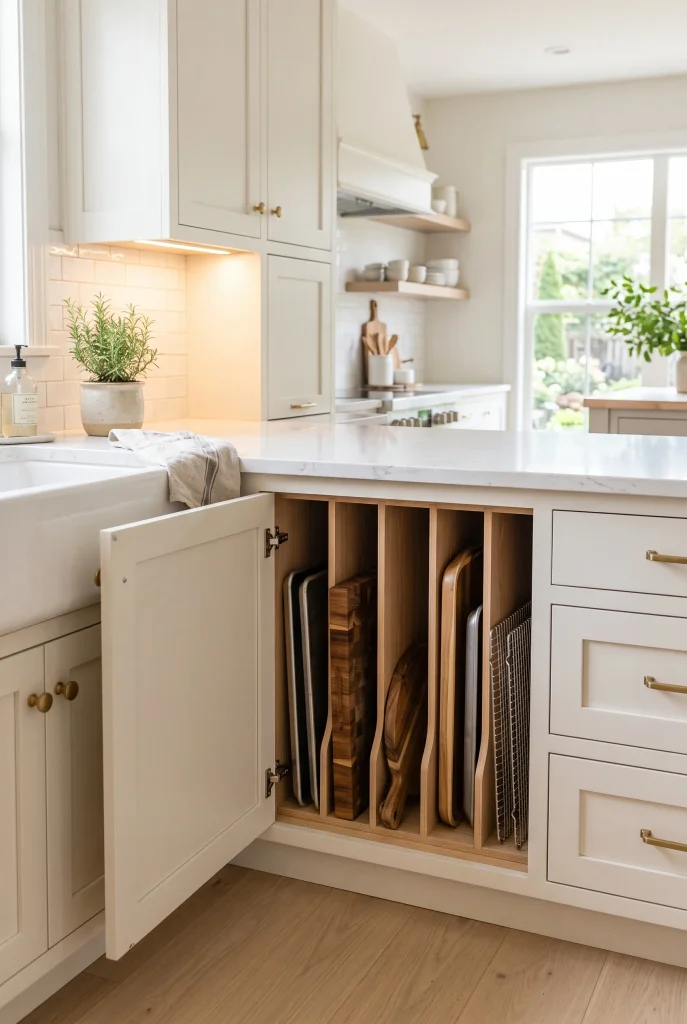
- Keeps flat kitchen pieces upright instead of stacked.
- Makes trays and boards easier to grab.
- Prevents heavy items from leaning messily.
- Gives crowded cabinets a cleaner visual structure.
Flat kitchen essentials can quickly become one of the messiest cabinet areas when they are stacked together. Vertical dividers solve that problem by giving cutting boards, baking sheets, trays, and cooling racks their own upright spaces. Instead of pulling out a heavy stack to reach one item, you can simply grab the piece you need. Adjustable dividers are especially useful because they can be positioned around different sizes. This setup also makes better use of narrow vertical space that might otherwise sit empty. The result is easier access and a cabinet that stays organized with less effort.
For the best result, group similar flat items together and position the dividers so each section has enough room to remove pieces comfortably. Baking sheets can share one area while cutting boards and serving trays occupy another. Avoid packing everything tightly, because a little breathing room makes the cabinet much easier to use. Vertical storage is particularly helpful in busy kitchens where these items are used frequently. A simple wood, bamboo, or metal divider system can also add a finished look while keeping awkward shapes contained and preventing them from sliding around.
5. Corner Cabinet Organizer
- Makes difficult corner space easier to access.
- Brings hidden items toward the front.
- Prevents forgotten cookware from collecting in back corners.
- Uses awkward cabinet space more efficiently.
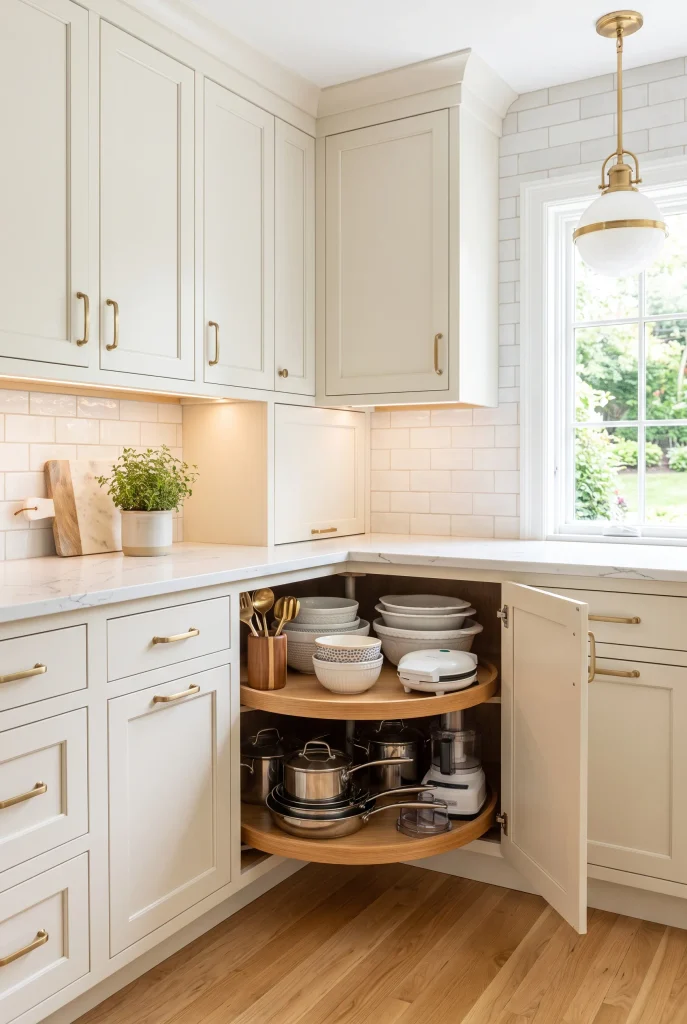
Corner cabinets often have plenty of storage but make it surprisingly difficult to reach what is inside. A rotating organizer, such as a lazy Susan, can change that by bringing stored items within easy reach. Instead of stretching toward the back or moving several pieces aside, you can rotate the shelves until the item you need comes forward. This works especially well for sauces, cookware, serving pieces, or pantry staples. Choose a sturdy design that fits the cabinet dimensions and rotates smoothly. A well-fitted organizer can make an awkward corner feel much more practical.
The key is to avoid treating a corner cabinet like one giant storage box. Divide the available space into simple categories and keep frequently used items toward the easiest-to-reach sections. A two-tier rotating organizer can separate smaller containers from larger bowls or cookware while keeping everything visible. For heavier items, choose a strong platform with a stable base rather than a lightweight plastic model. This type of improvement supports better kitchen cabinet organization because it turns difficult-to-reach storage into accessible space. It can also reduce the temptation to leave everyday items on the countertop.
View: 21 Living Room Furniture Ideas to Make Your Space Luxe
6. Drawer Inserts
- Gives every utensil a defined place.
- Prevents small tools from becoming tangled.
- Makes busy drawers easier to maintain.
- Helps separate everyday tools from specialty items.
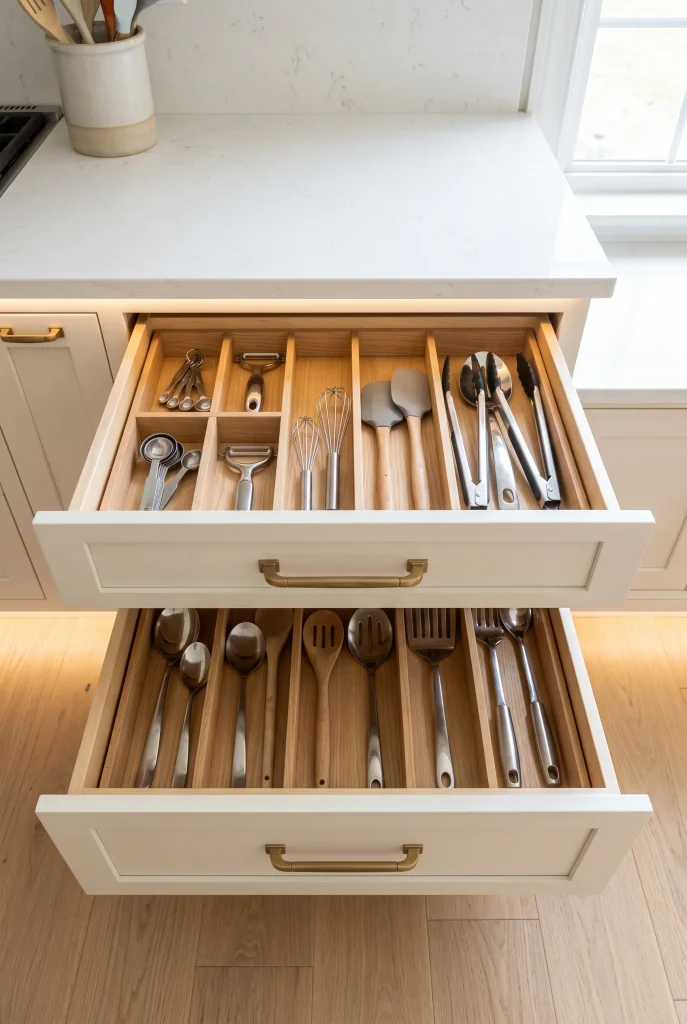
A messy utensil drawer can make even a beautiful kitchen feel disorganized, especially when spoons, peelers, measuring tools, and gadgets become mixed together. Drawer inserts create simple compartments that give each category a designated space. Instead of searching through a pile, you can immediately see what you need and put it back afterward. Wooden, bamboo, acrylic, and adjustable inserts are all useful options depending on the look and drawer size. Before buying one, measure the interior carefully and consider which tools you use most. A well-fitted insert can make a small drawer feel dramatically more functional.
For a practical setup, place everyday cooking tools in the easiest-to-reach compartments and reserve smaller sections for less frequently used pieces. Keep similar items together, such as measuring spoons, peelers, spatulas, and serving utensils. If your drawer is unusually wide, adjustable dividers can help prevent empty areas from becoming clutter zones. This simple approach makes the entire kitchen easier to maintain because every item has a clear home. It also creates a satisfying visual effect whenever the drawer opens. Clean lines and consistent materials can make even ordinary storage feel intentional and thoughtfully designed.
7. Under Sink Bins

- Keeps cleaning supplies contained and easy to find.
- Makes awkward under-sink space more usable.
- Prevents bottles from spreading across the cabinet floor.
- Creates a cleaner, more organized appearance.
The cabinet beneath the sink can easily become a collection of half-used bottles, sponges, brushes, and cleaning products. Using a few sturdy bins gives this awkward space some much-needed structure. Group everyday cleaners together, keep extra supplies in another container, and reserve a smaller bin for cloths or sponges. Clear bins make contents easy to identify, while woven or solid containers create a softer visual finish. Leave enough room around plumbing and avoid overcrowding the cabinet. A simple bin system can turn an overlooked storage area into a practical, easy-to-maintain zone.
Because under-sink cabinets often have pipes taking up valuable room, flexible storage works better than rigid shelving in many kitchens. Choose containers that can be lifted out easily when you need something from the back. Adding a small waterproof tray underneath bottles can also help protect the cabinet from minor spills. Keeping cleaning products grouped by purpose makes this area much easier to maintain. Instead of buying more organizers than necessary, start with the items already stored there. Once everything is categorized, you can see exactly what type of storage the space actually needs.
8. Spice Drawer Storage
- Keeps spice jars visible instead of hidden behind others.
- Makes cooking ingredients easier to identify quickly.
- Frees up crowded wall and cabinet shelves.
- Creates a neat, uniform visual display.
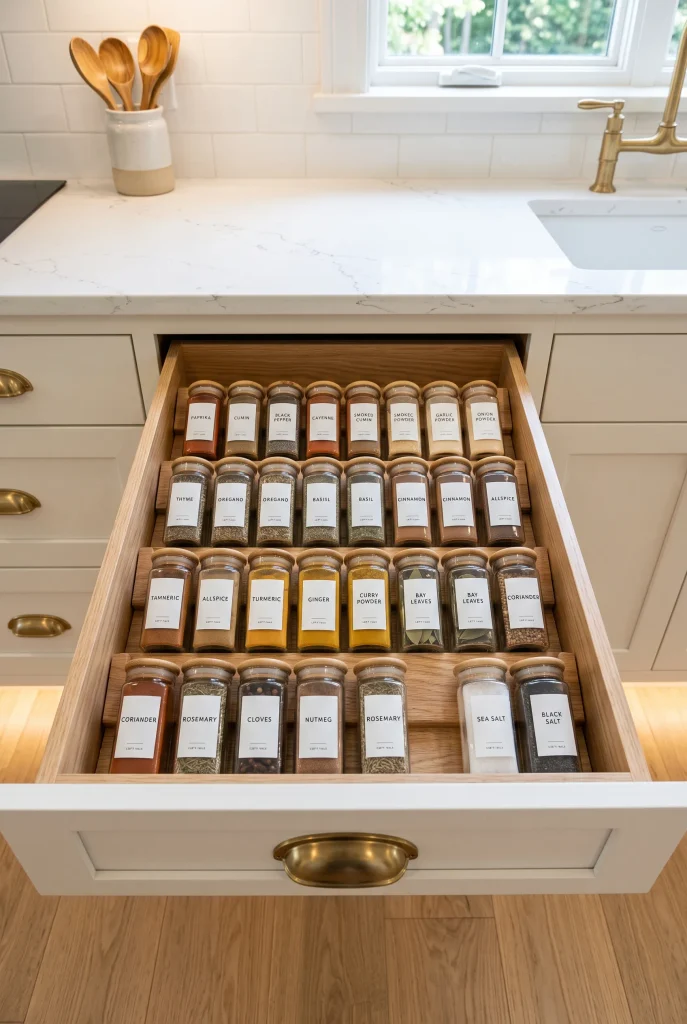
A spice drawer can make cooking feel much easier when every jar is visible from above. Instead of stacking containers behind one another or searching through a crowded cabinet, angled inserts display labels clearly in organized rows. This setup works especially well for home cooks who use many spices regularly. Arrange jars alphabetically, by cuisine, or simply by frequency of use depending on what feels most natural. Matching containers can create a polished appearance, but they are not required. Even a basic drawer insert can dramatically improve visibility and reduce the time spent searching for small ingredients.
When setting up a spice drawer, measure the drawer depth and choose an insert that keeps jars secure when the drawer opens and closes. Angled compartments are particularly helpful because labels remain easy to read without lifting each container. Keep frequently used seasonings near the front and specialty spices toward the back. This approach makes the drawer practical while giving it a clean, Pinterest-friendly appearance. If you refill jars, label them consistently and check expiration dates occasionally. A little organization here can free valuable shelf space while making everyday meal preparation feel smoother.
9. Stackable Bins
- Adds useful layers inside tall cabinets.
- Keeps small packages contained and grouped.
- Makes deep shelves easier to manage.
- Helps prevent loose items from spreading everywhere.
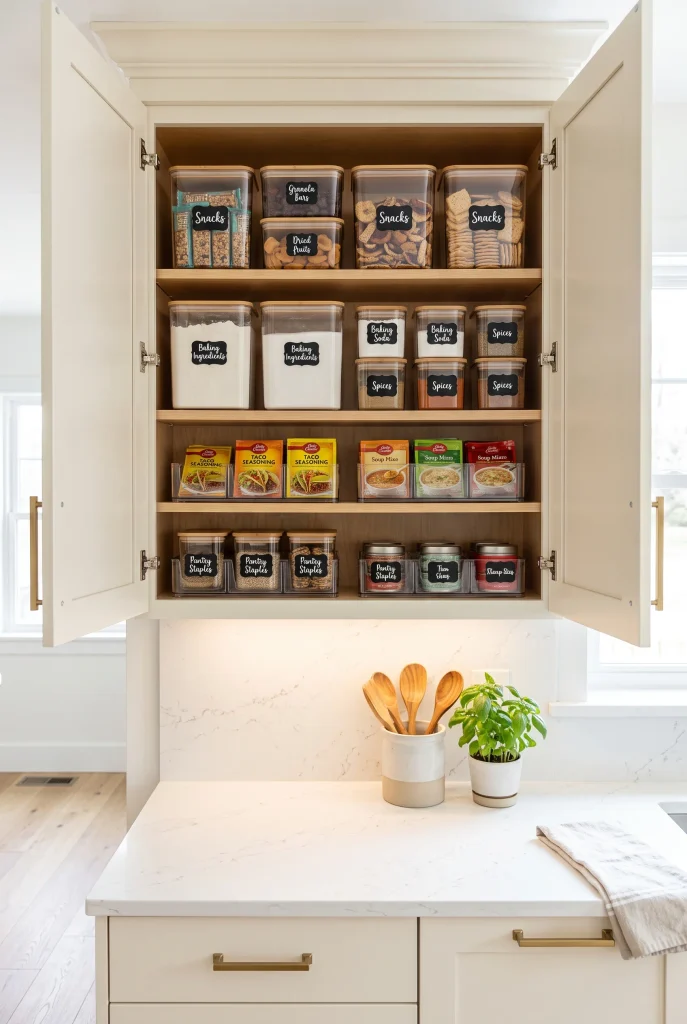
Tall cabinets often have unused vertical space above shorter containers, and stackable bins can turn that wasted height into practical storage. Use them to group snacks, baking ingredients, packets, small appliances, or other loose items that tend to spread across shelves. Clear bins make contents easy to see, while handled versions can be pulled forward without disturbing everything around them. Choose sturdy containers that stack securely and fit the cabinet dimensions. The goal is not to fill every inch, but to create simple zones that make stored items easier to access and return after use.
For the most useful setup, give each bin a specific purpose instead of mixing unrelated items together. One container might hold baking packets while another keeps snacks or specialty ingredients together. If the cabinet is deep, choose bins with handles so you can pull them forward comfortably. Leave a little space above each stack to prevent containers from catching on the shelf above. This small adjustment can improve kitchen cabinet organization by creating clear categories and using vertical space more effectively. It also makes cleaning easier because entire groups of items can be removed at once.
10. Pot Lid Rack
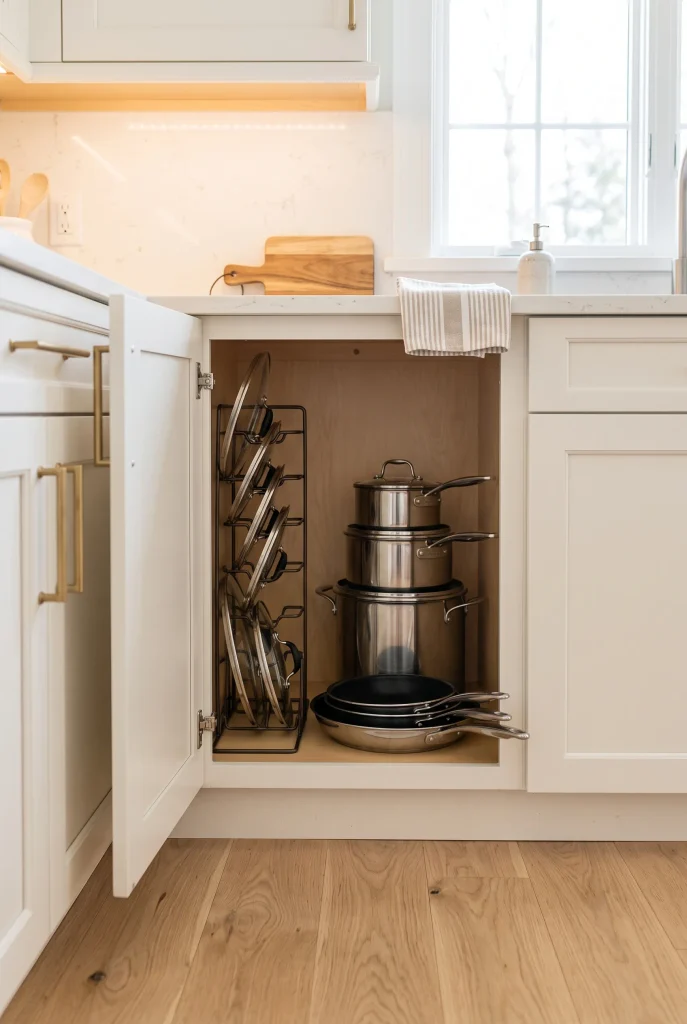
- Keeps loose pot lids from sliding around.
- Frees shelf space for larger cookware.
- Makes matching lids easier to find.
- Creates a cleaner and more functional cabinet interior.
Pot lids can be surprisingly difficult to store because their handles and rounded shapes take up awkward space. A slim rack keeps them upright and separated, making it much easier to grab the right lid without disturbing a stack of cookware. Depending on your cabinet layout, the rack can sit inside a lower cabinet, on a shelf, or against the side panel. Choose a design with enough spacing for different lid sizes. Keeping lids close to their matching pots can also make cooking routines faster and prevent loose pieces from creating unnecessary clutter.
A vertical lid rack is particularly useful when cabinet shelves are already crowded with pots and pans. Instead of placing lids underneath cookware or balancing them on top, give them a dedicated section. Arrange larger lids toward one side and smaller ones toward the other so each piece remains easy to identify. Make sure the rack is firmly positioned and does not interfere with cabinet doors or drawers. This simple change can improve kitchen cabinet organization while freeing valuable horizontal space. It also creates a more orderly cabinet interior that is easier to maintain after everyday cooking.
11. Baking Station
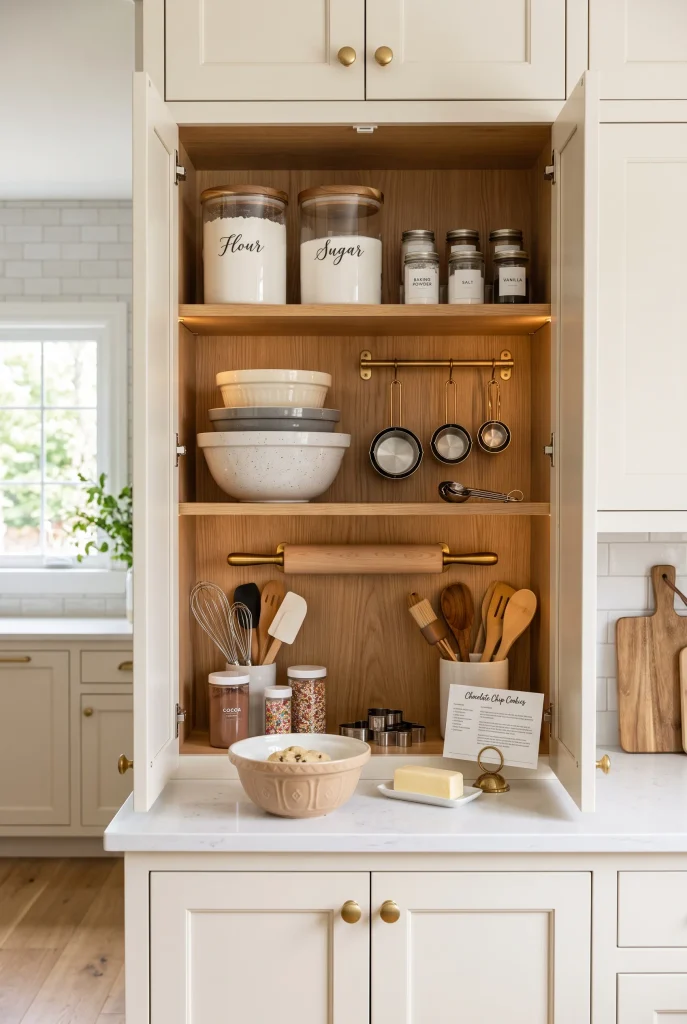
- Keeps baking ingredients and tools together.
- Reduces searching during recipes.
- Creates a dedicated zone for frequent baking tasks.
- Makes crowded cabinets feel more purposeful.
A dedicated baking station can make a busy kitchen feel much easier to use, especially when ingredients and tools are normally scattered across several cabinets. Keep flour, sugar, baking powder, measuring cups, mixing bowls, and frequently used tools within the same general area. Clear containers can make staples easy to identify while adding a neat visual rhythm to the shelves. Place heavier bowls on lower levels and smaller tools in a nearby drawer or container. Grouping everything around one task saves time and prevents the kitchen from becoming cluttered while you work.
The most effective baking station is based on how you actually prepare recipes, not simply how the shelves look. Keep the ingredients you use most often at comfortable heights and store specialty equipment farther back. A labeled container for small baking supplies can prevent packets and decorations from becoming scattered. If countertop space is limited, reserve only the tools you use frequently and store everything else inside the cabinet. This approach creates a functional baking zone without requiring a dedicated pantry. It also makes cleanup easier because every ingredient and tool has a clear place afterward.
12. Tray Storage
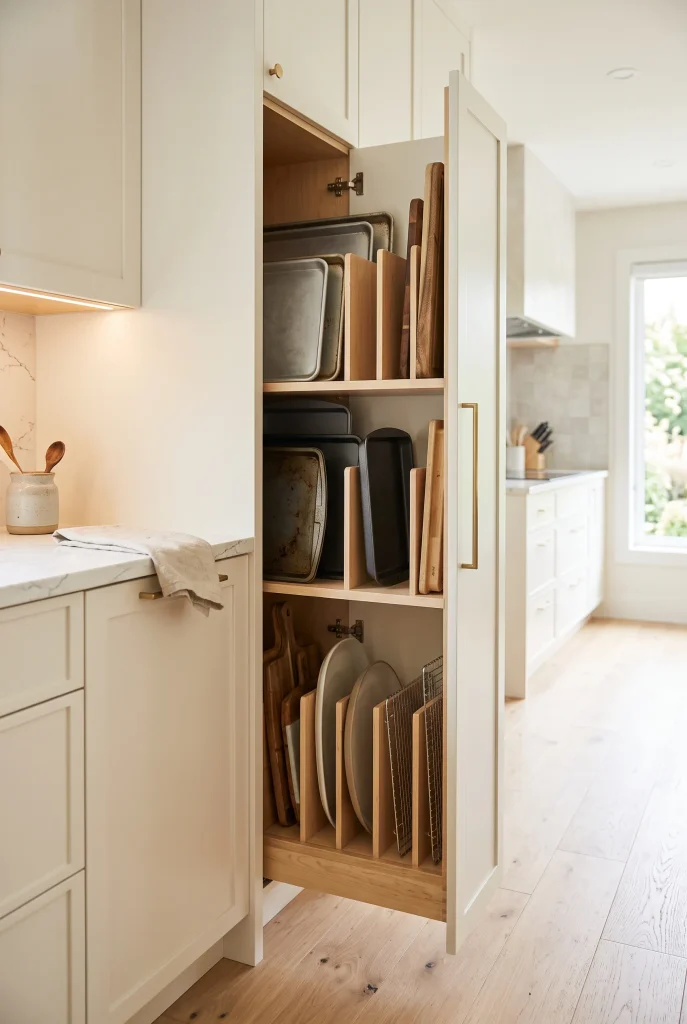
- Uses narrow cabinet space efficiently.
- Keeps large trays upright and accessible.
- Prevents serving pieces from leaning together.
- Makes oversized kitchen items easier to organize.
Large trays and serving platters can quickly take over a cabinet because they need more room than ordinary plates and bowls. Storing them vertically gives each piece a defined position while using narrow cabinet space efficiently. Wooden or metal dividers can separate baking trays, cutting boards, cooling racks, and platters without creating bulky stacks. This arrangement also makes it easier to remove one item without pulling everything else out. For best results, group pieces by size and purpose. Keeping the heaviest items lower can make the cabinet safer and more comfortable to use every day.
A vertical tray section works especially well beside the oven or prep area because those pieces are often needed during cooking. Measure the cabinet carefully before installing dividers, including the height and depth needed for your largest tray. Leave enough space between sections so handles and edges are easy to grip. This type of storage can make a noticeable difference in kitchens where large flat items were previously stacked in unstable piles. The cabinet becomes easier to navigate, while the overall space looks calmer because awkward pieces are contained instead of leaning against one another.
13. Lazy Susan Trays

- Makes deep cabinet contents easier to reach.
- Keeps bottles and jars visible.
- Prevents items from getting forgotten in corners.
- Creates an efficient storage zone without remodeling.
Deep cabinets can hide everyday ingredients behind several layers of bottles and jars, making simple tasks unnecessarily frustrating. Lazy Susan trays solve this by allowing the entire storage area to rotate toward you. They work especially well for oils, sauces, condiments, spices, and other small containers that are difficult to organize in straight rows. Choose a sturdy tray with a smooth rotation and a raised edge to keep bottles secure. Grouping similar products together also makes the setup easier to maintain. With everything visible, you can quickly find what you need without moving half the cabinet.
For the best results, avoid overcrowding the rotating tray. Leave enough space around each bottle so it can move smoothly without catching against neighboring containers. Place taller bottles toward the center and shorter jars around the outside where labels are easier to see. This setup is particularly useful in deep corner or pantry cabinets where the back area often becomes wasted space. A simple rotating tray can improve kitchen cabinet organization without changing the cabinet itself. It also helps you notice duplicate products, making it easier to use what you already have before buying more.
14. Under Shelf Baskets
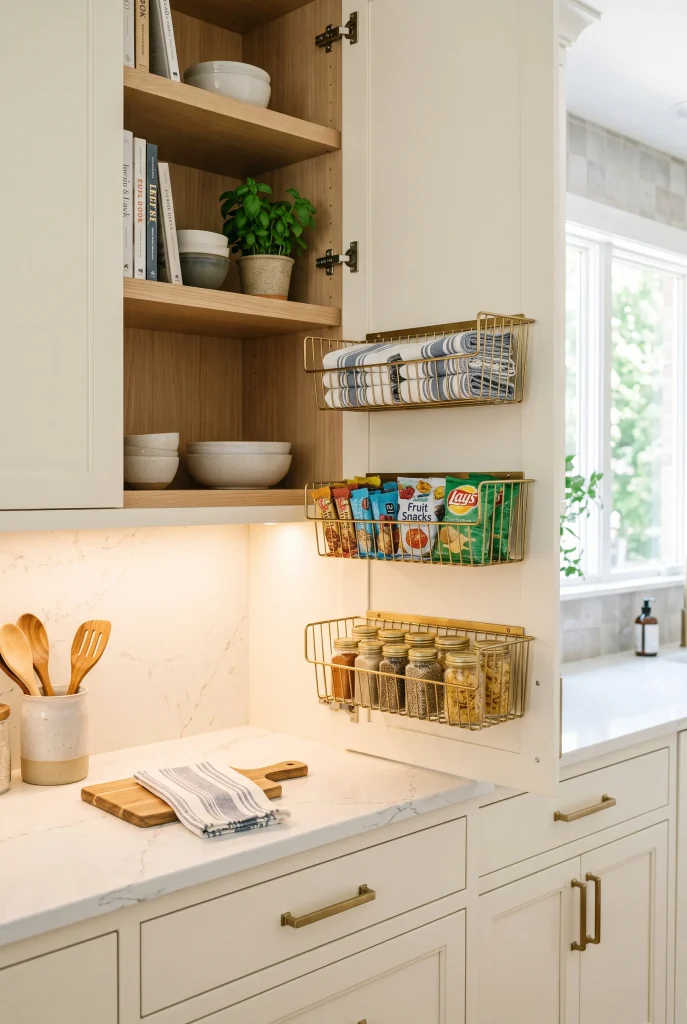
- Uses the empty space beneath existing shelves.
- Adds storage without taking up shelf width.
- Keeps small items contained and visible.
- Works well in cabinets with extra vertical clearance.
The space underneath a cabinet shelf is often completely unused, even when the shelf above is already full. Under-shelf baskets add a convenient storage layer without requiring a major change to the cabinet. They can hold snack packets, kitchen towels, wraps, small containers, or other lightweight items that tend to get lost. Choose baskets that attach securely and leave enough clearance below for the items underneath. This solution works particularly well in tall cabinets where there is noticeable empty space between shelves. It creates extra capacity while keeping the cabinet looking organized rather than overcrowded.
Before adding a basket, check that the shelf is strong enough to support the extra weight and that the basket will not interfere with the cabinet door. Lightweight items are usually the easiest choice. Use one basket for a specific category rather than creating another mixed storage area. For example, keep small baking packets together or reserve a basket for folded kitchen linens. This makes the additional space genuinely useful. A simple under-shelf basket can also help improve kitchen cabinet organization by turning overlooked vertical gaps into practical storage without sacrificing the main shelf surface.
15. Coffee Cup Hooks

- Frees shelf space by using the underside.
- Keeps favorite mugs easy to grab.
- Adds a charming decorative detail.
- Works especially well for small kitchens.
Mugs can quickly consume valuable shelf space because their handles and shapes make neat stacking difficult. Small hooks installed beneath a cabinet shelf create an easy solution by letting mugs hang vertically instead. This frees the shelf surface for coffee supplies, bowls, or other essentials while keeping favorite cups within easy reach. Brass, matte black, or simple wooden hooks can complement the kitchen hardware and add a subtle decorative touch. Choose hooks that are strong enough for the mugs you use and leave enough space between each one so handles do not collide.
This setup works especially well near a coffee station, breakfast area, or beverage cabinet where mugs are used every day. Keep the most frequently used cups toward the front and reserve less-used pieces for another shelf. Avoid overcrowding the hooks, because too many mugs can make the area look busy and place unnecessary weight on the shelf. A small collection of coordinated cups can actually become part of the kitchen decor. At the same time, moving mugs underneath the shelf creates more usable cabinet space for other everyday essentials.
16. Cleaning Supply Caddy
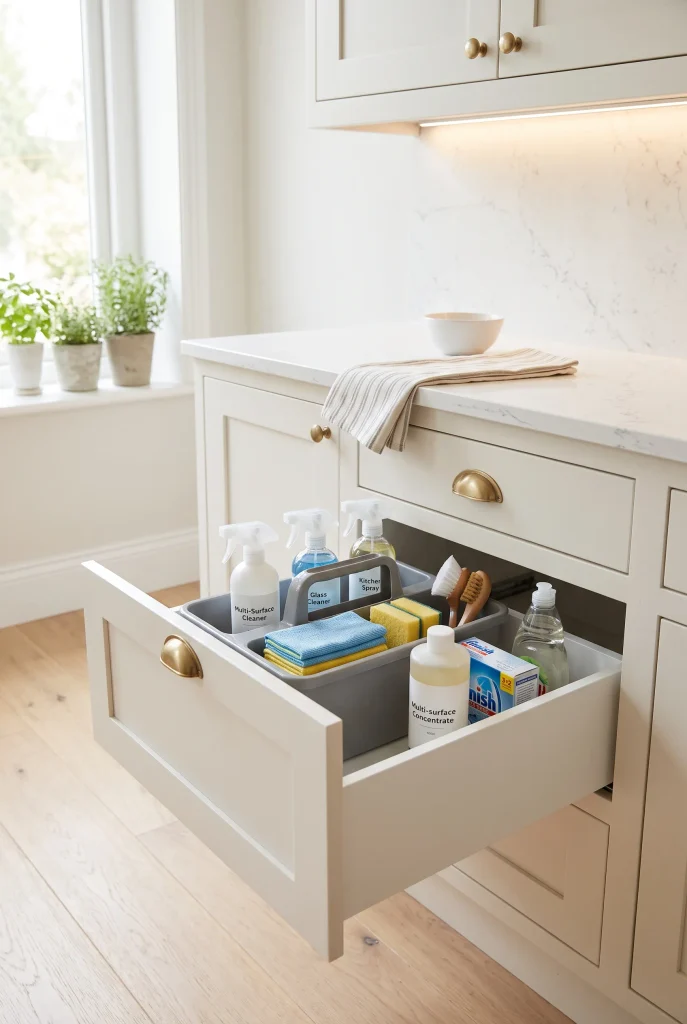
- Keeps frequently used cleaning products together.
- Makes the entire group easy to carry.
- Prevents loose bottles from spreading across shelves.
- Simplifies quick kitchen cleanup.
A cleaning supply caddy can make everyday kitchen maintenance much easier because all the essentials stay together in one portable container. Instead of reaching around several bottles under the sink, you can lift out one caddy containing your most-used spray, cloths, sponges, and brushes. Choose a sturdy container with a comfortable handle and enough ventilation for damp items. Keep heavier bottles toward the bottom and smaller tools around the sides. This simple setup saves space while making cleanup more convenient, especially when you regularly move between the countertop, sink, and other areas.
For a tidy cabinet, use the caddy for everyday supplies and store backup products separately. This prevents the main container from becoming overloaded and keeps frequently used items easy to grab. A waterproof tray beneath the caddy can provide an additional layer of protection against spills. It is also helpful to check the contents occasionally and remove empty bottles or worn-out cleaning cloths. This kind of portable organization improves kitchen cabinet organization by creating a clear system rather than simply hiding cleaning products behind the doors. The cabinet stays easier to access and maintain.
17. Plate Rack Insert
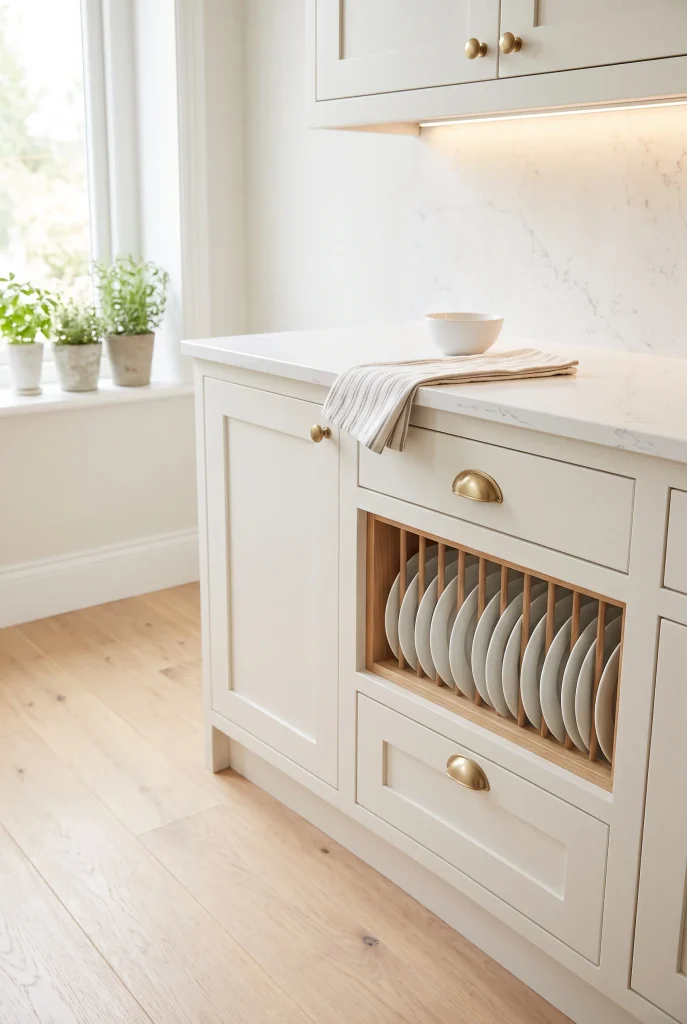
- Stores plates vertically for easier access.
- Reduces unstable stacks inside cabinets.
- Makes everyday dishes more visible.
- Adds a custom built-in feel without major remodeling.
A plate rack insert can make everyday dishes much easier to store and reach, especially when tall stacks become awkward to lift. Instead of placing plates horizontally on top of one another, the rack keeps them upright in individual sections. This makes it simple to pull out one plate without disturbing the rest. Wooden dividers create a warm, built-in appearance, while metal or acrylic versions offer a lighter modern look. Choose spacing that comfortably fits your dishes and avoid forcing oversized plates into narrow sections. The result is practical storage with a polished visual effect.
This arrangement is particularly helpful for households that use the same plates every day because the dishes remain visible and accessible. Position the most frequently used pieces toward the front and reserve less-used serving plates for another area. Make sure the rack is stable and securely positioned so plates cannot tip forward when the cabinet opens. A coordinated collection of white or neutral dishes can also create a calm visual rhythm inside the cabinet. By replacing tall stacks with individual sections, you gain easier access while making better use of the available storage.
18. Appliance Garage
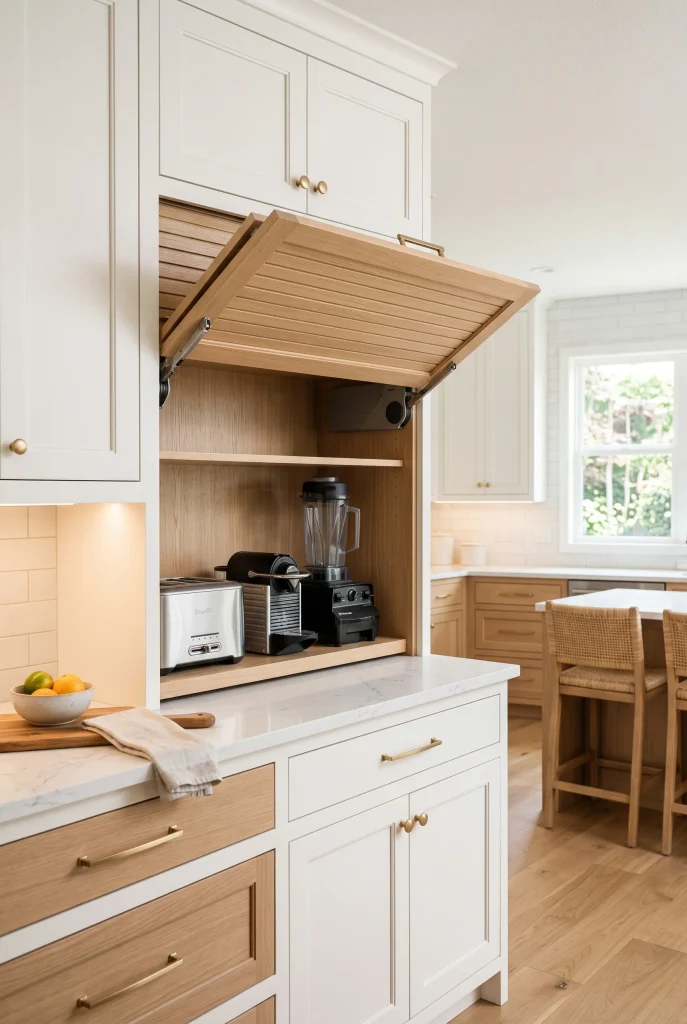
- Keeps bulky appliances off the main countertop.
- Creates a dedicated home for everyday machines.
- Makes the kitchen look calmer and less crowded.
- Keeps frequently used appliances easy to access.
Small appliances can quickly make a kitchen countertop feel crowded, especially when several machines are used every day. An appliance garage gives these bulky items a dedicated home behind a cabinet door while keeping them close to the workspace. Toaster ovens, coffee machines, blenders, and mixers can stay accessible without remaining visually exposed all day. If the cabinet is designed for this purpose, include enough depth, ventilation, and clearance for safe operation. A lift-up or retractable door can make access easier while maintaining a clean, streamlined appearance when the appliances are not being used.
The best appliance garage is planned around the machines you actually use rather than every appliance you own. Keep everyday equipment together and store occasional-use machines elsewhere to avoid overcrowding. Before installing one, consider electrical access and manufacturer safety requirements, especially for heat-producing appliances. When properly planned, this setup can make a dramatic visual difference because the countertop becomes much clearer. It also supports better kitchen cabinet organization by giving bulky items a designated zone. The kitchen feels more spacious, while your most useful appliances remain conveniently close to the area where you prepare meals.
19. Corner Drawer Storage
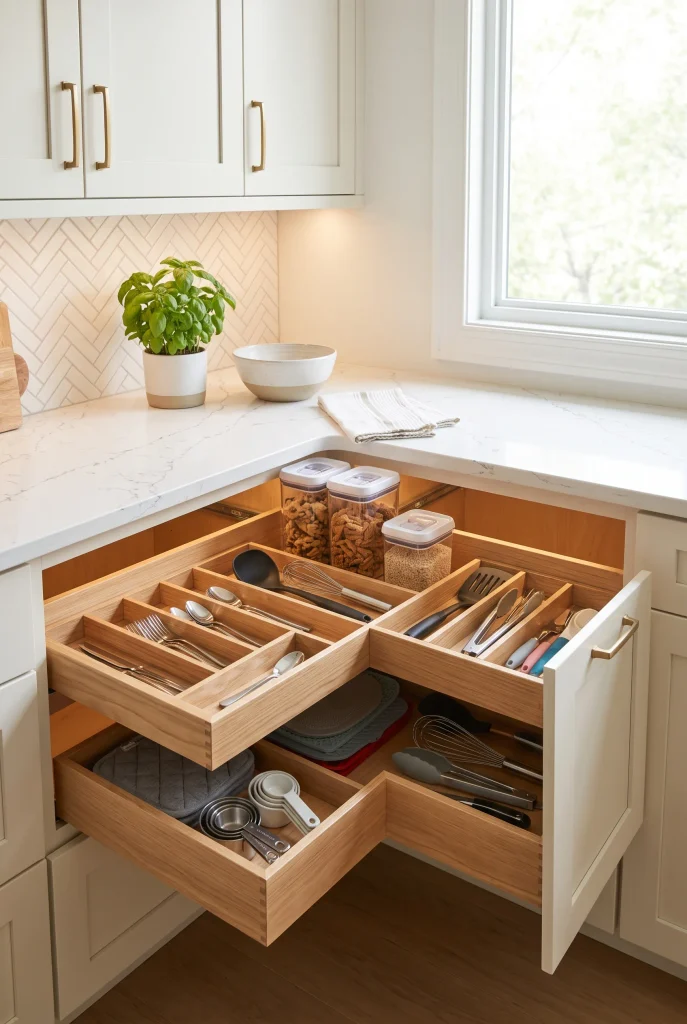
- Turns awkward corner space into usable storage.
- Keeps small kitchen tools separated and visible.
- Makes deep drawers easier to maintain.
- Provides convenient access to everyday essentials.
Corner areas can be difficult to organize because standard cabinets often leave awkward gaps or hard-to-reach spaces. Deep corner drawers offer a more accessible alternative by bringing storage directly toward you. Use adjustable dividers to separate utensils, measuring tools, food containers, or other small kitchen essentials. Keep the items you use most often near the front and group similar pieces together. Because the entire drawer pulls forward, you can see everything at once instead of reaching blindly into a dark corner. This makes everyday storage feel more efficient without adding visual clutter.
The key to making deep corner drawers work is creating clear zones instead of filling the entire space with loose items. Adjustable dividers can prevent tools from shifting whenever the drawer opens, while smaller containers can keep tiny accessories together. Avoid placing rarely used items directly in front of everyday essentials. A thoughtful layout makes the drawer easier to use and easier to reset after cooking. This approach can strengthen kitchen cabinet organization by turning an awkward area into accessible storage. It also gives the kitchen a more custom, streamlined feel without relying on excessive countertop storage.
20. Food Container Drawer
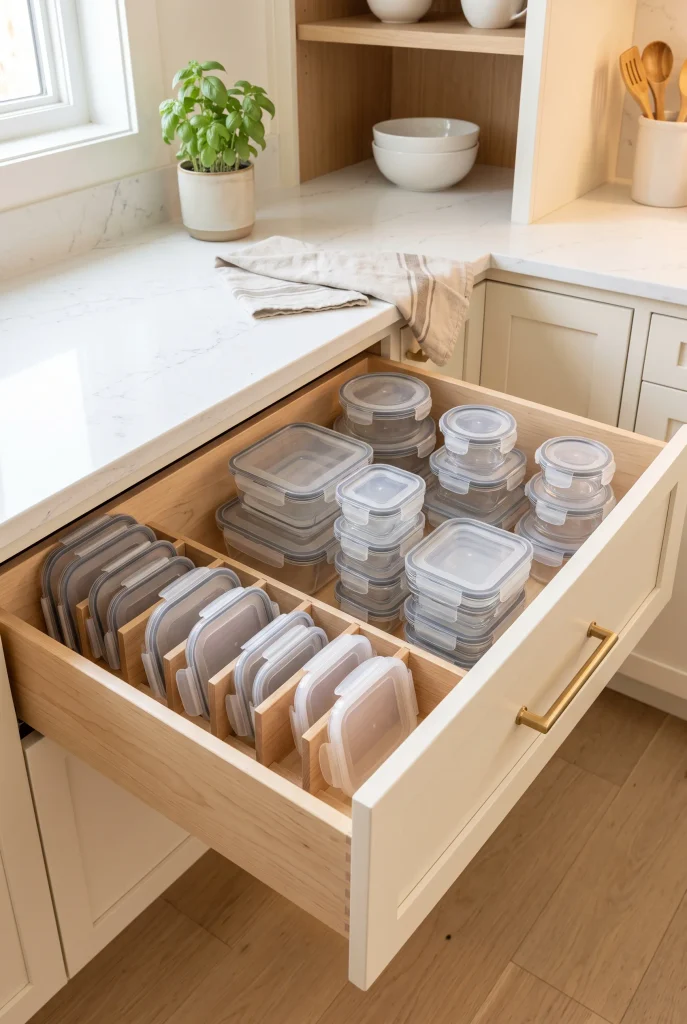
- Keeps food containers sorted by size.
- Prevents lids from disappearing into drawers.
- Makes meal-prep storage easier to manage.
- Helps reduce clutter from mismatched containers.
Food storage containers can become one of the hardest kitchen items to keep organized because different shapes and loose lids quickly turn into a tangled pile. A dedicated drawer gives them a clear home and makes it easier to separate containers by size. Stack matching pieces together and store lids vertically in a divider so each one remains visible. Clear or neutral containers also create a cleaner visual appearance. Before organizing, remove damaged or unmatched pieces you no longer use. Keeping only practical sets makes the drawer easier to manage and creates more room for the containers you actually need.
A deep drawer works especially well because containers can be stacked without disappearing behind one another. Place larger pieces toward the back and smaller everyday containers toward the front. For lids, use a narrow divider or upright rack that keeps them separated by shape. This prevents the common problem of searching through a pile every time you need one. Container storage becomes much easier when every piece has a predictable position. This simple system supports better kitchen cabinet organization while making meal prep, leftovers, and cleanup feel less frustrating.
21. Open Shelf Baskets
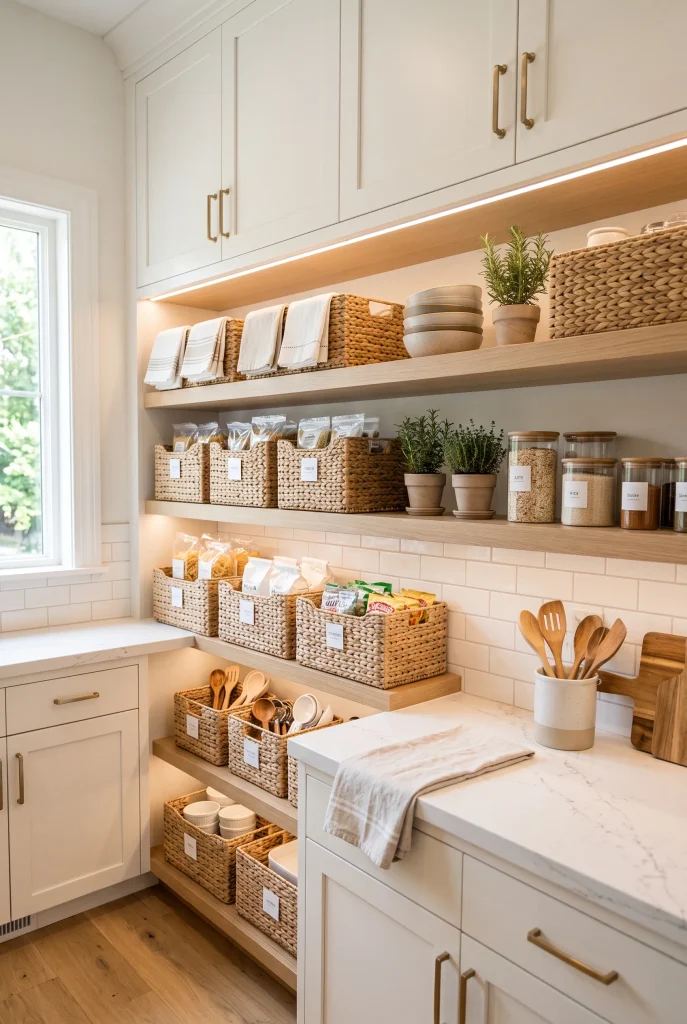
- Groups loose kitchen items into simple categories.
- Adds warmth and texture to cabinet storage.
- Keeps small supplies from spreading across shelves.
- Makes frequently used items easy to pull forward.
Open shelves inside cabinets can look messy when small packets, linens, and accessories are stored without clear boundaries. Matching baskets create simple visual zones while keeping loose items contained. Woven baskets add warmth and texture, while wire or clear versions create a more modern appearance. Use each basket for one category, such as kitchen towels, snack packets, baking supplies, or small serving accessories. Handles make baskets easier to pull forward when they sit on deeper shelves. The result is storage that feels intentional instead of simply packed, while everyday items remain easy to reach.
Choose basket sizes based on the shelf dimensions rather than trying to fill every available gap. Leave enough room to pull each basket forward comfortably and avoid making them so heavy that they become difficult to lift. A consistent material or color palette can also make several storage zones feel connected. This finishing touch is especially useful when cabinet interiors are visible through glass doors or open shelving. By combining practical containment with attractive textures, you can create kitchen cabinet organization that feels both functional and decorative, helping the space stay tidy without looking overly rigid.
Conclusion
A well-organized kitchen is not just about making cabinets look neat. It is about making everyday cooking, cleaning, and storage feel easier. These kitchen cabinet organization ideas can help you use awkward corners, empty vertical space, deep shelves, and busy drawers more effectively. Start with one area that regularly frustrates you, then build from there. Even a small change, such as adding a shelf riser or organizing lids vertically, can make a noticeable difference. Save this article to Pinterest for your next kitchen refresh, try the ideas that fit your space, and share it with someone who could use more storage too.