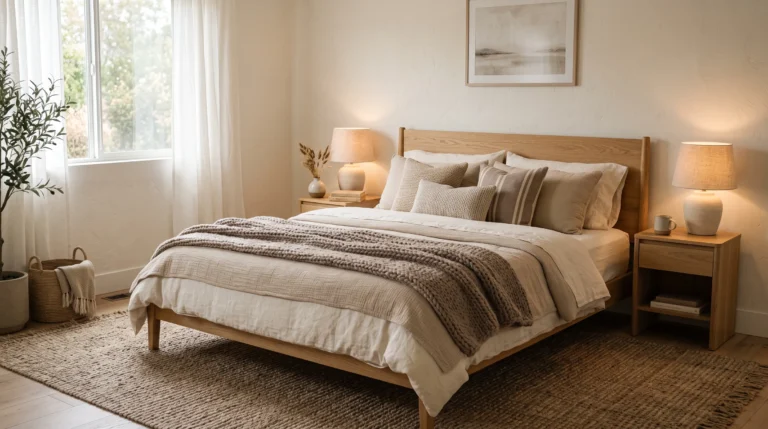

21 DIY Small Bedroom Ideas That Save Space and Money
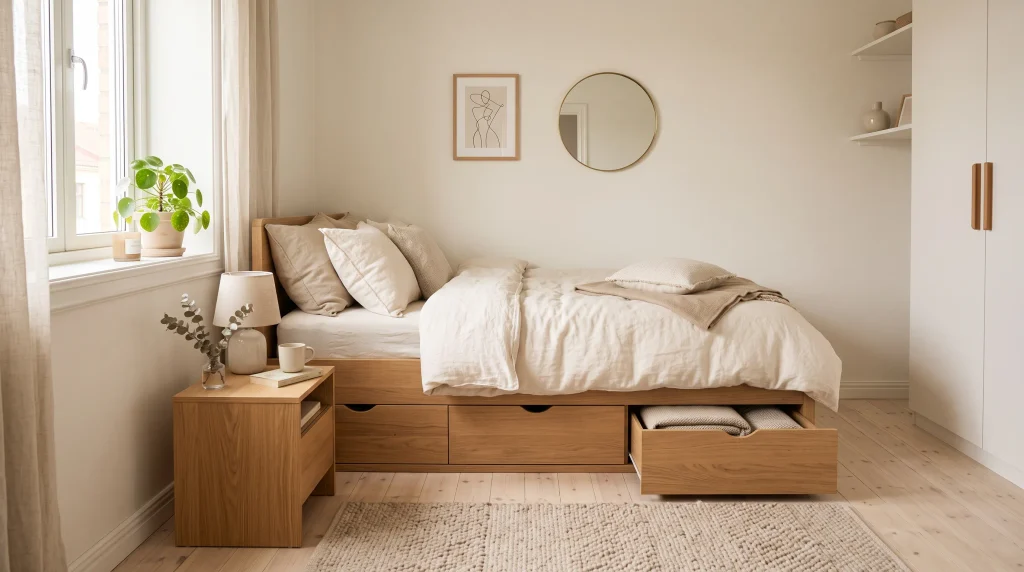
Small bedrooms can feel cramped, but the right DIY projects can make a big difference. These DIY small bedroom ideas help you save space and money while making your room feel more organized, comfortable, and personal. From under-bed storage and floating shelves to fold-down furniture and clever wall solutions, each idea helps you use the space you already have more effectively. You do not need a large budget or advanced tools to create a noticeable change. A few well-planned updates can make everyday routines easier while giving a compact bedroom a more polished, welcoming, and functional feel.
1. Under Bed Drawers
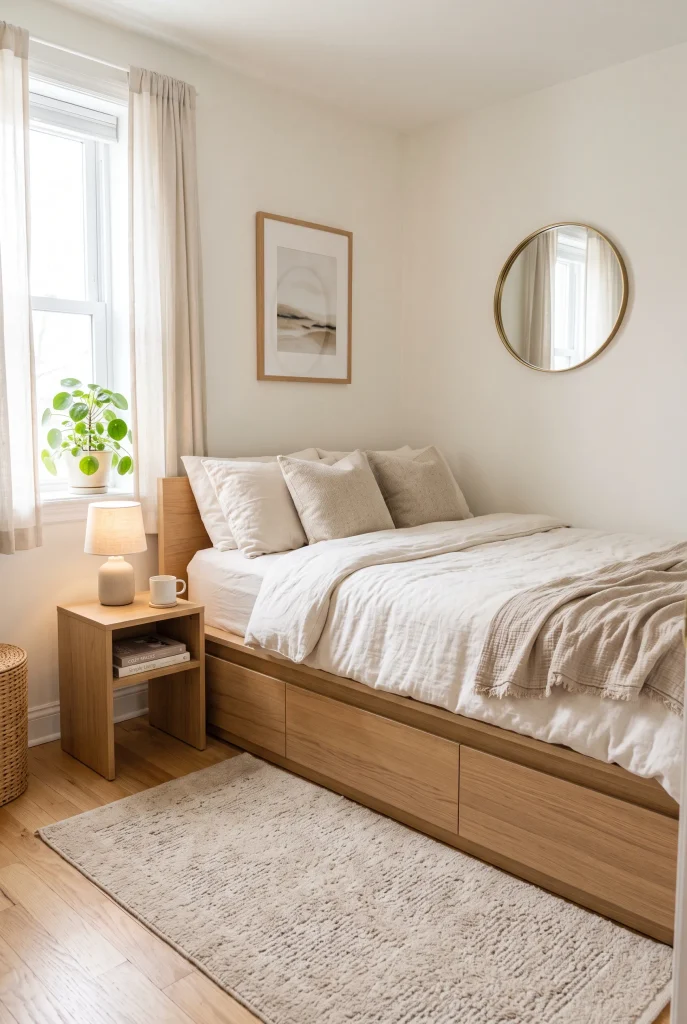
- Turns unused space beneath the bed into practical storage.
- Keeps clothing, shoes, and extra bedding out of sight.
- Removes the need for another bulky dresser.
- Helps maintain clearer walking space around the bed.
A tiny bedroom can feel surprisingly spacious when the bed works harder for you. A platform bed with built-in drawers turns the often-wasted area underneath into valuable storage for clothing, shoes, extra bedding, or seasonal items. Choose a simple frame in light oak, white, or warm walnut so the room stays visually open. Under-bed storage works best when drawers are easy to pull out and clearly organized. You gain storage without adding another bulky cabinet, which helps keep walking paths clear and makes the entire room feel calmer, cleaner, and easier to maintain.
Start with the bed because it usually occupies the largest footprint in a small bedroom. A storage platform can replace separate dressers or plastic bins while keeping everyday essentials close at hand. Look for deep drawers that extend smoothly and avoid filling them with items you rarely use. Divide clothing by category so the space stays practical. Pair the frame with streamlined bedding, a compact nightstand, and open floor space around the bed. This simple setup makes small bedroom projects feel achievable while giving the room a more organized, intentional appearance without sacrificing comfort.
2. Vertical Pegboard Storage
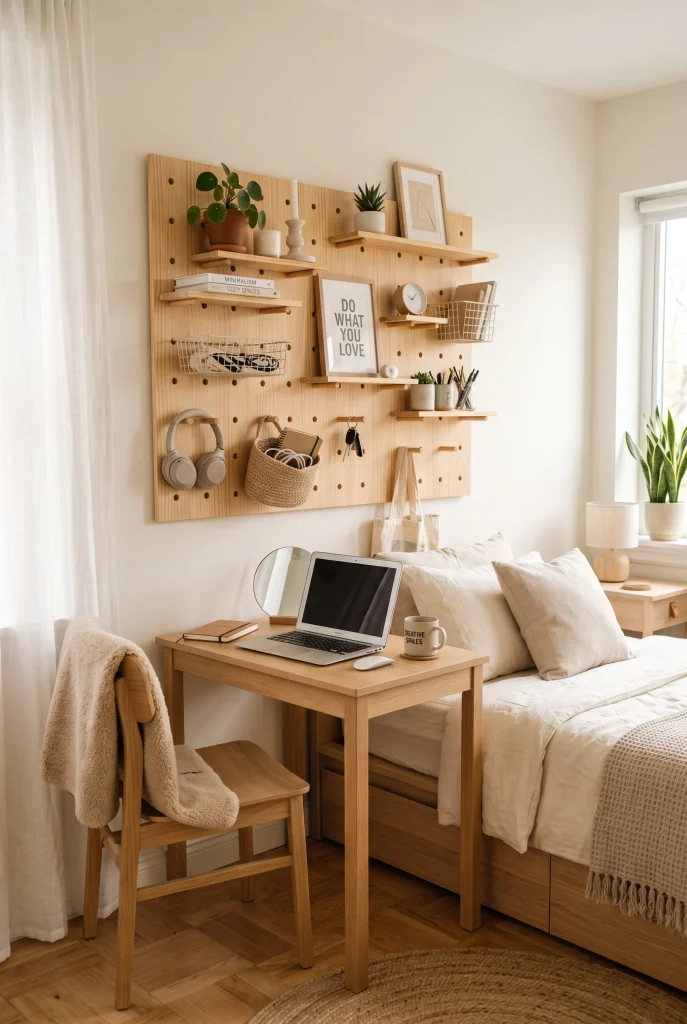
- Uses wall space instead of valuable floor area.
- Keeps everyday accessories visible and easy to reach.
- Adds flexible storage that can change with your needs.
- Creates a useful design feature without making the room feel crowded.
When floor space is tight, your walls can become the storage you need. A slim pegboard above a desk or beside the bed creates flexible organization for small accessories, headphones, bags, notes, and lightweight decor. Paint the board the same color as the wall for a quiet built-in look, or choose warm wood for added texture. Vertical storage feels especially useful in bedrooms where every square foot matters. Keeping frequently used items visible and within reach also prevents surfaces from becoming cluttered, making the room feel more open without requiring a larger furniture footprint.
Choose a pegboard layout that matches your daily routine rather than filling every opening. Add a few hooks, small shelves, baskets, and clips, then leave breathing room between useful items. Position it within easy reach but high enough to protect valuable floor area. For a softer bedroom look, use cream, beige, natural wood, or muted gray accessories instead of bright plastic pieces. This approach gives small rooms practical storage while adding a personalized design feature. It can also adapt as your needs change, making it useful for renters, students, and anyone working with limited space.
3. Floating Bedside Shelf
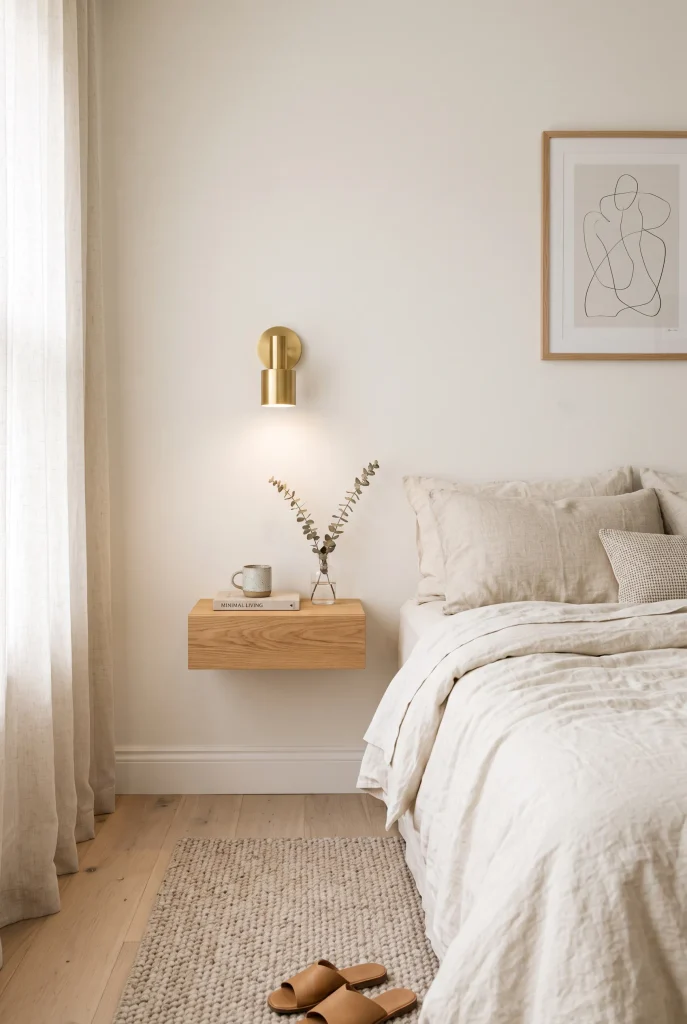
- Saves floor space beside the bed.
- Provides room for a lamp, book, phone, and small essentials.
- Keeps the floor visually open beneath the furniture.
- Works especially well beside narrow beds or tight walkways.
A wall-mounted nightstand can give you the convenience of bedside storage without taking up valuable floor space. Choose a simple floating shelf or compact box shelf beside the bed for a lamp, phone, book, and a small glass of water. Mount it at a comfortable height and keep the surface intentionally simple. Removing the legs from a traditional nightstand can make a noticeable difference in a narrow bedroom because the floor continues visually underneath the furniture. That extra sightline makes the room feel lighter while still keeping nighttime essentials close and organized.
For the best result, match the floating nightstand to the room’s existing finishes. Light oak adds warmth, white blends quietly into pale walls, and walnut creates richer contrast against cream or beige bedding. Add a small wall sconce instead of a table lamp if you want even more surface space. Keep cords secured and choose sturdy hardware suited to the wall type and shelf weight. The finished setup feels clean rather than crowded, and it can replace a bulky bedside table. It is a simple project that delivers both better circulation and a more polished bedroom layout.
4. Wall Mounted Clothing Rack
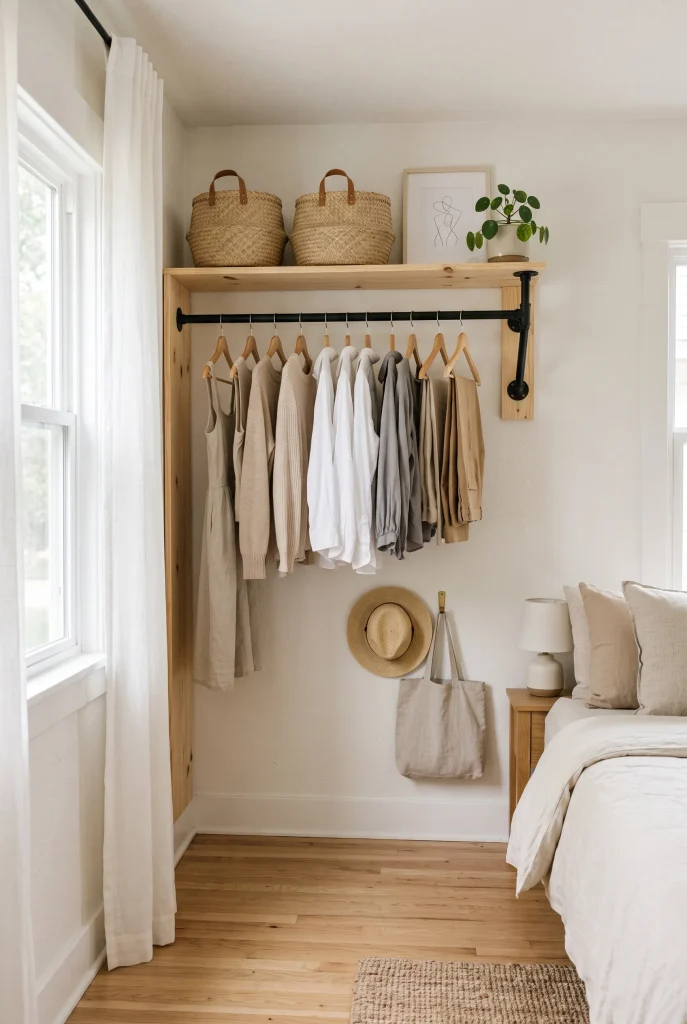
- Uses an empty wall instead of valuable floor space.
- Keeps frequently worn clothes easy to see and reach.
- Adds open storage without a bulky wardrobe.
- Works well for small wardrobes and narrow bedrooms.
A narrow room does not need a bulky dresser to stay organized. Build a simple wall-mounted clothing rack using a sturdy wooden board and a metal hanging rod, then place it in an unused corner or along a short wall. Keep the finish natural or paint it to coordinate with the bedroom. The open design makes clothing easy to see while keeping the floor clear beneath it. This works particularly well for a small wardrobe because choosing a limited number of pieces naturally encourages better organization and prevents the bedroom from becoming visually crowded.
Make the rack more useful by adding a small shelf above the hanging bar for folded sweaters, hats, baskets, or accessories. Use matching hangers to create a cleaner visual line, and leave enough space between garments so the arrangement does not look cramped. If you rent, choose an appropriately rated mounting system or a freestanding version instead of drilling into the wall. This setup can replace a traditional wardrobe in some rooms and gives you a flexible place to display favorite clothing. The result is practical storage that feels airy, accessible, and intentionally designed.
5. Vertical Wall Shelves
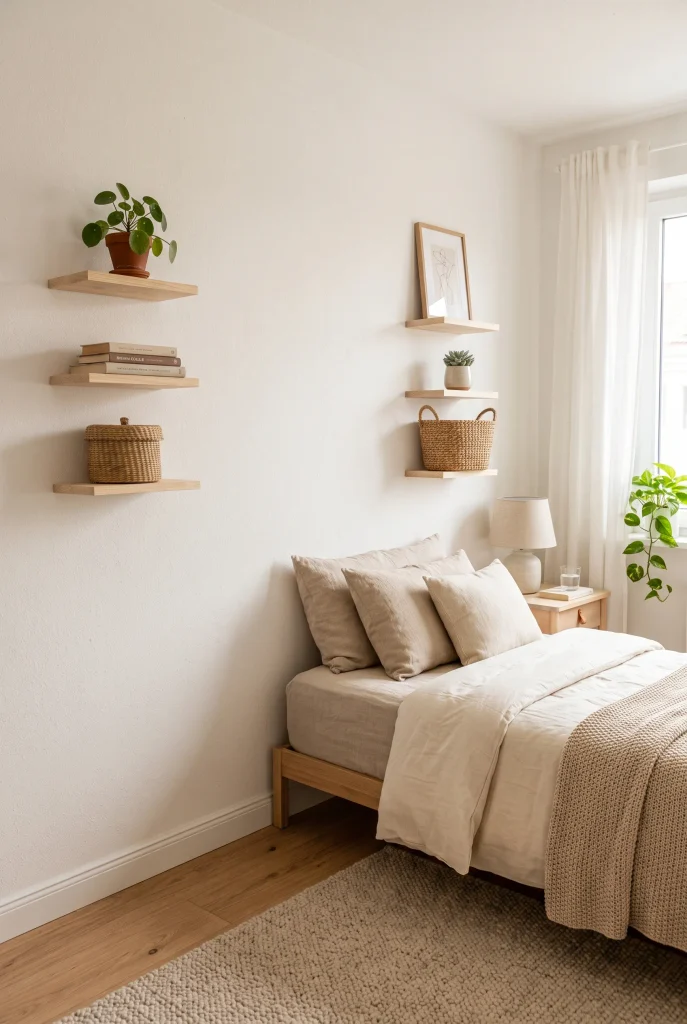
- Turns unused wall space into practical storage.
- Keeps baskets and everyday accessories off the floor.
- Adds height without making the room feel crowded.
- Creates an easy place to display personal decor.
A plain wall beside the bed can become valuable storage with a few inexpensive shelves. Mount narrow wooden shelves vertically to hold books, small baskets, framed prints, plants, or folded accessories without using floor space. Choose shelves with a simple finish that complements your existing furniture, such as light oak against warm white walls. Stacking storage upward works especially well in compact bedrooms because it draws the eye higher while keeping the lower half of the room open. The result feels more organized and gives unused wall space a clear purpose.
Keep the arrangement balanced by mixing practical storage with a few decorative pieces rather than filling every shelf. Place heavier baskets or books on lower levels and lighter objects higher up. Leave small gaps between groups so the wall does not become visually busy. You can also install a narrow rail underneath one shelf for hanging lightweight accessories. This approach gives you storage for everyday items while adding personality without expensive furniture. For renters, removable shelving systems may offer another option when suitable for the wall surface. A simple vertical arrangement can make a small room feel much more functional.
View: 17 Small Entryway Ideas That Feel Stylish and Spacious
6. Compact Wall Desk
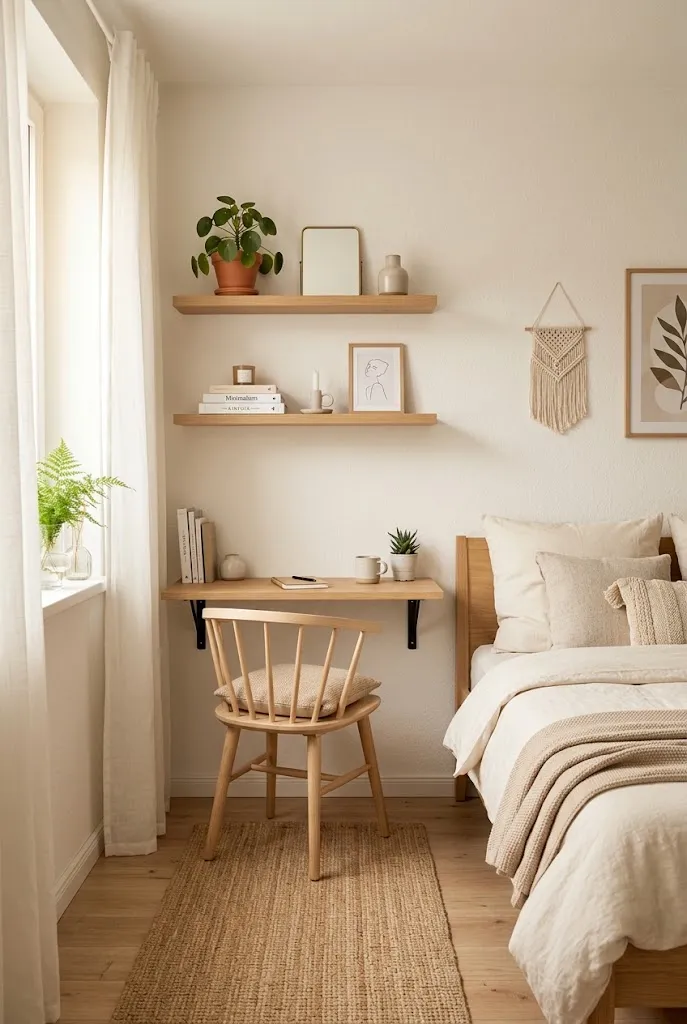
- Creates a dedicated workspace without adding a large desk.
- Keeps the chair tucked away when the desk is unused.
- Uses wall space to free up valuable floor area.
- Gives small bedrooms a practical study or work zone.
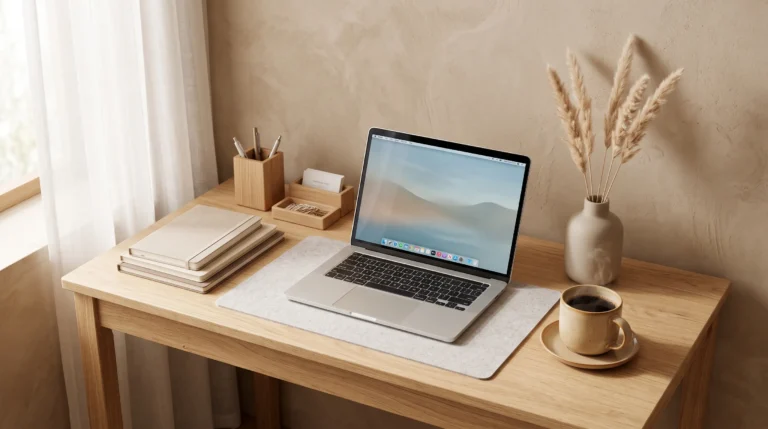
A compact desk becomes far more useful when its storage is built into the space around it. Create a slim DIY workspace with a narrow tabletop, wall-mounted brackets, and one or two small shelves above it. Choose a light wood surface with a simple chair that can slide completely underneath when the desk is not being used. This keeps the walkway open and gives you a dedicated spot for studying, working, or getting ready. A defined work zone helps small bedrooms feel less chaotic because every activity has a clear place.
Keep the desk visually light by limiting the surface to essentials such as a small lamp, notebook, laptop, or mirror. Use the shelves above for supplies, baskets, and a few decorative touches so the tabletop stays clear. If you build the surface yourself, measure the wall and chair first to ensure comfortable legroom and enough clearance for nearby furniture. A fold-down version can save even more space when the room is extremely tight. With thoughtful proportions and simple materials, this setup creates a functional workspace without making the bedroom feel like an office.
7. Peg Rail Organizer
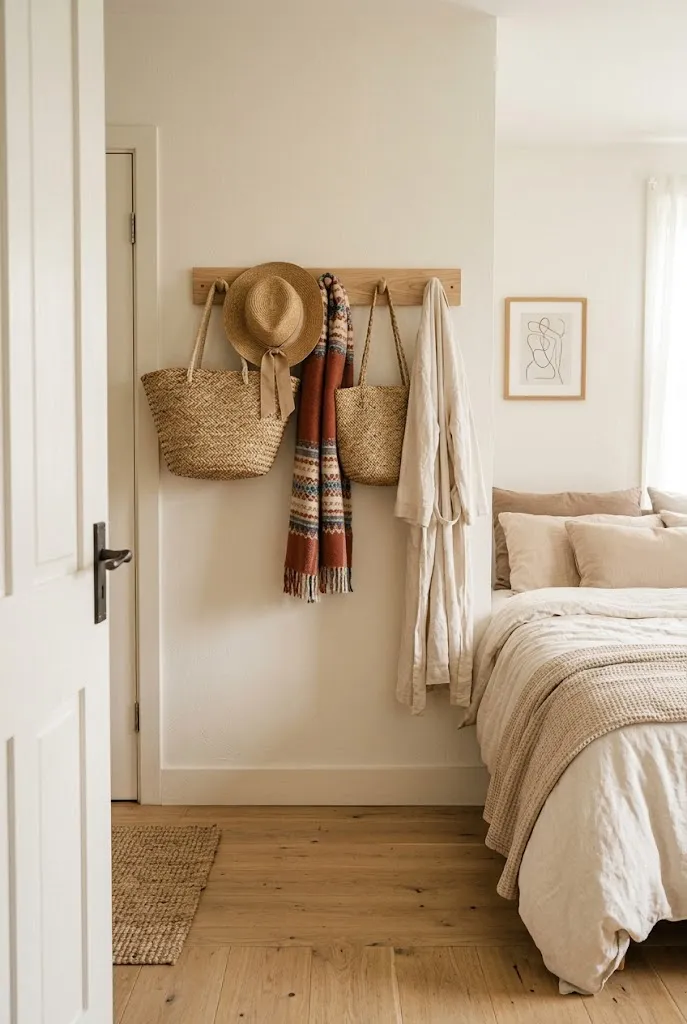
- Gives small accessories a dedicated place to hang.
- Keeps bags, hats, and scarves off chairs and floors.
- Uses a narrow strip of wall efficiently.
- Adds warm wood texture without bulky furniture.
A simple peg rail can solve the little storage problems that quickly make a small bedroom feel messy. Mount a wooden board with evenly spaced pegs near the door, beside the wardrobe, or above a dresser, then use it for bags, hats, scarves, robes, and other lightweight items. The narrow profile takes almost no room while giving everyday belongings a clear home. Open hooks are particularly helpful when you need to grab something quickly because frequently used items stay visible instead of disappearing into crowded drawers.
Keep the rail neat by assigning each peg a purpose and avoiding too many layers of hanging items. A natural wood finish works beautifully with cream, beige, white, or muted green bedrooms, while painted versions can blend into the wall for a quieter appearance. Before mounting it, check the wall type and use hardware appropriate for the expected load. You can also place a small basket underneath for shoes or folded accessories. This simple organizer helps reclaim floor and furniture space while adding a useful decorative detail to an otherwise empty wall.
8. Mirrored Closet Doors
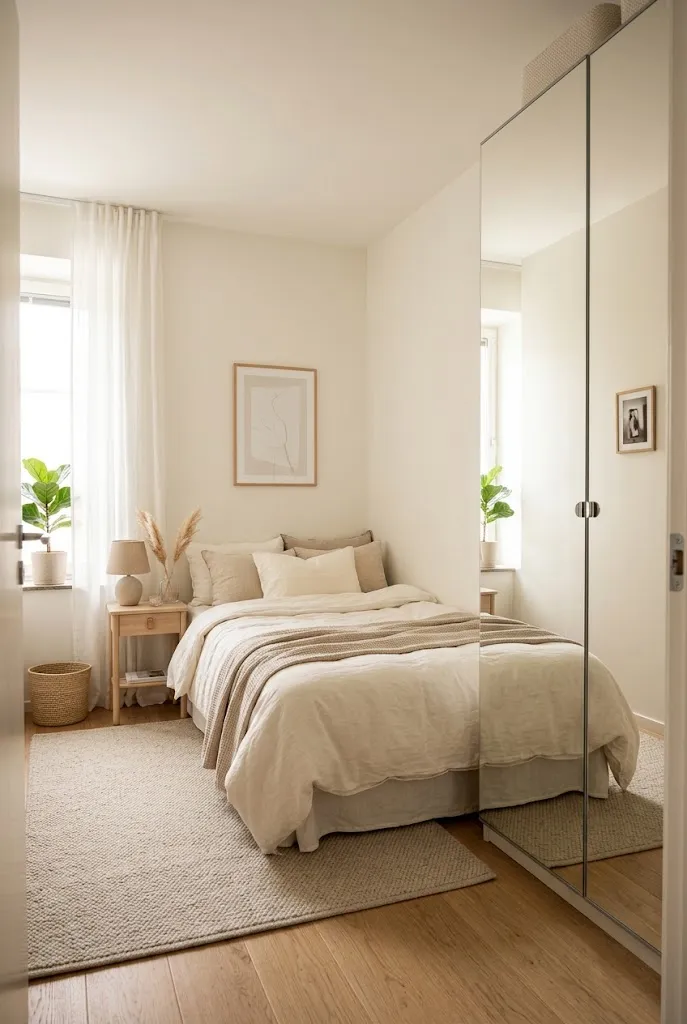
- Makes a small bedroom appear wider and brighter.
- Combines clothing storage with a full-length mirror.
- Reflects natural light around darker corners.
- Reduces the need for a separate standing mirror.
One smart way to make a small bedroom feel larger is to give existing furniture a second job. Mirrored closet doors provide full-height storage while reflecting light and creating the visual impression of more space. Instead of adding a separate floor mirror, the wardrobe becomes both a storage zone and a useful dressing surface. Position the closet where it can reflect a window or another bright area without creating an awkward reflection. This is one of the easiest ways to make a compact bedroom feel brighter, especially when natural light is limited.
If replacing closet doors is outside your budget, consider updating the existing panels with affordable mirror inserts or removable reflective film designed for suitable surfaces. Keep the surrounding furniture simple so the reflections do not multiply visual clutter. Light bedding, pale walls, and streamlined furniture can make the effect even stronger. A full-length mirror is especially useful for checking outfits while getting ready, so you gain functionality without sacrificing floor space. When planned carefully, this update can make a narrow bedroom feel more open while improving storage and everyday convenience.
9. Corner Storage Bench
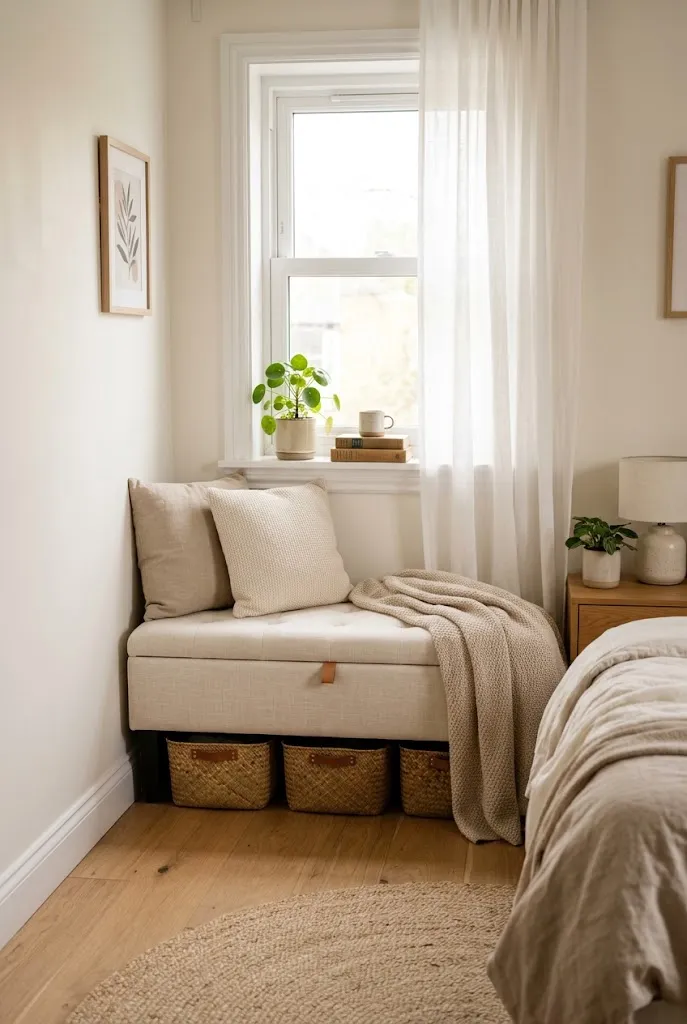
- Turns an unused corner into useful storage.
- Provides extra seating without adding a bulky chair.
- Hides blankets, pillows, bags, or seasonal accessories.
- Makes an awkward corner feel intentional and finished.
An empty corner does not have to stay unused just because the bedroom is small. A narrow storage bench can provide hidden space for blankets, shoes, bags, or seasonal accessories while also giving you a comfortable place to sit. Choose a compact design that fits beneath a window, at the foot of the bed, or against a short wall. A lift-up wooden bench with a simple cushion is especially practical for a DIY project. It adds storage without requiring another tall cabinet, helping the room maintain an open and balanced layout.
Use a neutral cushion such as cream, beige, or soft gray to keep the bench visually light, then add one woven basket nearby if extra organization is needed. Measure the available corner carefully before building so the bench does not interfere with drawers, doors, or walking paths. If the room already contains plenty of furniture, choose a simple box-style design with concealed storage rather than adding decorative details. The finished piece can make an awkward area useful while providing a practical drop zone for everyday belongings and creating a cozy place to pause.
10. Headboard Storage Cubby
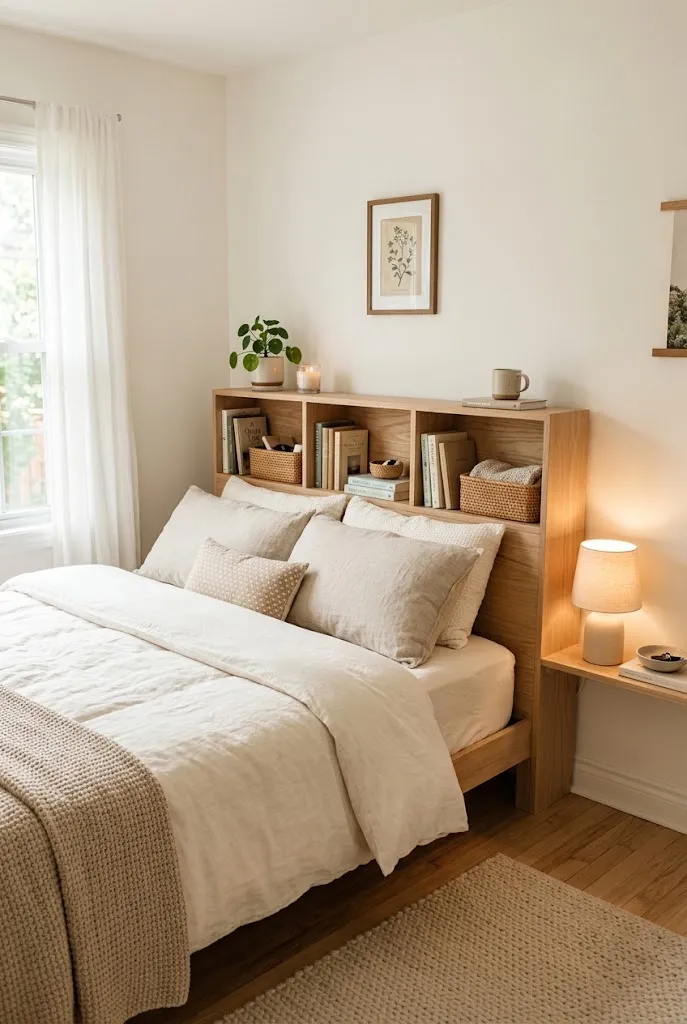
- Combines the bed frame with practical storage.
- Keeps books and nighttime essentials within easy reach.
- Replaces bulky bedside furniture in tight layouts.
- Makes the wall behind the bed more functional.
A headboard can do much more than frame your bed. Build one with narrow open cubbies to create storage for books, baskets, glasses, chargers, and other bedtime essentials without adding separate nightstands. Use plywood or finished wood panels to create a simple grid that fits the width of your bed. Keep the cubbies shallow so they do not make the sleeping area feel enclosed. This approach is especially useful when there is little room beside the bed for furniture. You gain storage exactly where you need it while keeping valuable walking space available.
For a cleaner appearance, reserve the lower cubbies for everyday necessities and use the upper spaces for a few decorative pieces. Small woven baskets can hide less attractive items while maintaining a warm, relaxed look. Add a wall-mounted reading light if you want to eliminate the need for a bedside lamp. Make sure the structure is securely attached and that shelves have enough support for their intended contents. The finished headboard creates a useful storage zone without overwhelming the bedroom, making the entire bed area feel more organized and thoughtfully planned.
11. Fold Down Vanity
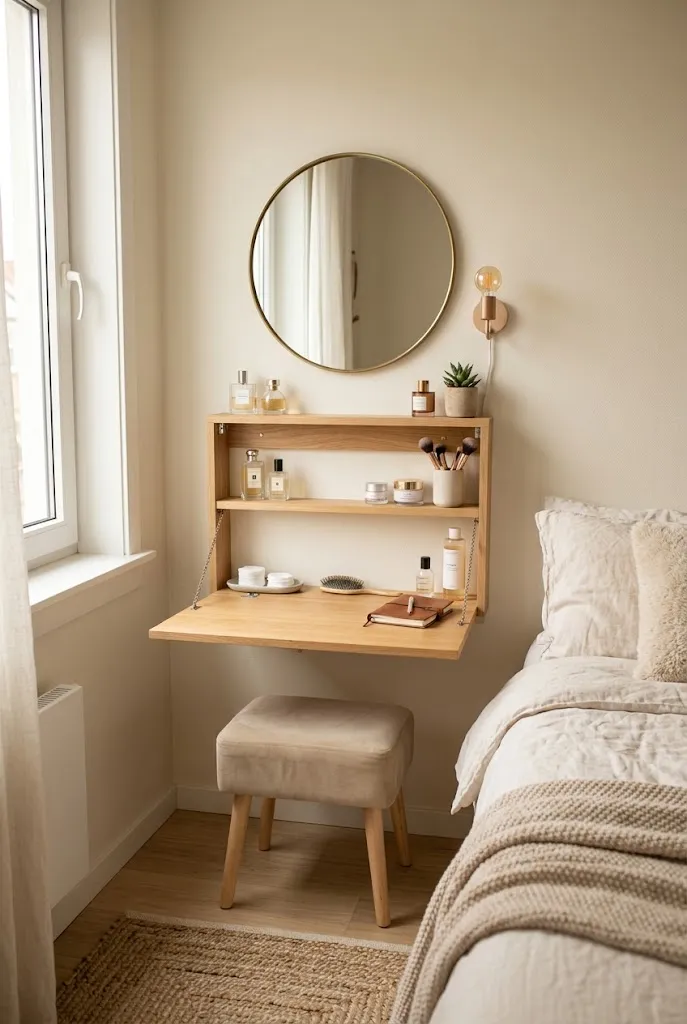
- Creates a vanity without permanently using floor space.
- Folds flat against the wall when not needed.
- Provides a convenient spot for getting ready.
- Works well in bedrooms with limited furniture space.
A fold-down vanity gives you a dedicated getting-ready area without permanently taking up floor space. A simple wall-mounted wooden panel can function as a small tabletop when opened and fold flat against the wall afterward. Add a round mirror above it and a slim shelf nearby for cosmetics, hair accessories, or jewelry. Choose a compact stool that slides underneath when the vanity is closed. This setup is especially useful when a traditional dressing table would make the room feel cramped or block an important walking path.
Keep the vanity surface narrow enough for comfortable use while leaving clearance for nearby doors, drawers, and the bed. A light wood finish can add warmth, while white or pale paint helps the unit blend into the wall. Install sturdy hinges and appropriate wall anchors because the hardware needs to support repeated opening and closing. Store small items in divided containers so the surface stays tidy. When folded away, the room immediately regains usable space, making the vanity feel almost invisible while still being available whenever you need it.
12. Curtain Closet Nook

- Hides open clothing storage behind soft fabric.
- Costs less than installing traditional wardrobe doors.
- Makes an awkward wall niche more useful.
- Keeps visual clutter contained while preserving easy access.
A small wall niche can become a practical closet without the expense or bulk of traditional wardrobe doors. Install a sturdy clothing rod inside the opening and add a shelf above for folded pieces, baskets, or accessories. Then conceal everything with full-length linen or cotton curtains mounted from a simple ceiling or wall track. The fabric softens the room while hiding visual clutter when the closet is closed. This setup works particularly well when you need storage but cannot spare the depth required for a large wardrobe. It also gives unused architectural space a useful purpose.
Choose curtains in cream, beige, soft gray, or another color that coordinates with the bedding and walls. Keep the clothing arrangement organized behind them so accessing items remains simple. Add matching baskets on the upper shelf to contain smaller belongings and reduce dust. If you are creating the nook yourself, check that the rod and shelf are securely supported before loading them with clothing. The finished closet feels lighter than a solid wardrobe and can be changed easily later. It is an affordable way to create concealed storage while keeping the bedroom comfortable and visually uncluttered.
13. Ladder Blanket Rack
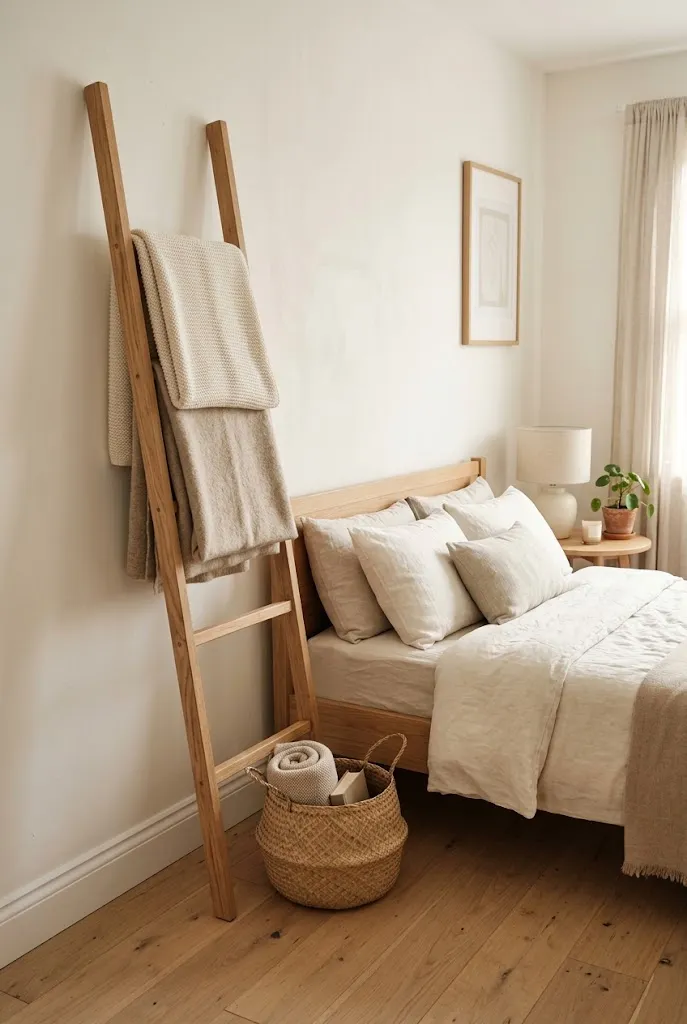
- Uses narrow vertical space for blankets and throws.
- Keeps bulky textiles off the bed and floor.
- Adds warmth and texture without a large cabinet.
- Can be built from inexpensive wooden boards.
A slim wooden ladder can turn a narrow unused wall area into practical textile storage. Lean it securely against the wall beside the bed or in an empty corner, then drape lightweight blankets, quilts, or throws across the rungs. Because the ladder uses vertical space and has a very small footprint, it can fit where a cabinet cannot. Natural wood adds warmth without making the room visually heavy. This works especially well in bedrooms where blankets tend to collect on chairs or the bed, giving them a dedicated spot that is easy to maintain.
Build the ladder from straight wooden boards and sturdy dowels, then sand the edges carefully before finishing it with clear sealant or paint. Keep heavier blankets on the lower rungs and lighter throws higher up to maintain a balanced appearance. Make sure the ladder is stable and secured appropriately, particularly if children or pets use the room. A small basket underneath can hold slippers or extra linens. The result combines storage and decoration in one narrow piece, helping the bedroom stay tidy while introducing natural texture and a relaxed, comfortable feel.
14. Drawer Under Stairs
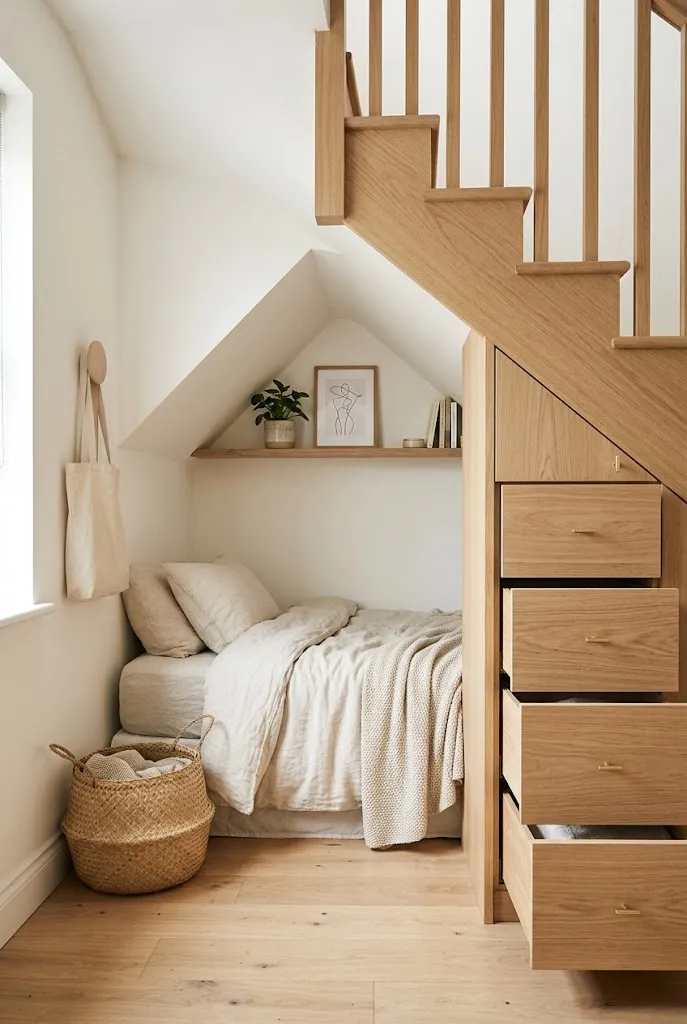
- Turns overlooked space beneath stairs into hidden storage.
- Keeps clothing and bedding concealed and organized.
- Provides deep storage without adding freestanding furniture.
- Makes an awkward architectural area work harder.
The space beneath a staircase can become surprisingly valuable storage in a small bedroom. Instead of leaving the lower area empty, install deep pull-out drawers for clothing, shoes, bedding, or seasonal belongings. Custom drawer fronts can be finished in natural wood or painted to match the surrounding walls, creating a more integrated appearance. This solution is particularly useful when the bedroom shares space with a staircase and every cabinet competes for floor area. Using existing architecture means you gain storage without sacrificing another section of the room for bulky furniture.
Measure each section carefully because the height and depth beneath stairs change from one end to the other. Shallow drawers can work near the lower clearance points, while deeper compartments can occupy taller sections. Add full-extension drawer slides where possible so items at the back remain accessible. Keep categories separated with fabric bins or dividers to prevent the drawers from becoming catchalls. Although this project requires more planning than simple shelving, it can dramatically improve storage capacity. The finished result feels built into the room rather than added afterward, making difficult space genuinely useful.
15. Closet Shelf Dividers
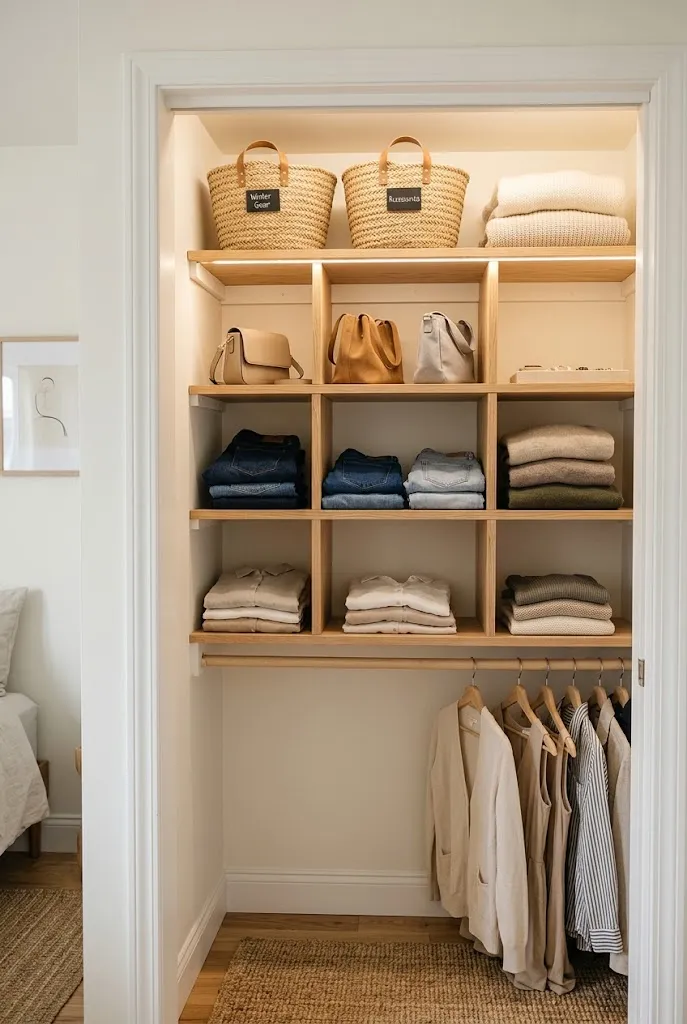
- Creates separate zones inside an existing closet.
- Prevents folded clothing from becoming messy stacks.
- Maximizes vertical shelf space without new furniture.
- Uses simple materials for an inexpensive organization upgrade.
Sometimes the best storage project is not another piece of furniture but a smarter use of the closet you already have. Add simple wooden dividers between stacks of folded clothing to create separate sections for sweaters, jeans, bags, or accessories. Vertical compartments stop piles from leaning into one another and make it easier to see what you own. This can be especially helpful in a small bedroom because an organized closet reduces the temptation to leave clothing on chairs, the floor, or the bed. A few inexpensive dividers can create noticeable improvement without changing the room layout.
Choose dividers that fit the shelf depth and height without wasting usable space. Thin plywood, finished boards, or ready-made shelf separators can all work depending on your budget and tools. Group similar items together and place the pieces you use most often toward the front. Add small baskets to the upper shelves for accessories that are easy to lose. Organizing existing storage before buying more furniture can often reveal how much capacity is already available. The closet becomes easier to use, and the rest of the bedroom can stay clearer and more comfortable.
16. Window Seat Storage
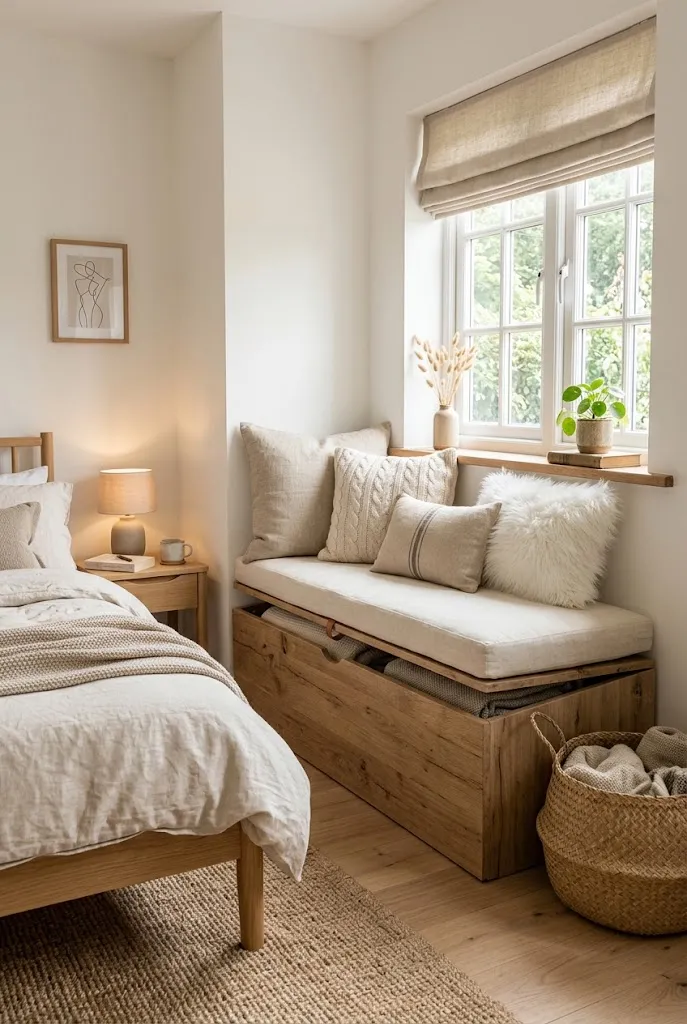
- Turns unused space beneath a window into storage.
- Provides a comfortable spot for reading or relaxing.
- Hides blankets, pillows, and seasonal items.
- Adds function without taking up extra floor space.
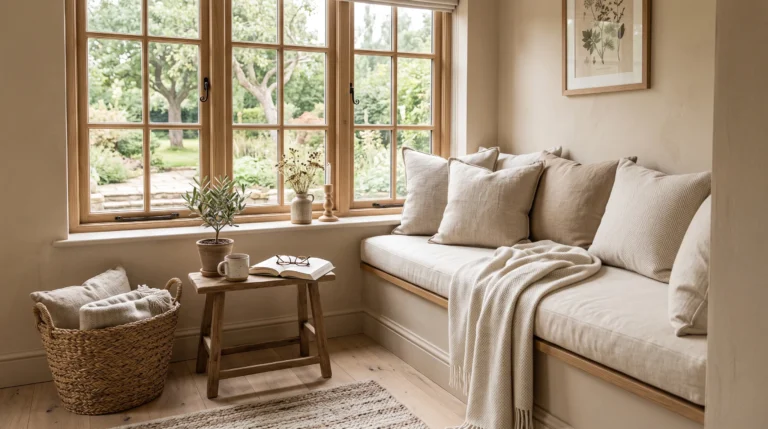
An unused area beneath a bedroom window can become one of the most useful spots in the room. Build a simple storage bench beneath the sill and top it with a comfortable cushion to create a window seat with hidden storage. The base can hold blankets, extra pillows, shoes, or seasonal clothing while the upper surface becomes a quiet place to sit. This is especially helpful when the room does not have space for a separate chair. The combination of seating and storage makes one small footprint serve two everyday purposes.
Keep the bench shallow enough to preserve comfortable walking space around the bed. Use a lift-up lid with sturdy hinges or install drawers on the front if you prefer easier access. A cream or beige cushion can blend naturally with neutral bedding, while a wood base adds warmth and character. Before building, measure the window height and check for radiators, vents, or other obstructions underneath. Add one or two pillows for comfort, but avoid overfilling the seat. The finished nook gives the bedroom useful storage and a welcoming place to relax.
17. Bedside Book Ledge
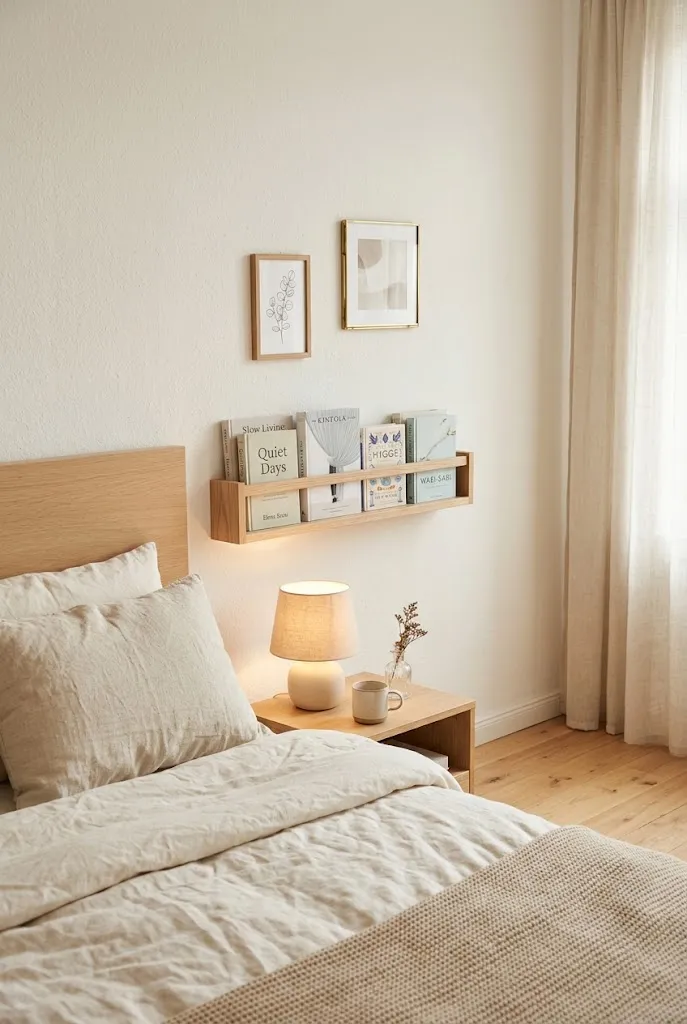
- Stores favorite books without using a nightstand.
- Keeps reading material visible and easy to reach.
- Takes up only a narrow strip of wall.
- Adds personality through simple, useful decor.
A narrow book ledge can replace a bedside table when floor space is extremely limited. Mount a slim wooden ledge beside the bed and use it to hold a few favorite books, a small frame, or lightweight decorative pieces. Unlike a deep shelf, the ledge stays close to the wall and leaves the walkway open. Choose a finish that matches the bed frame or nearby wood accents for a cohesive appearance. It is a particularly useful option for readers who want their nighttime essentials nearby without sacrificing precious floor space for another piece of furniture.
Keep the ledge low enough to reach comfortably from bed, but high enough to avoid bumping it when getting in or out. A small raised lip across the front can prevent books from sliding forward. Avoid overcrowding the surface because a few carefully selected books will look more intentional than a packed row. If you need lighting, install a compact wall sconce above or beside the ledge. This creates a dedicated reading area while keeping the bedside zone simple. The result is functional, inexpensive, and visually light, making it a strong choice for compact bedrooms.
18. DIY Storage Headboard
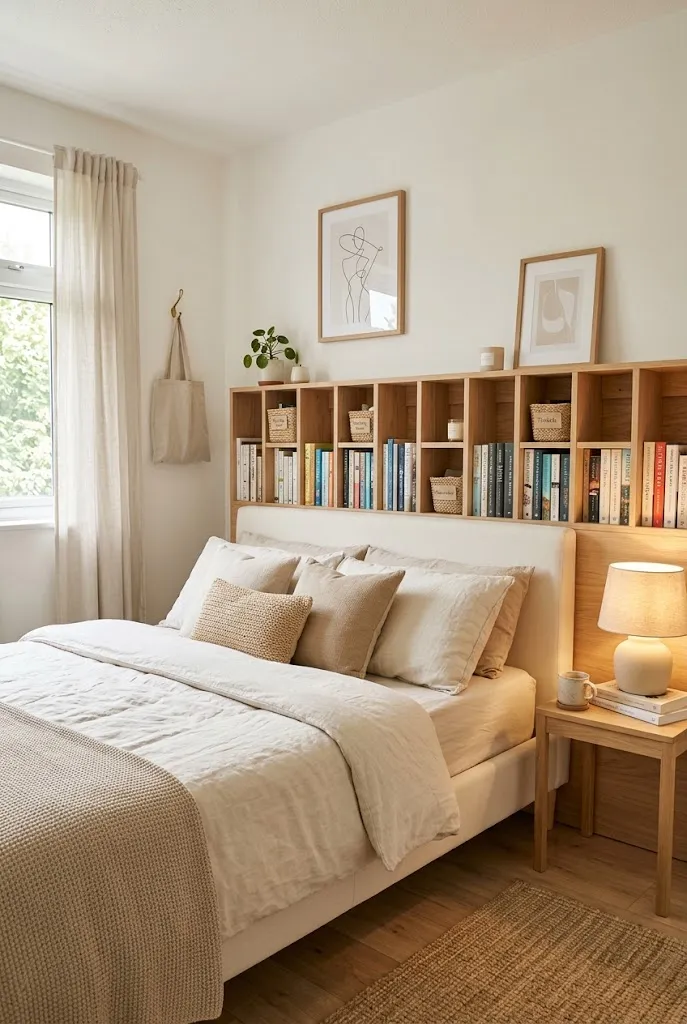
- Adds storage directly behind the bed.
- Uses vertical wall space without extending into the room.
- Can replace separate bedside storage pieces.
- Provides a strong focal point while improving organization.
A storage headboard can transform the wall behind your bed into a hardworking part of the bedroom. Build a simple full-width structure with narrow compartments for books, baskets, glasses, chargers, or small decorative items. The storage stays behind the bed, so it does not compete with the walking space around it. Use plywood or finished boards for an affordable approach, then sand and seal the surface for a polished result. This setup is especially useful when the bedroom is too narrow for two conventional nightstands but still needs convenient bedside storage.
Plan the compartments around the items you actually use instead of creating oversized sections that collect clutter. Keep everyday objects within easy reach and use baskets to conceal smaller belongings. A combination of open cubbies and closed compartments can provide both accessibility and a cleaner appearance. Add integrated reading lights or wall-mounted sconces to free even more surface space. Make sure the headboard is securely anchored and that all edges are smooth. With thoughtful proportions, this project can give the bed a custom appearance while adding storage exactly where the room needs it most.
19. Foldable Wall Table
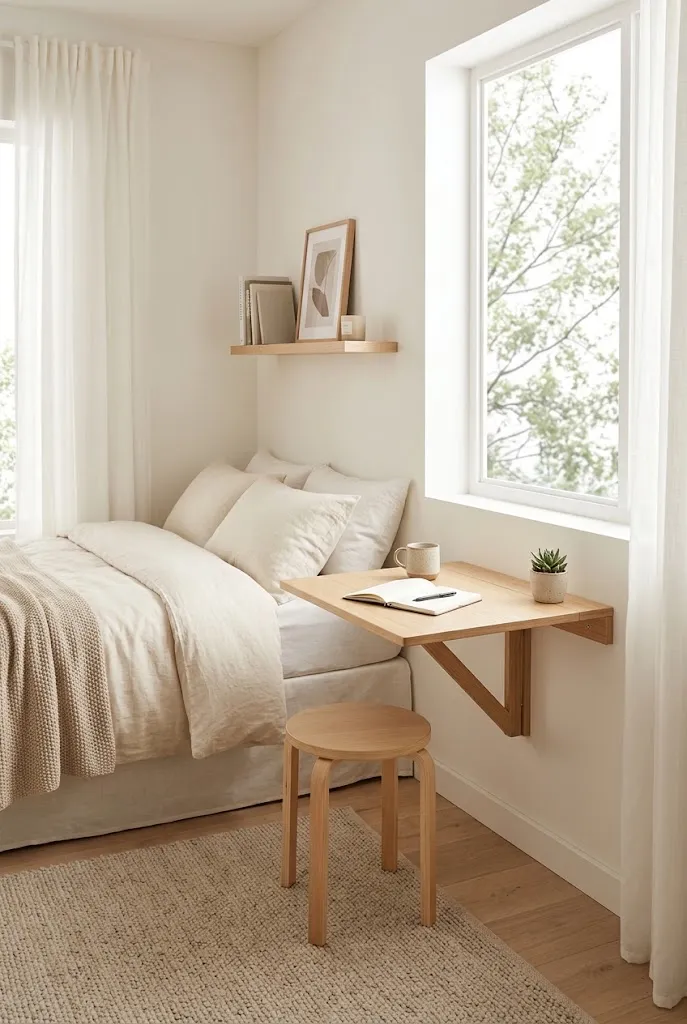
- Creates a temporary workspace without a permanent desk.
- Folds flat when the surface is not needed.
- Works well for studying, writing, or getting ready.
- Keeps the center of the bedroom open.
A foldable wall table is a smart choice when your bedroom needs a workspace but cannot spare a permanent desk. Mount a sturdy wooden panel to the wall with folding brackets so the surface opens when needed and folds flat afterward. Use it for a laptop, writing, crafting, or getting ready, then tuck a small stool underneath when you finish. This keeps the central floor area available for movement. Small-space DIY projects like this work particularly well because the furniture changes according to your daily routine instead of occupying space all day.
Choose a tabletop that is wide enough for your main activity but not so deep that it blocks a walkway when opened. Light oak, painted plywood, or a simple white finish can keep the piece visually lightweight. Add a narrow shelf above for notebooks, small baskets, or supplies, but avoid filling the wall with unnecessary storage. Check the mounting surface and use strong hardware suitable for the table and its expected load. A well-built folding table can give you a useful work surface during the day and almost disappear when the bedroom needs to function as a restful space.
20. Over Door Storage
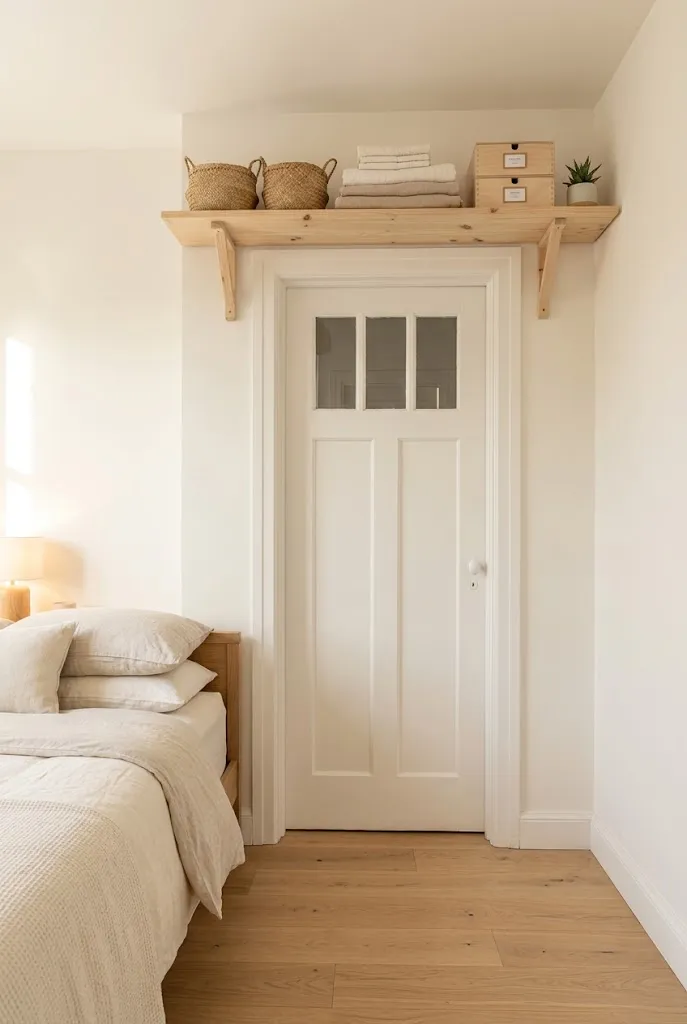
- Uses the overlooked wall area above the door.
- Stores seasonal and rarely used belongings.
- Keeps bulky storage boxes away from the floor.
- Makes use of vertical space that often goes unnoticed.
The wall above a bedroom door is easy to overlook, yet it can provide useful storage in a very small room. Install a sturdy shelf across the upper doorway and use it for labeled baskets, spare linens, seasonal accessories, or items you do not need every day. Because the storage sits high above eye level, it does not interfere with furniture or walking paths. This is a practical way to add capacity without buying another cabinet. It works especially well when closets are small and floor space is already occupied by essential bedroom furniture.
Keep frequently used belongings somewhere easier to reach and reserve this shelf for items you access occasionally. Choose lightweight baskets or matching storage boxes to create a cleaner appearance and reduce visual clutter. Before installing anything, check the door swing and measure the available clearance above the frame. The shelf should remain securely mounted and should not interfere with opening or closing the door. A simple painted board with sturdy brackets can be enough for the project. Once finished, an otherwise wasted section of wall becomes discreet, functional storage.
21. Rolling Storage Cart
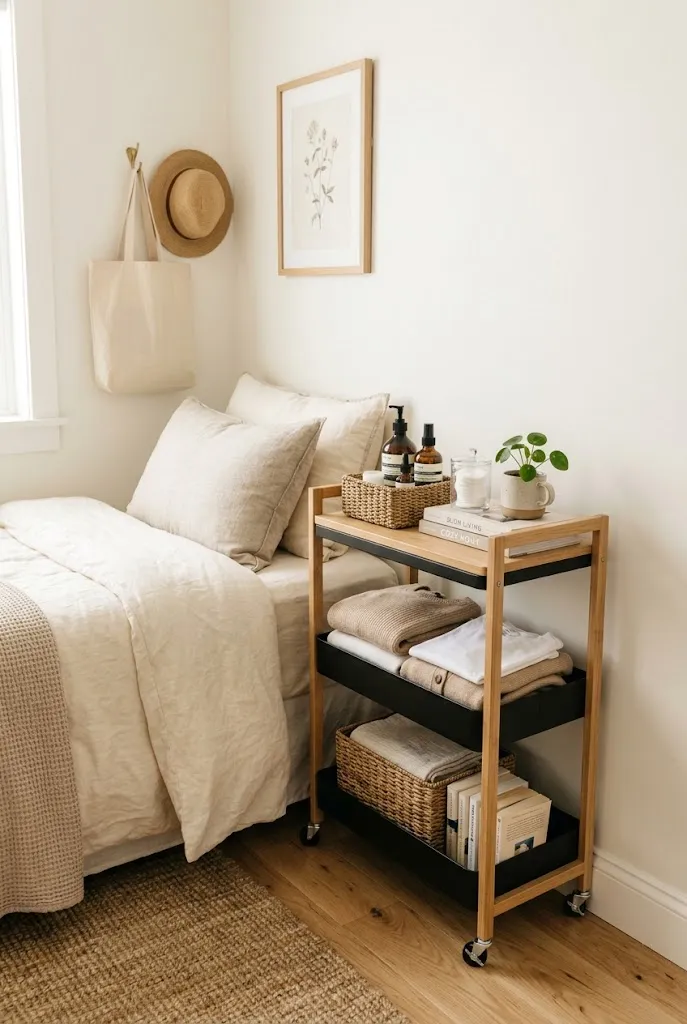
- Adds flexible storage that can move when needed.
- Fits beside beds, desks, or narrow gaps.
- Keeps small everyday items grouped together.
- Can be repurposed as needs change.
A slim rolling cart gives a small bedroom storage that can move with you. Use the tiers for folded clothes, books, skincare, craft supplies, or everyday accessories, then roll the cart into another corner when you need more floor space. Choose a narrow model that fits beside the bed or desk without blocking drawers or doors. The mobility makes it especially useful in multipurpose bedrooms where the same area may serve different functions throughout the day. Instead of dedicating permanent space to one storage purpose, you can move the cart wherever it is most useful.
Organize each level by category so the cart does not quickly become a collection of random belongings. Woven baskets can hide smaller items, while open shelves work well for books and frequently used pieces. Locking casters are helpful if the cart needs to remain beside the bed or workspace while in use. A wooden cart can add warmth, while a simple metal frame suits a more contemporary room. Since the cart is easy to reposition, it can adapt as your layout changes, making it a practical addition for renters and small-space households.
Conclusion
Small changes can make a small bedroom work much harder. From hidden storage to fold-down furniture, these DIY small bedroom ideas can help you reclaim floor space, stay organized, and spend less on bulky furniture. Choose the projects that fit your layout, budget, and daily routine rather than trying to change everything at once. Practical updates can make even tight rooms feel more comfortable and intentional. Save this post on Pinterest for your next project, try one idea that solves a real problem, and share it with someone who could use more space.