22 Chic Modern Boho Kitchen Ideas to Try Right Now
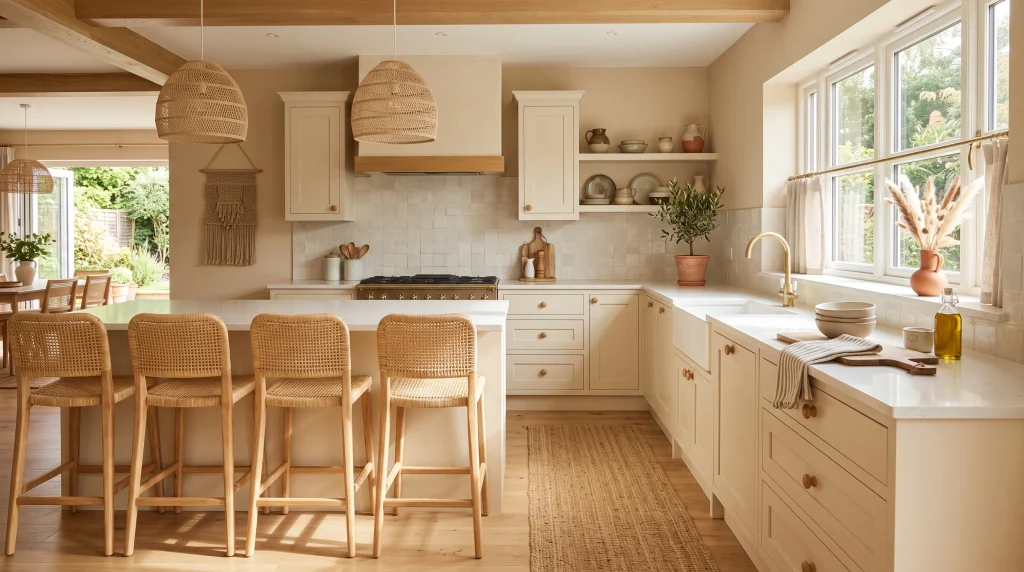
Ready to make your kitchen feel warmer, more stylish, and effortlessly inviting? Modern boho kitchen ideas combine clean contemporary design with natural textures, earthy colors, and relaxed character.
Whether your kitchen feels too plain, too cold, or simply needs a fresh update, these ideas can help you create a space that feels both beautiful and practical. Think warm wood, woven lighting, handmade ceramics, soft textiles, muted colors, and thoughtful details that make everyday cooking more enjoyable. You don’t need a complete renovation to capture the look, either. Small changes, such as replacing hardware, adding open shelving, or introducing natural textures, can make a noticeable difference. The most successful boho-inspired kitchens balance personality with function, creating spaces that look beautiful without feeling overly decorated.
1. Warm Neutral Palette
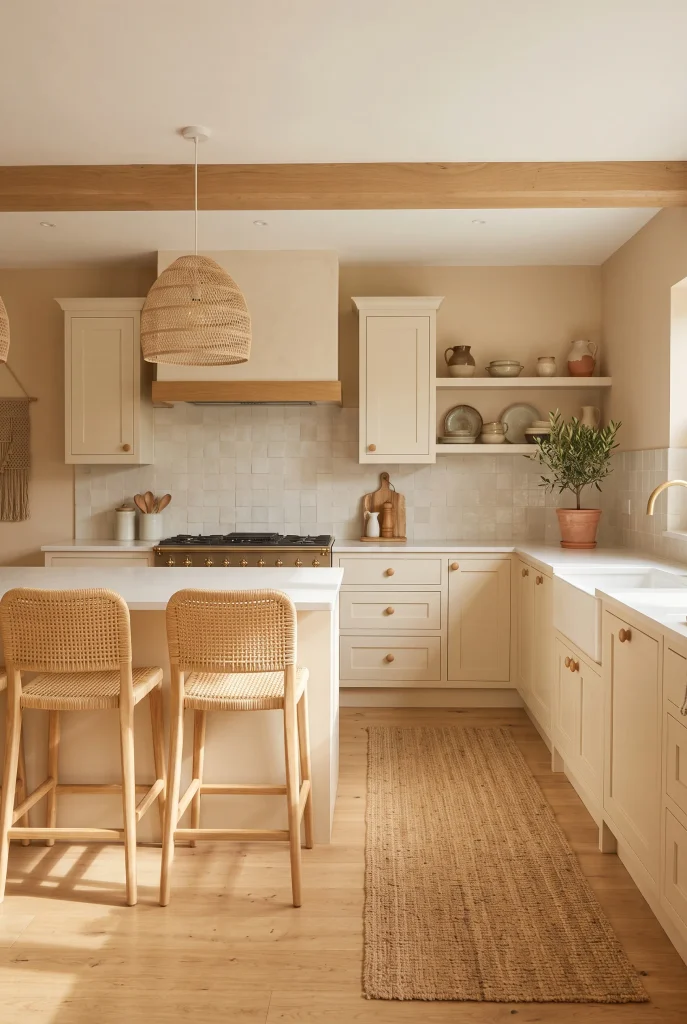
- Creamy and sandy tones make the kitchen feel warm without looking heavy.
- Light wood adds natural character while keeping the room fresh.
- Woven and ceramic accents introduce texture without creating clutter.
- A neutral base makes seasonal decorating much easier.
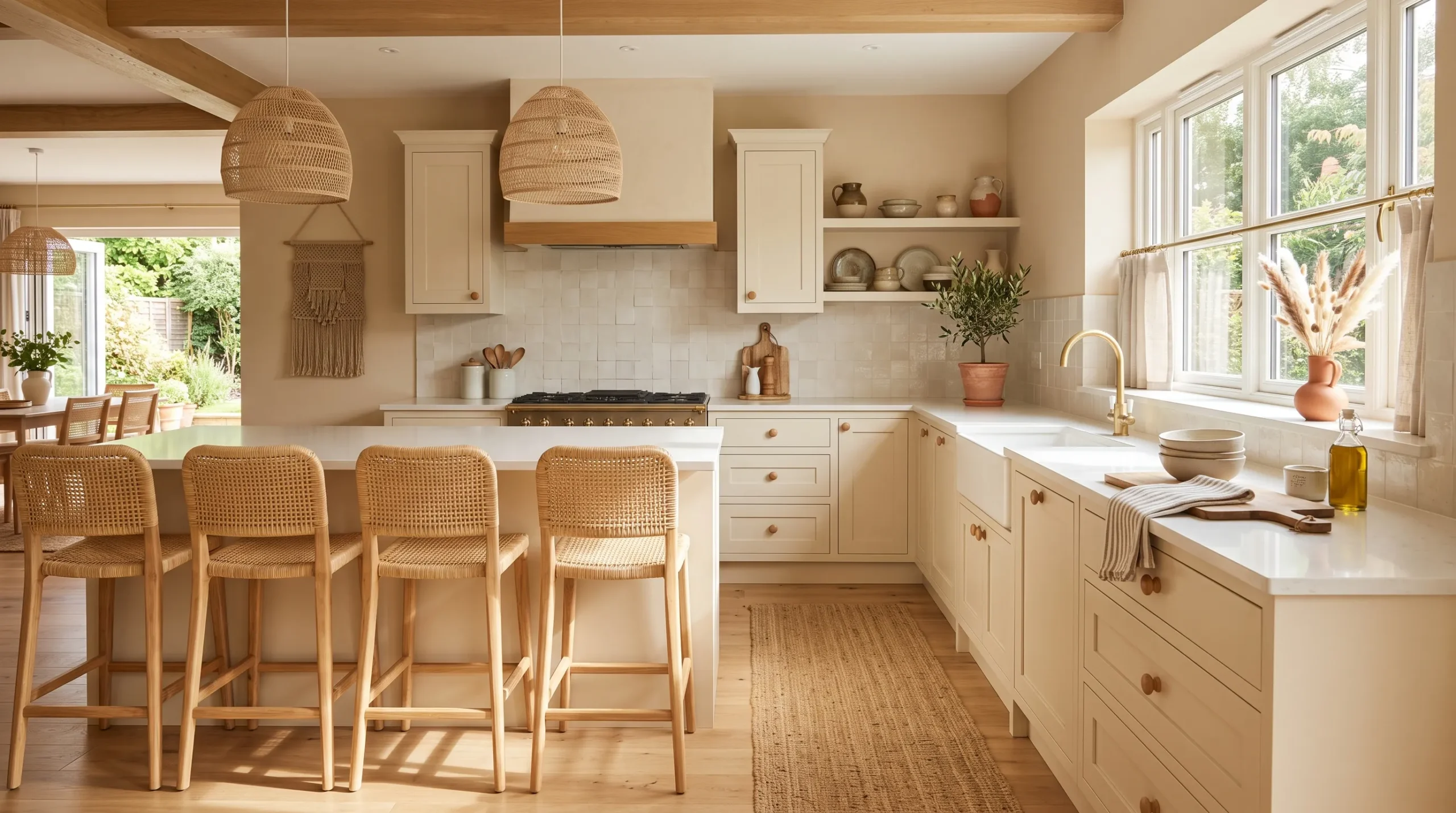
Want a kitchen that feels polished without losing its relaxed character? A warm neutral palette creates an easy foundation for modern boho styling, especially when creamy cabinets, beige walls, and natural wood share the same visual family. The result feels bright, calm, and collected rather than overly matched. Add subtle variation through woven stools, handmade ceramics, and textured linens so the room has depth. Warm neutrals also make changing seasonal accents much easier because terracotta, olive, rust, or muted blue can be introduced without fighting the existing scheme.
Start with one dominant warm neutral, then layer two or three nearby shades instead of choosing a completely different color for every surface. Cream cabinetry can pair beautifully with sandy walls, light oak flooring, and oatmeal-colored seating. Keep countertops visually quiet if the kitchen already has strong texture elsewhere. A few organic accessories, such as a rattan tray or clay vase, can soften crisp modern lines. This approach works particularly well in smaller kitchens because the restrained palette helps the space feel continuous, open, and naturally connected from the cooking area to nearby dining or living zones.
2. Rattan Pendant Lights
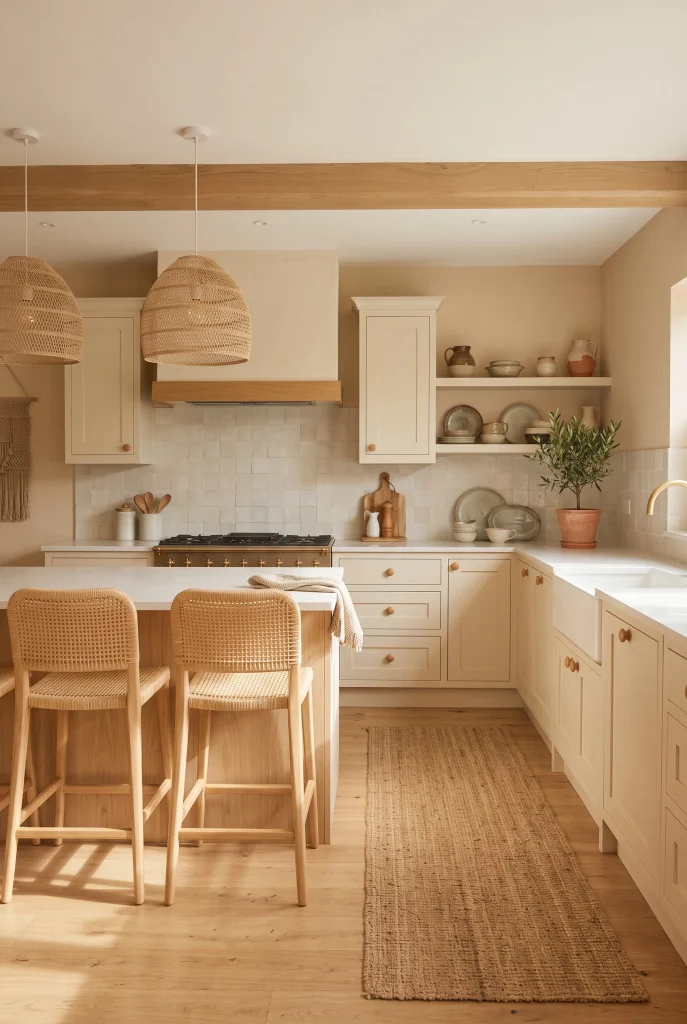
- Rattan lighting instantly adds warmth and handcrafted texture overhead.
- Oversized pendants can make a simple island feel more intentional.
- Natural woven fibers balance sleek cabinets and modern countertops.
- Choose open-weave shades when you want the kitchen to stay visually light.
A single lighting change can give a plain kitchen an entirely different personality, and rattan pendants are especially effective for this reason. Their woven texture brings an organic, handcrafted quality that balances modern cabinetry and smooth countertops. Hang one large shade over a compact island or use two matching pendants above a longer workspace. The natural fibers catch daylight beautifully and create soft shadows after sunset. For a relaxed bohemian look, choose warm tan or honey-colored rattan rather than a heavily stained finish. The contrast adds character while keeping the overall room airy and contemporary.
Placement matters just as much as the fixture itself. Center the pendants over the island or peninsula, leaving enough clearance for comfortable movement and clear sightlines. If your kitchen has low ceilings, select a shallower woven shade or a semi-flush rattan fixture instead. Pair the lighting with simple ceramic pieces, light wood, and neutral textiles so the texture feels intentional rather than busy. Natural pendant lights work particularly well when the rest of the kitchen stays relatively streamlined. They become a focal point without overwhelming the relaxed atmosphere that makes this style so inviting.
3. Natural Wood Island
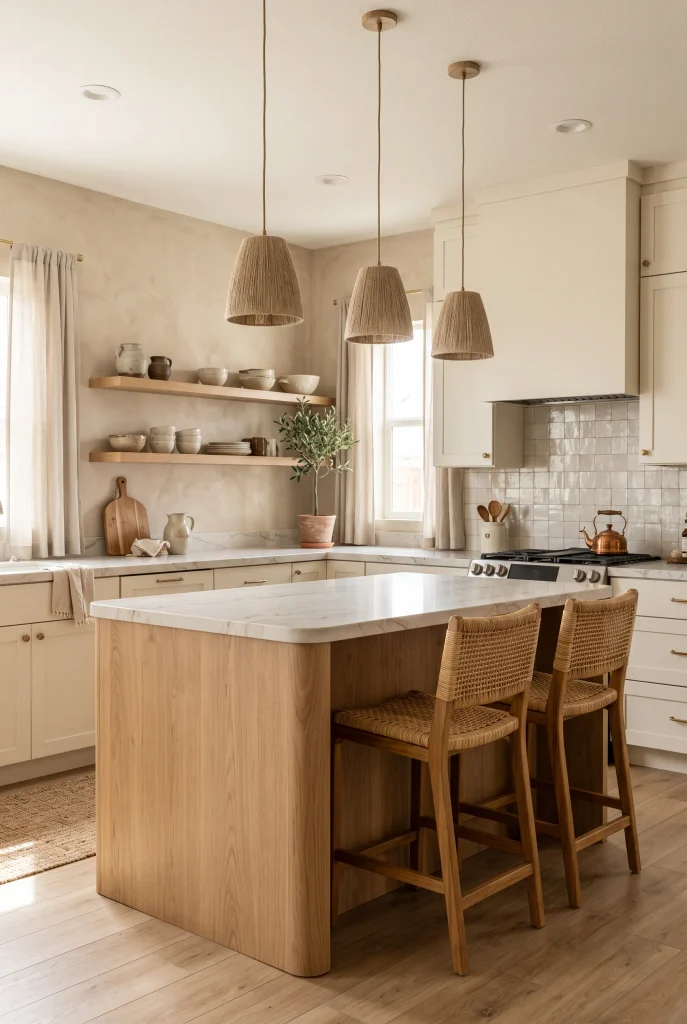
- A natural wood island brings warmth to crisp modern cabinetry.
- Visible grain creates texture without needing bold decorative patterns.
- Rounded edges can make a large island feel softer and more welcoming.
- Keep the surrounding finishes simple so the wood remains the focal point.
A natural wood island can become the grounding feature that makes a modern kitchen feel warmer and more lived-in. The visible grain adds movement and texture while preserving a clean, contemporary silhouette. Oak, ash, or walnut can all work, depending on the surrounding palette and the amount of contrast you want. Pairing a wood island with cream cabinets creates an especially inviting combination. Add woven stools underneath, a small ceramic bowl on top, and perhaps one simple branch in a handmade vase. The space feels considered, but still comfortable enough for everyday cooking, meals, and casual conversations.
For the strongest result, treat the island as a visual anchor rather than covering every inch with accessories. Let the wood grain remain visible and choose a countertop that supports, rather than competes with, its warmth. A pale stone surface can keep the composition bright, while a darker counter creates a richer, moodier effect. Consider rounded corners if the island is large or sits along a busy walkway. They soften the overall geometry and improve circulation. This is one of those modern boho kitchen ideas that can change the entire room while still providing practical storage, seating, and workspace.
4. Textured Backsplash
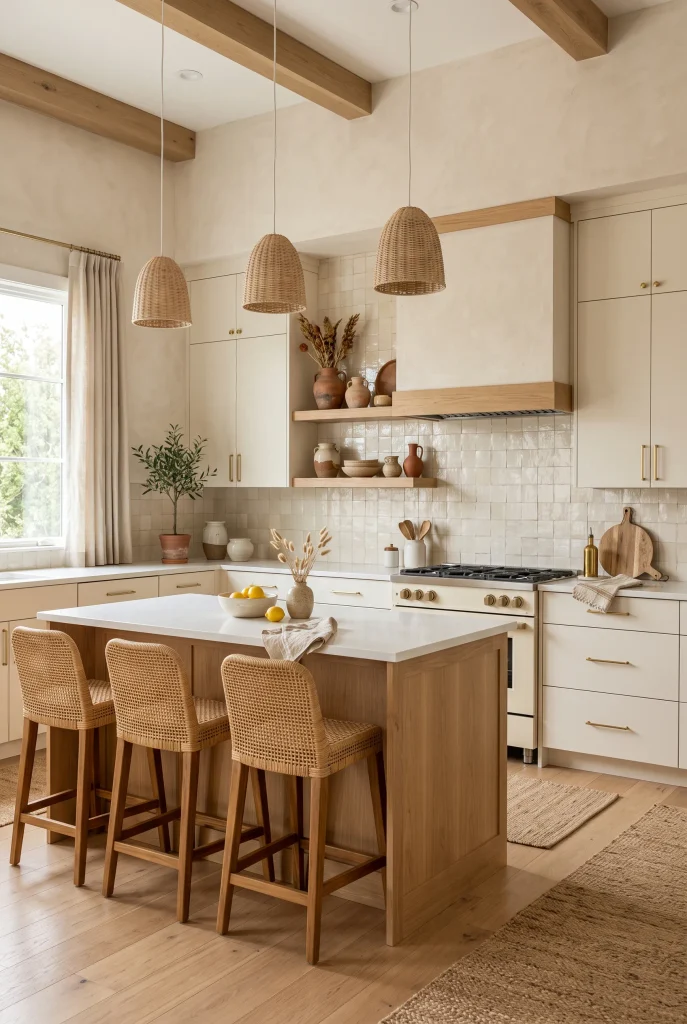
- Handmade tile adds character while keeping the palette calm and cohesive.
- Slightly uneven surfaces create beautiful depth as light moves across the wall.
- Cream and ivory tiles work well with wood, brass, and woven textures.
- Keep surrounding surfaces simple so the backsplash remains visually balanced.
One textured surface can completely change the feeling of a kitchen, and a handmade-style backsplash is an easy way to introduce that character. Zellige-inspired tiles, softly uneven ceramics, or lightly textured stone create subtle variation without demanding a bold color scheme. Their imperfect surfaces catch natural light and give plain walls a more handcrafted appearance. Pair warm ivory tiles with creamy cabinetry, natural oak, and simple brass hardware for a polished boho look. The combination feels relaxed and collected, while still looking intentional enough for a modern home with clean architectural lines.
When choosing backsplash materials, think about how much visual movement your kitchen already has. If the cabinets feature strong grain or the counters have noticeable veining, choose a quieter tile pattern with gentle texture. A simple stacked layout can feel contemporary, while traditional offset placement adds a softer, more familiar character. Warm white and ivory backsplashes are especially versatile because they reflect daylight beautifully and make darker accessories stand out. They also provide an easy backdrop for pottery, wooden cutting boards, and small plants without making the cooking area feel overcrowded or visually complicated.
5. Arched Open Shelving
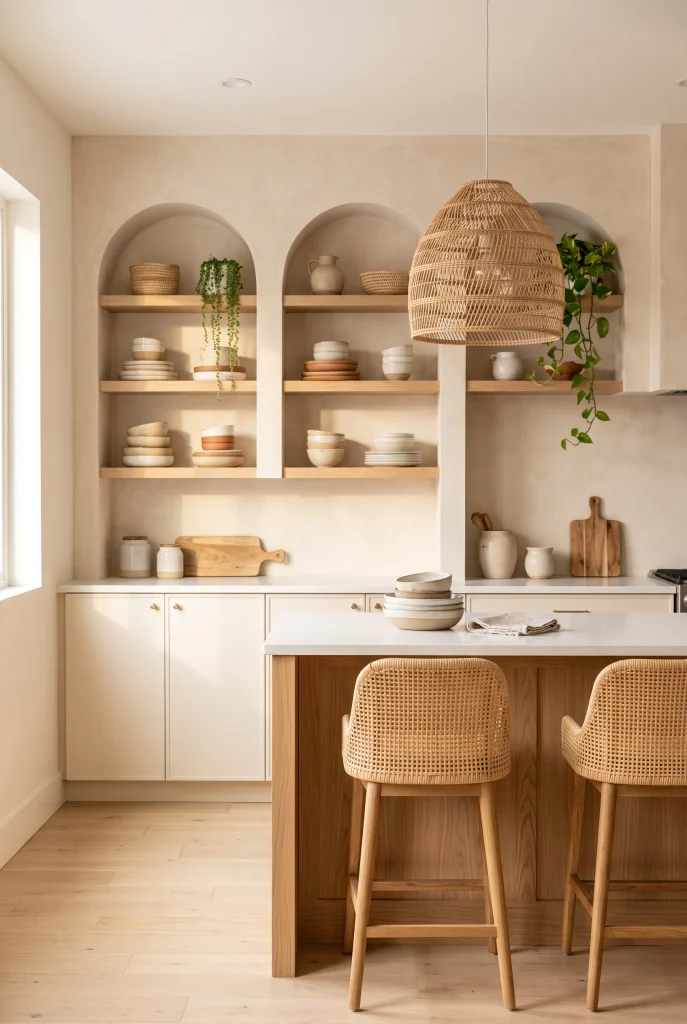
- Arched shelves soften the straight lines commonly found in modern kitchens.
- Open storage makes everyday dishes part of the room’s visual design.
- Wooden shelves introduce warmth without requiring major renovation.
- Display only useful or beautiful pieces to prevent a cluttered appearance.
Arched shelving brings a softer architectural detail to a kitchen filled with straight cabinets and sharp edges. The curved shape immediately adds visual interest while keeping the overall design clean and modern. Use natural oak or walnut shelves against a warm plaster, cream, or lightly textured wall for a relaxed bohemian effect. Then display a small collection of handmade mugs, neutral bowls, woven baskets, and one or two plants. The goal is not to fill every inch. Leaving breathing room between objects makes the shelves feel curated and allows their shape to remain an important part of the design.
Open shelving works best when it supports the way you actually use the kitchen. Keep frequently reached items within easy access and place less-used decorative pieces higher up. Group objects by material or tone rather than arranging everything randomly. A stack of ceramic plates beside a wooden board and a small clay vase can look more cohesive than a shelf packed with unrelated colors. If you worry about dust, use open shelving selectively rather than replacing every cabinet. This small change can deliver the relaxed personality associated with modern boho styling without sacrificing practical storage for everyday cooking.
6. Woven Counter Stools
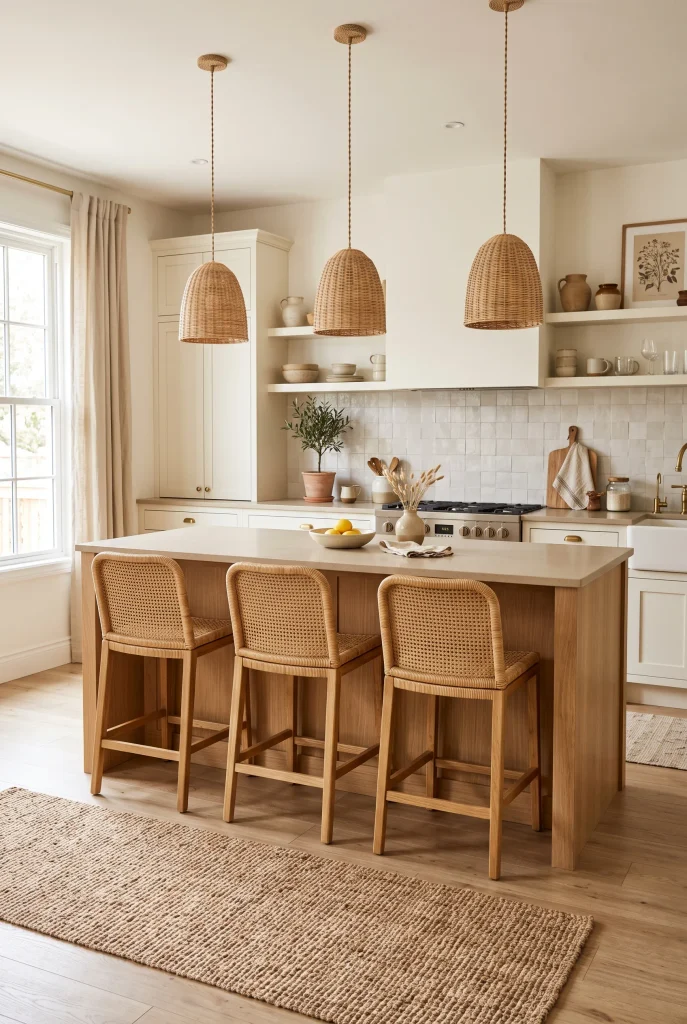
- Woven seating adds softness to a kitchen dominated by hard surfaces.
- Natural fibers create texture while keeping the color palette understated.
- Backless stools can make a compact island appear visually lighter.
- Choose durable, comfortable materials if the stools will be used daily.
The right counter stools can make a kitchen feel noticeably warmer, and woven seating is an effortless choice for a modern boho space. Cane, rattan, seagrass, and woven rush introduce natural texture while complementing wood cabinetry and neutral countertops. Choose a simple silhouette with a comfortable seat so the stools feel practical rather than purely decorative. Three matching stools can create a polished look along a larger island, while two smaller pieces may suit a compact layout better. The woven texture also breaks up smooth surfaces, giving the kitchen a more layered and welcoming appearance.
Before choosing a stool, consider the island height, available legroom, and how often the seats will be used. A supportive backrest is worth prioritizing if your family regularly eats or works at the counter. For smaller kitchens, stools with slim frames and open woven seats can reduce visual heaviness. Natural seating looks especially cohesive when another woven element appears elsewhere, such as a pendant shade, basket, or runner. Repeating the material once or twice creates continuity without turning the kitchen into a collection of matching accessories.
View: 21 Cozy Earthy Living Room Decor Ideas to Copy Now
7. Terracotta Accent Wall
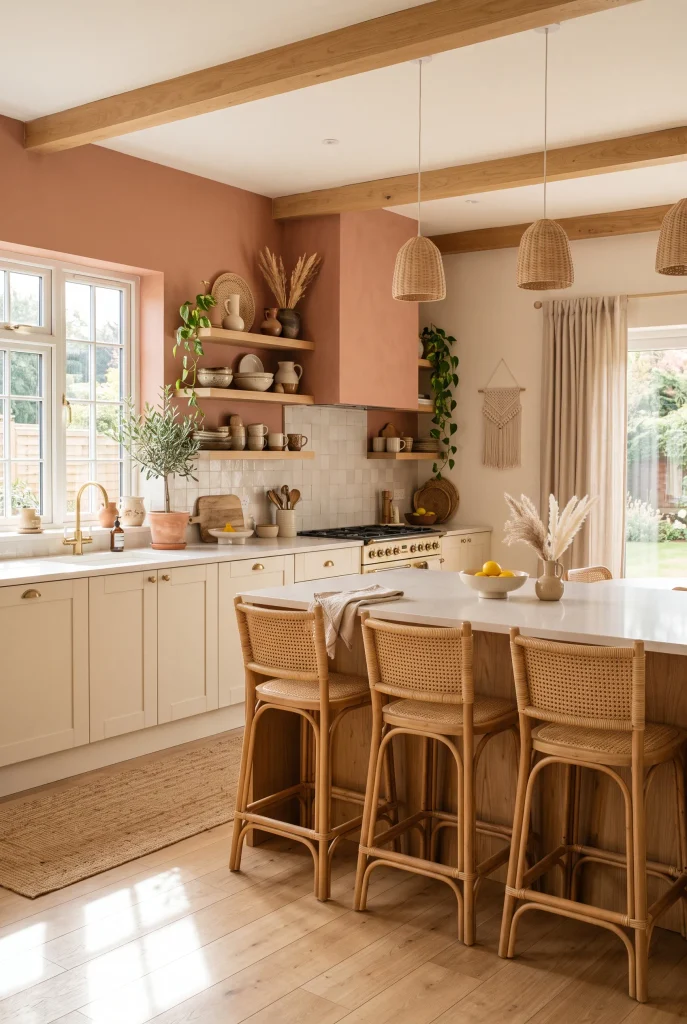
- Muted terracotta adds warmth without overwhelming a neutral kitchen.
- A single accent wall creates depth and visual focus.
- Pair earthy tones with cream and natural wood for balance.
- Use dusty or clay-like shades when you want a softer modern finish.
A muted terracotta wall can instantly give a neutral kitchen more warmth and personality without making the room feel overly colorful. The earthy shade works beautifully with cream cabinetry, natural wood, woven seating, and handmade ceramics because all of these materials share an organic visual quality. Instead of painting every wall, use terracotta on one feature wall behind open shelving, a breakfast nook, or the main cooking area. This creates a clear focal point while keeping the rest of the room light. The result feels expressive, grounded, and comfortably bohemian without losing its modern structure.
Choosing the right terracotta shade is important because strong orange tones can quickly dominate a smaller kitchen. Look for muted clay, dusty rust, or softened cinnamon shades that have a slightly earthy undertone. Balance the color with plenty of cream, beige, or pale wood so the room remains bright. If painting feels too permanent, introduce the same effect through removable wallpaper or a limewash-inspired finish. Terracotta looks particularly beautiful in natural afternoon light, when its warm undertones become more noticeable. A few matching ceramic accents can subtly connect the wall color throughout the space.
8. Statement Pendant
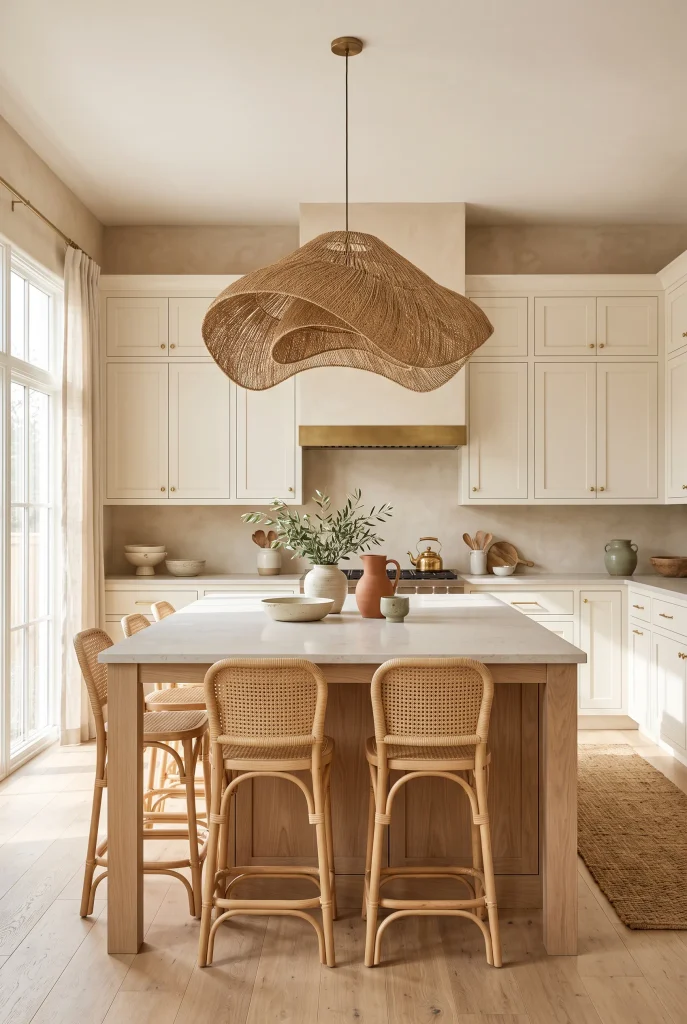
- A sculptural pendant gives the kitchen an instant focal point.
- Oversized lighting works especially well above a simple island.
- Choose organic shapes to reinforce the relaxed bohemian character.
- Keep surrounding decor restrained so the fixture gets visual attention.
A statement pendant can act like jewelry for the kitchen, drawing attention upward while giving the entire room a stronger sense of personality. Choose an oversized fixture with an organic silhouette, sculptural shade, woven material, or softly rounded form. It works particularly well above a simple island where there are few competing details. Warm natural fibers, aged metal, ceramic, and paper-like materials can all complement modern boho interiors. The key is choosing one memorable fixture instead of filling the ceiling with several competing designs. This creates a deliberate focal point while maintaining the relaxed simplicity that makes the style appealing.
Think about the scale of the kitchen before choosing your fixture. A large pendant can look beautiful in an open room but overwhelming above a narrow peninsula. Measure the island and ceiling height, then select a fixture that provides useful illumination without obstructing sightlines. Warm bulbs can enhance the earthy colors and make evening meals feel more inviting. If the kitchen already contains strong textures, choose a cleaner sculptural shape rather than another heavily woven element. That balance helps the lighting feel contemporary. A well-positioned pendant can also visually define the kitchen when it shares an open-plan space with the dining or living area.
9. Organic Ceramic Decor
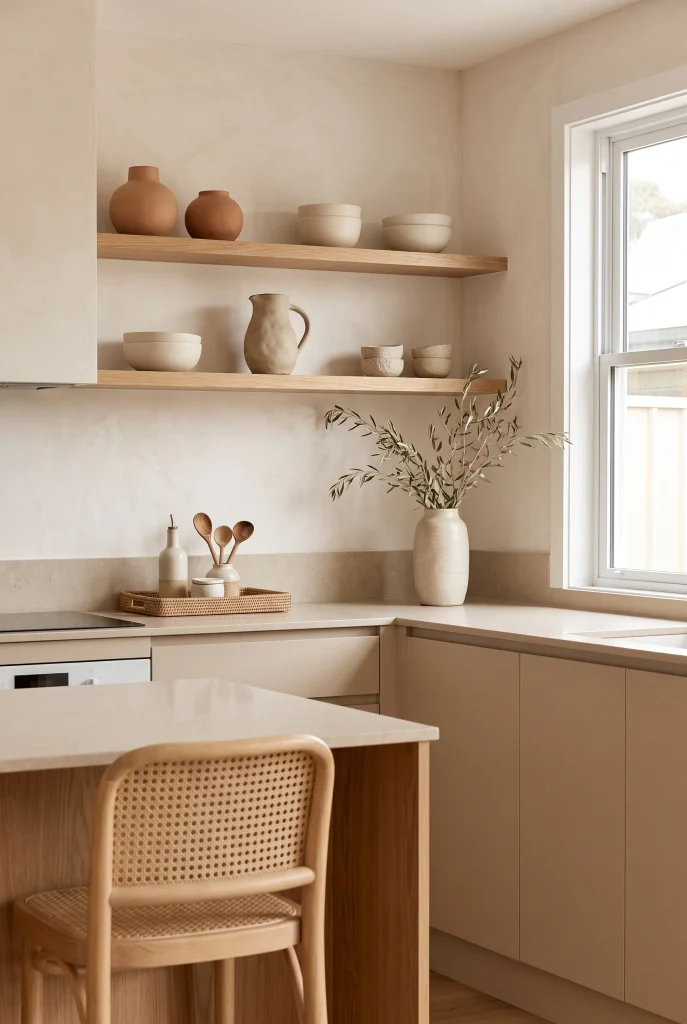
- Handmade ceramics add personality without introducing visual clutter.
- Matte finishes make shelves and countertops feel more tactile.
- Neutral pottery keeps decorative details connected to the overall palette.
- Group pieces in varied shapes and heights for a naturally collected look.
Small decorative details can make a kitchen feel finished, and organic ceramic pieces are one of the easiest ways to add personality without creating clutter. Look for handmade bowls, sculptural vases, textured mugs, and softly irregular pottery in cream, sand, beige, or muted clay tones. Their imperfect shapes bring a handcrafted quality that contrasts beautifully with precise cabinetry and modern appliances. Place a few pieces on open shelves, the island, or a countertop corner rather than spreading decorations everywhere. The result feels collected over time, giving the kitchen warmth and individuality while keeping its practical surfaces easy to use.
When styling ceramics, vary the height and shape of each piece so the arrangement feels natural rather than perfectly symmetrical. A tall vase beside two stacked bowls can create an easy visual grouping, while a small handmade cup adds a useful everyday touch. Avoid filling every shelf because negative space helps each object stand out. Matte and slightly textured finishes are especially effective in neutral kitchens because they add depth without relying on bright colors. Combine pottery with one natural element, such as olive branches or dried grasses, to create a simple connection between the kitchen and the outdoors.
10. Layered Linen Curtains
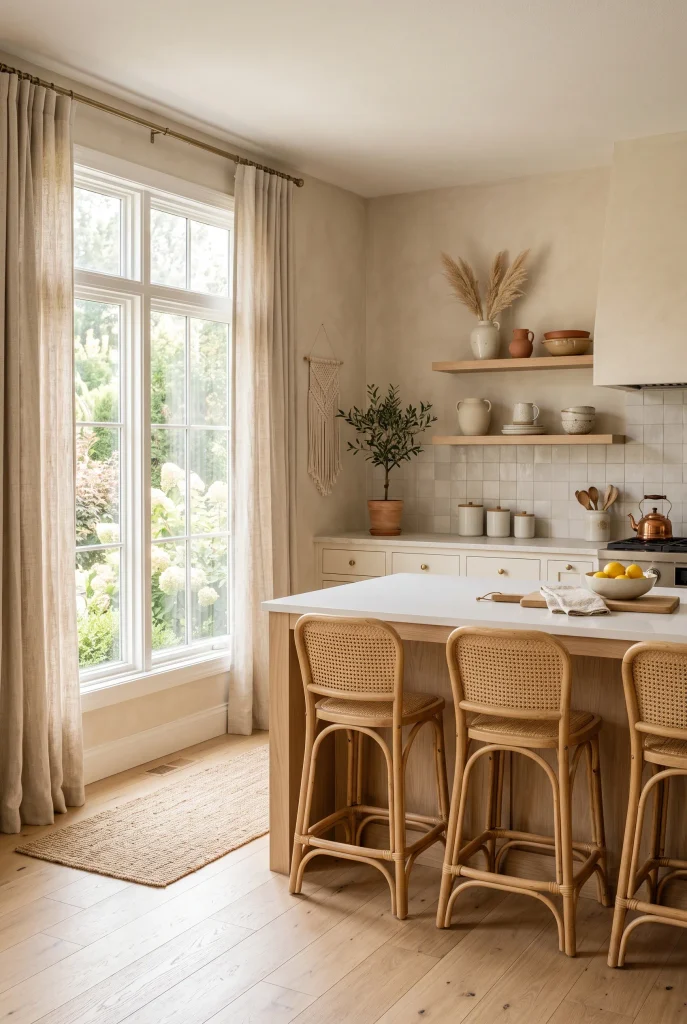
- Linen curtains soften hard kitchen surfaces and large windows.
- Natural fabric adds movement and warmth without heavy visual weight.
- Floor-length panels can make the room feel taller and more finished.
- Choose light neutral linen to preserve natural daylight.
Soft window treatments can make a kitchen feel instantly more relaxed, especially when the room already features modern cabinetry and clean architectural lines. Natural linen curtains introduce gentle movement, texture, and warmth without blocking the bright atmosphere that makes a kitchen feel spacious. Choose cream, oatmeal, or warm beige panels and let them fall close to the floor for an elegant finish. They work particularly well around large windows or glass doors where sunlight is abundant. The relaxed weave also complements rattan, natural wood, ceramics, and other tactile materials commonly used in modern bohemian interiors.
Function should guide your fabric choice as much as appearance. For a sunny kitchen, consider a lightweight linen blend that filters light while offering easier maintenance than delicate pure linen. Hang the curtain rod slightly above the window frame and extend it beyond the sides when possible, allowing the panels to frame the opening rather than cover it. This simple placement can make windows appear larger and ceilings feel taller. Keep the rest of the window area uncluttered so the flowing fabric remains a soft architectural accent instead of competing with nearby shelves or cabinetry.
11. Open Wood Shelves
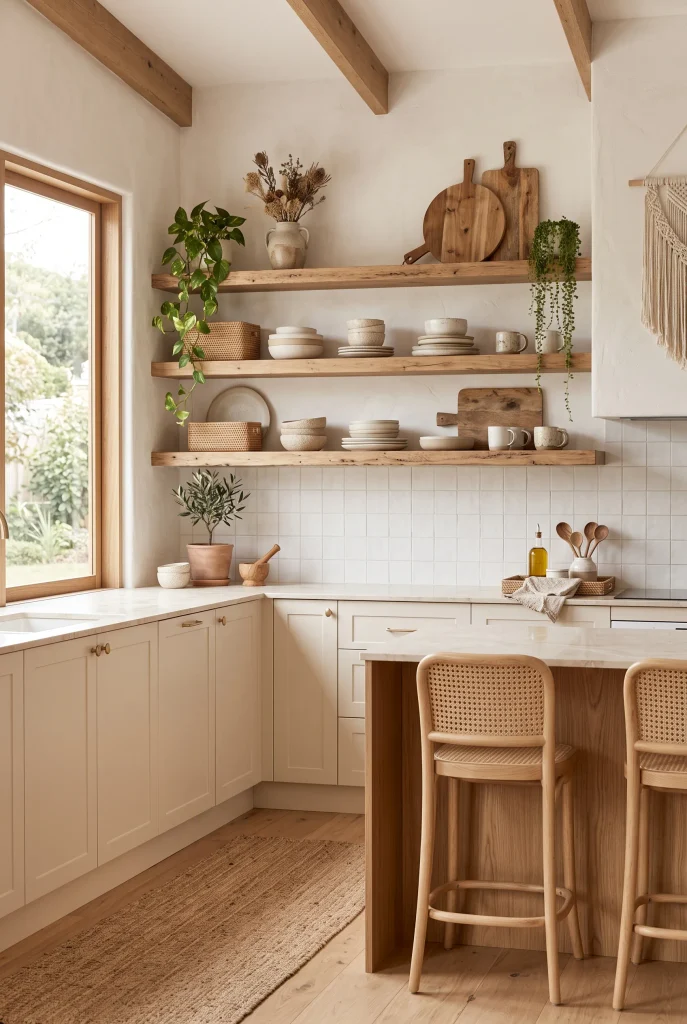
- Natural wood shelves add warmth to otherwise simple walls.
- Open storage creates an opportunity to display useful everyday pieces.
- Varying textures make shelves feel collected rather than overly styled.
- Leave generous empty space to keep the arrangement calm.
Open wood shelves bring both function and visual warmth to a modern kitchen, making them a natural fit for relaxed bohemian styling. Thick oak, walnut, or reclaimed-style shelves can soften a wall of cabinetry while providing convenient space for frequently used dishes and decorative pieces. Arrange neutral ceramics, wooden boards, woven baskets, and a few small plants to create an easy layered display. The combination feels personal without requiring expensive accessories. Because the shelving remains open, it also helps break up large blocks of cabinetry and gives the kitchen a lighter, more breathable appearance.
The secret to attractive open shelving is restraint. Instead of treating every inch as display space, leave some areas completely empty and group similar materials together. Keep everyday plates and bowls within comfortable reach, while decorative objects can occupy higher or less accessible sections. If you cook frequently, avoid placing too many dust-sensitive items near the stove. A simple arrangement of three or four useful pieces often looks better than a crowded collection. Natural wood also pairs easily with cream, beige, terracotta, and muted green, making it a versatile foundation for the broader modern boho aesthetic.
12. Brass Hardware Accents
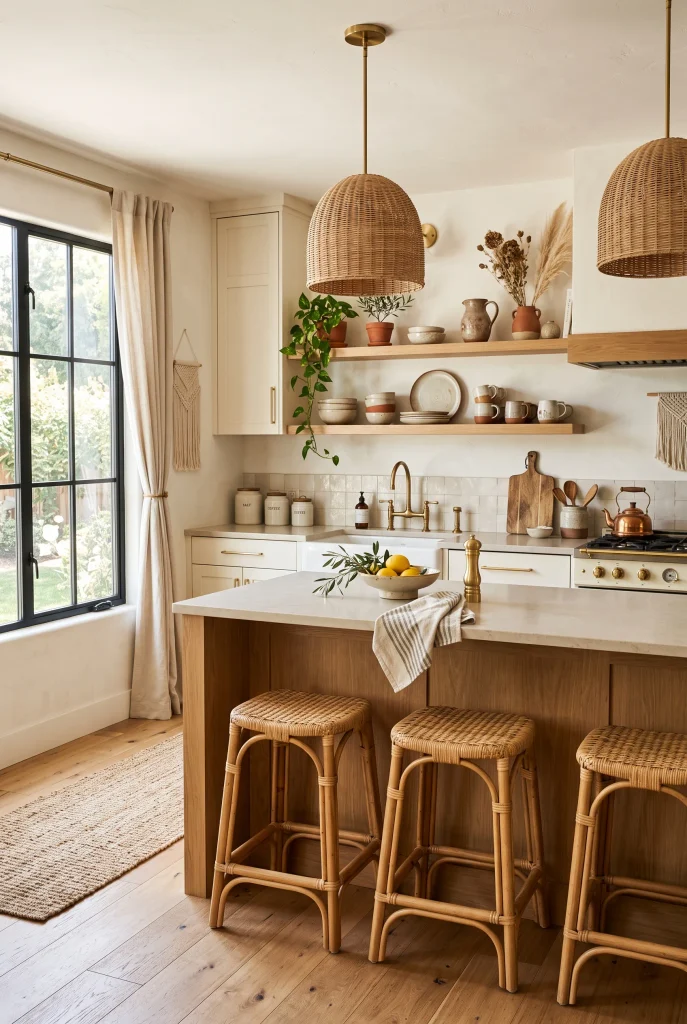
- Brushed brass adds a refined glow to neutral cabinetry.
- Small hardware changes can refresh a kitchen without replacing cabinets.
- Aged or brushed finishes usually feel softer than highly polished metal.
- Repeat the finish sparingly through lighting or small accessories.
Sometimes the smallest details create the biggest visual difference, and cabinet hardware is a perfect example. Brushed or aged brass pulls add a warm metallic accent that complements cream cabinets, natural wood, and earthy colors beautifully. The finish catches light subtly without looking overly formal, helping the kitchen balance modern structure with bohemian warmth. Choose simple bar pulls, rounded knobs, or mixed shapes depending on your cabinet style. Replacing dated hardware can be a relatively small update, yet it can make existing cabinetry feel fresher and more intentionally coordinated with the rest of the room.
For a cohesive result, repeat brass in only a few strategic places. Cabinet pulls can coordinate with pendant fittings, a faucet, or a small decorative tray, but every metal surface does not need to match perfectly. Mixing brass with black or natural materials can actually make the room feel more collected. Measure existing hole spacing before purchasing replacement pulls to avoid unnecessary drilling or cabinet repairs. This kind of update works particularly well in rental-friendly kitchen refreshes because hardware can dramatically change the overall impression while leaving the major cabinetry and countertops untouched.
13. Muted Green Cabinets
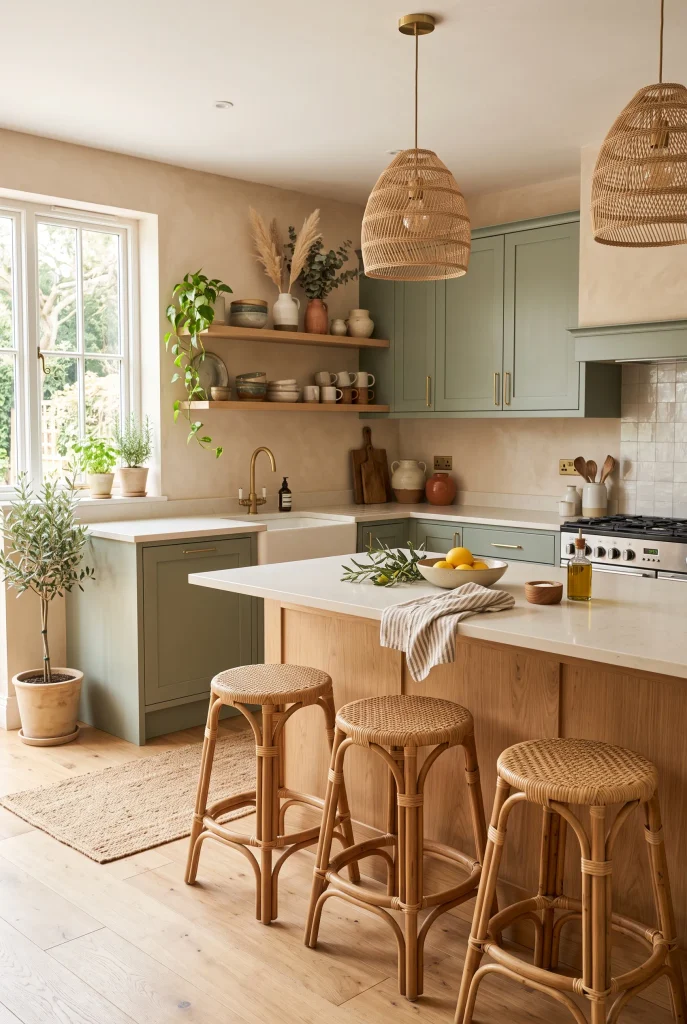
- Muted sage adds color while keeping the kitchen calm and sophisticated.
- Green works naturally with wood, cream, brass, and woven textures.
- A soft finish feels more relaxed than a highly saturated cabinet color.
- Keep countertops light to maintain an airy overall appearance.
A soft green cabinet color can give a kitchen personality while still feeling timeless and easy to live with. Muted sage, olive, and eucalyptus tones work especially well because they connect naturally with wood, clay, linen, and other organic materials. Pair green cabinetry with warm cream countertops and a natural oak island to create balanced contrast. The color becomes noticeable without taking over the room. For a modern boho kitchen, choose a dusty or gray-green finish rather than an intensely saturated shade. This creates a sophisticated backdrop for woven accents, handmade ceramics, and simple natural accessories.
Before committing to green cabinetry, test samples in both daylight and evening light because undertones can change dramatically throughout the day. A cooler sage may appear gray near a north-facing window, while warmer olive tones can become richer in afternoon sunlight. If full cabinetry feels too bold, use green only on the island or lower cabinets. That approach keeps the upper portion of the kitchen bright and visually open. Green also pairs beautifully with small terracotta details, especially when the terracotta is muted rather than bright. The combination creates warmth without making the palette feel busy.
14. Marble Countertops
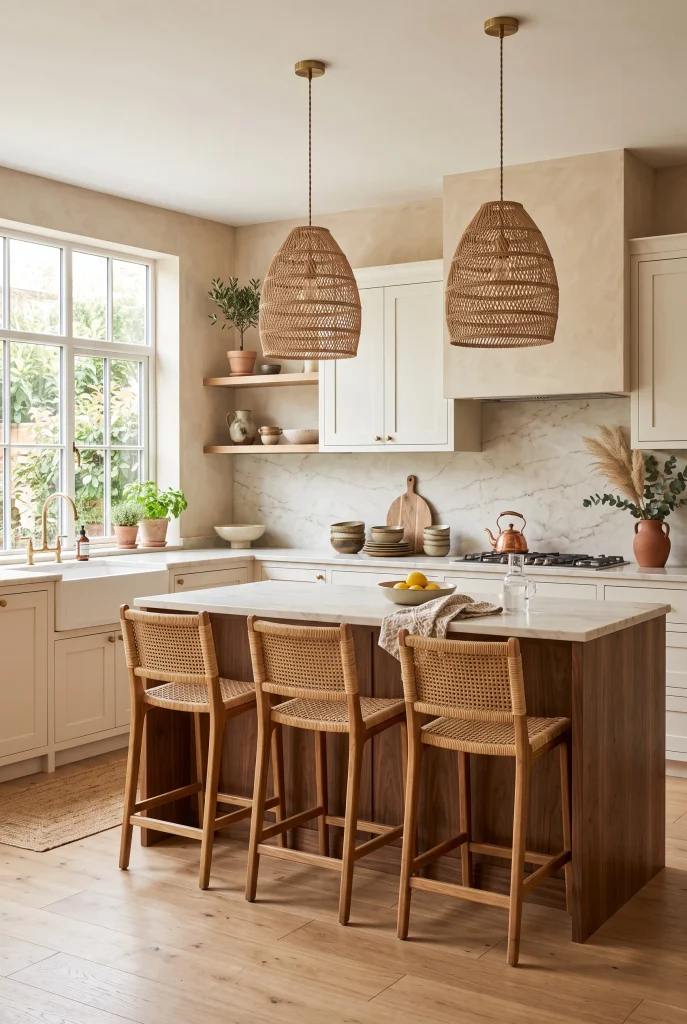
- Marble introduces natural movement without needing bold decorative colors.
- Soft veining complements warm wood and neutral cabinetry beautifully.
- A honed finish can create a quieter, more relaxed appearance.
- Use subtle veining when the kitchen already has several textures.
Natural stone can add an elevated finish to a relaxed kitchen, and marble works especially well when its veining remains soft and understated. Creamy white or warm ivory marble creates a bright surface while introducing natural movement that keeps the room from feeling flat. Pair it with oak, walnut, woven seating, and handmade pottery to balance its polished appearance. A honed or softly matte finish can feel more casual than highly polished stone. The combination gives modern boho kitchens a refined foundation while preserving the tactile, approachable character that makes the style feel comfortable rather than overly formal.
When selecting marble, pay attention to both the background color and the veining. Warm stone usually works best with cream cabinets and honey-toned wood, while cooler marble may pair better with crisp white or gray finishes. If maintenance is a concern, learn about sealing, staining, and etching before choosing natural stone. Quartz with a marble-inspired pattern can provide a similar visual effect with different maintenance requirements. Keep the rest of the kitchen relatively restrained so the countertop has room to stand out. A simple ceramic bowl, wooden board, or small plant is often enough to finish the surface.
15. Boho Gallery Wall
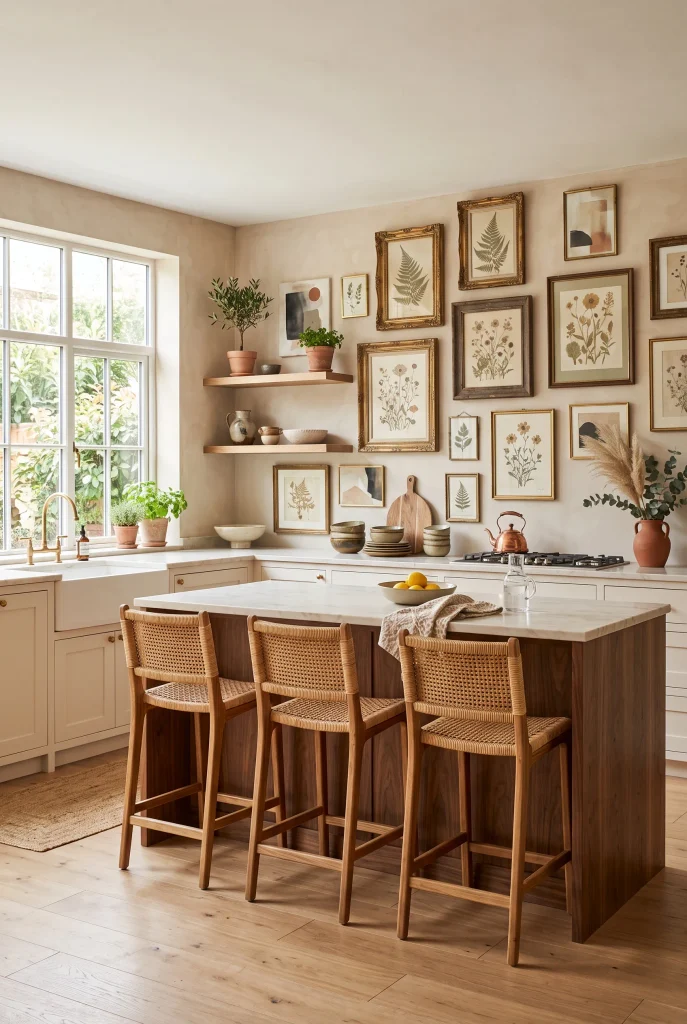
- Artwork makes a kitchen feel more personal and lived-in.
- Botanical and abstract prints reinforce an organic bohemian mood.
- Mixing frame finishes creates a collected, less manufactured appearance.
- Keep the palette connected to existing kitchen colors for cohesion.
A kitchen can feel just as personal as a living room when you give the walls room for artwork. A small gallery arrangement adds character to an otherwise overlooked surface and can make a modern kitchen feel more collected. Botanical prints, abstract shapes, vintage-inspired illustrations, and simple line drawings work beautifully with warm bohemian palettes. Mix a few frame styles while keeping the artwork connected through similar colors. Position the collection near a dining corner, breakfast area, or blank wall rather than directly beside cooking splashes. The result adds personality without sacrificing the kitchen’s practical function.
The strongest gallery walls usually have a little variety but still feel visually connected. Start by choosing one dominant color family, then mix artwork sizes and frame materials around it. Lay the pieces out on the floor before hanging them so you can adjust spacing and balance. Avoid placing delicate paper directly above areas exposed to steam or grease. Small artwork collections can make a surprisingly large difference in kitchens because they soften the functional feel of cabinets and appliances. Add one natural element nearby, such as a wooden stool or ceramic vase, to tie the display into the room.
16. Layered Area Rug
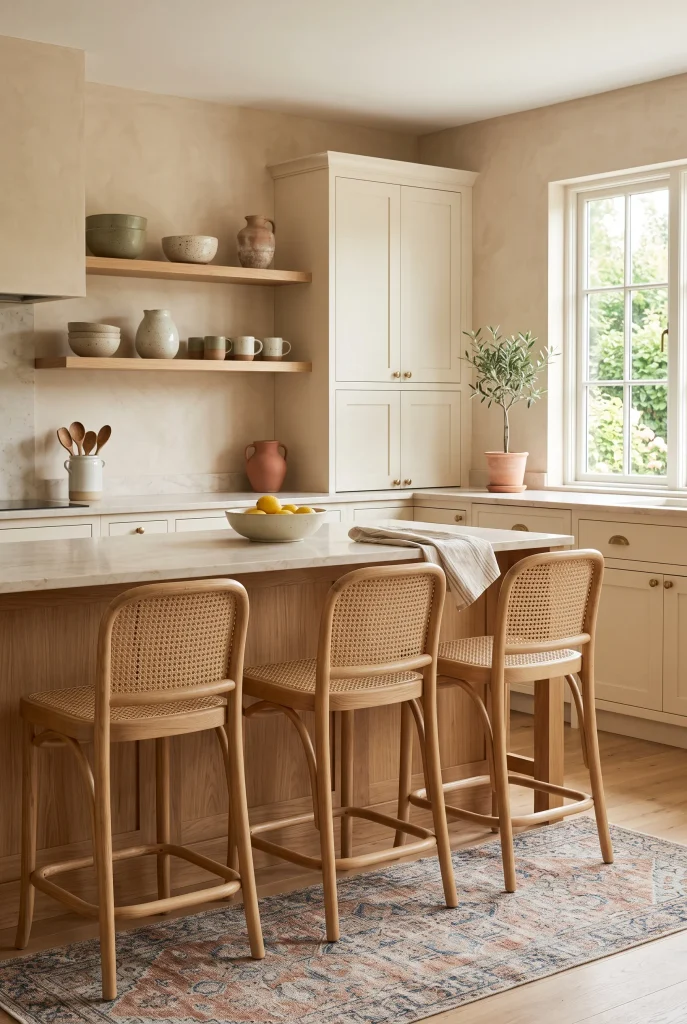
- A rug adds softness to hard flooring and cabinetry.
- Vintage-inspired patterns bring subtle bohemian character without overwhelming the room.
- Low-pile materials are easier to clean in busy kitchen areas.
- Choose colors that repeat existing tones for a cohesive finish.
A well-chosen rug can make a kitchen feel surprisingly warmer and more finished. Hard flooring, stone counters, and smooth cabinets can sometimes create a visually cold atmosphere, but a patterned textile adds softness and movement instantly. Choose a low-pile vintage-inspired rug in muted beige, rust, olive, or cream to reinforce the relaxed bohemian character. Place it beneath the island or along a long cooking zone where it adds comfort underfoot. The pattern does not need to be bold. Subtle faded details can provide enough visual interest while allowing wood and cabinetry to remain the main features.
Practicality matters when adding textiles to a kitchen, especially in areas exposed to spills and crumbs. Look for washable, stain-resistant, or low-pile options that are easy to clean and do not create a tripping hazard. A rug pad can improve stability on smooth flooring. Choosing a pattern with several existing kitchen colors makes maintenance easier visually because small marks are less noticeable. Keep the rug slightly away from appliance doors and high-splash zones whenever possible. This simple addition can define an island area, soften the room, and make everyday cooking feel noticeably more comfortable.
17. Curved Breakfast Nook
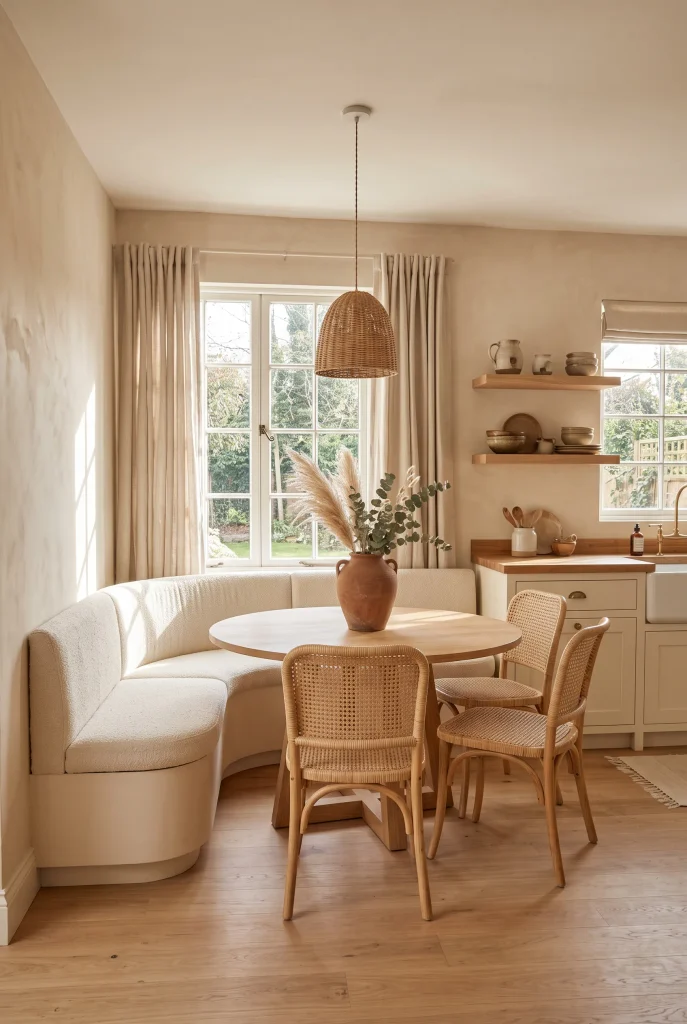
- Curved furniture softens the strong geometry of modern kitchens.
- A built-in bench can make an unused corner more functional.
- Round tables improve movement in compact breakfast areas.
- Layer linen cushions for comfort without adding excessive visual clutter.
A curved breakfast nook can turn an awkward kitchen corner into one of the most inviting areas in the home. Rounded benches, circular tables, and softly shaped chairs introduce gentle forms that balance the straight lines of cabinets and countertops. Position the nook near a window whenever possible so natural light becomes part of the design. Use cream or oatmeal upholstery with a round oak table, woven chairs, and a few textured cushions. The arrangement feels casual enough for morning coffee but polished enough to complement the rest of a thoughtfully designed modern kitchen.
Good proportions are essential when creating a breakfast nook, particularly in a smaller room. Measure the walkway around the table before adding a bench or chairs, and avoid furniture that blocks cabinet doors or appliance access. A built-in bench can provide useful hidden storage underneath, making it especially practical for compact homes. Keep the tabletop relatively simple with one ceramic vase or bowl rather than several decorations. Rounded furniture can make tight spaces feel easier to navigate because there are fewer sharp corners competing for circulation. The result is both functional and visually softer.
18. Indoor Herb Garden
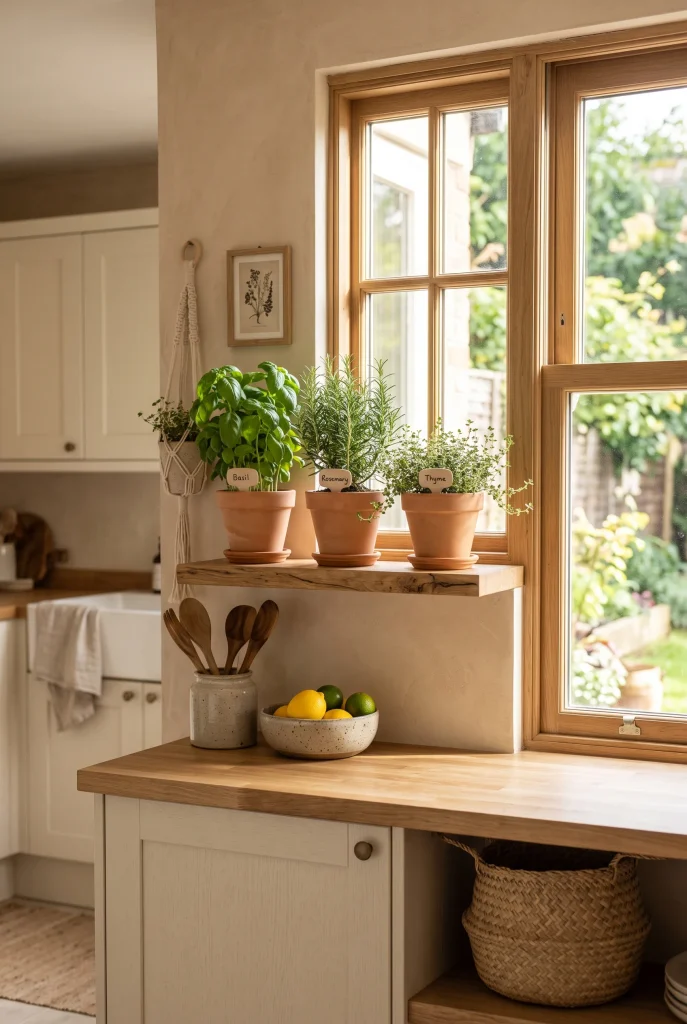
- Fresh herbs bring natural color and life into the kitchen.
- Terracotta pots reinforce the earthy bohemian material palette.
- A sunny windowsill keeps useful plants within easy reach.
- Group herbs in varied pot heights for a relaxed, collected display.
Bringing living herbs into the kitchen adds a fresh layer of color while making the room feel more connected to nature. Basil, rosemary, thyme, mint, and parsley can sit beautifully in small terracotta pots along a sunny windowsill or open shelf. Their green leaves contrast naturally with cream cabinets, warm wood, and neutral walls. Choose simple containers with slightly varied shapes rather than perfectly matching pots to keep the arrangement relaxed. Beyond decoration, an herb garden gives you something genuinely useful to reach for while cooking, making the styling choice feel practical as well as attractive.
Start by choosing herbs that match the amount of sunlight your kitchen receives. A bright window can support several common culinary herbs, while lower-light spaces may need a different plant selection or supplemental lighting. Use saucers beneath pots to protect wood and stone surfaces from moisture. Keep the grouping compact so it does not interfere with food preparation. Even two or three healthy herb plants can make a neutral kitchen feel noticeably more alive. Pair them with a small wooden cutting board or handmade ceramic planter for a simple organic display that feels natural rather than overly decorated.
19. Textured Range Hood
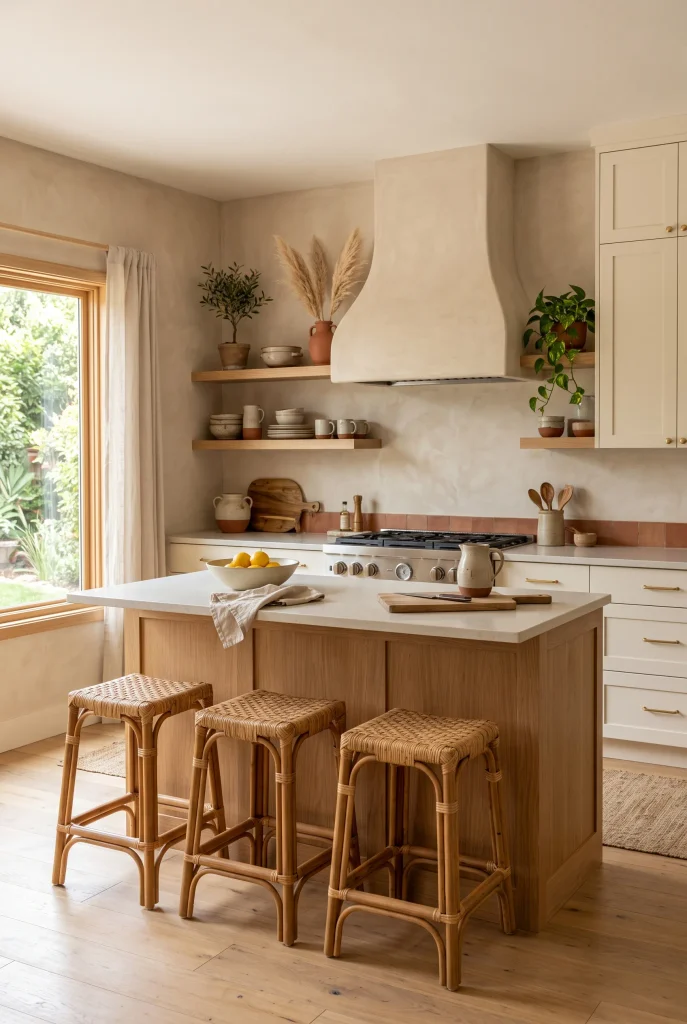
- A plaster-style hood creates a strong architectural focal point.
- Soft texture makes modern cabinetry feel warmer and more handcrafted.
- Rounded edges can soften an otherwise linear kitchen layout.
- Keep the surrounding finishes simple so the hood remains the feature.
A sculptural range hood can turn an ordinary cooking wall into a standout architectural feature. A plaster-style finish, softly rounded shape, or limewash-inspired surface adds texture while keeping the palette warm and understated. Pair it with cream cabinetry, natural oak, handmade ceramics, and woven accents so the hood feels connected to the rest of the room. Unlike a purely decorative accessory, it also serves an essential kitchen function. The combination of useful design and visual character makes this approach especially effective when you want a kitchen to feel custom-designed without relying on excessive ornament.
Before choosing the finish, consider how the hood will relate to the surrounding cabinets and backsplash. A softly textured neutral surface works best when the rest of the cooking wall remains relatively restrained. Make sure the material is suitable for the heat, moisture, and cleaning requirements of your range. If you love a rounded hood, check that its proportions work with the ceiling height and cooking area. Architectural details like this often make a bigger impact than adding many small accessories. One well-designed focal point can give the entire kitchen a more intentional and elevated appearance.
20. Earthy Open Pantry
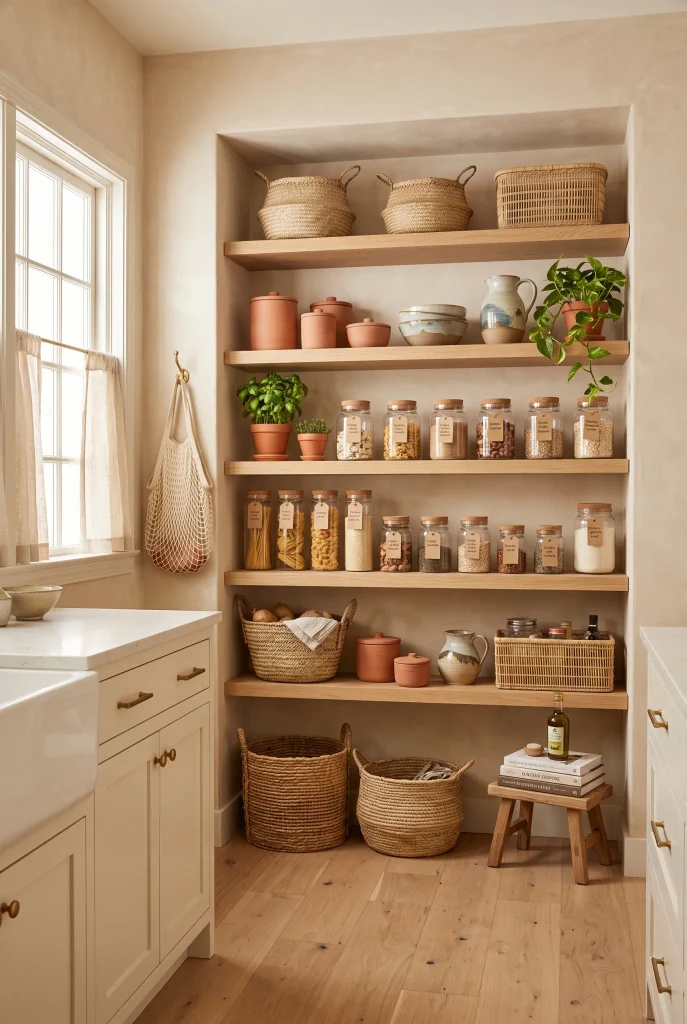
- Open pantry storage can make everyday ingredients part of the decor.
- Woven baskets hide less attractive items while adding natural texture.
- Matching glass jars create a cleaner, more organized appearance.
- Keep frequently used ingredients within easy reach for practical convenience.
An open pantry can make kitchen storage feel intentional rather than purely functional. Natural wood shelves, woven baskets, glass jars, and handmade containers create a warm display while keeping frequently used ingredients easy to reach. Transfer staples such as grains, pasta, or baking ingredients into simple jars for a cleaner visual rhythm. Use baskets for packets and less attractive items so the shelves remain organized without looking overly perfect. In a modern boho kitchen, this combination of useful storage and natural materials adds personality while helping everyday cooking feel easier and more enjoyable.
The key is creating an arrangement that remains manageable after the initial styling. Store the items you reach for most often between waist and eye level, and reserve higher shelves for occasional ingredients or decorative pieces. Label jars clearly if several contents look similar. Choose containers that are easy to refill and clean rather than buying elaborate pieces that are difficult to maintain. An open pantry looks best when practical items are allowed to remain visible but are grouped thoughtfully. A few woven baskets, wooden shelves, and consistent containers can make ordinary storage feel surprisingly attractive.
21. Statement Backsplash
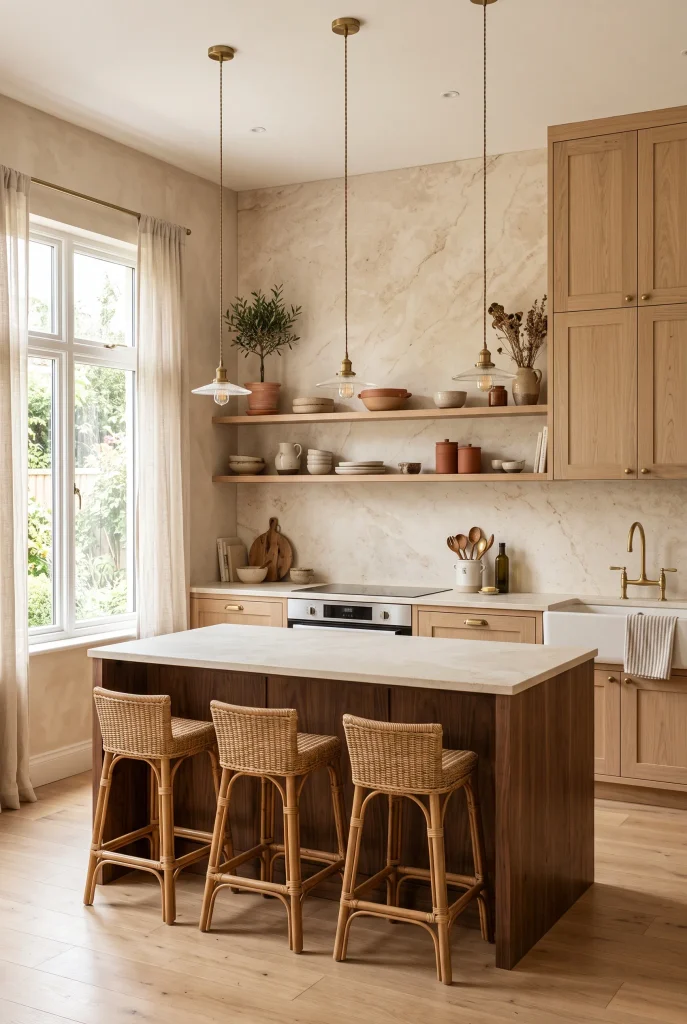
- A full-height backsplash creates instant visual impact behind the cooking area.
- Natural stone patterns add depth without requiring colorful accessories.
- Extending the material upward can make the kitchen feel more substantial.
- Keep cabinetry simple when the backsplash has noticeable movement.
A statement backsplash can become the visual centerpiece of a kitchen while keeping the rest of the design surprisingly simple. Consider full-height stone, softly veined marble, textured ceramic tile, or another material with natural variation. Extending the backsplash toward the ceiling can emphasize height and create a more custom appearance. Warm ivory, beige, cream, and earthy stone tones work especially well with natural wood and woven materials. The finished space feels sophisticated but still relaxed because the organic surface provides character without relying on bright colors or excessive decoration.
When using a stronger backsplash, allow it to lead the visual composition instead of competing with several other focal points. Choose streamlined cabinetry and simple hardware so the stone or tile has room to breathe. If the material has dramatic veining, limit patterned textiles and accessories nearby. A quieter counter can also help create balance. That approach is particularly useful in open-plan kitchens where the cooking area needs definition. The backsplash becomes a beautiful backdrop for everyday activity while giving the room a finished, cohesive appearance that photographs well from several angles.
22. Layered Natural Textures
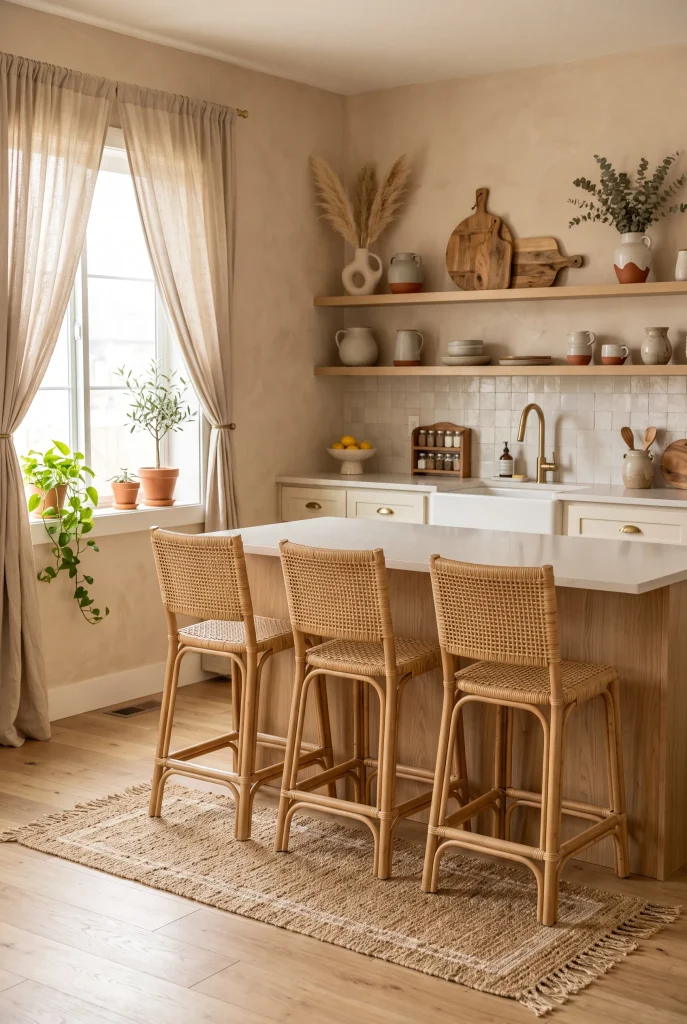
- Layering natural materials makes a modern kitchen feel warmer and more inviting.
- Wood, linen, jute, rattan, and ceramic create depth without relying on bold colors.
- Repeating organic textures helps different areas of the kitchen feel connected.
- Keep the palette restrained so the variety of materials feels intentional.
The most inviting kitchens often rely on texture rather than decoration, and layering natural materials is an easy way to create that effect. Combine light wood, woven rattan, linen, jute, ceramic, and subtle clay accents throughout the space. Each material contributes a slightly different surface quality while staying within the same earthy visual family. A wooden island can anchor the room, woven stools can soften the seating area, and a jute runner can add warmth underfoot. Together, these small choices create a kitchen that feels relaxed, tactile, and thoughtfully designed without appearing overly styled.
The trick is to repeat materials without making everything match. If you have rattan pendant lights, introduce another woven detail through a basket or stool. If the kitchen features oak cabinetry, connect it with a wooden tray or cutting board. Keep decorative pieces useful whenever possible so the room remains practical for everyday life. Texture becomes especially valuable in neutral kitchens because it prevents pale colors from feeling flat. These modern boho kitchen ideas show how a few carefully chosen materials can create depth, warmth, and personality while preserving a clean contemporary foundation.
Conclusion
A beautiful kitchen doesn’t have to feel complicated or perfectly styled. The best modern boho kitchen ideas combine warmth, texture, natural materials, and practical details to create a space that feels genuinely comfortable. From wood islands and woven lighting to earthy accents, open shelving, and handmade ceramics, even one thoughtful change can refresh the entire room. Start with the idea that fits your space, budget, and lifestyle best, then build from there. Small design changes can completely transform a room’s atmosphere. Save this article on Pinterest, try your favorite ideas, and share it with someone planning a kitchen refresh.