25 Kitchen Counter Styling Ideas You’ll Love to Copy
A beautiful kitchen counter can change the entire feel of your space without a major makeover. Kitchen counter styling ideas can help turn empty, cluttered, or ordinary surfaces into areas that feel warm, organized, and intentional. From wooden cutting boards and ceramic bowls to fresh herbs and woven baskets, small details can make a surprising difference. The best part is that many of these ideas use items you already have or can easily add over time. Whether your kitchen is modern, farmhouse, cozy, or minimalist, these simple styling touches can help you create a counter that looks polished while still working beautifully for everyday life.
1. Wooden Cutting Board Display
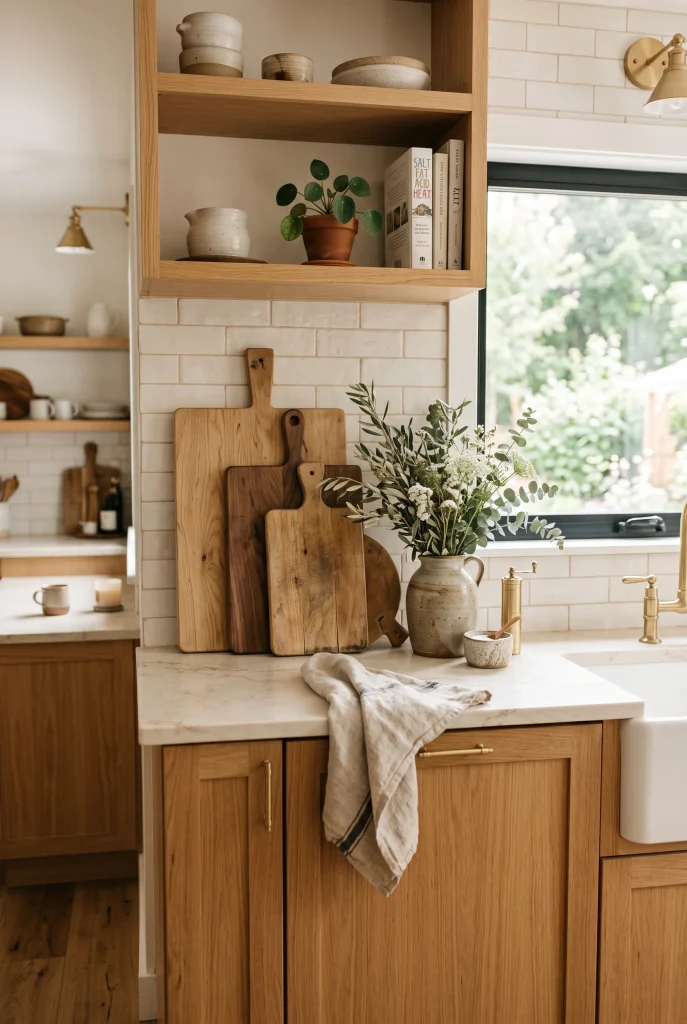
- Lean two or three wooden boards together instead of storing them flat.
- Mix different wood tones and shapes for a collected, natural look.
- Keep the arrangement near the prep area so it stays practical.
- Add one small ceramic piece to soften the harder wood surfaces.
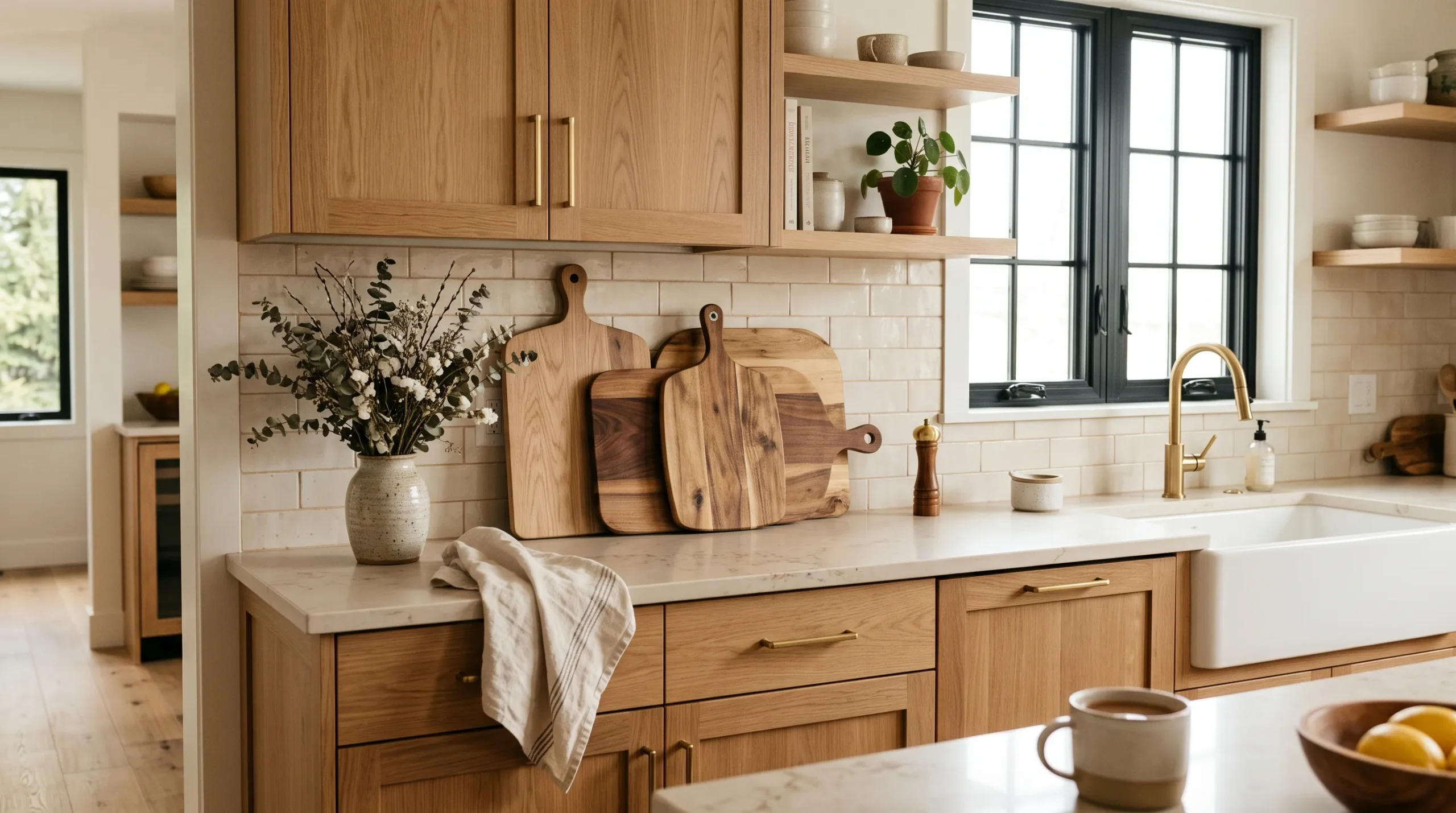
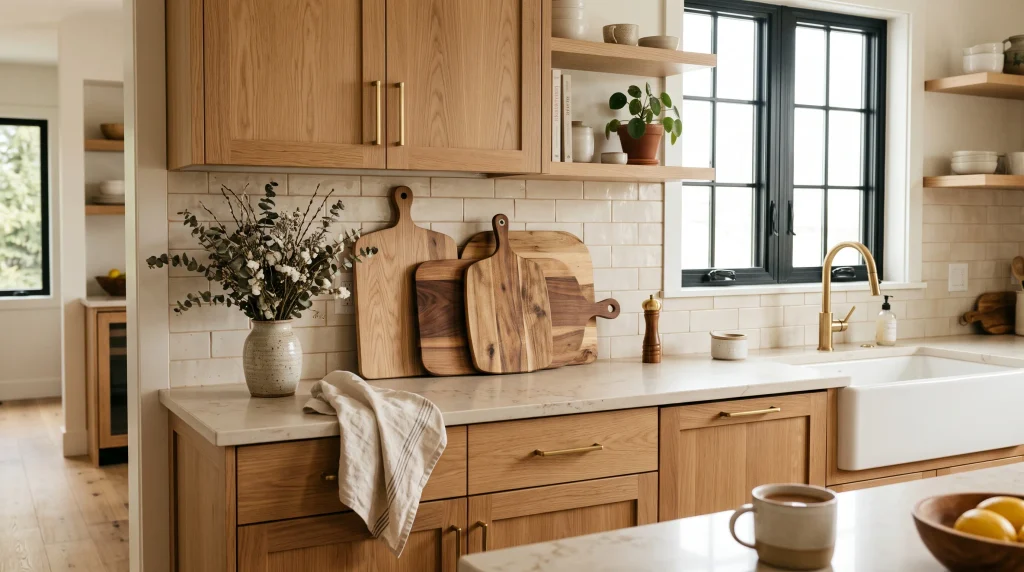
A stack of beautiful cutting boards can turn an ordinary counter into a warm, intentional focal point. Choose boards with slightly different sizes, shapes, or wood grains, then lean them against the backsplash rather than hiding them inside a cabinet. The layered look adds height without making the counter feel crowded. A small stone bowl or ceramic vase beside them creates balance and keeps the arrangement from looking too utilitarian. This simple setup works especially well in neutral kitchens because natural wood introduces warmth and texture while still keeping the overall palette calm, clean, and inviting.
The best part is that this styling choice combines decoration with everyday function. Keep your most-used board at the front, with larger boards behind it for an easy grab-and-go setup. Varying the board heights makes the display look much more polished than using several identical pieces. You can also pair the wood with a folded linen towel or a small olive-oil bottle for a relaxed kitchen feel. The result is one of those kitchen counter styling ideas that looks thoughtfully decorated without requiring extra furniture, expensive accessories, or a major renovation.
2. Ceramic Fruit Bowl
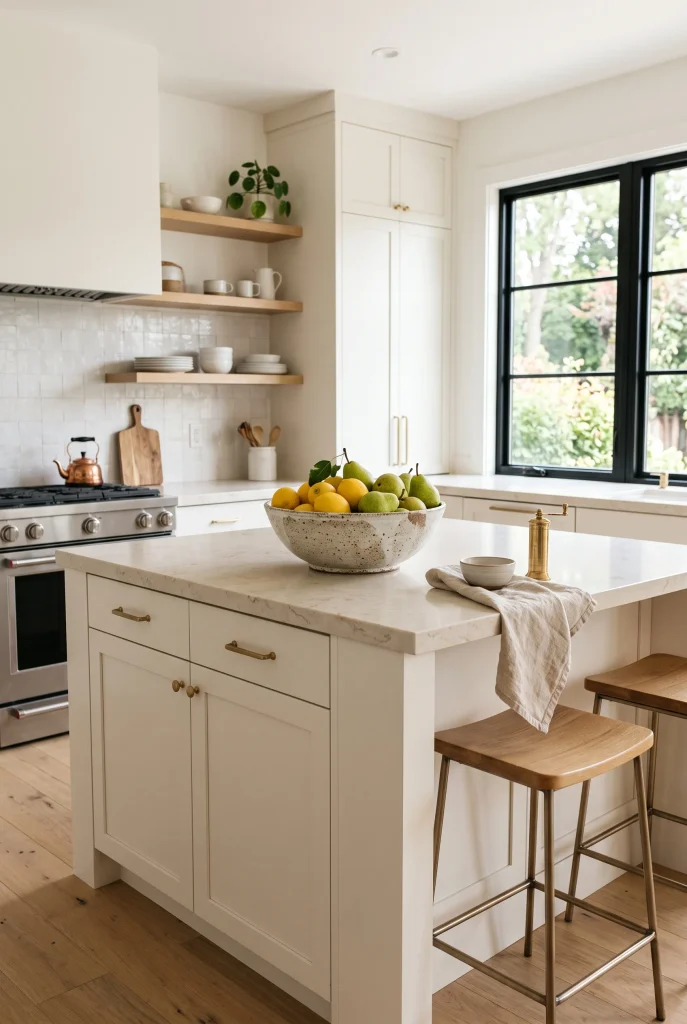
- Use one oversized bowl instead of several small countertop accessories.
- Fill it with colorful fruit for an easy natural focal point.
- Choose handmade ceramic for softness and subtle visual texture.
- Leave breathing room around the bowl so the counter feels spacious.
A generously sized ceramic fruit bowl can instantly give a kitchen counter more personality while keeping the surface useful. Look for a rounded or slightly irregular bowl in cream, ivory, beige, or soft earthy tones. Fill it with lemons, pears, apples, or seasonal fruit to introduce a natural pop of color. The bowl becomes a simple centerpiece without competing with the rest of the kitchen. On a large island, place it slightly off-center rather than directly in the middle. This creates a relaxed composition while leaving enough open workspace for preparing meals, serving snacks, or setting down groceries.
For smaller counters, scale the bowl to the available surface so it does not overwhelm the room. A low, wide design often works beautifully because it adds color and texture without blocking sightlines. Seasonal fruit can also refresh the look throughout the year without changing your entire decor. Pair the bowl with one restrained accessory, such as a wooden board or small vase, rather than creating a crowded collection. This approach makes the counter feel styled but still lived-in, which is especially helpful when you want a polished kitchen that remains comfortable and practical for everyday routines.
3. Brass Tray Arrangement

- Group small everyday items together on one attractive tray.
- Use brass to introduce a subtle polished accent without overdecorating.
- Keep only useful or frequently handled pieces in the arrangement.
- Choose a narrow tray when counter space is limited.
A brass tray is an easy way to make several small countertop essentials look like one intentional arrangement. Instead of letting soap, oils, candles, or small containers scatter across the surface, gather them on a slim tray with enough room between each item. The metallic finish adds a quiet touch of warmth and works especially well with cream, white, beige, and natural wood kitchens. Keep the tray near the sink or cooking zone so everything remains convenient. The arrangement feels decorative, but it still supports the daily routines that naturally happen around a busy kitchen.
Keep the styling restrained because the tray itself already provides visual structure. A ceramic soap dispenser, small candle, and attractive olive-oil bottle can be enough for a polished setup. Leaving a little empty space inside the tray makes the whole display feel more expensive and less cluttered. You can also swap one accessory seasonally, such as adding a small eucalyptus stem or textured towel. These small changes keep the counter fresh while preserving the same basic arrangement, making this a flexible approach for both modern and transitional kitchens.
4. Stoneware Utensil Crock
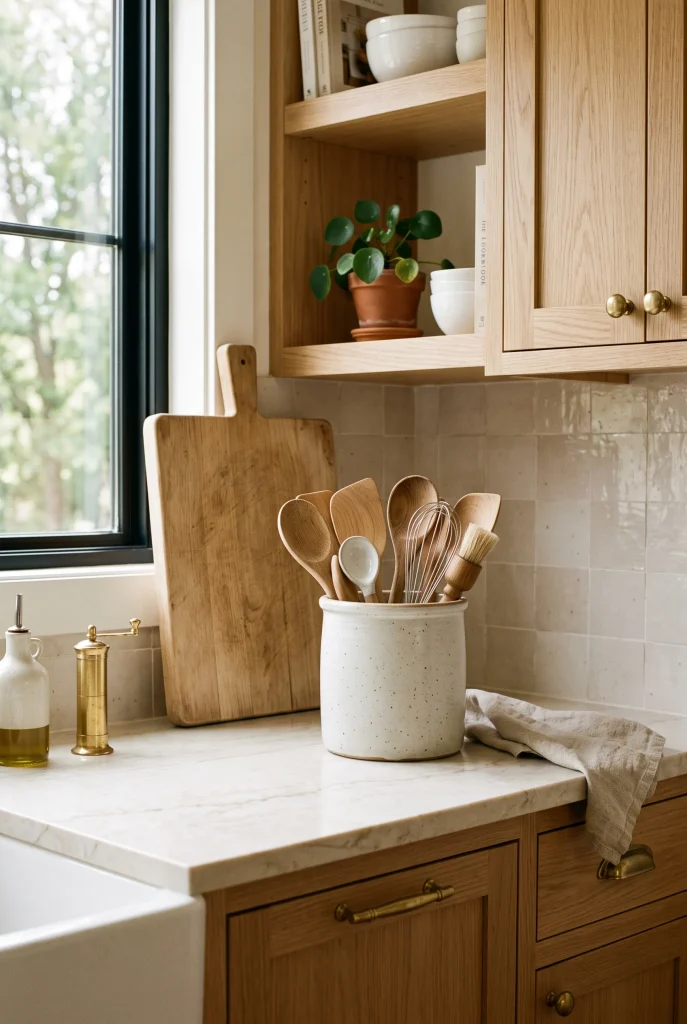
- Choose a generously sized crock that keeps frequently used tools together.
- Use wood, cream, or neutral-toned utensils for a cohesive look.
- Place it near the main cooking area for easy access.
- A textured ceramic finish adds character without creating visual clutter.
A beautiful utensil crock can make everyday kitchen tools feel like part of the decor. Instead of hiding wooden spoons, spatulas, and whisks inside drawers, gather them in one substantial stoneware container beside the stove or prep area. Choose a matte cream, warm beige, or soft taupe finish to blend naturally with neutral kitchens. The different utensil shapes create gentle height and texture, while the crock keeps everything organized. This arrangement works particularly well when the countertop is mostly open because one purposeful grouping can add interest without making the surface feel busy or overcrowded.
Keep the utensil collection edited so the crock does not become a dumping spot for every cooking tool you own. Five to eight frequently used pieces are usually enough for an attractive display. Wooden handles can add warmth against pale counters, while darker utensils create more contrast in an otherwise soft kitchen. Placing the crock beside a cutting board creates an especially balanced composition because both pieces bring natural texture. The result feels practical and styled at the same time, proving that useful kitchen accessories can become an important part of your overall counter design.
5. Layered Cutting Boards

- Layer boards from largest to smallest for an effortless dimensional effect.
- Mix wood tones while keeping the overall palette warm and natural.
- Add a linen towel for softness and subtle texture.
- Keep the display close to the food-preparation area for everyday convenience.
Layering cutting boards is one of the easiest ways to add depth to an otherwise flat kitchen counter. Start with the largest board at the back, then lean one or two smaller boards slightly in front of it. Different wood grains make the arrangement feel collected rather than overly coordinated. Walnut, oak, acacia, and lighter natural woods can work beautifully together when their tones complement the rest of the kitchen. Position the boards against a backsplash or wall so they remain stable. A folded linen towel nearby adds softness and helps connect the wood display with the surrounding kitchen textures.
This arrangement also makes sense in a busy kitchen because the boards remain within easy reach. Choose your most attractive pieces for display and keep less decorative boards stored away. For a stronger visual effect, vary the silhouettes by combining a rectangular board with a rounded or paddle-shaped design. The layered heights naturally draw the eye upward and make the counter feel more finished. Rather than filling every open space, let the boards act as the main feature and leave surrounding counter area clear. That balance keeps the setup useful, relaxed, and visually appealing.
View: 21 Board and Batten Accent Wall Ideas That Look Luxe
6. Minimal Coffee Station
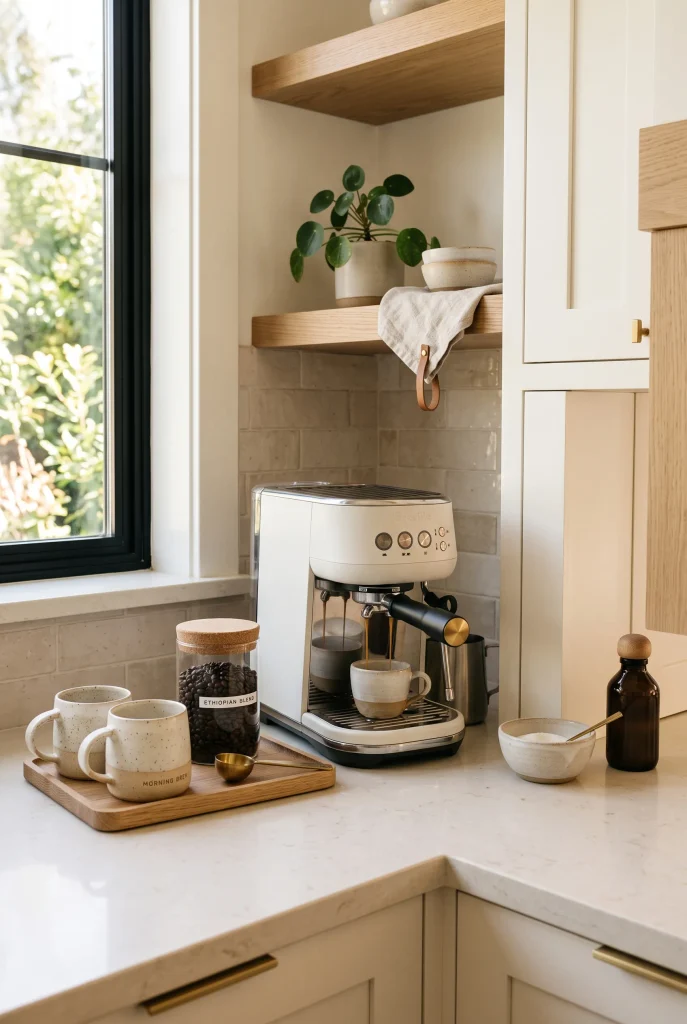
- Keep coffee essentials together to create a defined countertop zone.
- Use matching containers to make everyday supplies look more organized.
- Add two favorite mugs instead of displaying an entire collection.
- Leave surrounding counter space open for a cleaner appearance.
A small coffee station can give an ordinary counter a cozy focal point while making your morning routine easier. Place the coffee machine on one side of the counter and group nearby essentials on a compact wooden or stone tray. Add a glass jar for coffee beans, two favorite ceramic mugs, and a small spoon or sugar container. Keeping everything within one visual zone prevents the setup from spreading across the countertop. Warm wood, creamy ceramics, and subtle metallic details can make the area feel inviting without turning it into a bulky coffee bar.
The key is to keep the station compact and purposeful. If your counter is limited, choose a smaller machine and use vertical storage for mugs rather than adding multiple containers. A simple arrangement can still feel special when the materials coordinate with the rest of the kitchen. A coffee station looks most polished when only the items used every day remain visible. The open space around it gives the kitchen room to breathe, while the grouped accessories create a welcoming detail that makes the entire counter feel more thoughtfully styled.
7. Fresh Herb Corner
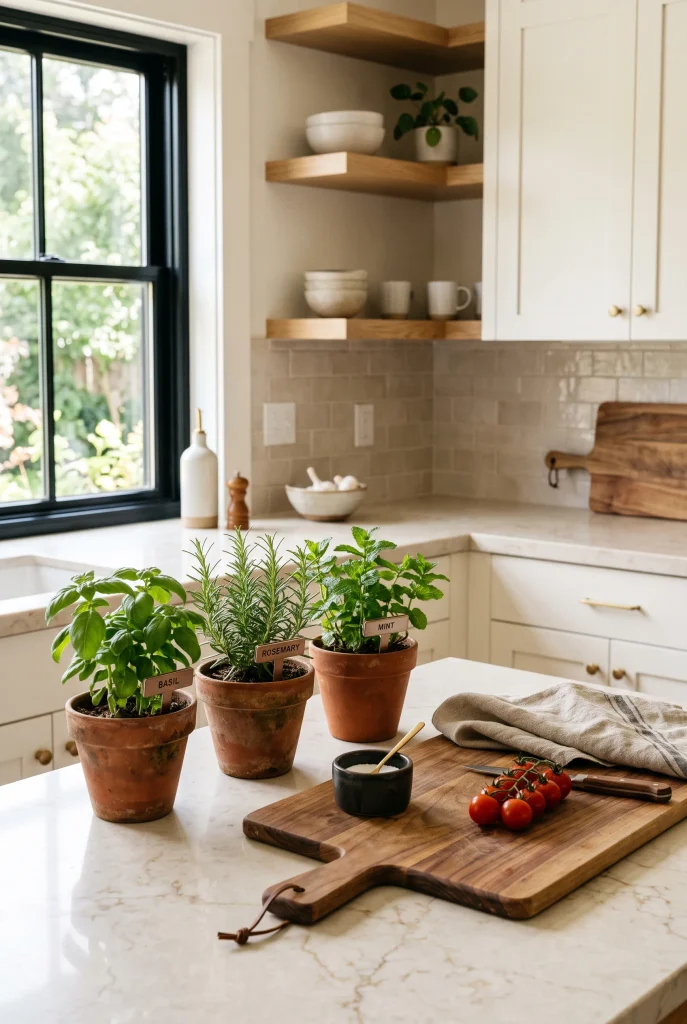
- Use matching pots to keep several herbs looking visually organized.
- Choose herbs you actually cook with so the display stays practical.
- Place them near natural light for a fresh, lively touch.
- Terracotta or ceramic pots add texture without overwhelming the counter.
Fresh herbs can bring a kitchen counter to life with very little effort. Group a few small basil, rosemary, mint, or thyme plants together in matching ceramic or terracotta pots for a simple natural display. Their green leaves add color against neutral counters and cabinetry, while the varied shapes create gentle visual movement. Place the plants near a bright window when possible, but avoid positioning them where heat from the stove could damage the leaves. The result is a useful little garden that adds freshness while making the kitchen feel more connected to nature.
Keep the arrangement compact so the plants feel intentional rather than scattered around the workspace. Three small pots often create enough visual impact without taking over the counter. Choose containers that complement your kitchen finishes, such as warm terracotta for rustic spaces or matte ceramic for modern interiors. A small wooden board beside the herbs can reinforce the natural theme. This setup works especially well for people who want kitchen counter styling ideas that are both decorative and functional. You get greenery, texture, and ingredients within easy reach without adding unnecessary accessories.
8. Oversized Decorative Vase
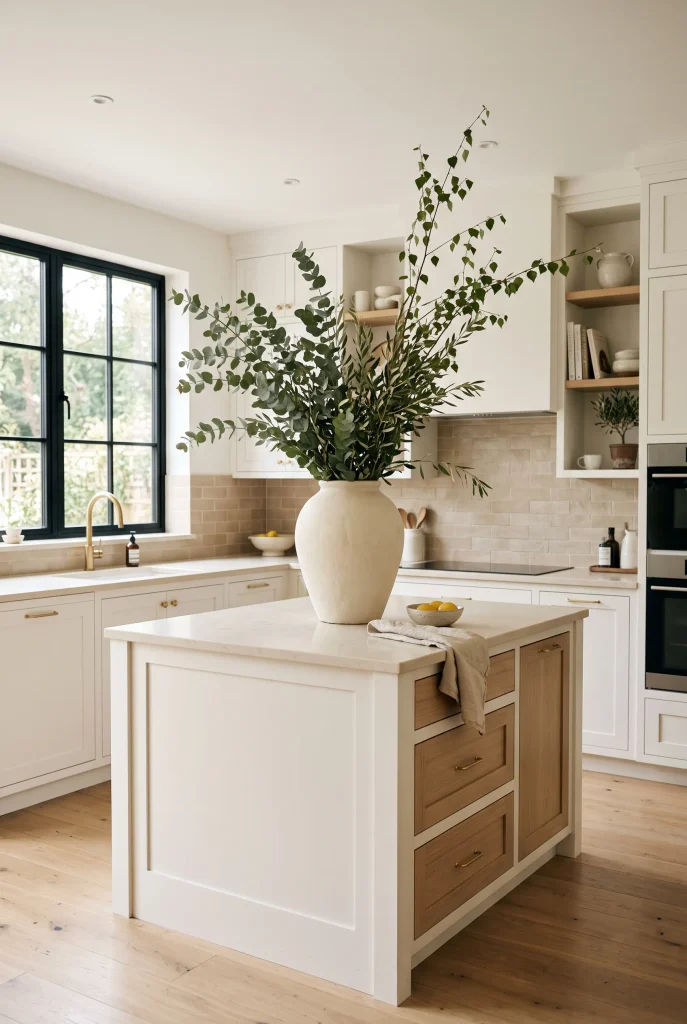
- Use one large vase instead of several tiny decorative objects.
- Choose tall branches to add height against a low backsplash.
- Keep the vase near an unused corner of the island.
- Neutral ceramics create a polished look without competing with other finishes.
An oversized vase can give a kitchen counter an instant focal point without requiring a complicated arrangement. Choose a tall ceramic vessel in ivory, cream, beige, or muted stone and fill it with leafy branches, eucalyptus, olive stems, or simple dried greenery. The height draws the eye upward and helps balance kitchens with long horizontal counters. On a large island, place the vase slightly off-center so the surface still feels usable. Its simple silhouette can create a sophisticated focal point while leaving plenty of visual breathing room around the rest of the countertop.
The scale matters more than the number of accessories. A vase that is too small may disappear against large cabinets, while an oversized piece can make a compact counter feel crowded. Look at the proportions of your kitchen before choosing one. Organic branches usually create a softer effect than tightly arranged flowers because their irregular shapes feel relaxed and natural. If you prefer a cleaner look, leave the vase mostly empty or use a few sculptural stems. This keeps the counter stylish while maintaining the calm, uncluttered feeling many modern kitchens need.
9. Marble Pastry Stand
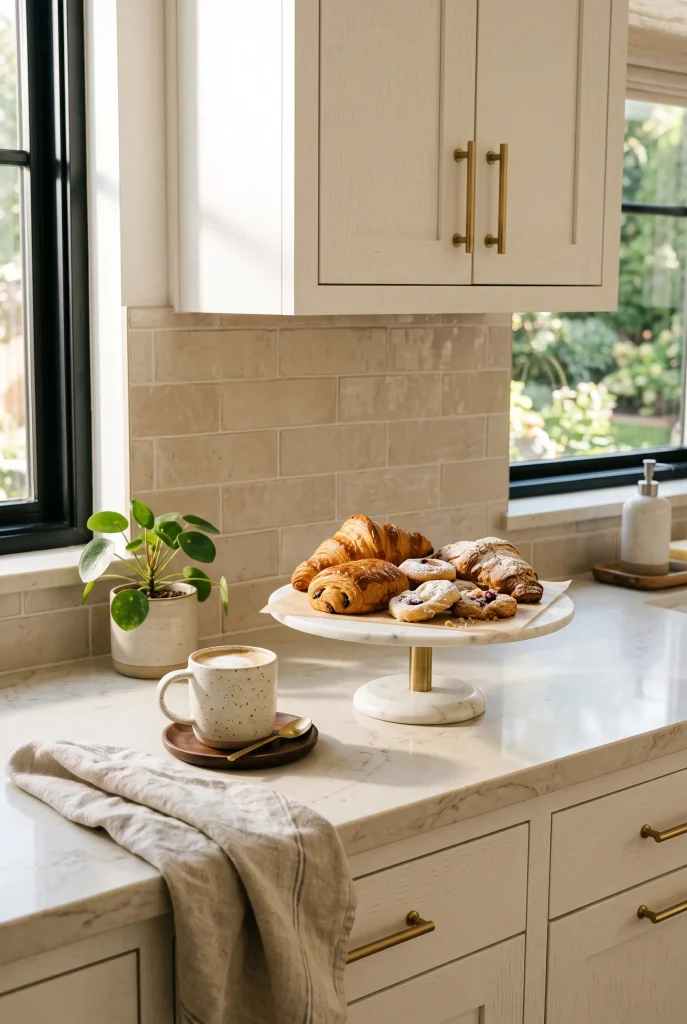
- Use a marble stand to add height and a subtle luxurious detail.
- Display a few pastries or seasonal treats for a welcoming touch.
- Keep the surrounding counter mostly clear for visual balance.
- Choose a low-profile stand when the kitchen already has strong vertical elements.
A marble pastry stand can make a simple kitchen counter feel instantly more elevated. Place a few croissants, muffins, cookies, or homemade treats on the stand and position it where the display can be enjoyed without interfering with food preparation. The raised surface adds dimension to the counter, while white or veined marble introduces a refined material that works beautifully with neutral kitchens. Pair it with a ceramic mug or folded linen towel for a relaxed breakfast feel. The goal is not to fill the entire stand, but to create one inviting detail that looks naturally lived-in.
For everyday use, choose a sturdy stand with a stable base and enough surface area for the foods you actually serve. A marble or stone finish pairs especially well with wood, brass, and warm neutral cabinetry. You can also switch the display seasonally, using fruit in summer or small baked treats during cooler months. This keeps the arrangement fresh without changing the entire counter. When the rest of the surface stays relatively open, one elevated display piece can provide enough character to make the kitchen feel finished, welcoming, and thoughtfully styled.
10. Glass Canister Collection
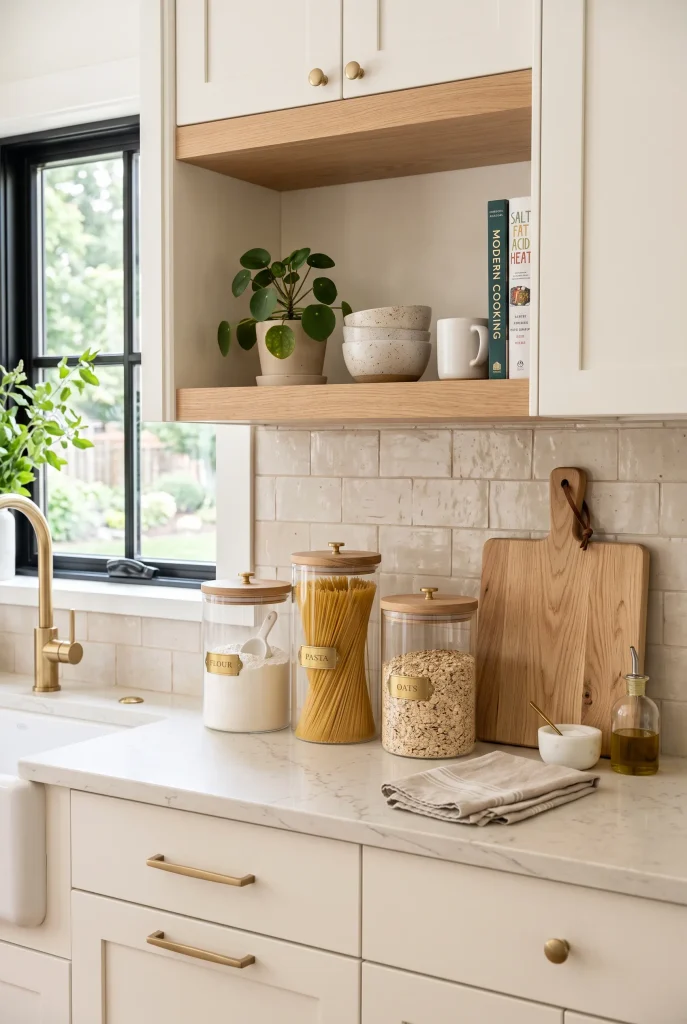
- Use matching glass containers to create a clean, coordinated display.
- Choose staples with attractive shapes or textures for visible storage.
- Add simple labels if you want a more organized look.
- Keep the collection near the cooking area for easy access.
Clear glass canisters make everyday pantry staples feel like part of the kitchen decor. Arrange two or three matching containers on the counter and fill them with items such as pasta, oats, flour, rice, or coffee beans. The transparent glass adds lightness, while the contents introduce subtle color and texture. Choose containers with simple lids in wood, bamboo, or brushed metal to complement your existing finishes. Keeping the collection together creates a defined storage zone instead of allowing individual packages to spread across the countertop.
The trick is to display only ingredients that you use frequently. Too many containers can quickly make a counter feel crowded, especially in a smaller kitchen. Use consistent shapes and sizes so the arrangement looks intentional rather than like leftover storage. Placing the tallest container toward the back and shorter ones in front creates a more balanced display. If you add labels, keep them simple and easy to read. This approach combines organization and decoration, giving your counter a tidy appearance while keeping everyday cooking ingredients visible and within reach.
11. Wooden Tray Centerpiece
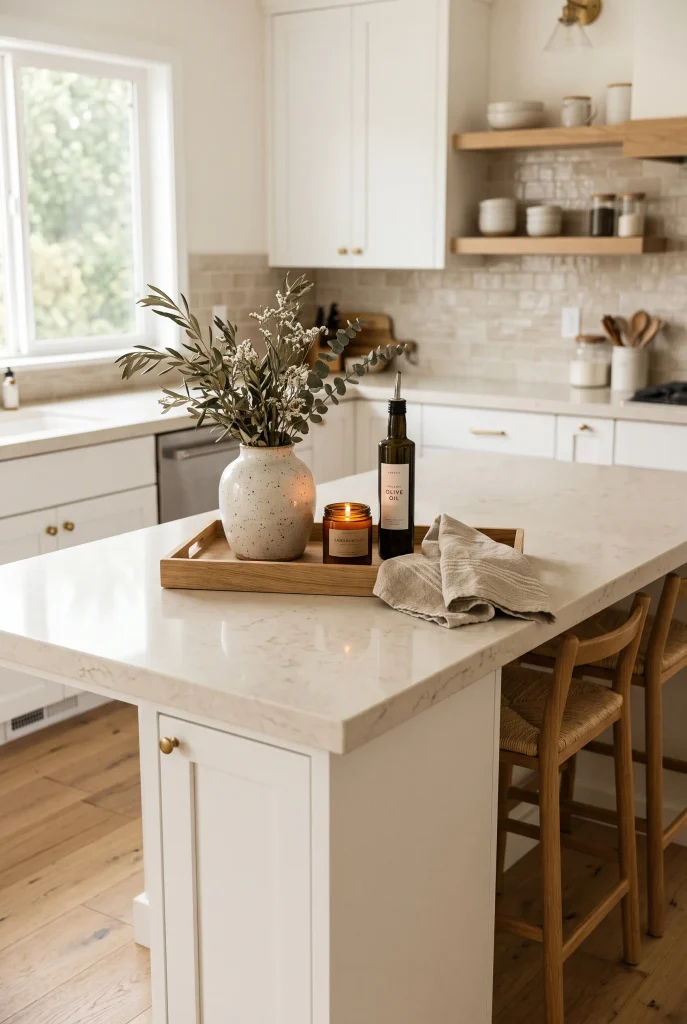
- Use a wooden tray to visually connect several small accessories.
- Choose natural wood for warmth against stone or quartz counters.
- Keep the centerpiece low enough to preserve an open sightline.
- Mix useful objects with one decorative piece for a balanced arrangement.
A wooden tray can turn several unrelated countertop objects into one cohesive centerpiece. Choose a rectangular or oval tray with a warm natural finish, then add a small ceramic vase, candle, olive-oil bottle, or folded linen towel. The tray creates a visual boundary, making the arrangement feel deliberate instead of scattered. This works especially well on a large kitchen island where small accessories can otherwise look lost. Keep the arrangement slightly off-center and leave generous open space around it so the island still feels practical and uncluttered.
Choose accessories with different heights and textures to keep the display interesting. For example, pair a low candle with a taller vase and a medium-height bottle. The contrast creates dimension without requiring lots of objects. A wooden tray also makes cleaning easier because several items can be moved together when you need more workspace. For a softer look, combine warm wood with cream ceramics and natural linen. For a more polished kitchen, add a small brass accent. The result is a flexible styling setup that feels welcoming while remaining simple enough for everyday life.
12. Cookbook Stack
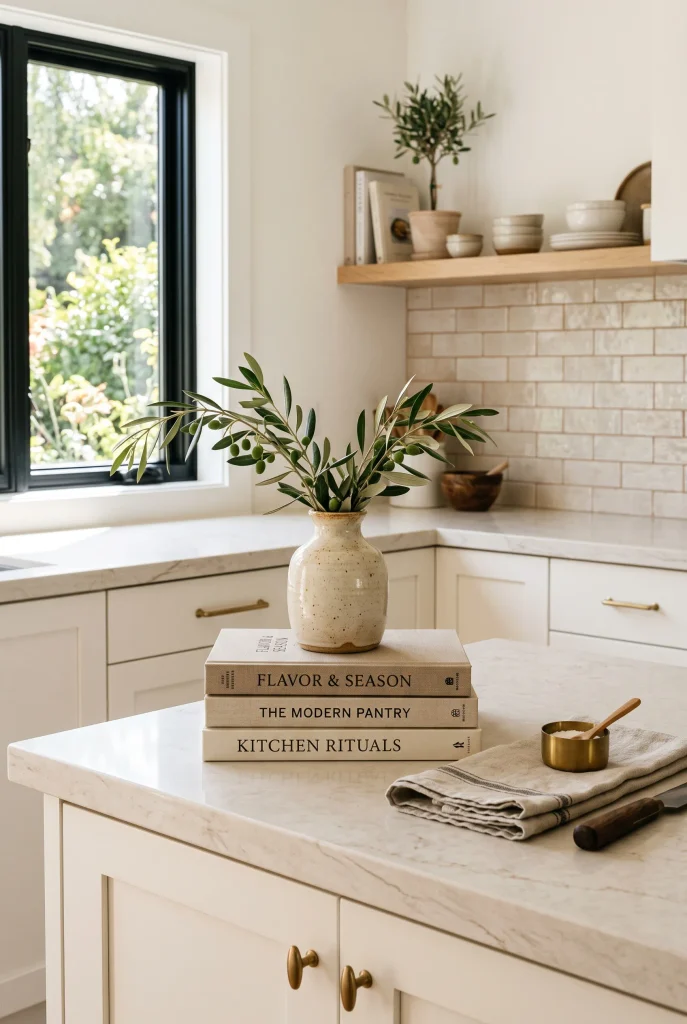
- Stack two or three attractive cookbooks to introduce height and personality.
- Choose neutral covers that complement your kitchen color palette.
- Place a small decorative object on top for a finished look.
- Keep favorite recipes nearby so the display remains functional.
A small stack of cookbooks can add personality and height to a kitchen counter without taking up much space. Choose two or three books with attractive neutral covers, then stack them horizontally with the largest book at the bottom. A small ceramic vase, candle, or decorative bowl placed on top creates a simple layered arrangement. The books can also reflect your cooking interests, making the counter feel more personal rather than styled entirely for appearance. Position the stack in an unused corner where it will not interfere with food preparation or everyday appliances.
Keep the overall arrangement compact, especially if your kitchen already has several countertop accessories. Neutral covers in cream, tan, muted green, or warm gray blend easily with modern and traditional interiors. You can rotate the books occasionally to refresh the display or replace them with seasonal cooking favorites. This simple detail adds visual interest while keeping useful information close at hand. When paired with wood, ceramic, or natural stone accessories, a cookbook stack can make the counter feel layered and lived-in without sacrificing the clean, organized appearance of the space.
13. Olive Oil Display
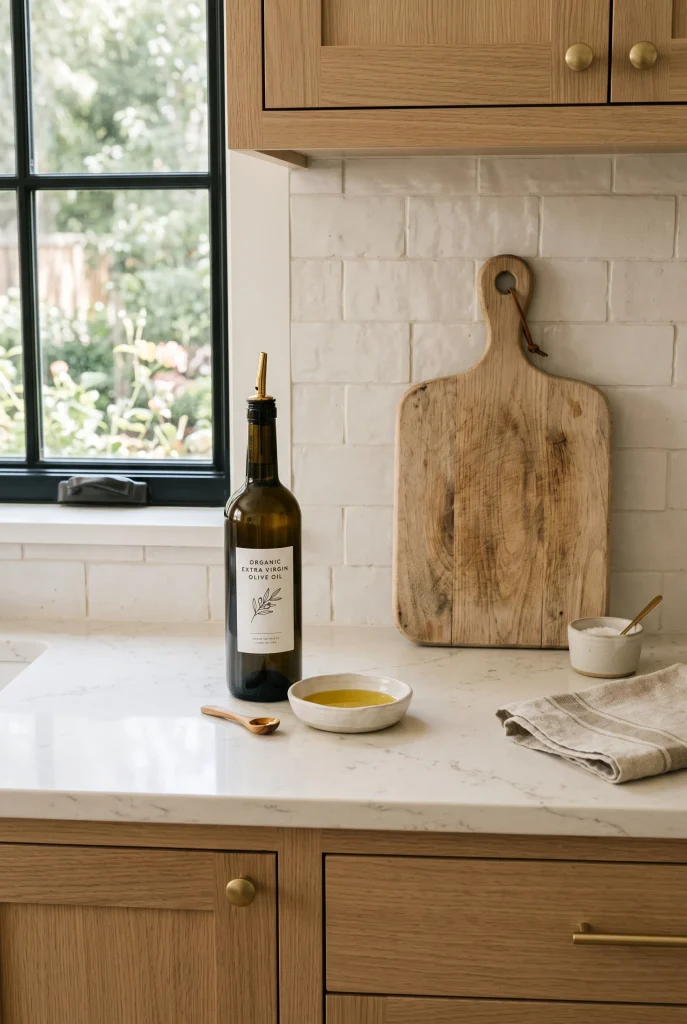
- Choose an attractive bottle that looks intentional enough to stay visible.
- Place it near the stove or prep area for convenient everyday use.
- Add a small dish or wooden board to anchor the arrangement.
- Keep other nearby accessories minimal so the bottle remains the focal point.
A beautiful olive-oil bottle can become a surprisingly stylish part of your countertop instead of something that needs to be hidden away. Choose a dark glass, ceramic, or sculptural bottle with a simple shape, then place it beside a wooden cutting board or small stone dish. Keeping the bottle near the cooking area makes it convenient for everyday meals while giving the counter a useful decorative detail. Warm wood and neutral ceramics work especially well with olive oil because they create a natural, relaxed feeling that suits both modern and traditional kitchen styles.
Avoid displaying too many bottles together unless you have a dedicated cooking station. One attractive bottle usually creates a cleaner effect than several mismatched containers. If you regularly use infused oils or vinegar, choose coordinated bottles so the collection feels intentional. A small dish underneath can catch occasional drips and protect the countertop. The bottle adds height without taking up much space, making it especially useful on open counters. The result is simple, functional styling that makes an everyday cooking essential feel like a thoughtful part of the kitchen design.
14. Linen Towel Layer
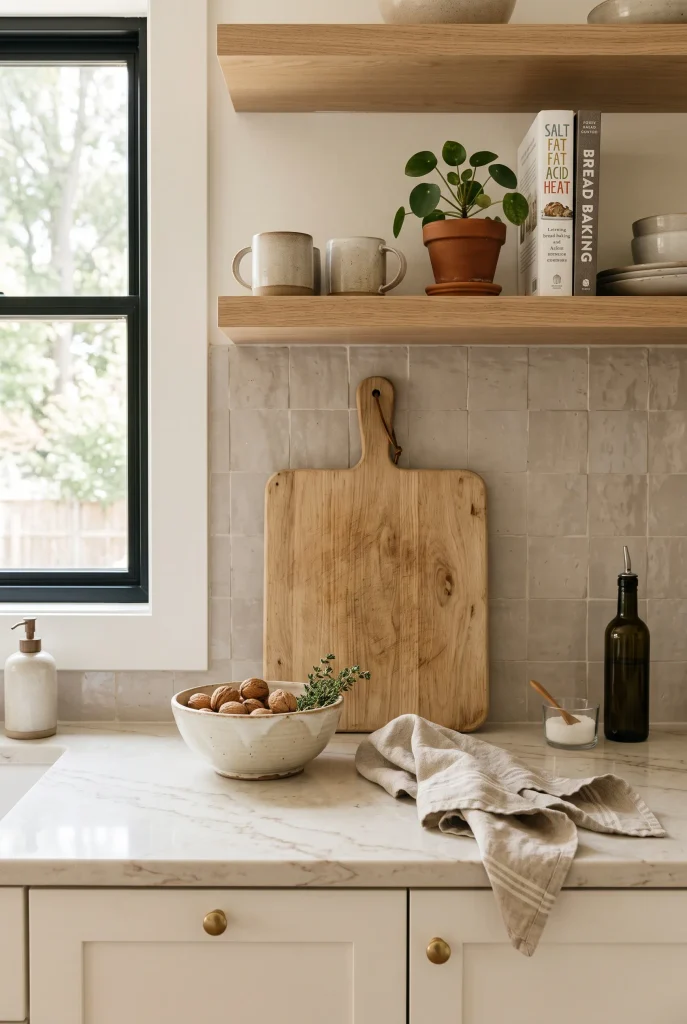
- Use linen to introduce softness against hard stone or quartz surfaces.
- Fold or drape the towel casually for a relaxed appearance.
- Choose warm neutrals that complement the existing kitchen palette.
- Keep the towel within reach of the sink or preparation area.
A simple linen towel can soften the look of a kitchen counter while adding a useful everyday layer. Choose a towel in oatmeal, cream, beige, muted gray, or another natural shade, then fold it loosely over the edge of a wooden cutting board or place it beside a ceramic bowl. The fabric introduces texture against smooth quartz, marble, or stone surfaces. A slightly relaxed fold usually looks more natural than a perfectly pressed arrangement. Keep the towel close to the sink or prep zone so it remains practical rather than becoming decoration that needs to be constantly moved.
Texture makes a noticeable difference when a kitchen contains mostly hard materials. Pairing linen with wood and ceramic creates a warmer, more balanced countertop arrangement without adding much visual weight. For a subtle seasonal update, switch the towel to a deeper earthy shade during fall or a lighter natural tone during warmer months. Choose washable linen or cotton-linen blends for areas that get frequent use. This small addition can make the kitchen feel softer and more lived-in while keeping the overall styling simple, functional, and easy to refresh.
15. Statement Pendant Reflection
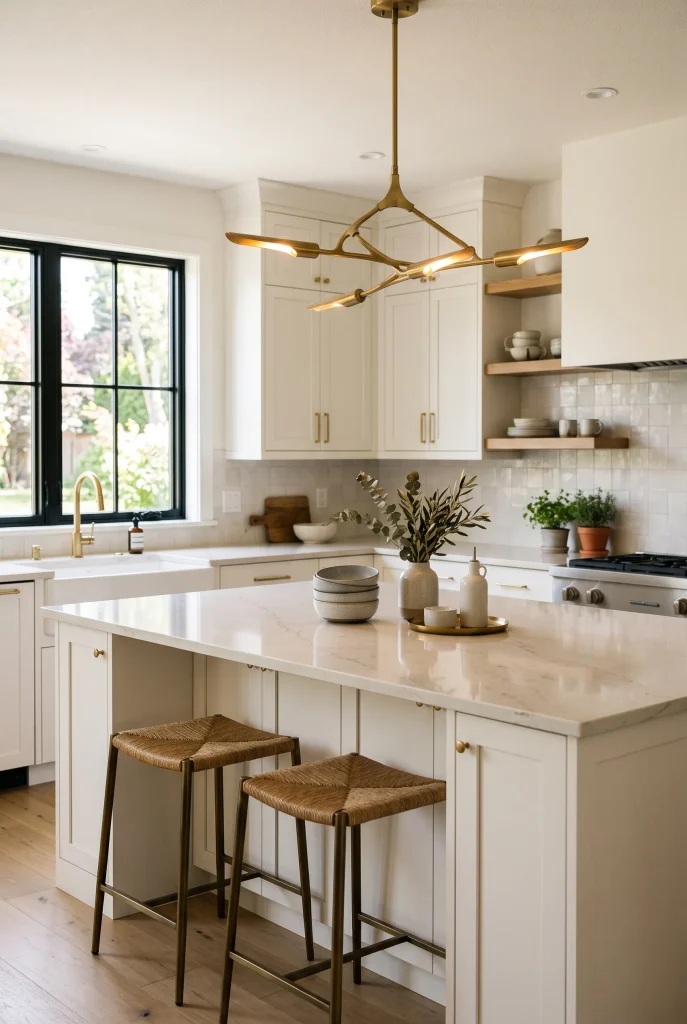
- Let the lighting fixture become part of the overall countertop composition.
- Keep the island surface relatively simple beneath a bold pendant.
- Use reflective finishes to subtly connect lighting with nearby accessories.
- Choose warm bulbs to create a welcoming evening atmosphere.
A statement pendant can influence how the entire kitchen counter feels, even though it sits above the surface. A sculptural brass, aged-metal, glass, or woven fixture can draw the eye toward the island and create a strong visual anchor. Keep the countertop underneath relatively uncluttered so the lighting has room to stand out. A few carefully chosen accessories, such as a ceramic bowl or wooden tray, can connect the lower and upper parts of the composition. The result feels intentional because the countertop and lighting work together instead of competing for attention.
Consider the size and height of the pendant carefully so it feels proportional to the island. Warm bulbs can add a soft glow in the evening, while natural daylight keeps the kitchen bright during the day. Reflective materials such as polished stone, glass, or subtle brass can pick up small highlights from the fixture and create extra depth. This approach is especially useful when you want the kitchen to feel styled without filling the counter with accessories. Sometimes keeping the surface simple allows one strong architectural detail to do most of the visual work.
16. Decorative Salt Cellar
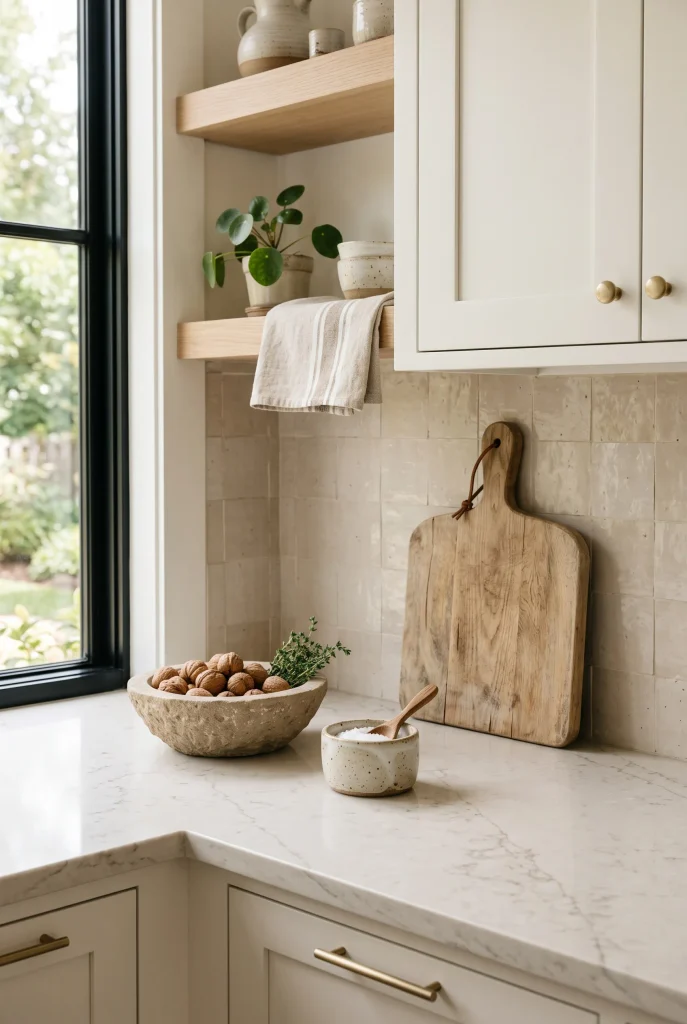
- Choose a handmade ceramic container for subtle texture and character.
- Keep it beside the main cooking area for quick access.
- Select a neutral finish that blends with surrounding materials.
- Pair it with one wooden or stone accessory for a cohesive setup.
A small salt cellar can add a charming detail to the kitchen while keeping an everyday ingredient within easy reach. Choose a ceramic, stone, or wooden container with a simple shape and place it near the stove or food-preparation area. Its compact size keeps the counter from feeling crowded, while the material adds texture to an otherwise smooth surface. Cream, beige, soft gray, or natural stone finishes blend easily with most kitchen palettes. Instead of displaying a large collection of seasoning containers, one thoughtfully chosen cellar creates a cleaner and more intentional look.
For a more layered arrangement, place the salt cellar on a small wooden board beside a ceramic spoon or pepper mill. Keep the colors coordinated so the setup feels like one small composition rather than several unrelated objects. This is particularly useful in kitchens where you want functional accessories to contribute to the decor. Tiny details like this can make an open countertop feel more finished without adding visual clutter. Because the container is genuinely useful, it can stay visible every day while still giving the kitchen a warm, considered appearance.
17. Fluted Ceramic Vessels
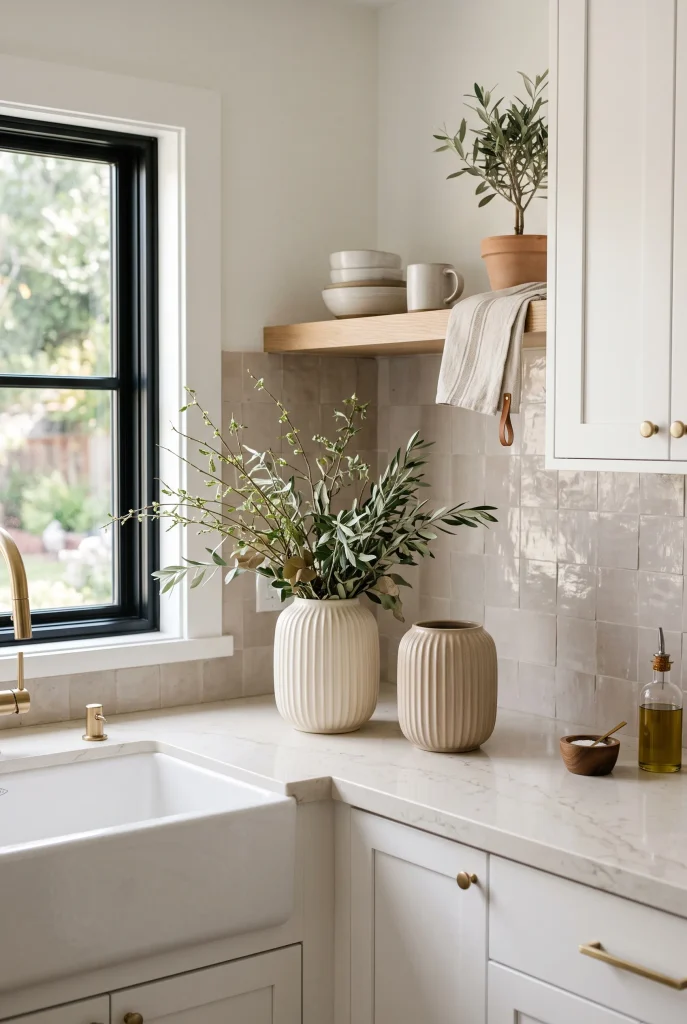
- Use fluted surfaces to bring subtle dimension to a smooth countertop.
- Combine two vessels with different heights for visual balance.
- Keep the color palette soft so texture remains the main feature.
- Add simple greenery if the arrangement needs a natural accent.
Fluted ceramic vessels bring texture to the counter without relying on bold colors or excessive decoration. Choose one or two pieces with vertical ridges, rounded silhouettes, or softly sculpted surfaces, then position them near a backsplash or unused corner. An ivory or warm beige finish keeps the arrangement understated while allowing the texture to catch changing daylight. One vessel can hold leafy stems, while another remains empty as a sculptural accent. This combination creates height and interest without taking away the calm, uncluttered feeling that works so well in modern kitchens.
Varying the heights helps the arrangement feel more natural and prevents the vessels from looking like a matching showroom set. You can also combine a fluted vase with a smooth ceramic bowl to create a subtle contrast in texture. Keep the surrounding counter open so the details remain easy to appreciate. This style works particularly well with warm wood cabinetry, stone surfaces, and brushed metal hardware because the materials complement one another without looking overly coordinated. The finished counter feels sophisticated, tactile, and welcoming while requiring only a few carefully selected pieces.
18. Open Produce Basket

- Choose a breathable basket for storing fruits you reach for often.
- Natural woven fibers add warmth and organic texture to the counter.
- Mix two or three fruit colors for an attractive natural display.
- Keep the basket away from heat sources and direct harsh sunlight.
A woven produce basket can make everyday fruit storage look warm and intentional. Choose a medium-sized basket made from rattan, seagrass, cane, or another natural fiber, then fill it with apples, pears, lemons, or seasonal produce. The basket adds texture against smooth countertops while the fruit provides natural color without needing decorative accessories. Place it in a corner of the island or near the main food-preparation area where it remains easy to reach. This setup is especially useful when you want the counter to feel lived-in rather than perfectly staged.
Avoid overfilling the basket because too much produce can make the arrangement look messy and visually heavy. A loose mix of colors and shapes usually creates a more natural appearance. If the kitchen already has several wood elements, a woven basket can reinforce that warm, organic feeling without adding another hard surface. Rotate the fruit as it changes throughout the week so the display stays fresh. This practical approach turns storage into decor while keeping healthy snacks visible and encouraging a more organized, welcoming kitchen environment.
19. Black Accent Containers
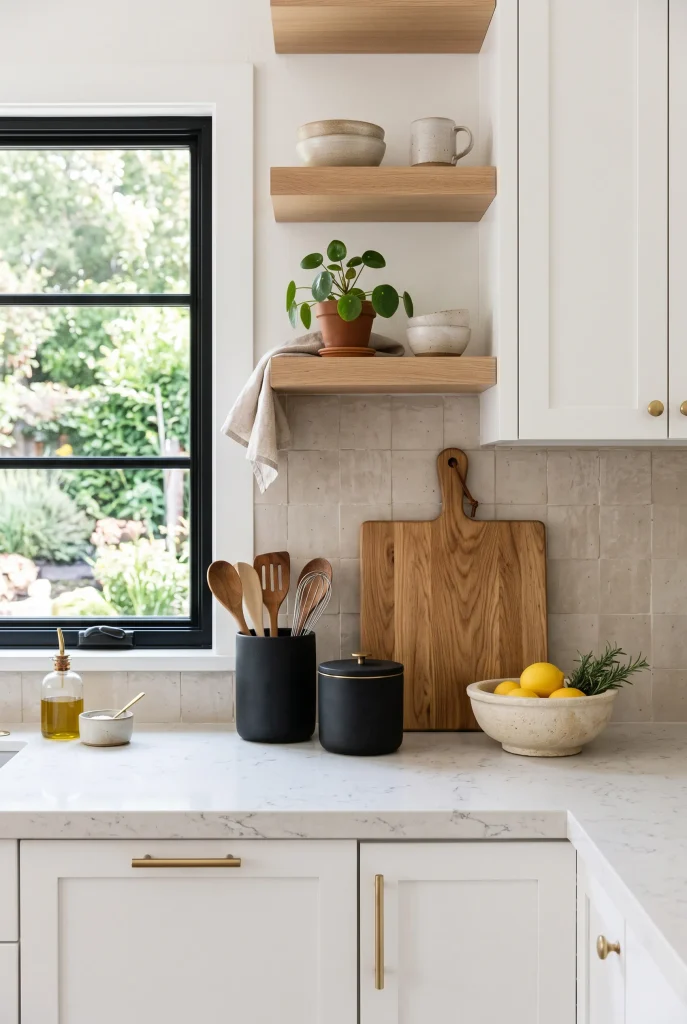
- Use black containers to create contrast against light countertops and cabinets.
- Choose matte finishes for a softer, more sophisticated appearance.
- Keep the number of dark accessories limited for balanced contrast.
- Pair black with wood or ceramic to prevent the look from feeling harsh.
A few matte black containers can give a light kitchen stronger visual definition without making the space feel dark. Choose simple canisters, utensil holders, or small storage jars with clean silhouettes, then position them beside warmer materials such as wood or natural stone. The contrast draws attention to the styled area and helps break up an all-white or cream palette. Keep the collection limited to two or three pieces so the darker color feels intentional. This works especially well in modern kitchens where small amounts of contrast can make simple surfaces look more refined.
For a softer result, choose matte black rather than glossy finishes. The low sheen absorbs light and creates a subtle, grounded effect against bright counters. Pairing black with warm wood can also prevent the arrangement from feeling too stark or industrial. If your kitchen already has black cabinet hardware, repeating the finish on the counter creates a visual connection throughout the room. Keep the surrounding accessories neutral and uncluttered so the contrast remains controlled. This simple technique adds depth to the counter while maintaining a clean, contemporary atmosphere that feels easy to live with.
20. Natural Stone Bowl
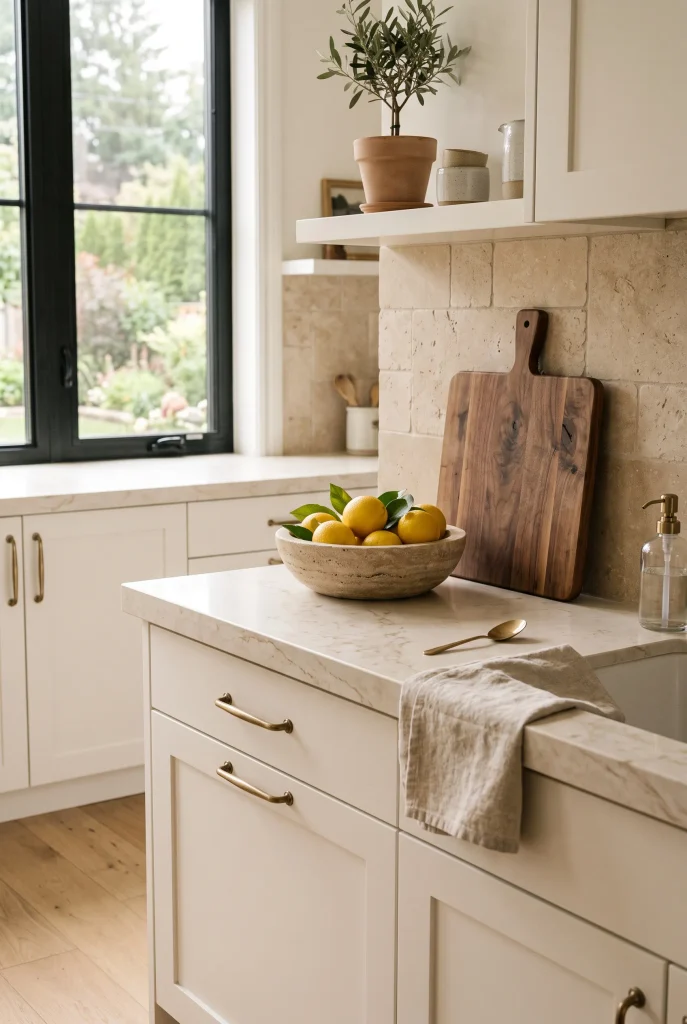
- Choose stone with natural variations for authentic texture and character.
- Use the bowl for fruit, small produce, or simple decorative objects.
- Select a low profile to keep the countertop visually open.
- Pair stone with wood to create a warm material contrast.
A natural stone bowl can add quiet character to a kitchen counter through its weight, texture, and organic variation. Choose a low bowl made from travertine, marble, limestone, or another natural stone, then fill it with lemons, pears, or a small collection of seasonal produce. The irregular veining and earthy surface create visual interest without relying on bright colors. Place it on a kitchen island or open counter where the shape can be appreciated. Its substantial material also helps anchor smaller accessories, making the entire arrangement feel more grounded and intentional.
Keep the bowl relatively simple so its natural texture remains the focus. A low, wide design is especially useful on busy counters because it adds interest without blocking views across the kitchen. Pair it with warm walnut, oak, or acacia wood for a balanced combination of hard and organic textures. Natural stone looks most effective when surrounded by a little empty space. That breathing room allows the material to stand out and prevents the counter from feeling overloaded. The result is understated styling with a timeless, collected quality.
21. Small Artful Sculpture

- Choose one sculptural piece with an interesting silhouette.
- Use neutral ceramics or stone for a subtle artistic touch.
- Position it in an unused corner where it will not interfere with work.
- Keep nearby accessories simple so the sculpture remains noticeable.
A small sculptural object can bring an artistic touch to a kitchen without turning the counter into a display shelf. Look for a ceramic form, stone figure, abstract shape, or handcrafted object with an interesting silhouette. Place it beside a cutting board, vase, or small bowl to create a compact vignette. Neutral shades such as ivory, sand, charcoal, or warm gray keep the focus on the shape rather than color. This approach works especially well when the rest of the kitchen already has clean lines and minimal decoration.
Scale is important because the sculpture should add personality without becoming an obstacle. Choose a piece that feels substantial enough to notice but small enough to leave plenty of working surface. If you already have strong materials such as marble counters or detailed cabinetry, select a simple form that adds contrast without competing. You can also rotate decorative pieces throughout the year to keep the space feeling fresh. A single artistic object can make the kitchen feel more personal and collected, proving that countertop decor does not need to be large or complicated to make an impact.
22. Woven Bread Basket
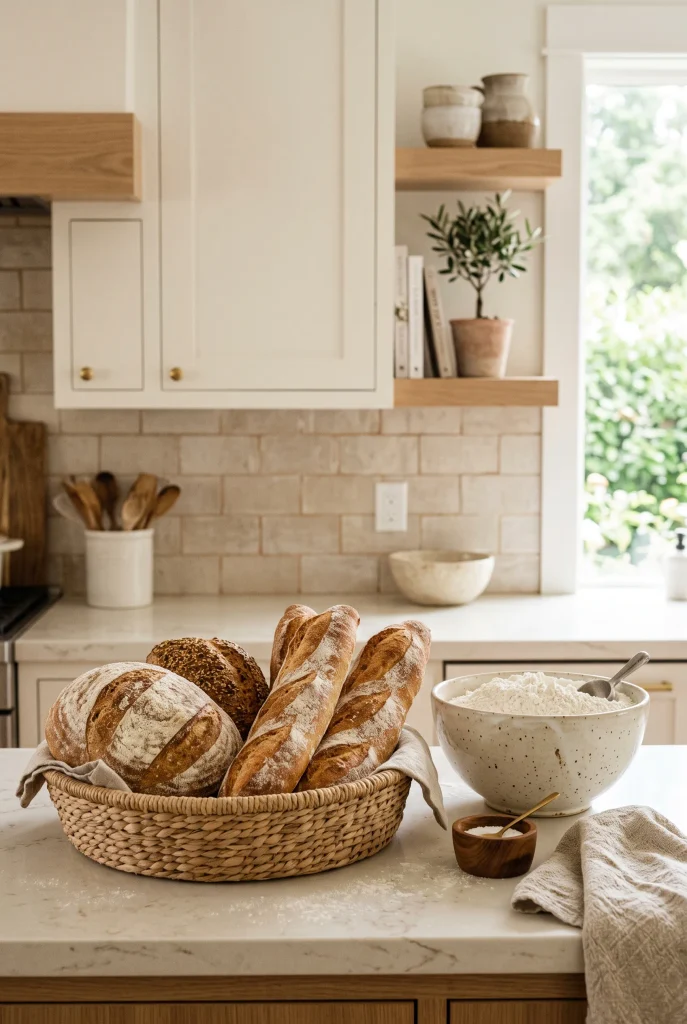
- Choose a shallow woven basket that keeps bread easy to reach.
- Natural fibers add warmth against smooth stone countertops.
- Keep the basket near the breakfast or food-preparation area.
- Use one attractive basket instead of several small storage containers.
A woven bread basket can make a kitchen counter feel instantly warmer and more inviting. Choose a shallow rattan, seagrass, or cane basket and fill it with bread, rolls, or a fresh baguette. The natural fibers introduce texture while the bread adds an everyday, lived-in quality. Place the basket near the breakfast area or somewhere convenient for serving meals. Its open shape keeps the contents visible and accessible, turning practical food storage into a simple decorative feature that works beautifully in farmhouse, cottage, Scandinavian, and organic-modern kitchens.
Choose a basket with enough room to hold your usual amount of bread without overflowing. A linen liner can add softness and help create a more finished appearance, while a neutral fabric keeps the palette calm. Avoid placing bread directly beside heat-producing appliances, as warmth can affect freshness. The basket can also be paired with a wooden cutting board or ceramic butter dish for a cohesive breakfast corner. This arrangement proves that useful storage can contribute to the overall style of the kitchen while keeping frequently used foods organized and easy to grab.
23. Sculptural Fruit Branches
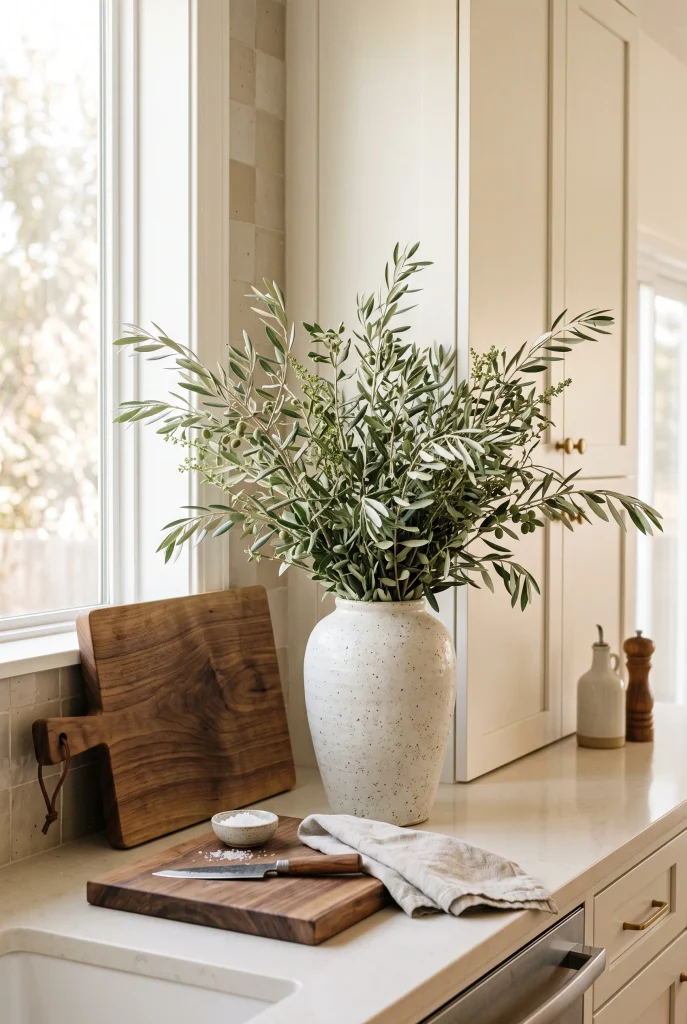
- Use long branches to introduce height without adding bulky accessories.
- Choose olive, eucalyptus, or similar greenery for an organic effect.
- Place the vase where it will not interfere with food preparation.
- Let the natural branch shapes create visual movement across the counter.
Tall branches can give a kitchen counter a fresh, sculptural quality while keeping the color palette calm. Place a few olive, eucalyptus, or other natural branches inside a simple ceramic vase and position the arrangement toward the back of the counter. Their irregular shapes create height and movement against straight cabinetry and clean countertops. Choose a warm neutral vase so the greenery remains the main feature. This setup works particularly well when the kitchen feels visually flat because the branches draw attention upward and add a soft organic element without requiring many decorative pieces.
Keep the arrangement loose rather than packing the vase with too many stems. A handful of branches usually creates a more natural silhouette and allows light to pass through the leaves. If you have a narrow counter, choose a tall, slim vase that uses vertical space rather than spreading outward. You can also replace the branches seasonally with dried stems or fresh greenery. The simple change keeps the kitchen feeling current without requiring a complete redesign. Combined with wood, stone, and neutral ceramics, this arrangement creates a relaxed and polished countertop that feels connected to nature.
24. Layered Serving Platters
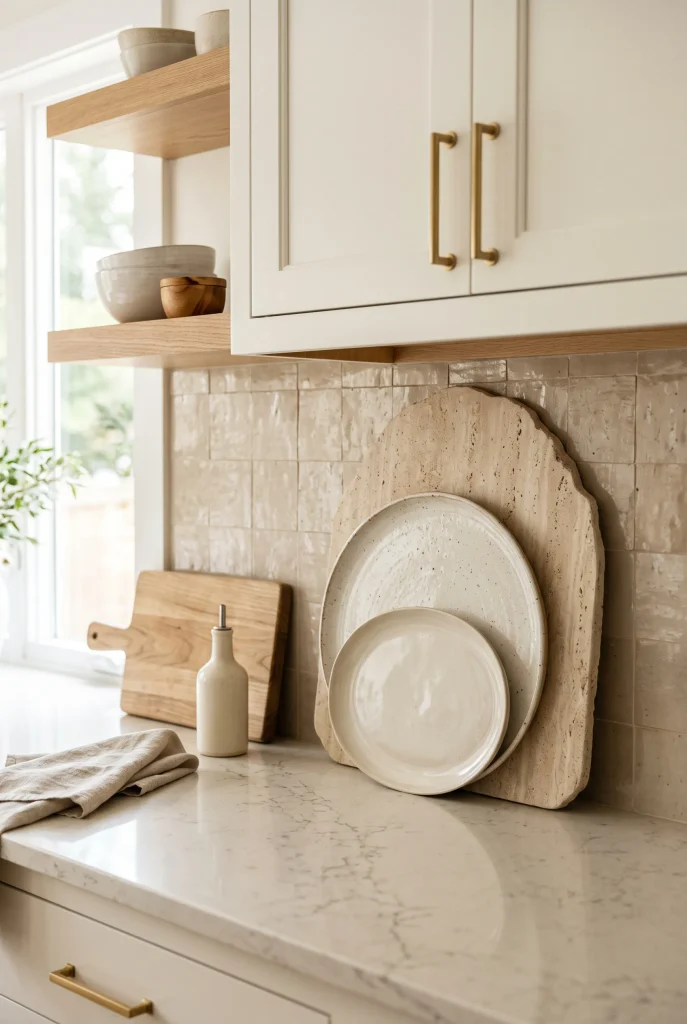
- Lean serving platters vertically to create height and visual interest.
- Mix round and rectangular shapes for a more collected appearance.
- Choose neutral finishes that complement the kitchen’s existing palette.
- Keep the arrangement near an unused backsplash area for stability.
Layered serving platters can turn useful kitchen pieces into a beautiful countertop display. Instead of storing every platter inside a cabinet, choose two or three with attractive shapes, finishes, or subtle patterns and lean them vertically against the backsplash. Place the largest piece at the back and layer smaller platters in front to create depth. Cream ceramic, natural stone, wood, or softly patterned designs work especially well with neutral kitchens. The arrangement adds height without requiring shelves, making it useful for counters that need more visual interest but still have limited surface area.
Select pieces that you would genuinely use when serving meals so the display remains practical. Make sure the platters are stable and supported, especially if they are heavy stone or ceramic pieces. For extra texture, pair them with a small bowl, vase, or folded linen towel positioned in front. Keep the colors related but not perfectly identical so the arrangement feels collected. This styling method gives an empty backsplash area purpose while keeping everyday serving pieces accessible. It also creates a layered backdrop that can make the entire counter feel more finished and thoughtfully arranged.
25. Seasonal Produce Display
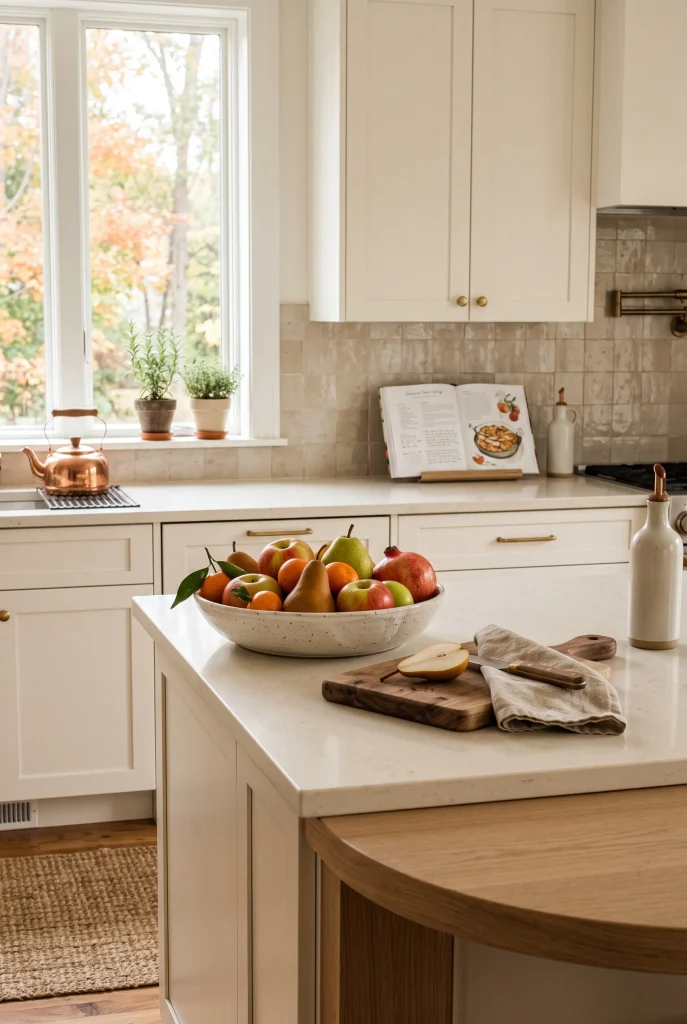
- Use seasonal produce to introduce natural color throughout the year.
- Choose one large bowl rather than several scattered fruit containers.
- Mix different shapes and tones for a relaxed, abundant appearance.
- Keep fruit visible so the display remains useful as well as decorative.
Seasonal produce can give a kitchen counter an easy refresh while adding color and everyday usefulness. Fill a large ceramic, stone, or wooden bowl with whatever fruit is freshest, such as apples and pears in autumn or lemons and oranges during warmer months. The natural variations in color and shape create a lively focal point without feeling overly decorated. Place the bowl on the island or in a convenient corner where everyone can reach it. Because the display uses food you already buy, it adds personality without requiring extra decorative objects.
Keep the arrangement loosely filled rather than perfectly organized. A mixture of fruit sizes makes the bowl look more natural and visually interesting. Choose a container that complements your kitchen materials, such as warm ceramic beside stone counters or wood beside white cabinetry. Refresh the contents as fruit ripens so the display stays attractive and practical. This is one of the easiest ways to change the feeling of the kitchen throughout the seasons. A simple bowl of fresh produce can make the space feel brighter, warmer, and more welcoming with almost no effort.
Conclusion
Styling your kitchen counter does not have to mean filling every inch with decor. The most inviting spaces usually combine useful pieces with a few thoughtful details, leaving enough open space for everyday cooking and routines. From natural wood and fresh produce to ceramics, trays, and greenery, these kitchen counter styling ideas offer plenty of ways to make your space feel more organized and welcoming. Save this article on Pinterest so you can revisit your favorite ideas later, then try one or two in your own kitchen. Small changes can create a noticeably warmer, more polished space you will enjoy using every day.