21 Bed Without Headboard Ideas That Look Expensive
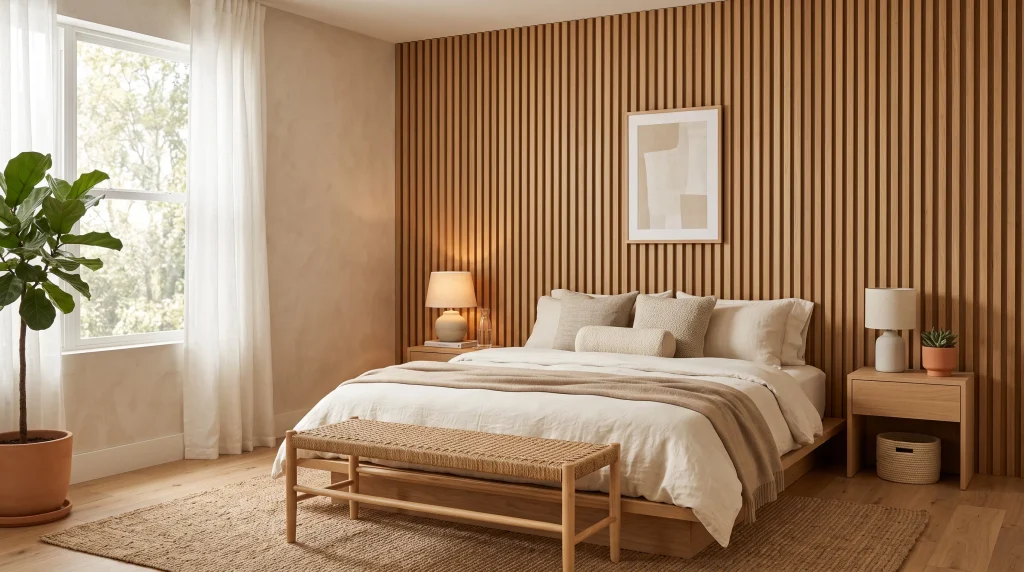
A beautiful bedroom does not always need a traditional headboard. Bed without headboard ideas can make your space feel lighter, more modern, and surprisingly expensive with the right details. From painted accent walls and oversized artwork to textured plaster, woven pieces, and statement lighting, there are plenty of ways to create a finished focal point around your bed. These ideas are especially useful if you are decorating on a budget, working with a small room, or simply prefer a cleaner look. You’ll find practical ways to add height, texture, warmth, and personality while keeping the bedroom comfortable and uncluttered.
1. Natural Wood Slat Backdrop
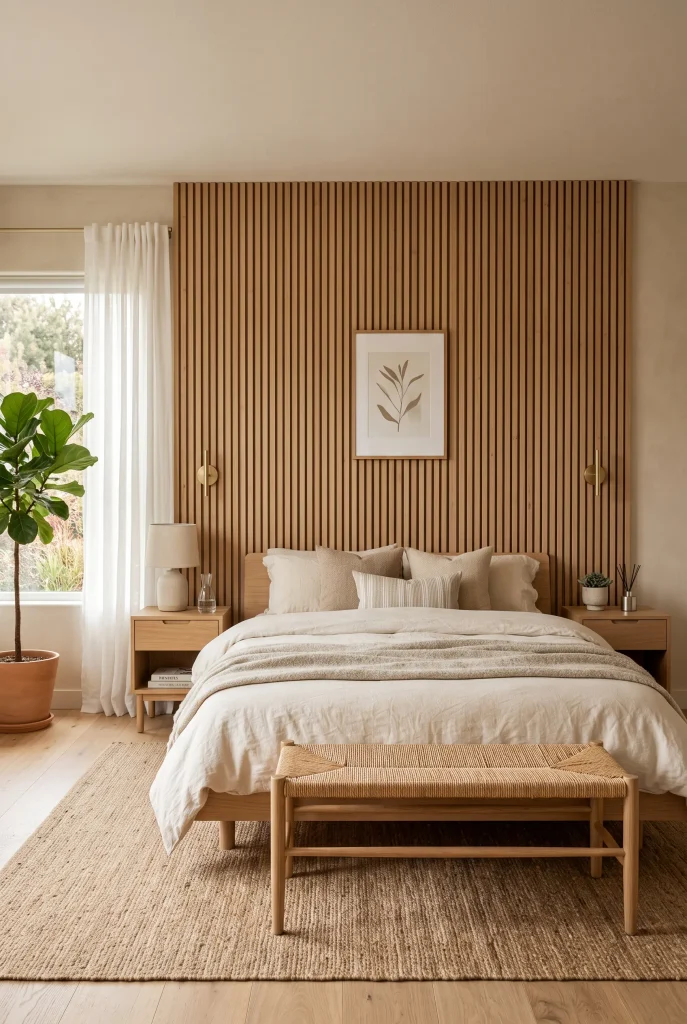
- Vertical wood slats add height and texture without needing a bulky headboard.
- The warm oak finish makes the bed wall feel intentional and expensive.
- Keep the bedding simple so the wood feature remains the focal point.
- A slim bench or woven basket can add function without crowding the room.
A beautiful wood backdrop can make a simple bed feel like a carefully designed centerpiece. Instead of adding a traditional headboard, use slim oak slats behind the mattress to create warmth, texture, and architectural interest. The vertical lines naturally draw the eye upward, which can also make the ceiling feel taller. This approach works especially well in neutral bedrooms where the palette needs a little definition. Choosing a wood tone close to the flooring creates a connected look, while contrasting bedding keeps the overall space from feeling too uniform or heavy.
For a polished result, leave enough visible wall or slat detail above the mattress so the arrangement feels intentional rather than crowded. Cream, white, beige, or soft taupe bedding pairs beautifully with natural wood and keeps the room bright. You can also add two small wall sconces or simple pendant lights to frame the sleeping area without installing a headboard. The result is a warm focal wall that feels custom and sophisticated. It also gives a bed without headboard a finished appearance while using relatively simple materials and a straightforward layout that can suit many bedroom styles.
2. Oversized Artwork
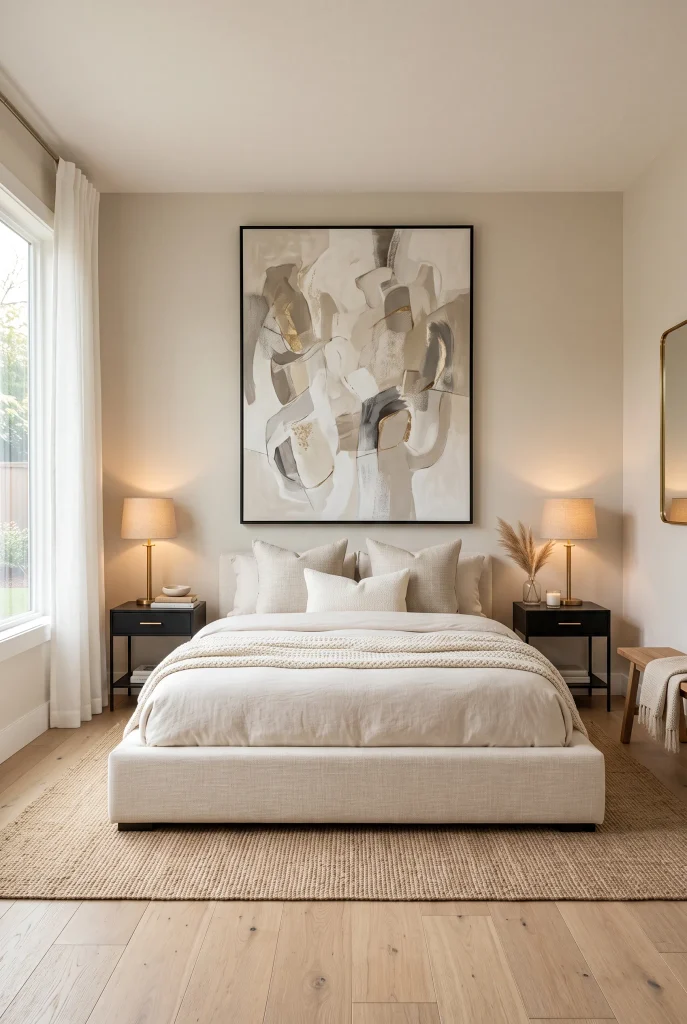
- One large artwork can give the bed wall instant visual structure.
- Choose a wide piece that relates to the bed’s overall width.
- Soft abstract shapes keep the room sophisticated without overwhelming it.
- Matching nightstands and lamps help the arrangement feel balanced.
Sometimes the simplest wall treatment creates the most expensive-looking bedroom. Hang one oversized piece of artwork above the bed and let it act as the visual anchor instead of using a traditional headboard. A large abstract canvas in muted beige, cream, charcoal, or earthy tones can connect the bedding, walls, and surrounding furniture without making the room feel busy. This idea is particularly useful when you want a sophisticated look with minimal decorating. The artwork gives the sleeping area a clear focal point while leaving the bed itself visually light and uncomplicated.
Scale matters more than price with this approach. A piece that is too small can make the wall feel unfinished, while an oversized canvas creates a stronger designer-style effect. Keep the surrounding furniture restrained with simple nightstands, understated lamps, and bedding in coordinating shades. If the artwork includes several colors, repeat one subtle tone through a throw or cushion for cohesion. This technique works especially well in smaller bedrooms because the open space above the bed remains uncluttered. The finished arrangement feels intentional, airy, and polished without requiring a bulky furniture piece.
3. Layered Linen Cushions
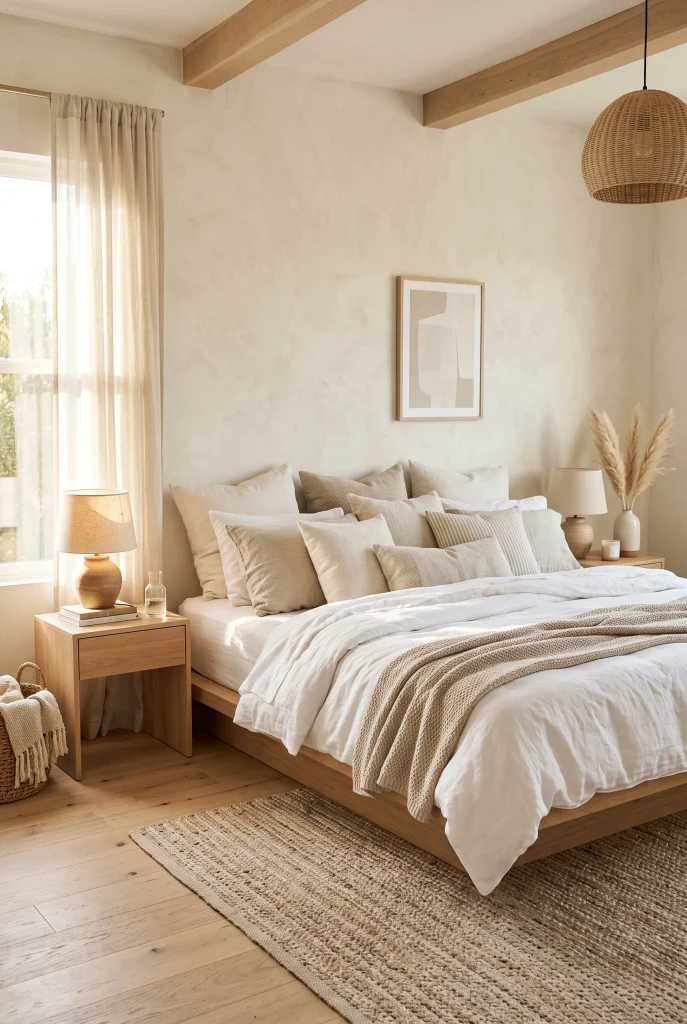
- Layered pillows create softness and height behind a simple bed.
- Mixing linen textures adds depth without introducing too many colors.
- Large European-style cushions can visually replace some headboard structure.
- Keep the palette tonal for a calm, elevated bedroom appearance.
A carefully layered pillow arrangement can turn an ordinary bed into a soft, inviting focal point. Start with two large Euro cushions at the back, followed by standard sleeping pillows and a few smaller decorative cushions in linen, cotton, or boucle. Without a physical headboard, these layers create height and visual fullness while keeping the room relaxed. Choose related shades such as ivory, oatmeal, beige, and warm taupe so the bed looks luxurious rather than cluttered. The key is using different textures within a limited color palette, which creates richness without making the space feel overly decorated.
This setup is especially practical for renters or anyone who does not want to permanently change the bedroom wall. The pillow arrangement can be adjusted whenever a different look is wanted, and everything remains easy to remove or refresh. Add a soft throw across the lower third of the bed for another layer of texture. For extra structure, place slim nightstands on both sides and use matching lamps. The finished arrangement makes the sleeping area feel complete, comfortable, and thoughtfully styled, proving that a headboard is not always necessary for visual impact.
4. Painted Accent Wall

- A painted accent wall gives the bed a defined visual backdrop.
- Warm taupe or greige creates depth while keeping the room inviting.
- Continue the color slightly behind the nightstands for a cohesive effect.
- Simple bedding lets the wall color become the main design feature.
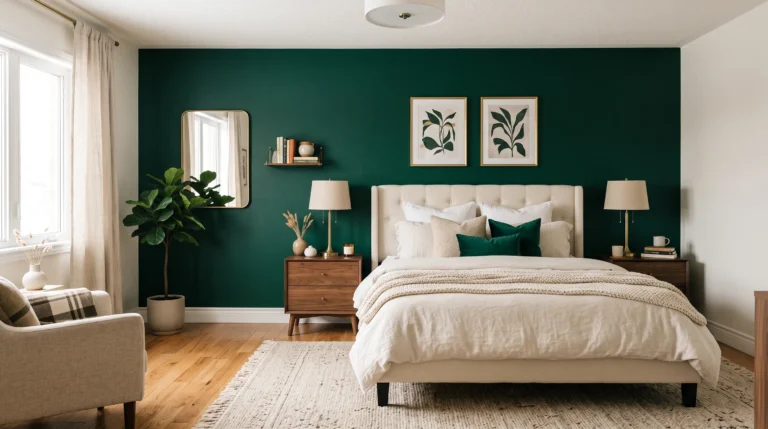
A thoughtfully painted wall can give a simple bed the presence of a much more expensive setup. Choose a rich neutral such as warm taupe, mushroom, greige, or muted olive and use it to visually frame the sleeping area. The color creates contrast against lighter bedding while adding depth without taking up any floor space. This is especially useful when the bedroom already has attractive flooring or furniture that you want to keep visible. A painted backdrop also feels more permanent and intentional than simply leaving a blank wall behind the bed.
For a refined finish, keep the rest of the room relatively calm and repeat small touches of the wall color through cushions, artwork, or a throw. Matte paint usually works beautifully because it absorbs light softly instead of creating distracting reflections. Pair the wall with natural wood nightstands, warm metal lighting, and textured bedding for a layered appearance. If the room is small, avoid extremely dark shades unless there is plenty of natural light. A balanced accent color can make the bed area feel grounded, polished, and complete without adding another large piece of furniture.
5. Wall Mounted Sconces
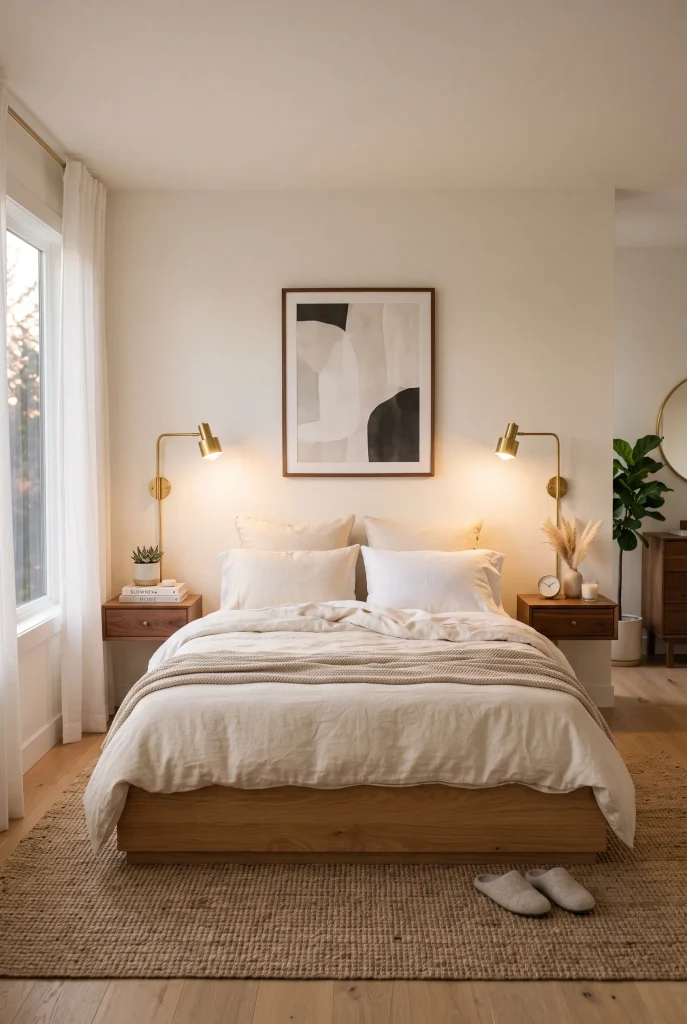
- Wall sconces add height and structure around a simple bed.
- Matching fixtures create symmetry without requiring a large headboard.
- Brass, black, or aged bronze finishes can add a refined accent.
- Choose adjustable lights if you want both style and practical reading illumination.
Beautiful lighting can make the entire bed wall feel more intentional. Instead of relying on a headboard for structure, install matching sconces on both sides of the bed to create symmetry and visual height. The fixtures naturally frame the sleeping area while keeping valuable floor space open. This works particularly well with compact nightstands because the wall becomes part of the design. Choose simple brass, black, bronze, or ceramic sconces that complement the room’s existing finishes. The result feels architectural and polished while still being practical enough for everyday reading or relaxing before bed.
Placement is important because the lights should feel connected to the bed rather than floating randomly on the wall. Center each fixture in relation to its nightstand and consider the height of the mattress before drilling. Warm bulbs generally create a softer bedroom atmosphere, especially in the evening. If you prefer flexibility, choose swing-arm or adjustable sconces that can direct light where needed. This approach works especially well in bedrooms where a clean look is important because it provides decoration, symmetry, and useful lighting in one simple design move.
View: 17 Cherry Red Bedroom Ideas That Feel Bold and Cozy
6. Textured Plaster Wall
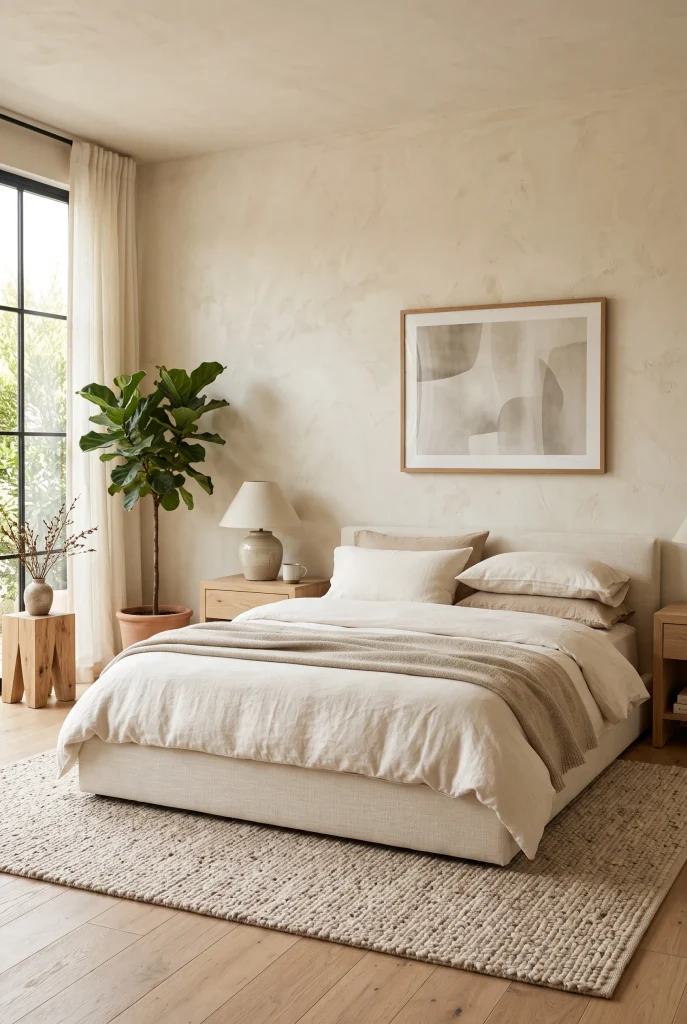
- Subtle plaster texture adds character without filling the wall with decor.
- Warm ivory and creamy beige keep the finish soft and timeless.
- Natural imperfections make the bedroom feel more architectural and custom.
- Pair textured walls with simple furniture to avoid visual competition.
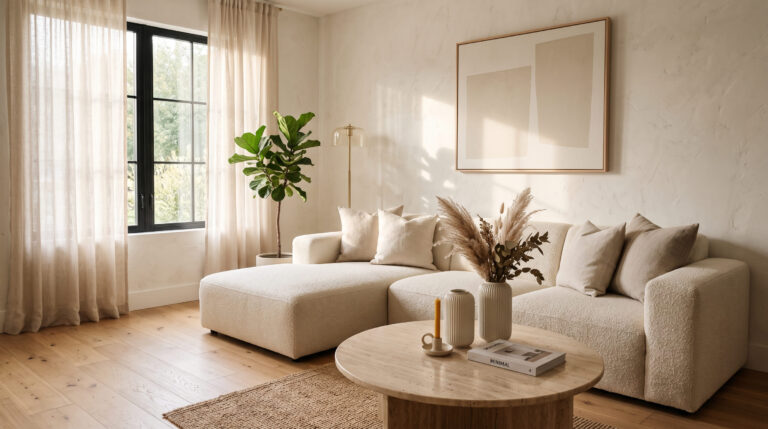
Texture can make a quiet bedroom feel remarkably sophisticated without adding more furniture. A softly finished plaster wall behind the bed creates subtle movement and depth while keeping the overall palette neutral. Warm ivory, creamy beige, or light greige works beautifully because these shades reflect natural light without making the room feel stark. The organic surface gives the sleeping area a custom architectural quality that can replace the visual role normally provided by a headboard. It also pairs naturally with linen bedding, wood furniture, woven accents, and other materials commonly used in relaxed, elevated bedrooms.
The beauty of this treatment is that it does not need much decoration around it. Let the textured surface remain visible and choose a few carefully selected pieces, such as ceramic lamps, a simple bench, or a small piece of artwork. If authentic plaster is outside the budget, textured paint techniques or removable wall finishes can create a related effect. Keep the bed frame low and streamlined so the wall remains prominent. The combination creates a calm focal point that feels layered and expensive while maintaining the open, uncluttered character many modern bedrooms need.
7. Upholstered Wall Panels
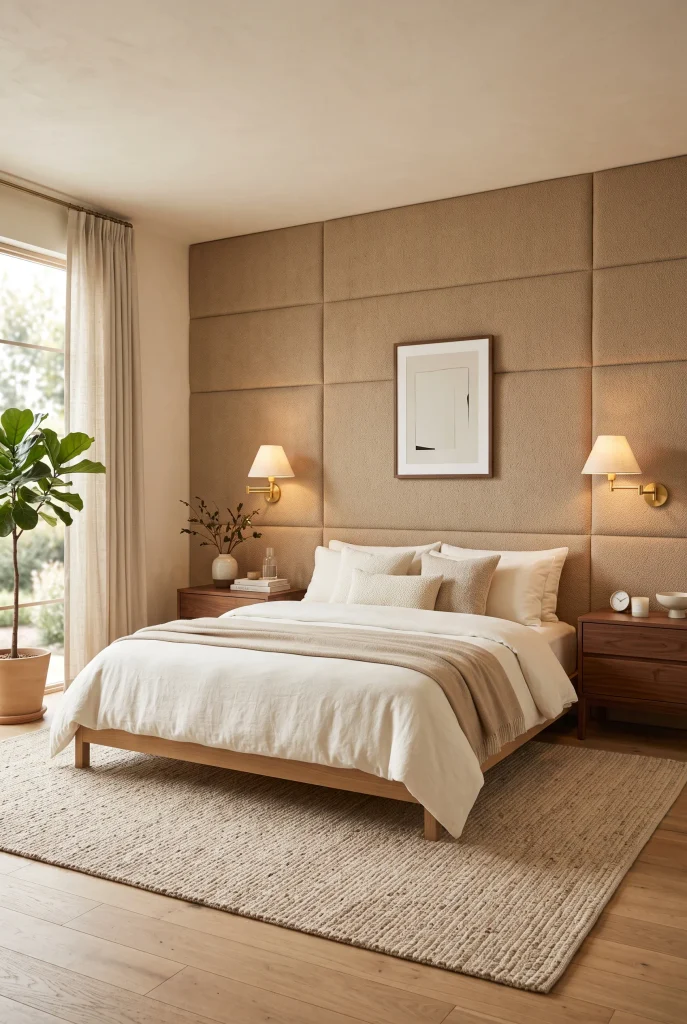
- Full-width fabric panels create the softness of a traditional headboard.
- Neutral upholstery makes the sleeping area feel warm and sophisticated.
- Vertical paneling can add height, while wide panels create a spacious effect.
- Choose durable, easy-care fabric for a practical everyday bedroom.
A wall of upholstered panels can make a simple bed feel intentionally designed from floor to ceiling. Instead of placing a separate headboard behind the mattress, install fabric-covered panels directly onto the wall to create softness, texture, and visual structure. Warm beige, oatmeal, cream, and soft gray are easy choices because they blend naturally with most bedding. The padded surface also brings a cozy quality to the room, making the sleeping area feel more comfortable and substantial without adding bulky furniture. It is an especially effective option for creating a quiet luxury bedroom.
For the most polished look, extend the panels across the width of the bed and, when space allows, slightly beyond the nightstands. This makes the entire wall feel connected rather than creating a narrow feature behind the mattress. Vertical seams can subtly emphasize ceiling height, while larger horizontal panels give a wider visual impression. Add warm lighting and natural wood furniture to balance the softness of the fabric. If you prefer a simpler project, use a smaller arrangement of removable upholstered panels behind the bed to achieve a similar effect with less commitment.
8. Floating Picture Ledge
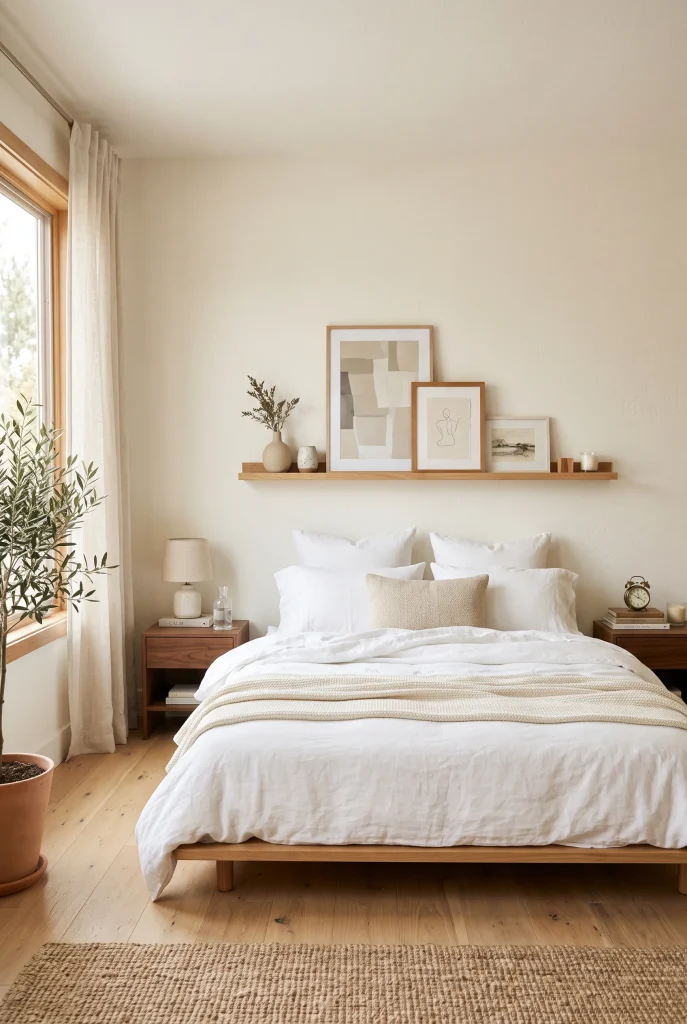
- A slim picture ledge adds personality without visually weighing down the wall.
- Layered artwork can be changed easily when your style evolves.
- Natural wood introduces warmth against a light neutral wall.
- Keep the artwork shallow and secure so the sleeping area remains practical.
A slim picture ledge can give the wall above your bed a finished look while keeping the arrangement light and flexible. Mount a narrow wood ledge several inches above the mattress and lean two or three framed prints against the wall. Add a small ceramic vase, candle, or simple decorative object for another layer. Because the pieces are not permanently arranged like a gallery wall, you can easily switch the artwork whenever you want a seasonal refresh. This makes the idea particularly useful for renters or anyone who enjoys changing bedroom decor without making major alterations.
Keep the composition simple by choosing artwork that shares a common color palette, such as cream, tan, black, muted green, or warm brown. The ledge itself can match nearby furniture to create visual continuity. Avoid placing too many objects on it because the wall should still feel calm and open. A few larger pieces usually look more intentional than a crowded collection of small frames. Combined with soft bedding and understated nightstands, this setup gives the bed area personality while preserving the clean appearance of a headboard-free bedroom.
9. Statement Pendant Lights

- Hanging pendants create strong vertical interest around a simple bed.
- Matching fixtures can visually frame the mattress without a headboard.
- Woven shades add warmth and texture while keeping the room inviting.
- Hang pendants carefully so they remain attractive without interfering with movement.
Statement pendant lights can turn an otherwise plain bed wall into a striking focal point. Hang one pendant on each side of the bed to create symmetry and draw the eye upward. This approach replaces some of the visual structure a traditional headboard would provide while introducing a decorative element that also serves a practical purpose. Woven, glass, ceramic, or metal shades can work depending on the room’s style. Warm bulbs are particularly effective because they create a soft glow around the bed in the evening and make neutral bedding feel more inviting.
Choose pendant proportions carefully so they complement rather than overpower the bed. Larger rooms can handle generous woven or sculptural fixtures, while compact bedrooms usually benefit from slimmer designs. Keep the hanging height high enough for comfortable movement and position the fixtures consistently on both sides. Pair them with simple nightstands and minimal accessories so the lighting remains the star. This arrangement is especially useful when you want the bedroom to feel custom and layered without adding another substantial piece of furniture behind the mattress.
10. Built-In Wall Niche
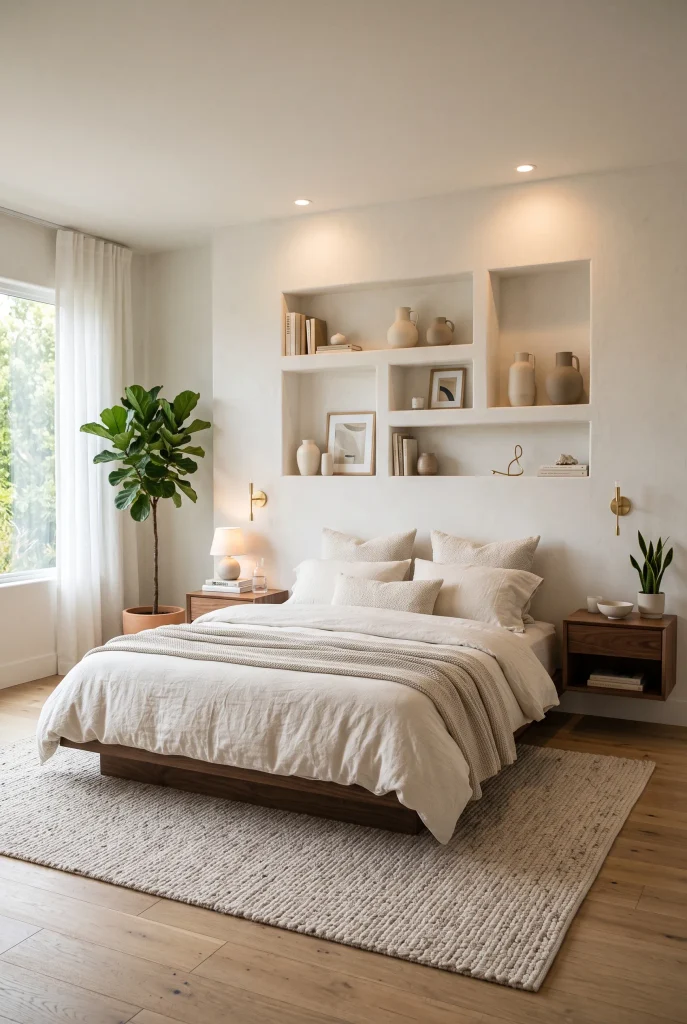
- A built-in niche gives the bed wall useful storage and visual depth.
- Recessed lighting can highlight small decorative pieces beautifully.
- Keep the niche colors close to the wall for a seamless appearance.
- Use only a few meaningful objects to maintain a calm bedroom feel.
A built-in wall niche can make the space behind a simple bed feel architectural and thoughtfully planned. Instead of adding a traditional headboard, create shallow recessed compartments for books, ceramics, framed artwork, or small decorative objects. The niche adds depth to an otherwise flat wall while giving you useful space for items you want close to the bed. Soft integrated lighting can make the recesses even more noticeable in the evening. This approach works particularly well in contemporary bedrooms where clean lines and built-in details create a sophisticated, custom appearance.
For a cohesive finish, paint the niche interiors in the same color as the surrounding wall or choose a slightly deeper shade for subtle contrast. Avoid filling every compartment because negative space helps the arrangement feel expensive rather than cluttered. A few carefully chosen pieces, such as a ceramic vase, stacked books, or a small framed print, are enough. If a permanent renovation is not practical, you can create a similar effect with shallow wall-mounted boxes painted to match the wall. The result gives your sleeping area both character and practical storage without relying on a bulky headboard.
11. Floor-to-Ceiling Curtains

- Full-length curtains create softness and height behind the bed.
- Light linen fabric keeps the room bright and visually relaxed.
- Mount the curtain rod close to the ceiling for a taller appearance.
- Layering sheer and blackout curtains can combine style with privacy.
Floor-to-ceiling curtains can create one of the softest alternatives to a traditional headboard. Hang them behind the bed so the fabric becomes a full-height backdrop, adding movement and texture without introducing another solid piece of furniture. Ivory, warm white, beige, or oatmeal linen works beautifully with neutral bedding and natural wood finishes. The vertical fabric panels also guide the eye upward, making the room feel taller and more spacious. This idea is especially effective when the bed sits in front of a window or when you want to disguise an unattractive wall.
For a polished appearance, install the curtain rod as close to the ceiling as practical and allow the fabric to reach the floor. Choose enough width for gentle folds rather than stretching the curtains tightly across the wall. If privacy or light control matters, combine decorative linen-look panels with functional shades or blackout curtains behind them. Keep the rest of the bedroom relatively simple so the flowing fabric remains the main backdrop. The result feels soft, elegant, and layered while giving a headboard-free bed a clearly defined place within the room.
12. Decorative Wall Molding
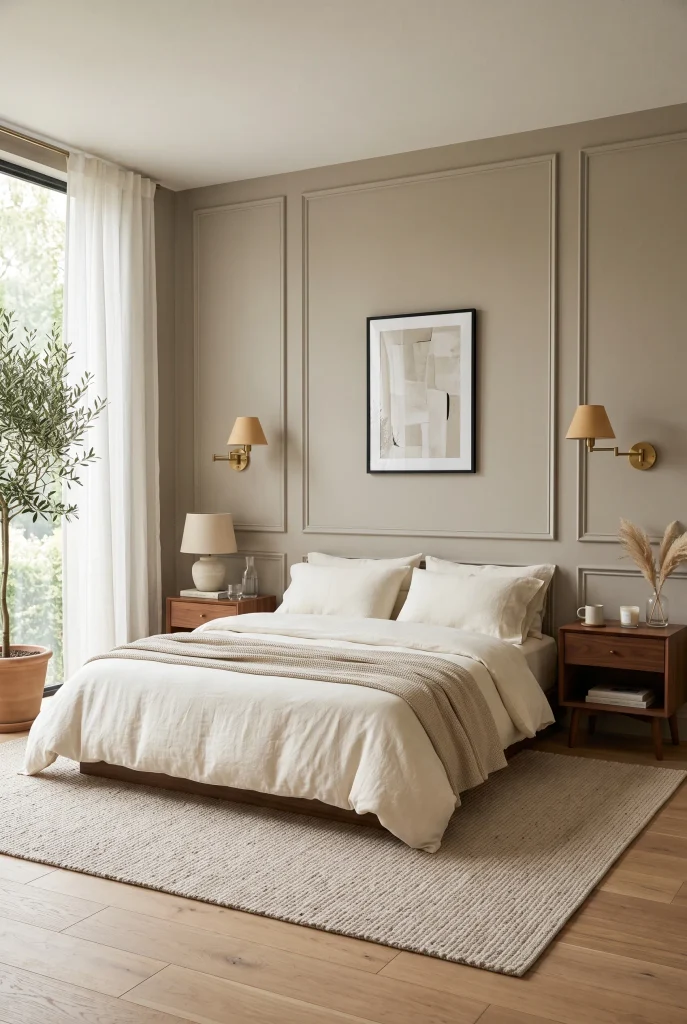
- Wall molding creates architectural detail around a simple sleeping area.
- Rectangular panels can make a plain wall feel custom and finished.
- Warm greige or creamy paint keeps the look sophisticated rather than formal.
- Symmetrical molding works especially well with matching nightstands and lighting.
Decorative wall molding can give a simple bed the architectural presence usually associated with a statement headboard. Create one large rectangular frame behind the mattress or use several evenly spaced panels to build a more traditional feature wall. Painted in the same shade as the surrounding wall, the molding adds subtle shadows and depth without introducing another color. Warm greige, creamy white, taupe, and soft beige are particularly versatile choices. The result feels tailored and elegant while keeping the bedroom visually calm and allowing the furniture to remain simple.
The proportions of the molding matter because overly small or crowded panels can make the wall feel busy. Center the main design around the bed and maintain consistent spacing between each section. Add matching sconces or simple artwork if the wall needs additional function, but avoid covering too much of the architectural detail. For a more accessible project, lightweight molding strips can create a similar effect without major construction. Once painted, the trim can look surprisingly integrated. It gives the sleeping area a polished backdrop that feels custom, balanced, and timeless without adding a conventional headboard.
13. Arched Wall Feature

- A painted arch creates a distinctive focal point without adding bulky furniture.
- Rounded lines soften the sharper shapes commonly found in bedrooms.
- Use a slightly deeper neutral to make the arch stand out gently.
- Center the arch carefully so the bed feels visually anchored beneath it.
A large painted arch can instantly give a simple bed a more intentional and architectural backdrop. Paint a soft curved shape directly behind the mattress, extending slightly wider than the bed so the sleeping area feels framed. Warm beige, muted terracotta, dusty olive, or creamy taupe can work beautifully depending on the room’s palette. The rounded shape introduces softness and creates a clear focal point without taking up any floor space. This is also an affordable way to create visual impact when you want something more distinctive than a plain painted accent wall.
For the most balanced appearance, center the arch precisely with the bed and keep its width proportional to the mattress. The lower portion can begin just above the nightstands or behind the pillows, while the curved top draws attention upward. Keep nearby furniture simple so the painted shape remains easy to notice. A pair of matching lamps can reinforce symmetry, while natural wood and textured bedding add warmth. If the style changes later, repainting the wall is much easier than replacing a large furniture piece, making this a flexible bedroom update.
14. Exposed Brick Wall
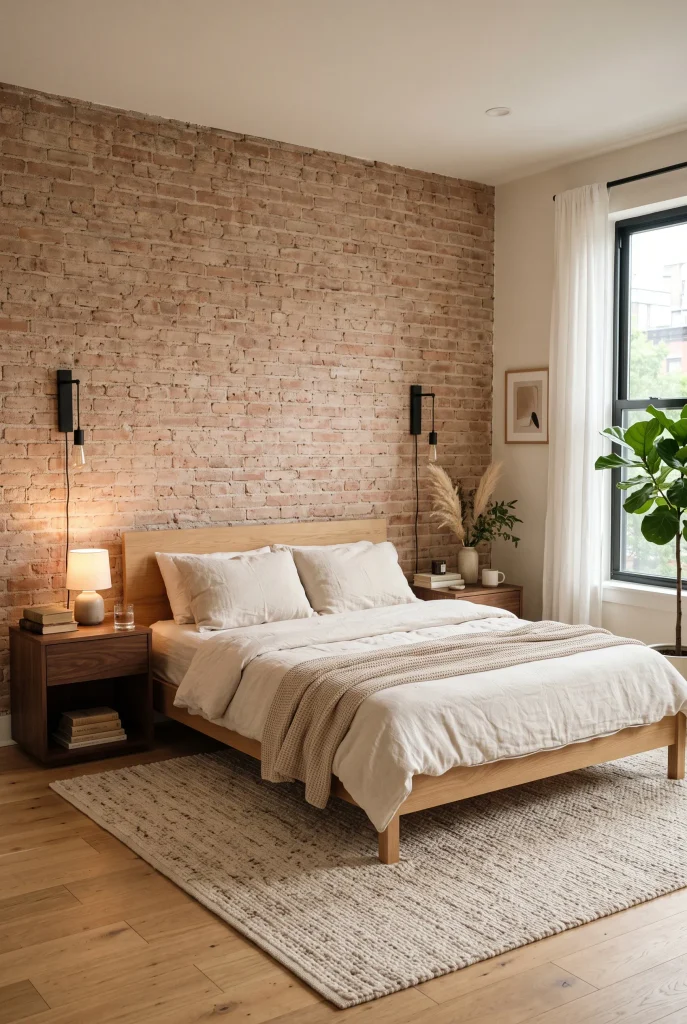
- Exposed brick adds texture and architectural character behind the bed.
- Light or whitewashed brick keeps the bedroom feeling bright and relaxed.
- Soft bedding balances the harder texture of the masonry.
- Keep decorative accessories minimal so the brick remains the focal point.
An exposed brick wall can provide enough texture and character that a traditional headboard becomes unnecessary. The natural variation between individual bricks creates a strong backdrop behind a simple bed while adding warmth and architectural interest. Classic red brick works beautifully in industrial or loft-inspired rooms, while whitewashed or pale brick can create a softer contemporary appearance. Pair the wall with cream linen bedding, natural wood, and simple lighting to prevent the room from feeling too hard or visually heavy. The contrast between rough masonry and soft textiles makes the sleeping area feel layered and welcoming.
If authentic brick is already present, let its natural imperfections become part of the design rather than trying to make everything perfectly uniform. In newer homes, realistic brick veneer or textured wall panels can provide a similar visual effect with less structural work. Keep the bed frame low and choose streamlined nightstands so the wall remains visible. Warm lighting is particularly helpful in the evening because it emphasizes the brick’s texture and creates a cozy atmosphere. The finished space feels distinctive and substantial while still maintaining the relaxed comfort expected from a bedroom.
15. Oversized Floor Mirror
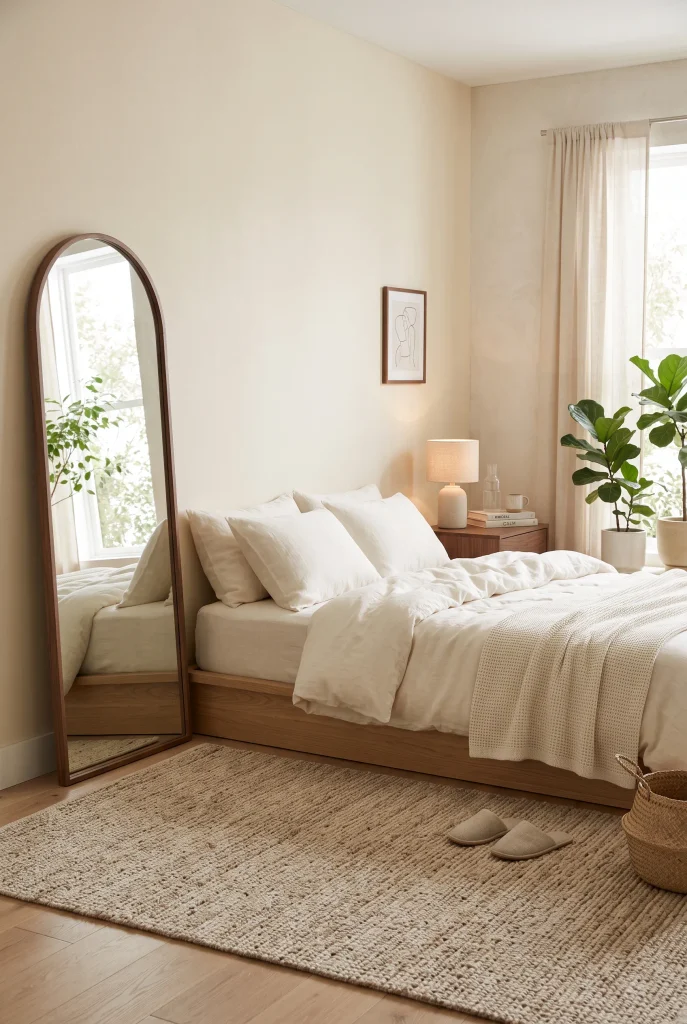
- A large mirror adds height while helping the bedroom feel more open.
- An arched frame introduces softness and visual interest near the bed.
- Leaning the mirror keeps the arrangement relaxed and less formal.
- Position it to reflect natural light or an attractive part of the room.
A large floor mirror can add height, light, and visual interest to a bedroom without placing anything directly behind the bed. Choose a tall arched or softly rounded mirror and lean it against an open wall near the sleeping area. Its vertical shape naturally draws the eye upward, while the reflective surface can make a compact room appear brighter and more spacious. This works particularly well when the bed itself is low and streamlined because the contrast between the horizontal mattress and tall mirror creates a pleasing sense of proportion.
Rather than using the mirror as a replacement for a headboard directly behind the mattress, position it slightly to one side where it can reflect a window, artwork, or another attractive part of the room. This prevents the reflection from feeling visually chaotic while maximizing the sense of openness. Choose a thin wood, brass, or black frame that coordinates with existing finishes. Keep nearby accessories restrained so the mirror remains a clean statement piece. The result is an airy bedroom arrangement that feels considered, functional, and polished without adding unnecessary furniture.
16. Canopy Frame
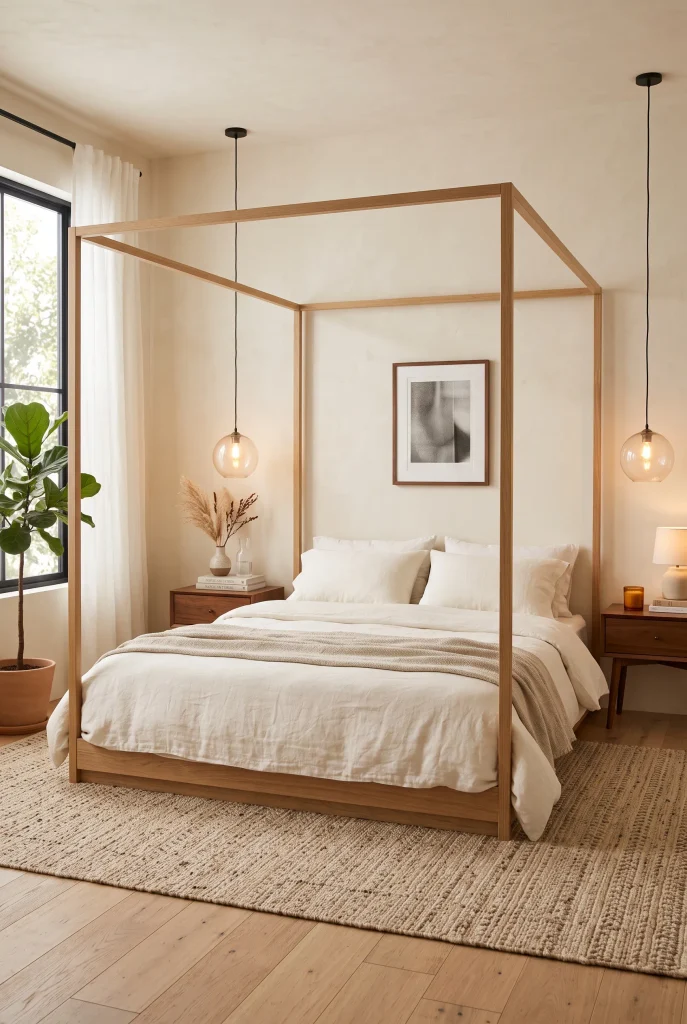
- A slim canopy frame gives the bed strong architectural definition.
- Natural wood adds warmth without making the room feel heavy.
- Keep the frame simple so the bedroom stays modern and airy.
- Flowing linen fabric can be added for extra softness when desired.
A slim canopy frame can completely change the presence of a simple bed without requiring a traditional headboard. Choose a streamlined frame in natural oak, walnut, or painted wood and let it create a clean architectural outline around the mattress. The vertical posts naturally add height, while the open structure keeps the bedroom feeling spacious. This approach works particularly well when you want a dramatic focal point but still prefer an uncluttered design. Pair the frame with simple linen bedding and warm lighting to create a relaxed, sophisticated sleeping area.
The key is choosing a frame with clean proportions rather than an overly ornate design. A simple rectangular structure feels contemporary and allows the bedding, lighting, and surrounding furniture to remain visible. You can also drape lightweight linen fabric across the upper frame for a softer effect, but leaving it open creates a more minimal appearance. Keep the nightstands compact and use coordinated materials throughout the room. The finished arrangement gives the bed a strong sense of place while preserving the openness that makes a headboard-free bedroom feel fresh and modern.
17. Woven Wall Hanging

- A large woven piece introduces warmth and handmade texture.
- Neutral fibers keep the bedroom soft and visually calming.
- Choose a wide design that relates proportionally to the bed.
- Natural materials pair especially well with linen, wood, and jute accents.
A large woven wall hanging can bring warmth and personality to the space above a simple bed. Choose a substantial textile in cream, beige, oatmeal, or natural fiber tones and center it carefully over the mattress. The soft texture creates visual interest without the weight or structure of a traditional headboard. Macramé, woven wool, raffia, or other textured fiber designs can work depending on the overall bedroom style. This is especially appealing when you want the room to feel relaxed, organic, and collected rather than overly formal or perfectly matched.
For the best result, select a piece wide enough to relate to the bed without extending dramatically beyond the nightstands. Let the woven texture remain the main decorative feature and keep the surrounding wall relatively open. Natural wood furniture, linen bedding, and woven rugs can reinforce the organic theme without making the room feel repetitive. For a more refined look, choose a geometric textile with subtle texture instead of an intricate pattern. The finished space feels warm and personal while giving the sleeping area a clear focal point without adding bulky furniture.
18. Minimalist Black Frame
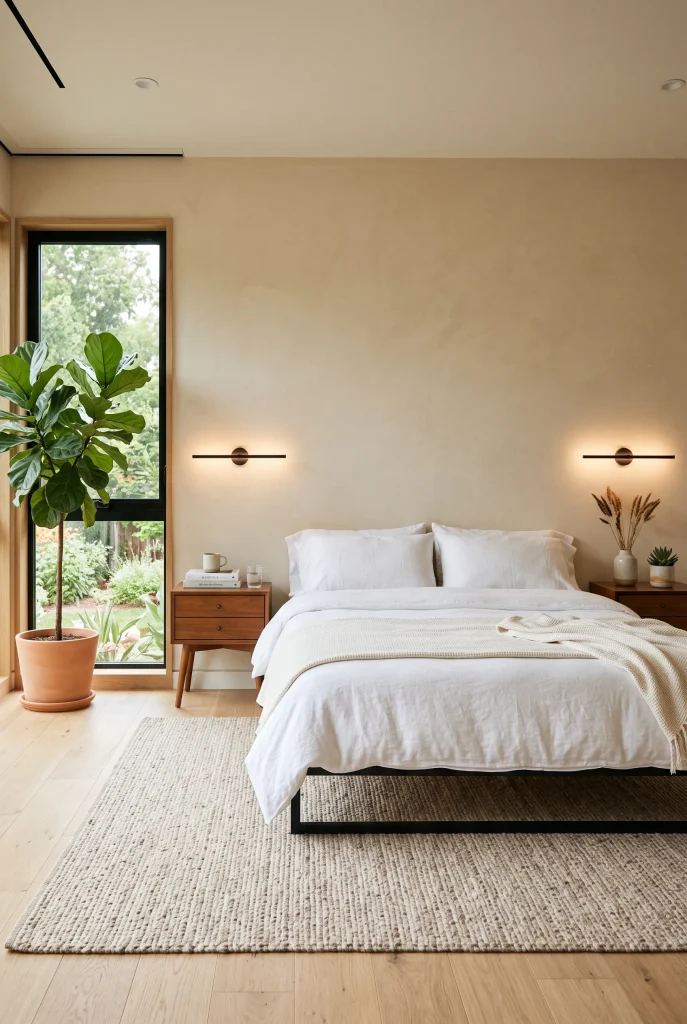
- A slim black frame gives the bed a defined architectural outline.
- Matte black creates contrast without requiring a large decorative wall.
- Keep the frame visually delicate for a lighter modern appearance.
- Repeat small black accents through lighting or hardware for cohesion.
A slim black bed frame can make a headboard-free setup feel deliberate rather than unfinished. Instead of hiding the simple structure, use the frame itself as part of the room’s design. Matte black metal creates crisp contrast against warm white, beige, or greige walls while giving the bed a clean architectural outline. Because the frame is visually lightweight, it preserves an airy feeling and allows more of the wall and surrounding furniture to remain visible. This approach works especially well in contemporary, minimalist, industrial, and modern organic bedrooms.
Balance the dark frame with softer materials so the room does not feel overly stark. Cream linen bedding, a textured neutral rug, warm wood nightstands, and woven accessories can soften the contrast beautifully. Repeat black in small details such as sconces, picture frames, or cabinet hardware to make the finish feel intentional. Avoid adding too many dark elements because the strength of this look comes from restraint. The result is a polished sleeping area that feels modern and expensive while proving that a simple frame can provide enough structure without a traditional upholstered or wooden headboard.
19. Statement Stone Wall

- Natural stone creates instant texture and architectural depth behind the bed.
- Warm limestone or travertine keeps the look sophisticated without feeling cold.
- Simple bedding allows the stone surface to remain the main focal point.
- Use warm lighting to emphasize the natural variations in the material.
A statement stone wall can give a simple bed the visual weight of a custom-designed bedroom. Materials such as limestone, travertine, or softly textured stone create natural variation that makes the wall interesting even without additional artwork. Warm beige and creamy stone tones work particularly well with neutral bedding because they create a layered palette instead of a sharp contrast. The organic surface also adds an architectural quality that can make the entire sleeping area feel more substantial. When the bed itself remains simple, the wall becomes the feature that gives the room its character.
Stone can feel heavy if too many strong materials compete with it, so keep the surrounding furniture streamlined. Choose warm wood nightstands, soft linen bedding, and simple brass or bronze lighting to complement the natural texture. If a full stone installation is impractical, large-format stone-look porcelain panels or realistic wall surfaces can create a similar visual direction. Keep accessories minimal and let the material speak for itself. The finished bedroom feels grounded, warm, and sophisticated, with a strong focal wall that provides the presence normally associated with a substantial headboard.
20. Curved Painted Headboard Shape
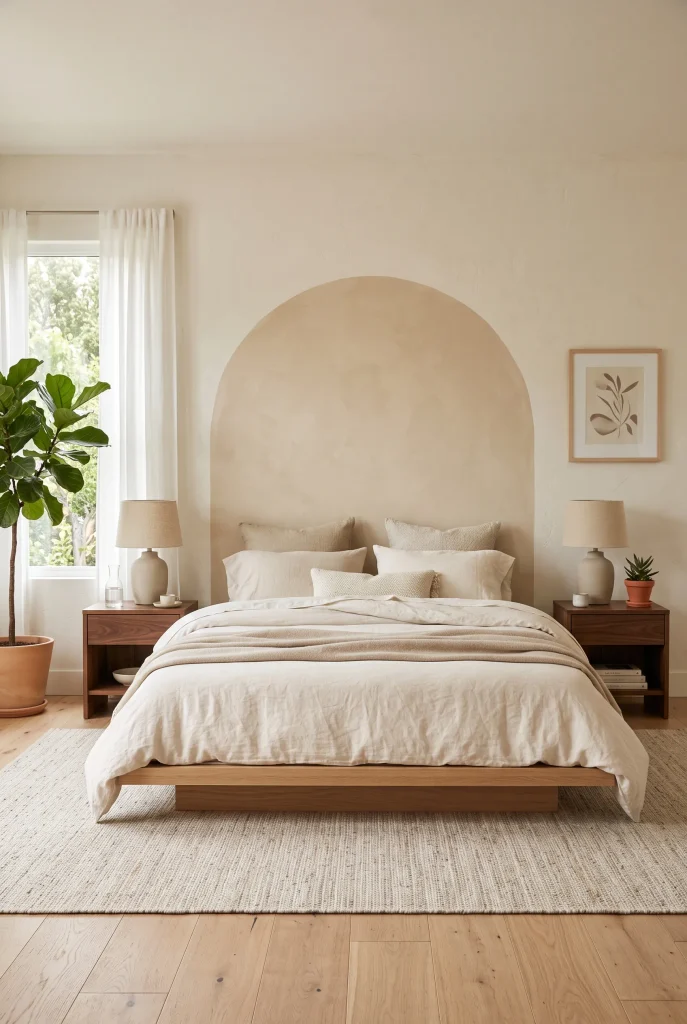
- A rounded painted shape visually frames the bed without adding furniture.
- Curved edges soften the straight lines of the mattress and nightstands.
- Warm neutral paint keeps the feature sophisticated and easy to coordinate.
- Extend the shape slightly beyond the bed for a stronger visual anchor.
A curved painted shape can mimic the visual presence of a headboard while keeping the wall completely open. Paint a large rounded or pill-shaped area directly behind the mattress and use it as a simple architectural frame. Warm beige, muted clay, soft olive, or creamy taupe can create a sophisticated backdrop without overwhelming the rest of the room. The curved outline also introduces a softer shape into a space filled with straight furniture lines. This makes the bedroom feel more relaxed while giving the bed a clearly defined focal point.
For a balanced composition, make the painted shape wider than the mattress but not so large that it dominates the entire wall. Center it carefully and keep the surrounding decor understated. Simple ceramic lamps, natural wood nightstands, and soft linen bedding can reinforce the calm aesthetic. If you want additional height, extend the shape farther upward rather than adding more objects. Painted geometric features can have a surprisingly strong effect because they define an area without taking up any physical space, making them especially useful in smaller bedrooms.
21. Layered Gallery Wall
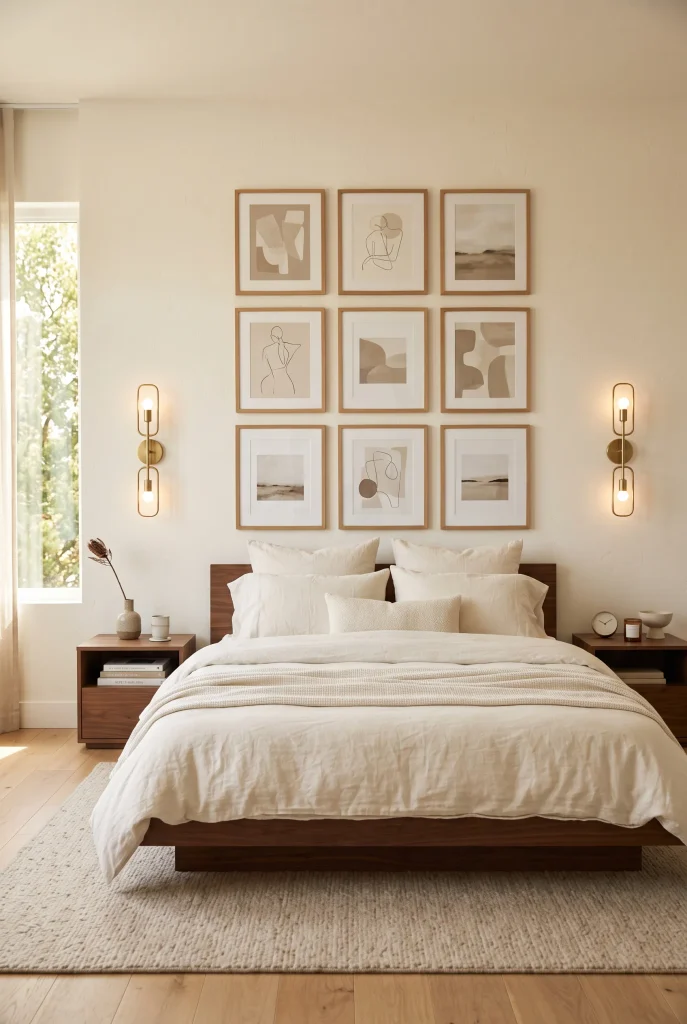
- A curated gallery wall adds personality and visual structure above the bed.
- Matching or coordinated frames make multiple pieces feel intentionally connected.
- Neutral artwork keeps the arrangement sophisticated rather than visually busy.
- Leave consistent spacing between frames for a polished, balanced appearance.
A carefully arranged gallery wall can transform a plain space above the bed into a personalized focal point. Choose several prints that share similar tones, such as warm white, beige, charcoal, brown, or muted green, and arrange them in a balanced composition. Matching frames can make the collection feel more cohesive, while varied artwork sizes add subtle visual movement. This approach works beautifully when you want the bedroom to reflect your personality without relying on a large furniture piece. The artwork gives the wall purpose and makes the entire bed arrangement feel intentionally styled.
Before hanging anything, lay the frames on the floor and experiment with spacing and proportions. Keep the overall arrangement centered with the mattress and avoid pushing the artwork too high toward the ceiling. If the room already contains strong patterns, choose simpler prints so the gallery does not compete with bedding or rugs. A few larger pieces often create a more sophisticated effect than many tiny frames. The result is a warm, collected bedroom with plenty of personality, while the open space around the bed keeps the overall design feeling light and uncluttered.
Conclusion
Creating a polished bedroom does not require an expensive headboard. The right wall treatment, lighting, artwork, texture, or furniture arrangement can give your sleeping area the same finished feeling while keeping the design fresh and personal. These bed without headboard ideas offer plenty of ways to experiment with color, materials, and proportions until you find a look that suits your home. Save this post on Pinterest so you can revisit your favorite ideas when decorating, and share it with someone planning a bedroom makeover. Sometimes one simple change is all it takes to make the entire room feel beautifully transformed.