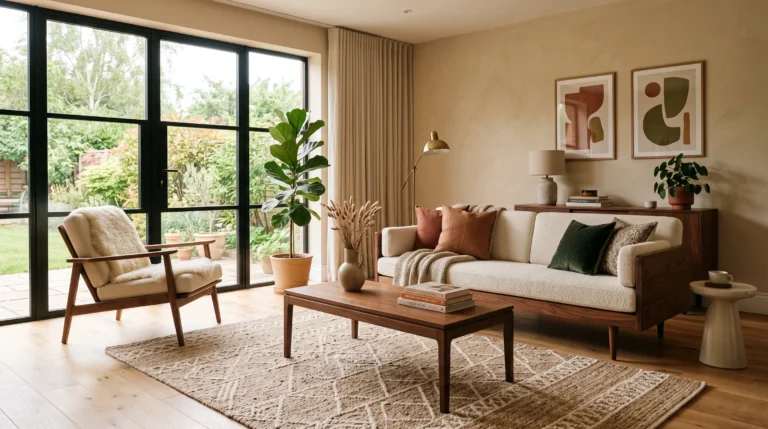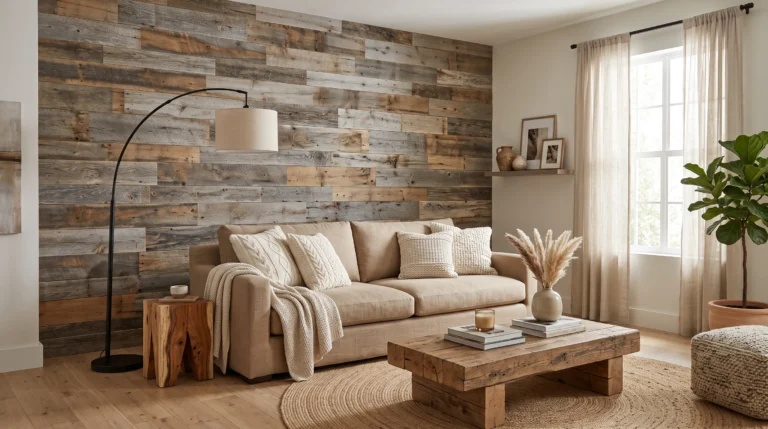
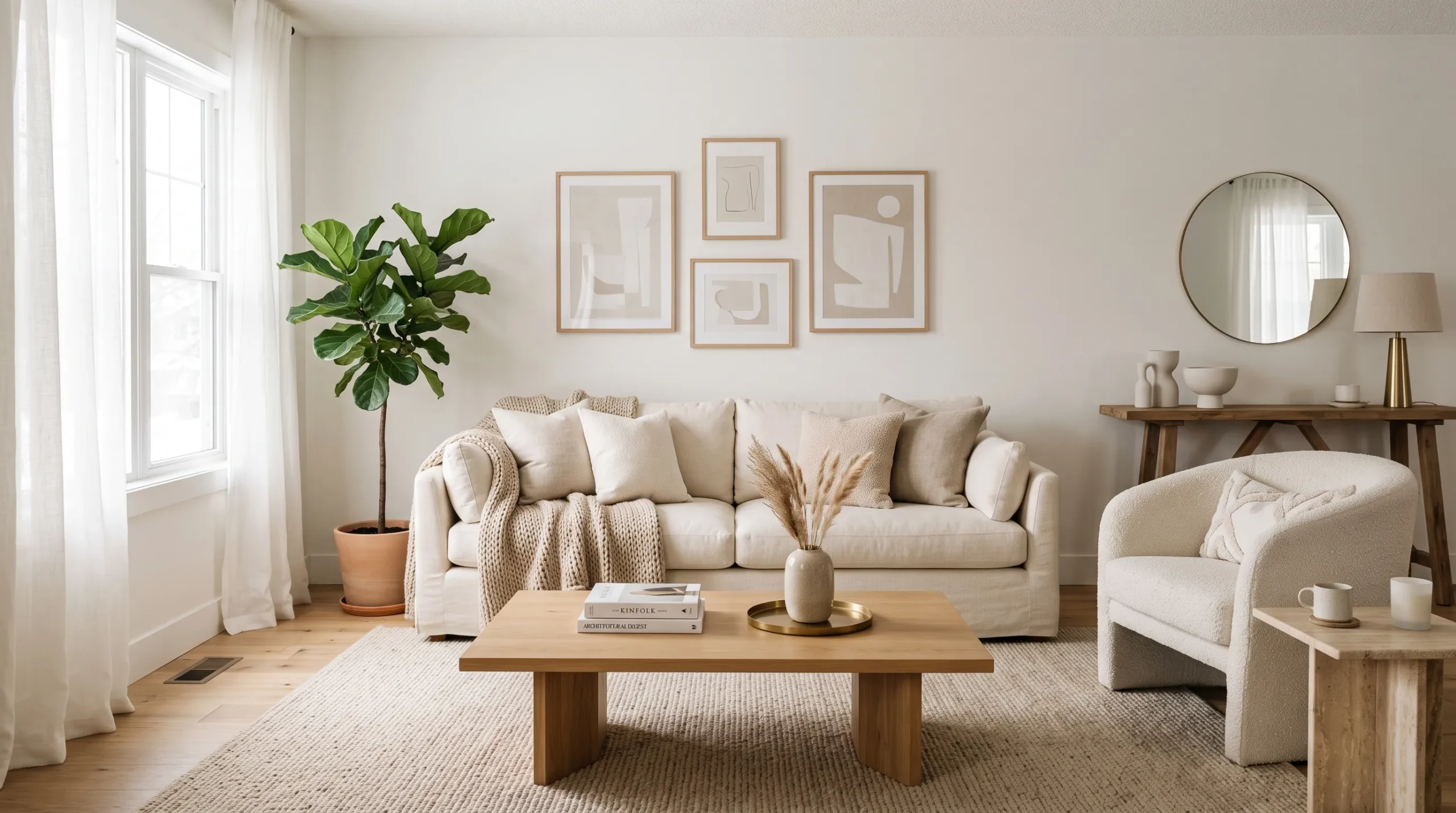
23 Neutral Home Decor Ideas That Look So Expensive
What if your home could look expensive without expensive furniture or a complete renovation?
The secret often lies in soft colors, beautiful textures, and thoughtful details. These neutral home decor ideas show you how to create a space that feels warm, elegant, and effortlessly stylish without losing its everyday comfort.
From warm white walls and layered linen to natural oak furniture and sculptural ceramics, each idea offers a practical way to refresh your home. Whether you are decorating a small apartment, updating your living room, or creating a peaceful bedroom, you will find inspiration that suits your style and budget. Small changes in texture, lighting, and furniture placement can make a surprisingly big difference. Explore these ideas, discover your favorite looks, and find simple ways to make your space feel beautifully put together.
1. Warm White Walls
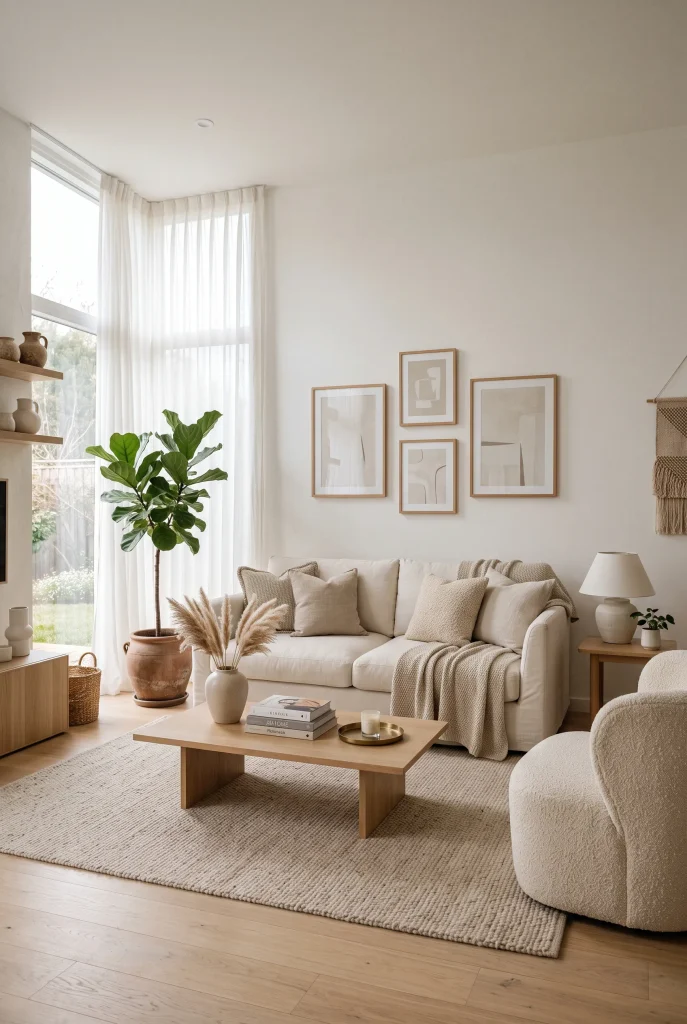
- Warm white walls create a bright, timeless foundation.
- Cream and beige furnishings add softness without looking flat.
- Natural light makes the entire room feel more spacious.
- Subtle wall texture can add depth without expensive renovations.
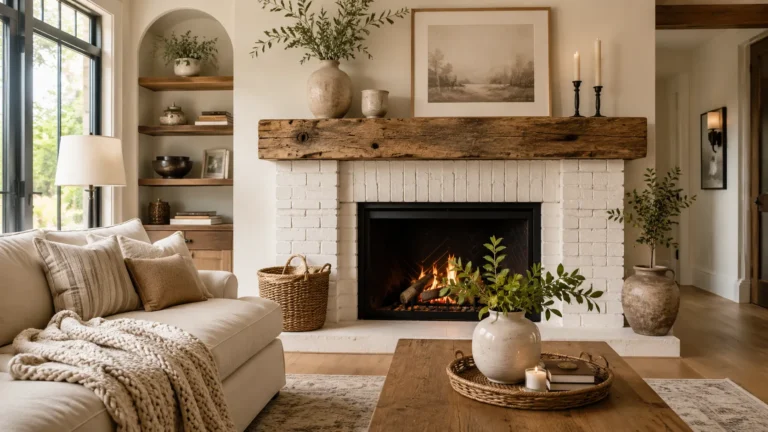
A room can look instantly more expensive with one simple change: the right wall color. Warm white walls create a soft, elegant backdrop that allows furniture, artwork, and decorative details to stand out beautifully. Unlike stark white, warmer shades bring a welcoming feeling that works especially well with cream, beige, and natural wood. This approach suits both small apartments and spacious homes because it reflects daylight and keeps the room visually open. Choosing a warm undertone instead of a cold white makes neutral styling feel much more comfortable and thoughtfully designed.
The beauty of warm white walls is their flexibility. You can pair them with a beige sofa, woven baskets, light oak furniture, or black metal accents without creating visual competition. For a polished finish, choose one consistent wall color throughout connected spaces and add interest through artwork or textured curtains. If your room receives limited sunlight, test paint samples during both daytime and evening. The result should feel creamy rather than yellow. This simple foundation makes other neutral home decor ideas easier to combine, helping your space look coordinated, calm, and naturally sophisticated.
2. Layered Linen Textures
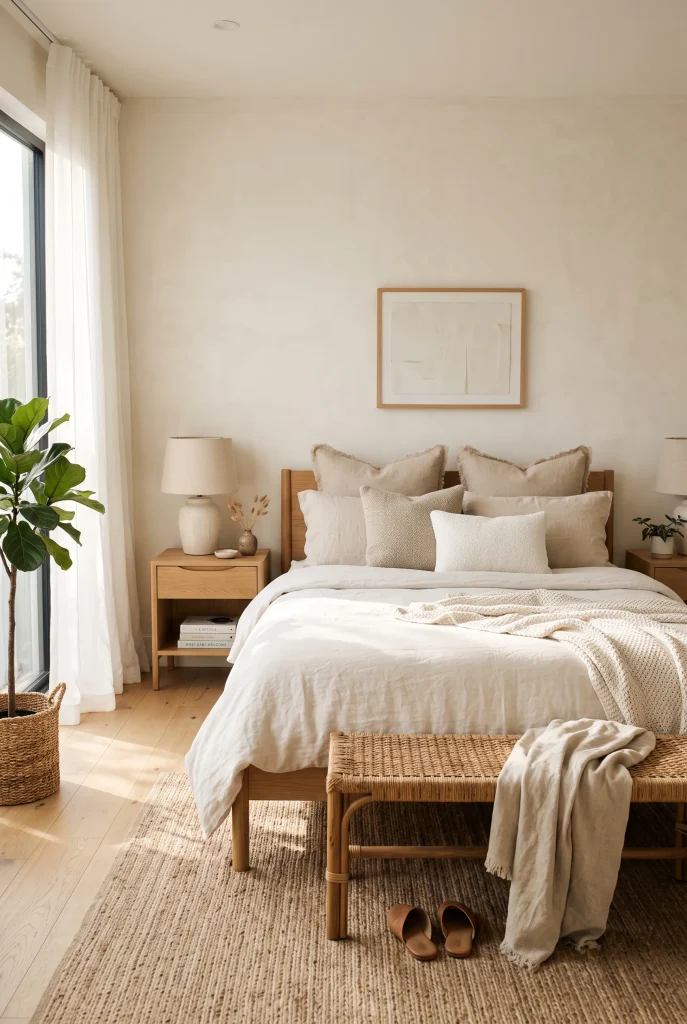
- Linen bedding adds natural texture and relaxed elegance.
- Layering different fabric weights prevents neutral rooms from feeling plain.
- Soft textiles make bedrooms and living spaces more inviting.
- Slightly rumpled linen creates a comfortable, lived-in appearance.
Nothing makes a neutral room feel more inviting than beautifully layered textiles. Linen bedding, cotton cushions, and a soft woven throw introduce subtle differences that create depth without relying on bold colors. The natural wrinkles in linen add character, while its breathable texture keeps the space feeling relaxed rather than overly formal. This combination works particularly well in bedrooms, where comfort matters as much as appearance. Even a simple bed can look thoughtfully styled when the fabrics vary in texture but remain within the same soft color family.
To achieve this look, begin with one main neutral shade, such as ivory or warm beige, and add two or three complementary tones. Mix smooth cotton with textured linen, chunky knits, or lightly woven materials. Avoid making every piece identical, because small differences create a more natural finish. A folded throw at the foot of the bed or a casually arranged cushion can complete the arrangement. These small styling choices make the room feel softer, more layered, and visually rich without requiring expensive furniture or major changes.
3. Natural Oak Furniture
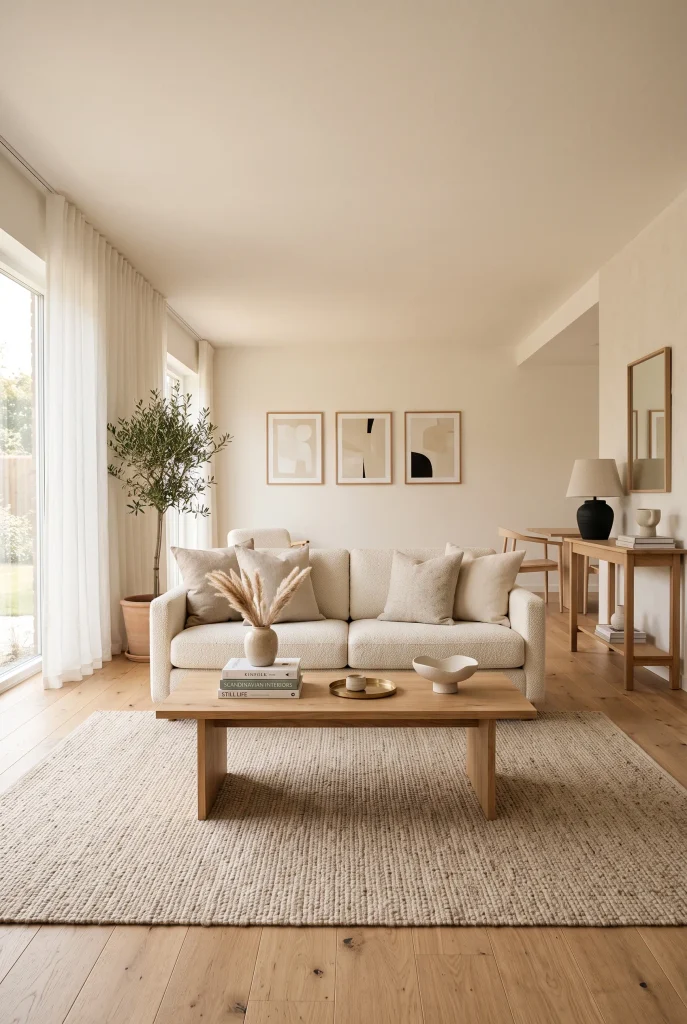
- Natural oak introduces warmth into pale neutral rooms.
- Visible wood grain adds organic character and visual richness.
- Light wood furniture pairs easily with cream and beige furnishings.
- A few well-chosen pieces can make the space feel intentional.
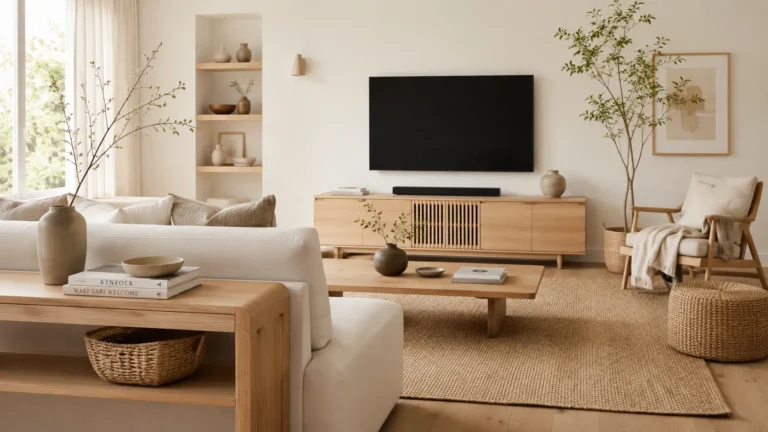
Natural oak furniture brings warmth and understated elegance to a neutral interior. Its visible wood grain adds organic detail, while its light honey tones prevent pale rooms from feeling cold or unfinished. A simple oak coffee table, bedside table, or console can become a grounding element that connects soft fabrics with harder surfaces. This balance is especially effective in Scandinavian, modern farmhouse, and minimalist spaces. Rather than filling the room with matching furniture, choose a few quality-looking wood pieces that provide function and create a cohesive visual rhythm.
When styling oak furniture, keep the surrounding palette restrained so the wood remains noticeable. Pair it with cream upholstery, textured beige rugs, and understated ceramic accessories. Mixing slightly different wood tones can work, but staying within a similar warmth level usually creates a more polished result. Consider the room’s existing flooring before choosing new pieces, especially if both surfaces are visible together. A well-positioned oak table near a sofa or an open wood shelf against a pale wall can make an ordinary room feel more welcoming, balanced, and thoughtfully furnished.
4. Oversized Neutral Artwork
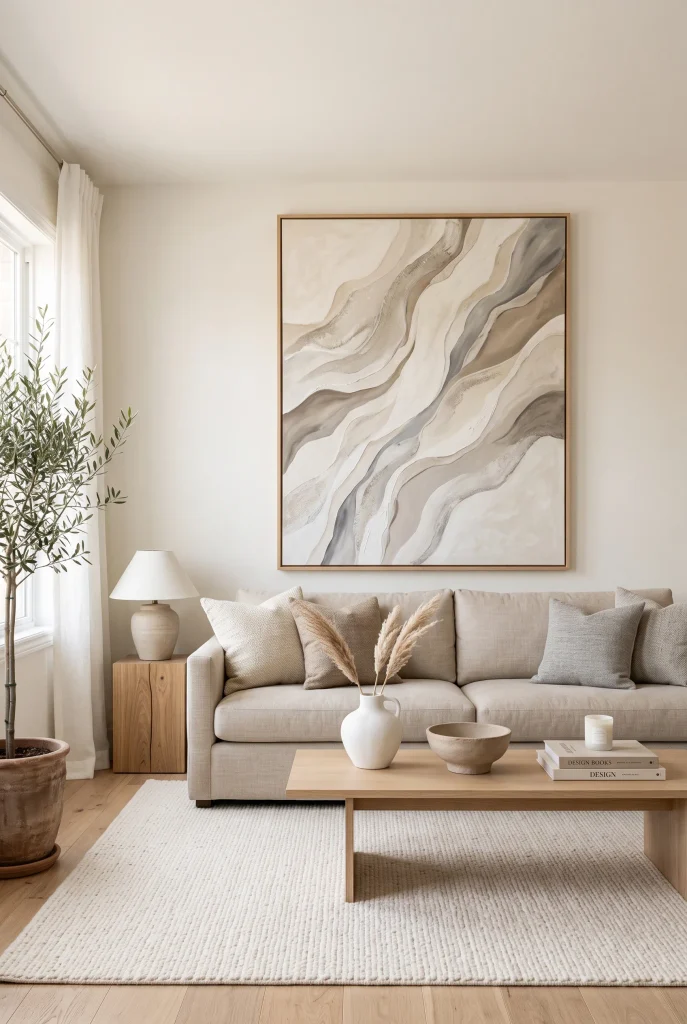
- A large artwork creates an instant focal point.
- Soft abstract patterns add personality without overwhelming the palette.
- One statement piece can look more intentional than several small frames.
- Neutral artwork works beautifully above sofas, beds, and consoles.
One oversized artwork can transform a quiet neutral room into a space that feels curated and expensive. Instead of filling the walls with many small decorations, choose a large abstract canvas featuring soft cream, taupe, beige, or muted gray tones. Its scale creates visual impact while keeping the atmosphere calm. This approach works particularly well above a sofa, bed, or console table, where a blank wall might otherwise feel unfinished. The artwork becomes a focal point that gives the room personality without competing with the furniture or natural textures.
For the most polished result, select artwork that complements the room’s existing undertones. A warm beige painting pairs naturally with cream upholstery and oak furniture, while soft gray artwork can balance cooler neutral furnishings. Hang the piece at a comfortable viewing height, usually with its center near eye level. You do not need an expensive original; a thoughtfully chosen print in a substantial frame can create a similar impression. One well-scaled artwork can make a simple room feel more complete and visually connected.
5. Sculptural Ceramic Decor
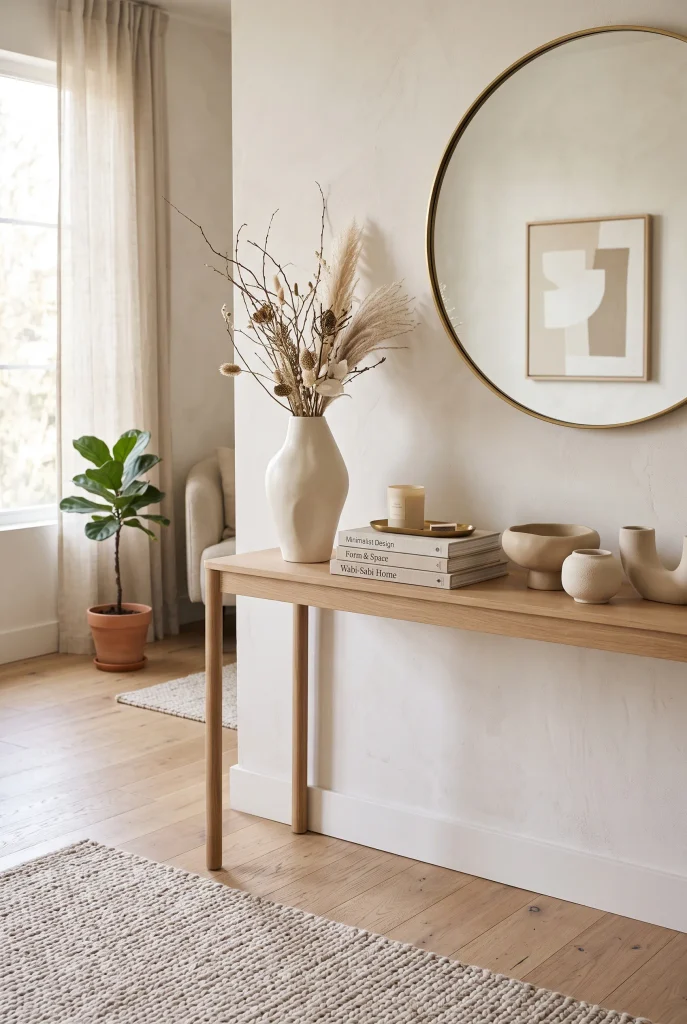
- Rounded ceramic shapes soften straight furniture lines.
- Matte finishes create understated visual interest.
- A few sculptural objects look more refined than crowded accessories.
- Neutral pottery adds texture while maintaining a cohesive palette.
Sculptural ceramic decor adds an artistic touch to neutral interiors without introducing strong colors. Rounded vases, curved bowls, and abstract pottery create visual interest through shape rather than pattern. Their matte finishes and earthy tones work beautifully with linen, wood, and woven materials. A single sculptural vase on a console or a small ceramic bowl on a coffee table can make the arrangement feel considered. This is especially useful when your room has simple furniture and you want to add character without making the space look busy.
To style ceramic pieces successfully, focus on balance and negative space. Group two or three objects with different heights, shapes, or textures, and leave enough room around them so each piece remains visible. Cream, sand, and warm stone shades are easy to combine with most neutral palettes. If the room already has many rectangular elements, curved pottery can introduce a softer silhouette. Choosing fewer decorative objects with distinctive shapes often creates a more elegant appearance than covering every surface with accessories.
View: 21 Living Room Decor Ideas You’ll Wish You Knew Sooner
6. Textured Bouclé Seating
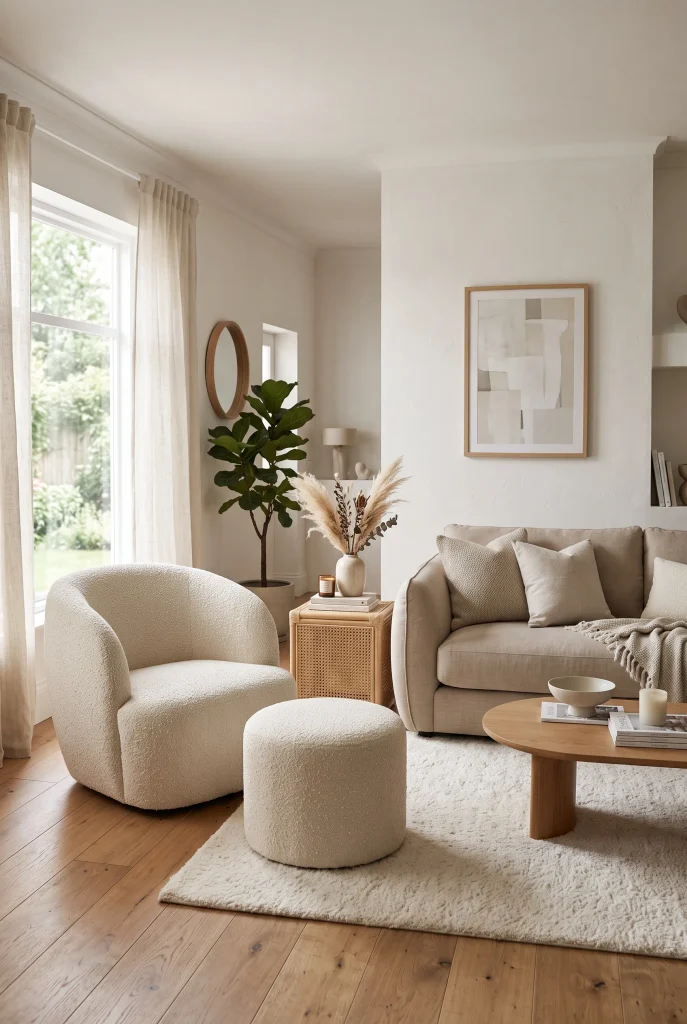
- Bouclé upholstery adds softness and tactile appeal.
- Curved seating creates a welcoming, contemporary silhouette.
- Cream upholstery complements warm wood and beige accessories.
- One textured chair can refresh an otherwise simple room.
A textured bouclé chair can give a neutral living room an instant sense of comfort and modern elegance. Its soft, nubby upholstery catches the light subtly, adding dimension to an otherwise restrained color palette. Pairing a cream bouclé accent chair with a beige sofa creates a layered seating arrangement that feels inviting rather than overly matched. The rounded shape of many bouclé chairs also softens the sharper lines of coffee tables, shelving, and architectural details, making the overall room feel more relaxed and visually balanced.
For everyday living, choose upholstery that suits your household’s practical needs. Bouclé can be beautiful, but its textured surface may require more care than smooth, tightly woven fabrics. Place the chair where it serves a purpose, such as beside a reading lamp, near a window, or opposite the sofa. Add a small neutral cushion or soft throw for extra comfort. The goal is not to fill the room with plush furniture, but to introduce one tactile piece that makes the entire space feel warmer and more thoughtfully designed.
7. Soft Beige Curtains
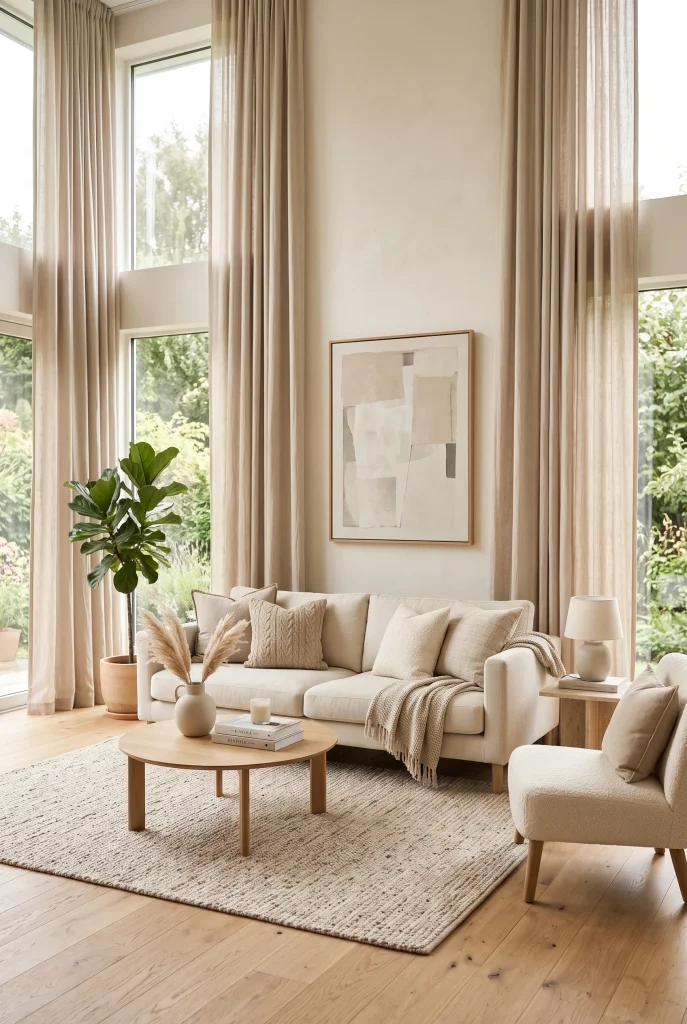
- Floor-length curtains make windows appear taller.
- Beige linen adds softness without blocking natural light completely.
- Simple curtain panels create a clean, tailored appearance.
- Matching warm undertones help connect the room’s decor.
Soft beige curtains can make a neutral room feel taller, calmer, and more refined. Their gentle color blends beautifully with cream walls, light wood furniture, and textured rugs, creating a seamless visual flow. When curtains extend from near the ceiling to the floor, they also emphasize the height of the room and frame windows elegantly. This simple styling choice works in living rooms, bedrooms, and dining areas, especially when you want a brighter space that still feels warm and comfortable rather than stark.
For a polished appearance, choose curtains that reach the floor and hang slightly wider than the window frame. Linen or linen-look fabric adds natural texture, while a softly filtered weave allows daylight to enter. If privacy is important, layer sheer curtains with heavier panels. Keep the hardware simple and coordinate its finish with existing fixtures. Well-hung curtains can make even basic furniture look more intentional because they soften the architecture and create a finished backdrop for the rest of the room.
8. Statement Stone Coffee Table
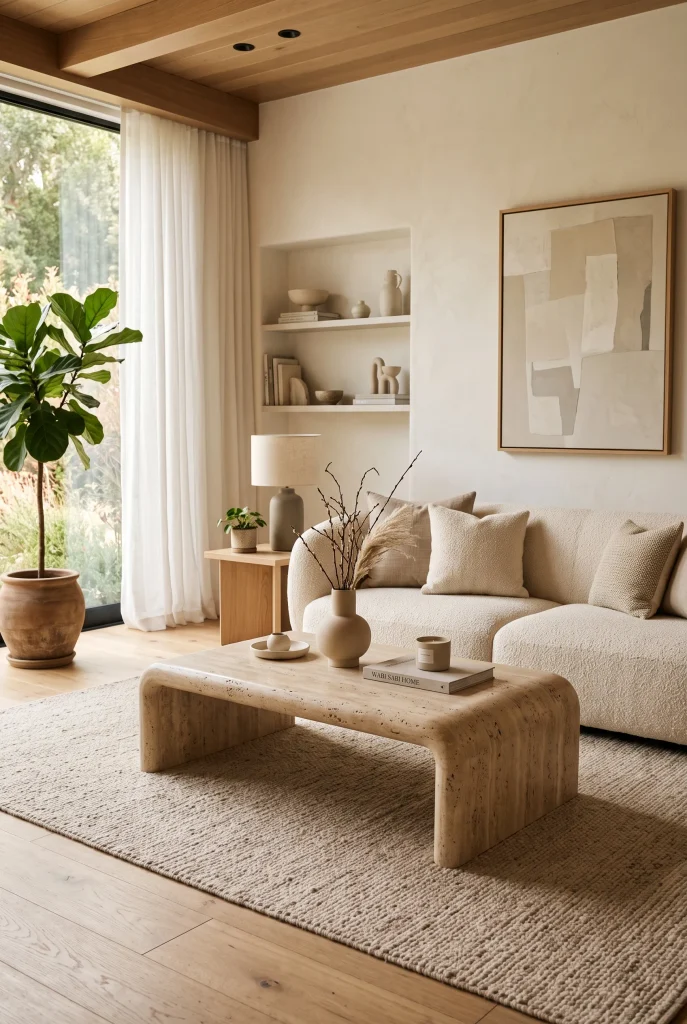
- Natural stone adds weight and visual sophistication.
- Rounded edges create a softer, more welcoming look.
- Travertine and limestone pair beautifully with warm neutrals.
- A substantial coffee table can anchor an otherwise airy room.
A statement stone coffee table introduces a luxurious focal point while keeping the rest of the room understated. Travertine, limestone, and softly finished stone offer natural variation through subtle veining, warm undertones, and organic surfaces. These details create the impression of quality without requiring dramatic colors or elaborate decoration. A rounded stone table works especially well with a cream sofa, textured rug, and light oak flooring because it balances the softness of the upholstery with a grounded, substantial material.
When choosing a stone table, consider both its appearance and everyday practicality. Natural stone can be porous, so check the manufacturer’s care recommendations and use coasters or protective mats where needed. Keep the tabletop styling simple with a low ceramic bowl, a small stack of books, or a single sculptural object. Allow enough walking space around the table for comfortable movement. One distinctive material can elevate a room more effectively than several unrelated decorative pieces competing for attention.
9. Woven Accent Baskets
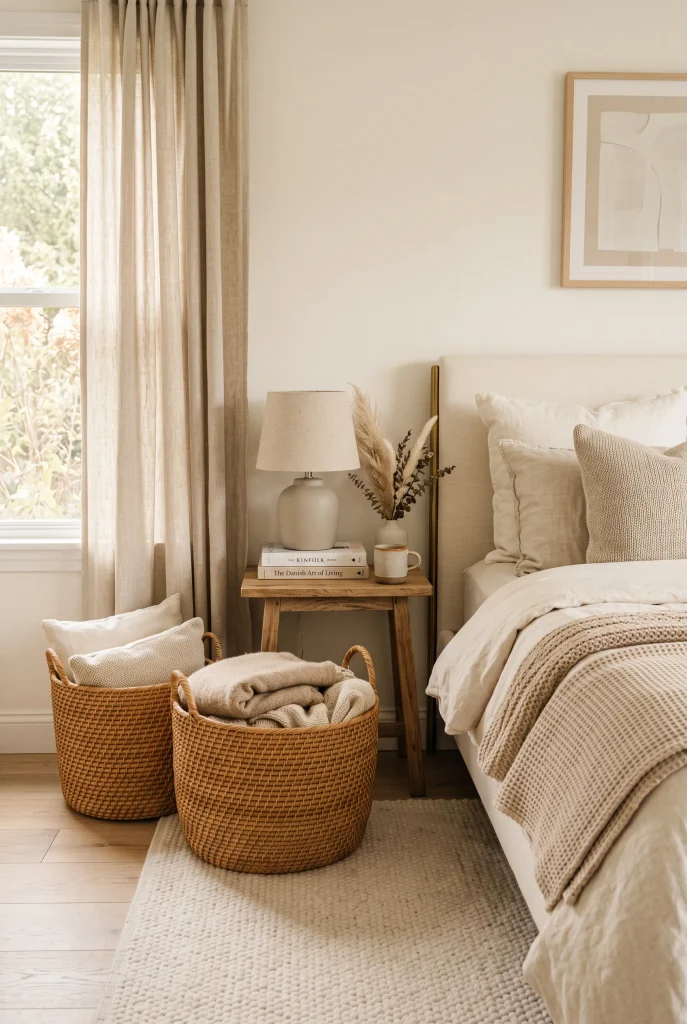
- Woven baskets combine storage with natural texture.
- They help keep blankets, toys, and everyday items organized.
- Rattan and seagrass add warmth to pale interiors.
- Matching basket materials create a cohesive decorative theme.
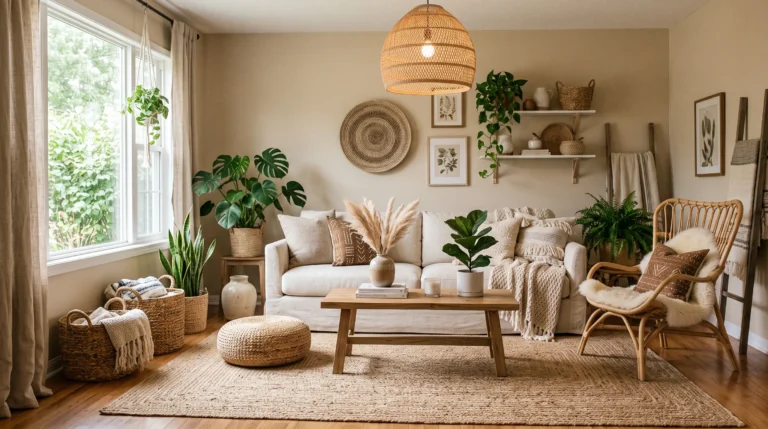
Woven accent baskets are one of the easiest ways to add warmth and useful storage to a neutral home. Made from materials such as rattan, seagrass, or jute, they introduce organic texture that contrasts beautifully with smooth walls and upholstered furniture. A large basket beside the sofa can hold blankets, while smaller versions can organize toys, towels, or everyday accessories. This combination of function and style makes the room feel more intentional without adding unnecessary furniture or visual clutter.
To create a cohesive look, choose baskets with similar natural tones but vary their sizes and shapes according to the room’s needs. Place a tall basket in an empty corner, a shallow basket beneath a console, or a pair beside a bed. Avoid overcrowding the floor; leaving some open space helps the room feel lighter. These practical additions are particularly helpful in busy homes because they make tidying easier while contributing to the relaxed, earthy character of neutral interiors.
10. Minimalist Layered Lighting
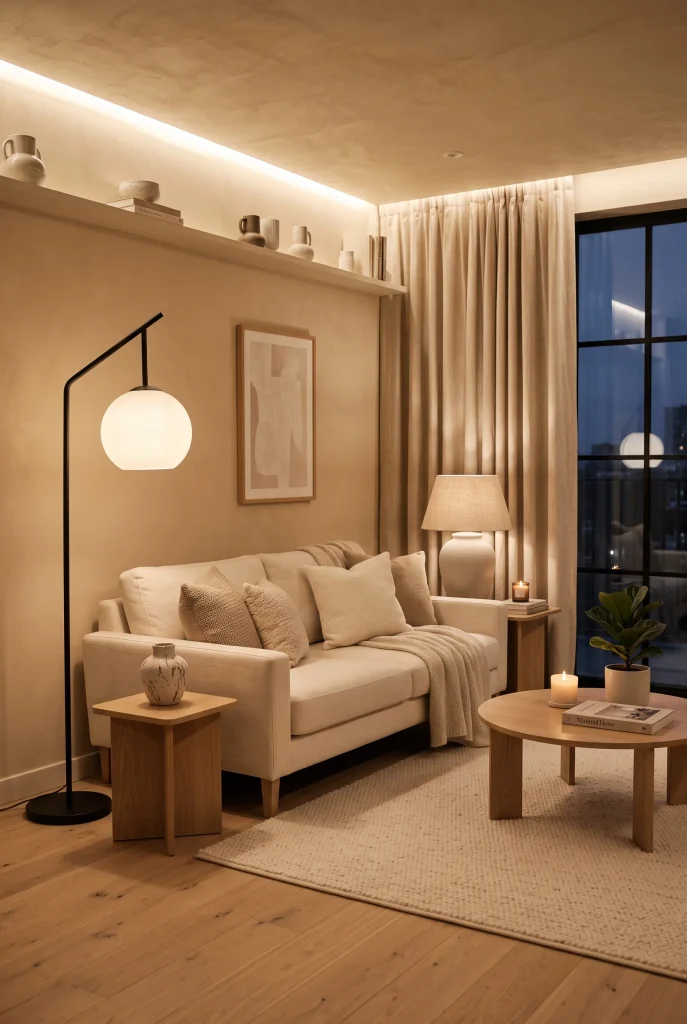
- Layered lighting creates depth and a welcoming atmosphere.
- Warm bulbs make cream and beige shades feel richer.
- Floor and table lamps add practical light where needed.
- Soft illumination helps neutral textures stand out beautifully.
The right lighting can make a neutral room feel dramatically more inviting, especially after sunset. Instead of depending on one bright ceiling fixture, combine overhead lighting with a floor lamp, table lamp, or wall sconces. Each light source serves a different purpose, creating gentle layers that highlight furniture, artwork, and textured fabrics. Warm illumination works particularly well with cream, beige, and natural wood because it enhances their cozy undertones. This approach gives a simple room a more refined atmosphere without changing its main furnishings.
Start by identifying the areas that need practical light, such as a reading chair, sofa, or work surface. Add a floor lamp beside seating and a table lamp on a console or side table. Choose bulbs with a warm color temperature, often around 2700K, for a comfortable evening glow. Use dimmable fixtures where possible so the brightness can change throughout the day. Thoughtful lighting placement often makes a bigger difference to a room’s mood than adding more decorative accessories.
11. Tone-on-Tone Styling
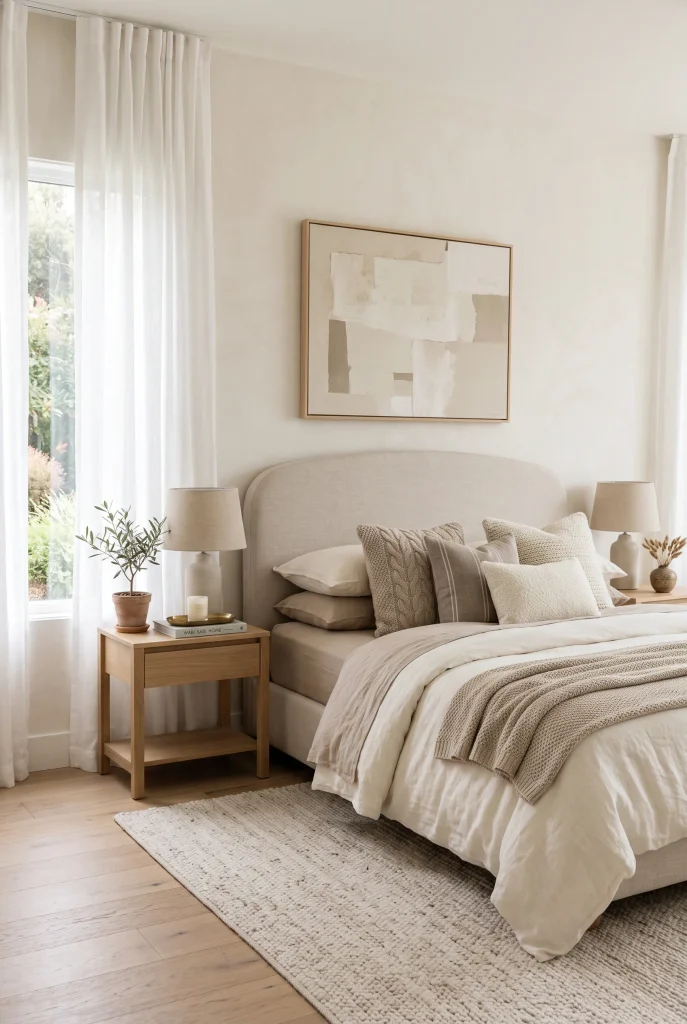
- Similar shades create a calm, coordinated appearance.
- Small tonal differences prevent the room from looking flat.
- Textures become more noticeable when colors remain restrained.
- This approach works well in bedrooms and living rooms.
A tone-on-tone palette makes a neutral room feel elegant through subtle color variation rather than dramatic contrast. Imagine ivory walls, a cream sofa, beige cushions, and a taupe rug working together in one balanced composition. Each shade is slightly different, but the overall effect remains cohesive and peaceful. This method is particularly effective when you want a sophisticated room that feels bright and uncluttered. The secret is to combine several related tones instead of choosing exactly the same color for every surface.
To keep the arrangement visually interesting, vary the materials as well as the shades. Pair smooth painted walls with linen upholstery, woven baskets, textured rugs, and matte ceramic accessories. Introduce slightly deeper taupe or warm gray through one or two accent pieces to create definition. Before purchasing new items, compare them in the actual room’s lighting because undertones can change throughout the day. A carefully balanced tonal palette can make even modest furnishings feel connected, comfortable, and thoughtfully styled.
12. Curved Furniture Details
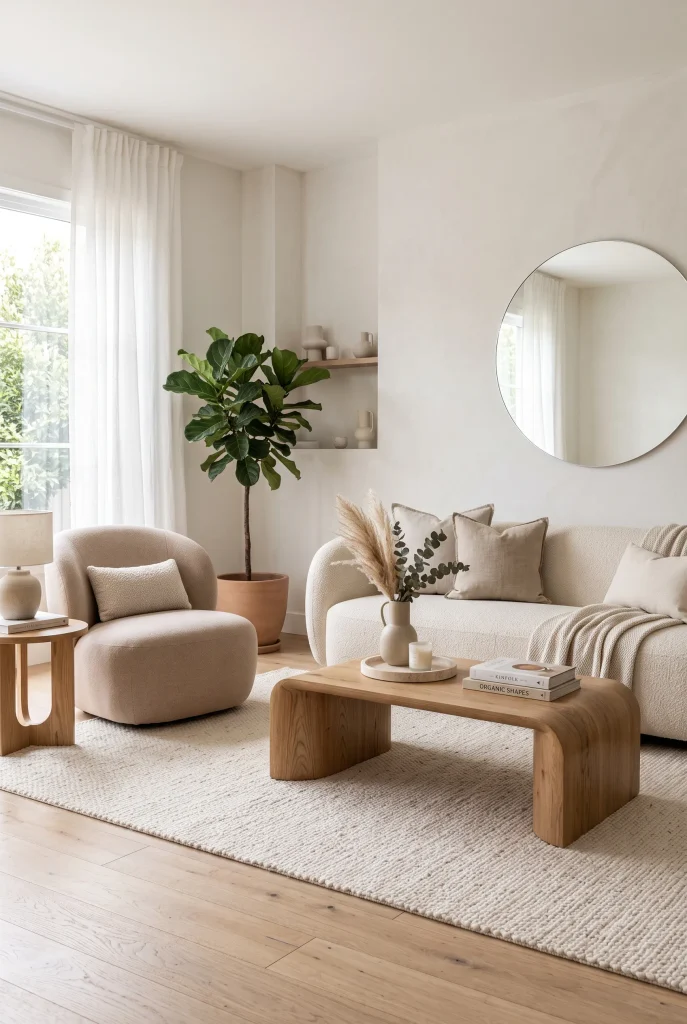
- Curved furniture softens rooms dominated by straight lines.
- Rounded shapes create a more welcoming seating arrangement.
- Circular accessories can reinforce the design theme.
- A single curved piece can introduce visual variety.
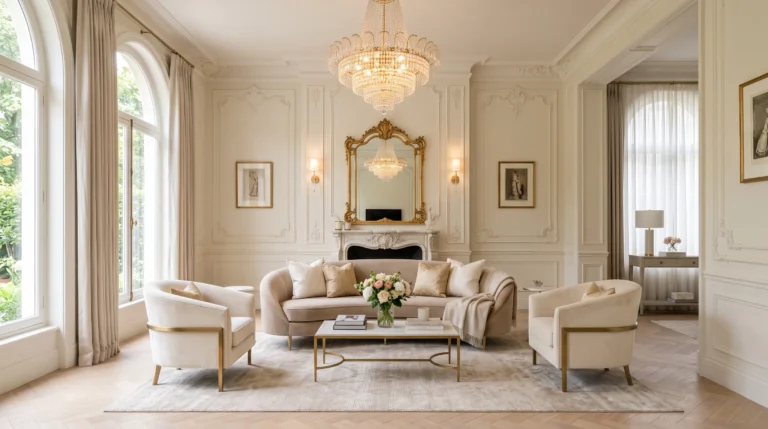
Curved furniture brings a softer, more welcoming character to neutral interiors. A rounded sofa, circular coffee table, or gently curved accent chair can break up the straight lines commonly found in modern furniture. This creates a more relaxed visual flow while maintaining a clean, sophisticated appearance. The effect is especially attractive in living rooms with simple architecture, where rounded silhouettes add interest without introducing strong colors or busy patterns. Even one curved piece can make the arrangement feel more balanced and inviting.
When adding curved furniture, consider how it fits the room’s layout and walking paths. A round coffee table can work well in front of a sofa, while a curved chair may soften an empty corner. Balance rounded forms with a few straight-edged elements, such as a rectangular rug or slim console, so the space does not feel overly uniform. Choose upholstery in cream, beige, or soft taupe to maintain the neutral palette. The result is a room that feels comfortable, contemporary, and visually considered.
13. Elegant Black Accents
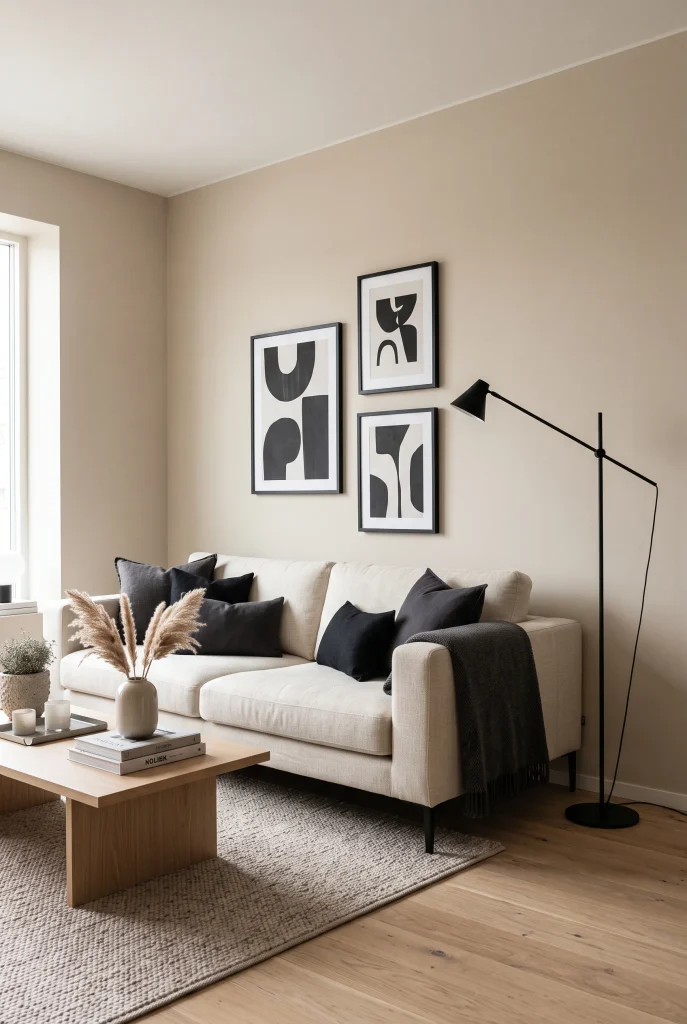
- Black accents add definition to soft neutral palettes.
- Dark details create contrast without overwhelming the room.
- Slim metal frames and lamps offer a modern touch.
- A few carefully placed accents look more polished than many.
A few elegant black accents can give a neutral room the definition it needs. Against cream walls and beige furnishings, black introduces a crisp contrast that makes the overall design feel more structured. Think of a slim black floor lamp, dark picture frames, or a small black side table. These details draw attention to important areas without overpowering the softness of the space. The result is a balanced combination of warmth and sophistication that works beautifully in modern, minimalist, and contemporary homes.
The key is to use black thoughtfully rather than scattering it everywhere. Choose two or three accents that repeat naturally across the room, such as a lamp, curtain rod, and artwork frame. Keep their shapes simple so they complement the relaxed neutral palette. If your space is small, slim metal details can provide contrast without making the room feel visually heavy. Repeating a dark finish in small doses helps separate furniture and accessories, giving the room a more intentional and finished appearance.
14. Plush Neutral Area Rugs
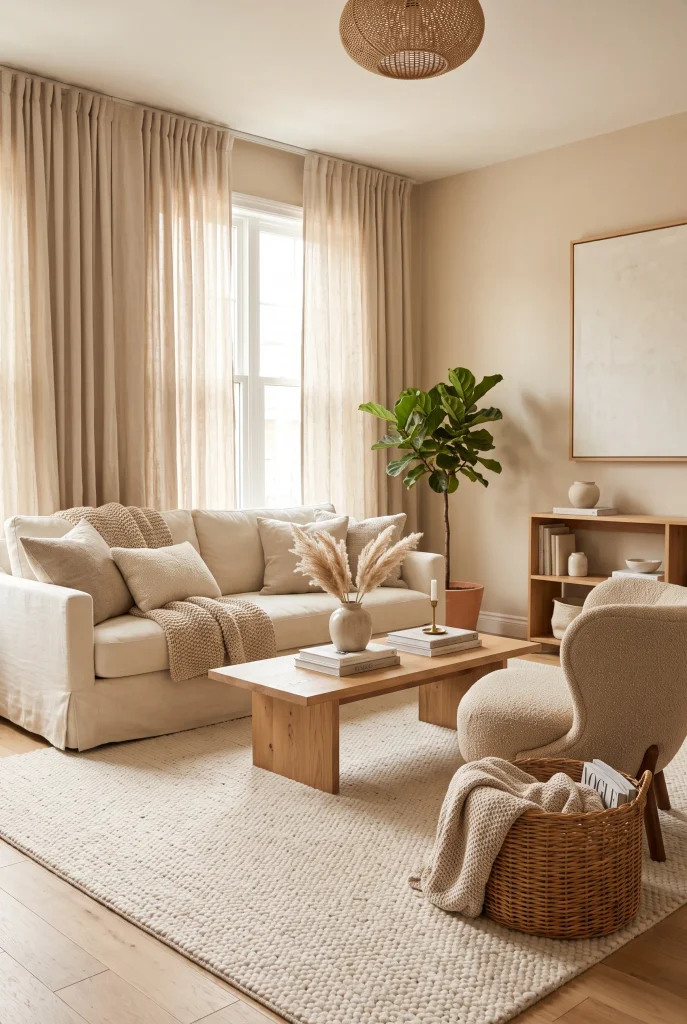
- A large rug helps define the seating area.
- Plush textures make hard flooring feel warmer.
- Ivory and beige rugs complement many neutral palettes.
- Proper sizing creates a more cohesive furniture arrangement.
A plush neutral area rug can completely change how a room feels underfoot and visually. Soft ivory, beige, or warm taupe rugs introduce texture while connecting the furniture into one cohesive seating arrangement. They also soften the appearance of hardwood, tile, or laminate flooring, making the room feel more comfortable and inviting. In a neutral interior, the rug becomes an important layer because it adds depth without relying on bold patterns or saturated colors.
Choose a rug large enough to anchor the main furniture rather than leaving every piece floating separately. In a living room, placing at least the front legs of the sofa and chairs on the rug often creates a more connected arrangement. Consider pile height and maintenance, especially in high-traffic areas. A low-pile textured rug may be easier to clean, while a plush design adds extra comfort in bedrooms. The right size, texture, and undertone can make the entire space feel more balanced and thoughtfully furnished.
15. Organic Wood Shelving
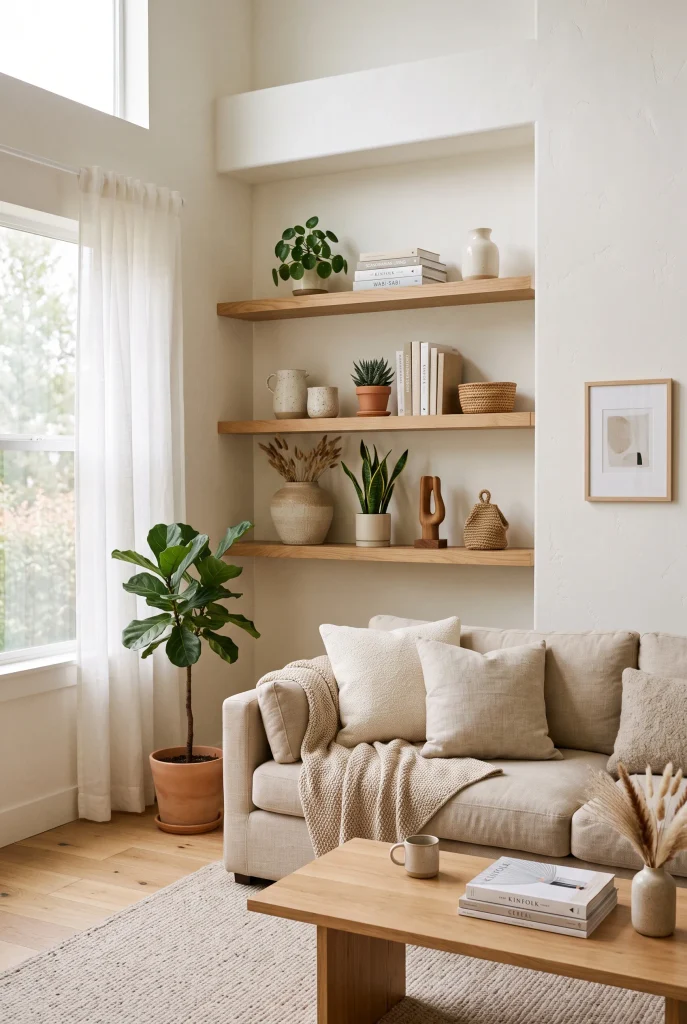
- Open shelving adds storage and visual interest.
- Natural wood brings warmth to pale walls.
- Carefully spaced objects prevent shelves from looking crowded.
- Neutral accessories create a calm, coordinated display.
Organic wood shelving combines practical storage with a warm decorative element. Floating oak shelves or a slim wooden bookcase can turn an empty wall into a useful display for books, ceramics, framed art, and small plants. The natural grain introduces a subtle contrast against cream or white walls, while the open design keeps the room feeling airy. This is a particularly useful solution for apartments or smaller homes where you want to add personality without taking up much floor space.
For a refined arrangement, leave some shelf space empty and vary the height of displayed objects. Place larger pieces toward the back or lower shelves, then add smaller ceramics and books for balance. Avoid filling every inch, because negative space helps the display feel intentional. Secure shelves properly according to the wall type and manufacturer’s instructions. A few well-chosen objects on natural wood shelves can create more visual impact than a crowded collection of unrelated decorations.
16. Textured Accent Walls
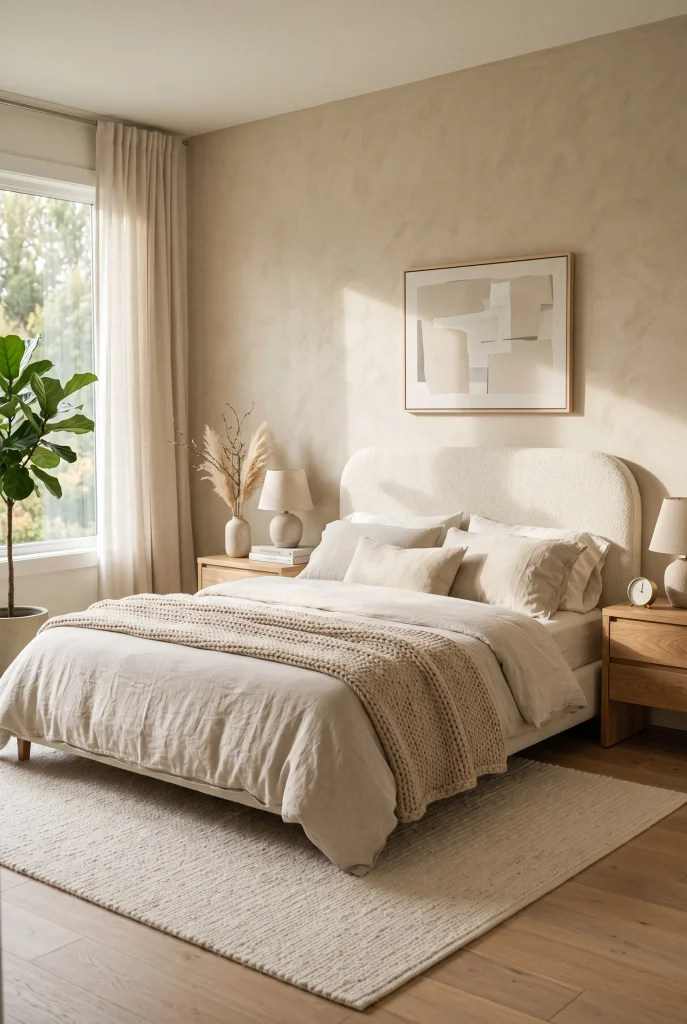
- Textured walls add depth without relying on bold colors.
- Limewash and plaster finishes create organic visual movement.
- A single accent wall can define the room’s focal point.
- Soft beige tones maintain a calm, cohesive atmosphere.
A textured accent wall can make a neutral room feel architectural and thoughtfully designed. Subtle finishes such as limewash, plaster, or textured wallpaper create gentle variations in light and shadow, adding depth without introducing loud patterns. This approach works beautifully behind a bed, sofa, or dining table, where one wall can become the room’s natural focal point. Warm beige, ivory, and soft taupe finishes pair especially well with linen, wood, and understated furnishings.
Before choosing a finish, consider the existing wall condition and the amount of natural light. Some textured paints require careful preparation, while quality textured wallpaper can offer a more straightforward alternative. Test samples at different times of day to see how the surface responds to changing light. Keep the surrounding decor relatively simple so the wall remains the main feature. A thoughtfully selected finish can add character and a subtle sense of luxury without making the entire room feel busy.
17. Oversized Floor Mirrors
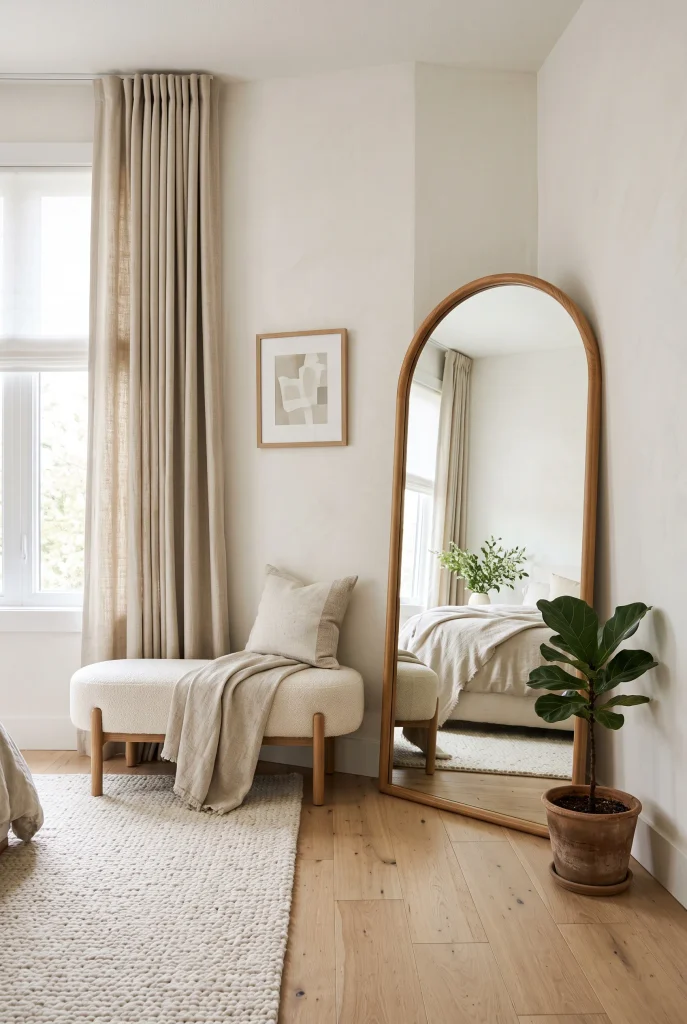
- A large mirror reflects light and adds visual openness.
- Arched frames introduce a softer architectural detail.
- Full-length mirrors are useful for everyday dressing.
- Leaning or freestanding designs can create a relaxed look.
An oversized floor mirror can make a neutral room feel brighter, taller, and more spacious. Its reflective surface helps distribute natural light, while a warm wood or understated metal frame adds a decorative finish. Placed near a window, the mirror can reflect daylight and nearby textures, creating a more open visual impression. This idea works well in bedrooms, entryways, and living rooms where a practical mirror can also serve as a strong design feature.
Choose a position that reflects something attractive, such as a window, artwork, or a neatly styled seating area. Avoid placing it where it reflects clutter or creates an awkward visual distraction. For safety, secure a large leaning mirror according to the manufacturer’s instructions, especially in homes with children or pets. An arched or softly rounded frame can complement curved furniture, while a rectangular frame suits cleaner, modern lines. The result is a useful, elegant addition that enhances both function and atmosphere.
18. Neutral Gallery Wall
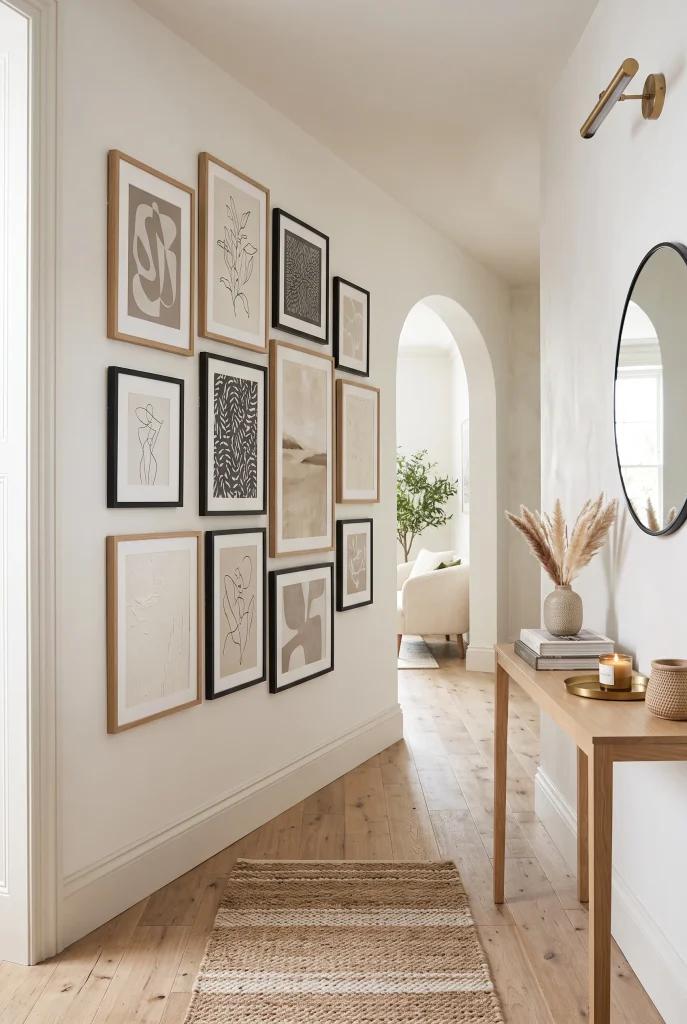
- A gallery wall adds personality to neutral spaces.
- Coordinated frames create visual consistency.
- Black, oak, and cream frames offer different styling effects.
- Artwork can fill a blank wall without adding furniture.
A neutral gallery wall brings personality and visual rhythm to an otherwise simple interior. A curated collection of abstract prints, line drawings, photography, or textured artwork can create a sophisticated focal point while maintaining a restrained palette. By choosing pieces in related shades of cream, beige, taupe, and charcoal, you can achieve a cohesive look without making every artwork identical. This approach works especially well in hallways, staircases, living rooms, and above consoles.
Start by deciding whether you prefer matching frames or a carefully mixed collection. Oak frames create warmth, black frames add definition, and cream frames offer a softer appearance. Arrange the artwork on the floor first to test spacing and balance before hanging anything. Keep the overall composition connected to the room’s furniture and color scheme. A gallery wall feels more intentional when it includes a mix of sizes and subjects, rather than repeating the same print several times.
19. Layered Neutral Bedding
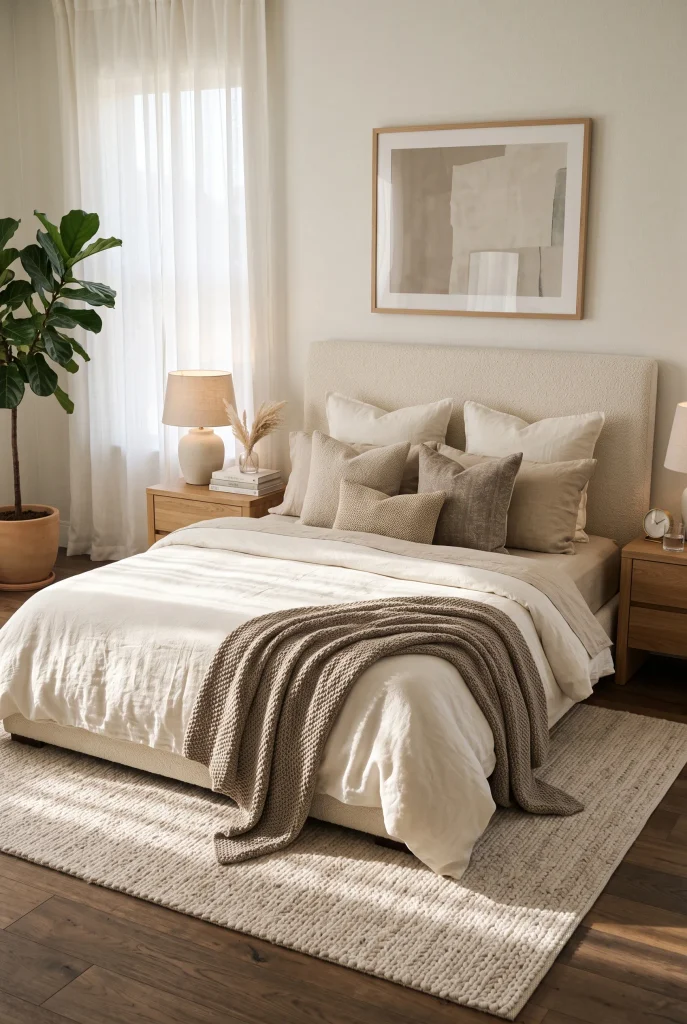
- Layered bedding makes the bedroom feel inviting and comfortable.
- Different fabric textures create depth without bold patterns.
- Neutral shades keep the sleeping area calm and cohesive.
- A folded throw adds a relaxed, finished touch.
Layered neutral bedding can make an ordinary bedroom feel like a calm boutique retreat. Start with an ivory duvet, add pillows in cream and beige, then finish with a textured throw in taupe or warm gray. The gentle variation in color and fabric creates depth while keeping the overall atmosphere peaceful. This styling approach works especially well with upholstered headboards, natural wood nightstands, and soft rugs because the materials complement one another without competing for attention.
For a polished but comfortable arrangement, combine different pillow sizes and fabrics rather than arranging everything identically. A linen duvet cover, cotton sheets, and a knitted or woven throw offer useful textural contrast. Choose breathable materials suited to your climate and wash-care preferences. You can refresh the entire bedroom simply by changing the accent throw or pillow covers seasonally. These small adjustments keep the space feeling welcoming and thoughtfully styled without requiring new furniture or a complete redesign.
20. Minimalist Entryway Console
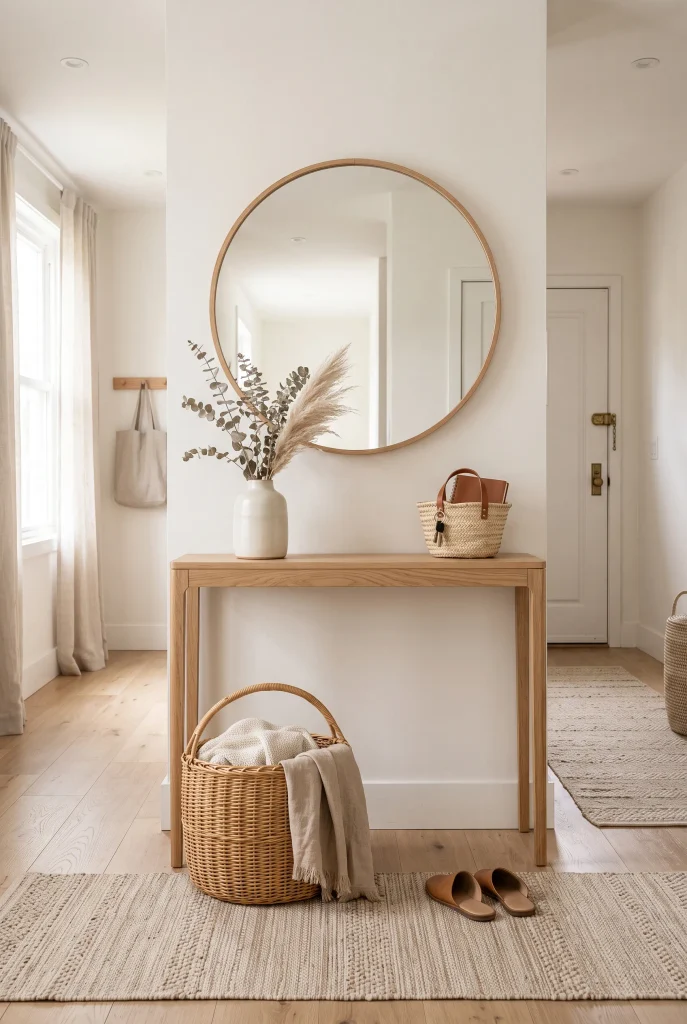
- A slim console adds function without crowding the entryway.
- A mirror creates a practical finishing touch.
- One vase or bowl provides understated decoration.
- Baskets help organize everyday essentials near the door.
A minimalist entryway console creates a welcoming first impression while giving everyday essentials a designated place. A slim oak or light wood console paired with a round mirror can make a narrow entrance feel organized and visually balanced. Keep the tabletop simple with one ceramic vase, a small bowl for keys, or a modest stack of books. The restrained arrangement allows the natural materials and clean lines to stand out, creating a refined appearance without sacrificing practical storage.
Choose a console that leaves comfortable walking space, especially in a narrow hallway. If you need additional organization, use baskets beneath the table for shoes, scarves, or other small items. A runner rug can add warmth and visually connect the entryway to nearby rooms. Keep decorative objects proportionate to the console’s size, and avoid filling every surface. A tidy entryway with a few useful, attractive pieces makes the entire home feel more considered from the moment you walk through the door.
21. Soft Neutral Dining Area
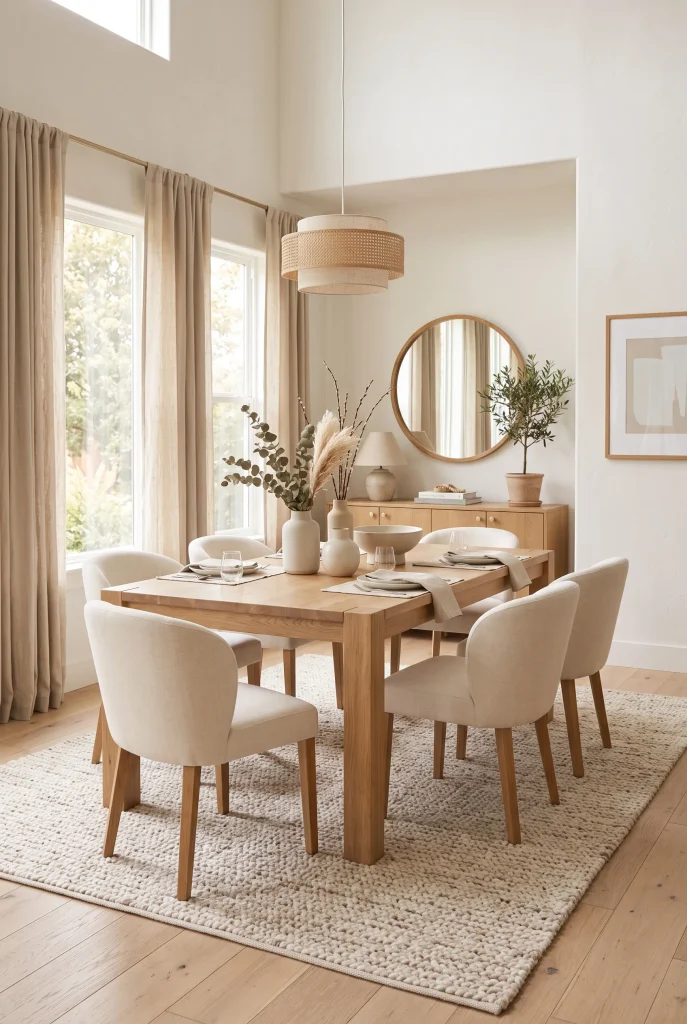
- Light wood furniture creates a warm dining atmosphere.
- Upholstered chairs add comfort and softness.
- A simple centerpiece keeps the table visually clean.
- Neutral textiles connect the dining area with surrounding spaces.
A soft neutral dining area combines comfort, warmth, and understated elegance in one inviting setting. A light oak table, cream upholstered chairs, and a simple ceramic centerpiece create a balanced arrangement that feels both practical and refined. The restrained color palette allows the natural wood grain and fabric textures to become the main visual features. This approach works beautifully in open-plan homes because it creates a gentle transition between the dining area, kitchen, and living room.
For everyday use, choose dining chairs that are comfortable and easy to maintain. Add a washable runner or subtle woven placemats if you want texture without making the table feel crowded. A low centerpiece keeps conversations clear and leaves room for serving dishes. Coordinate the dining area’s warm undertones with nearby flooring and cabinetry for a cohesive look. These small choices help create a dining space that feels welcoming for family meals, casual gatherings, and quiet evenings at home.
22. Warm Neutral Kitchen
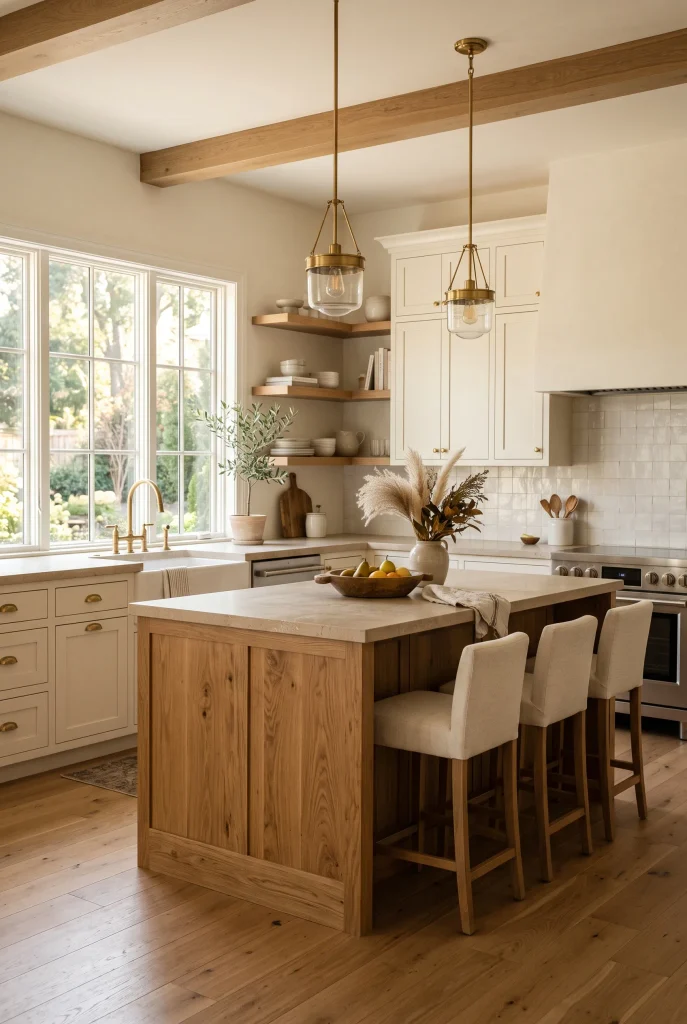
- Cream cabinetry creates a softer alternative to stark white.
- Natural oak adds warmth and visual character.
- Subtle stone surfaces create a refined finish.
- Simple hardware keeps the kitchen feeling timeless.
A warm neutral kitchen feels inviting, timeless, and beautifully connected to the rest of the home. Cream cabinets, beige countertops, and natural oak details create a soft palette that works in both modern and traditional interiors. Instead of relying on bold colors, this approach uses material quality, subtle texture, and thoughtful proportions to create visual interest. The result is a kitchen that feels bright during the day and cozy in the evening, making it a welcoming place for everyday cooking and gathering.
To achieve this look, coordinate the undertones of your cabinets, countertops, backsplash, and flooring. Warm whites pair naturally with creamy stone and honey-toned wood, while cooler materials may require a different palette. Add interest through simple hardware, woven counter stools, or a ceramic fruit bowl. Consider maintenance when selecting countertop materials, especially in busy kitchens. A balanced combination of practical surfaces and warm finishes can make the kitchen feel polished without sacrificing the comfort and functionality a hardworking space needs.
23. Calm Neutral Bathroom
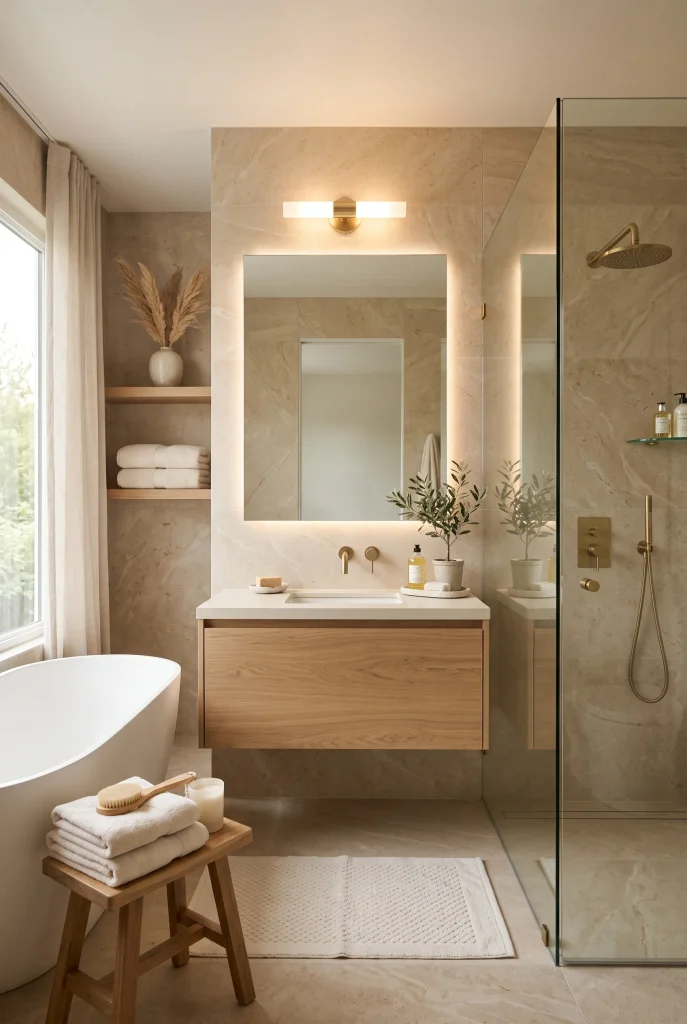
- Warm neutral tiles create a relaxing foundation.
- Natural wood adds softness to hard bathroom surfaces.
- Simple fixtures create a clean, refined appearance.
- Textured towels and ceramics provide subtle finishing details.
A calm neutral bathroom can feel like a private retreat through thoughtful materials and a restrained color palette. Warm beige tiles, a light oak vanity, and cream towels create a soothing foundation that feels clean without looking clinical. Soft textures and natural finishes help balance the hard surfaces typically found in bathrooms. This approach works in both compact powder rooms and spacious primary bathrooms because it emphasizes visual calm, practical storage, and a sense of continuity between the home’s different spaces.
For a cohesive result, select tiles and fixtures that share compatible undertones. Add warmth through wood-look cabinetry, woven storage baskets, or a small ceramic accessory. Keep the countertop relatively uncluttered so the room feels spacious and easy to maintain. Choose moisture-resistant materials and follow proper installation guidelines for bathroom use. Even a small bathroom can feel significantly more relaxing when the finishes, lighting, and accessories work together instead of competing for attention.
Conclusion
Creating an elegant home does not require a huge budget or a complete makeover. The right combination of warm neutrals, natural textures, thoughtful lighting, and practical furniture can transform an ordinary room into a welcoming retreat. These neutral home decor ideas offer inspiration for every space, from cozy bedrooms to refined kitchens and inviting entryways. Start with one change that fits your style, then build gradually as your needs and budget allow. Save this article on Pinterest for your next decorating project, and share it with someone who loves beautiful, comfortable homes. Your dream space can begin with one simple detail.