21 Reading Nook Ideas That Make You Want to Read More
A cozy reading corner can turn even the smallest unused space into a place you genuinely want to spend time. Reading nook ideas can help transform an empty corner, window seat, bedroom area, or awkward alcove into a comfortable retreat.
The right setup does not need to be complicated or expensive. A supportive chair, soft lighting, a small table, and a few favorite books can completely change how the space feels. These ideas explore different layouts, furniture choices, colors, textures, and storage solutions so you can find an approach that fits your home. Whether you love bright and airy spaces or prefer a moody library atmosphere, there is inspiration here for creating a reading spot that feels inviting, practical, and personal.
1. Window Seat Nook
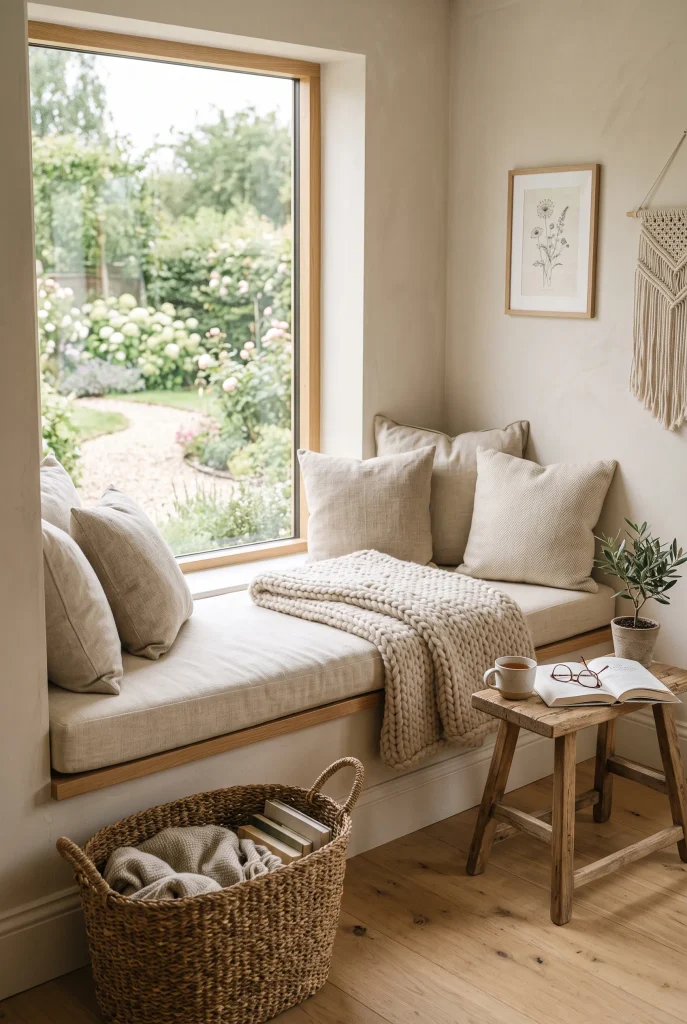
- A window seat turns unused space into a naturally inviting reading spot.
- Soft cushions make the nook comfortable enough for longer reading sessions.
- A small side table keeps books, glasses, and a warm drink within reach.
- Light neutral colors help the area feel open and peaceful.
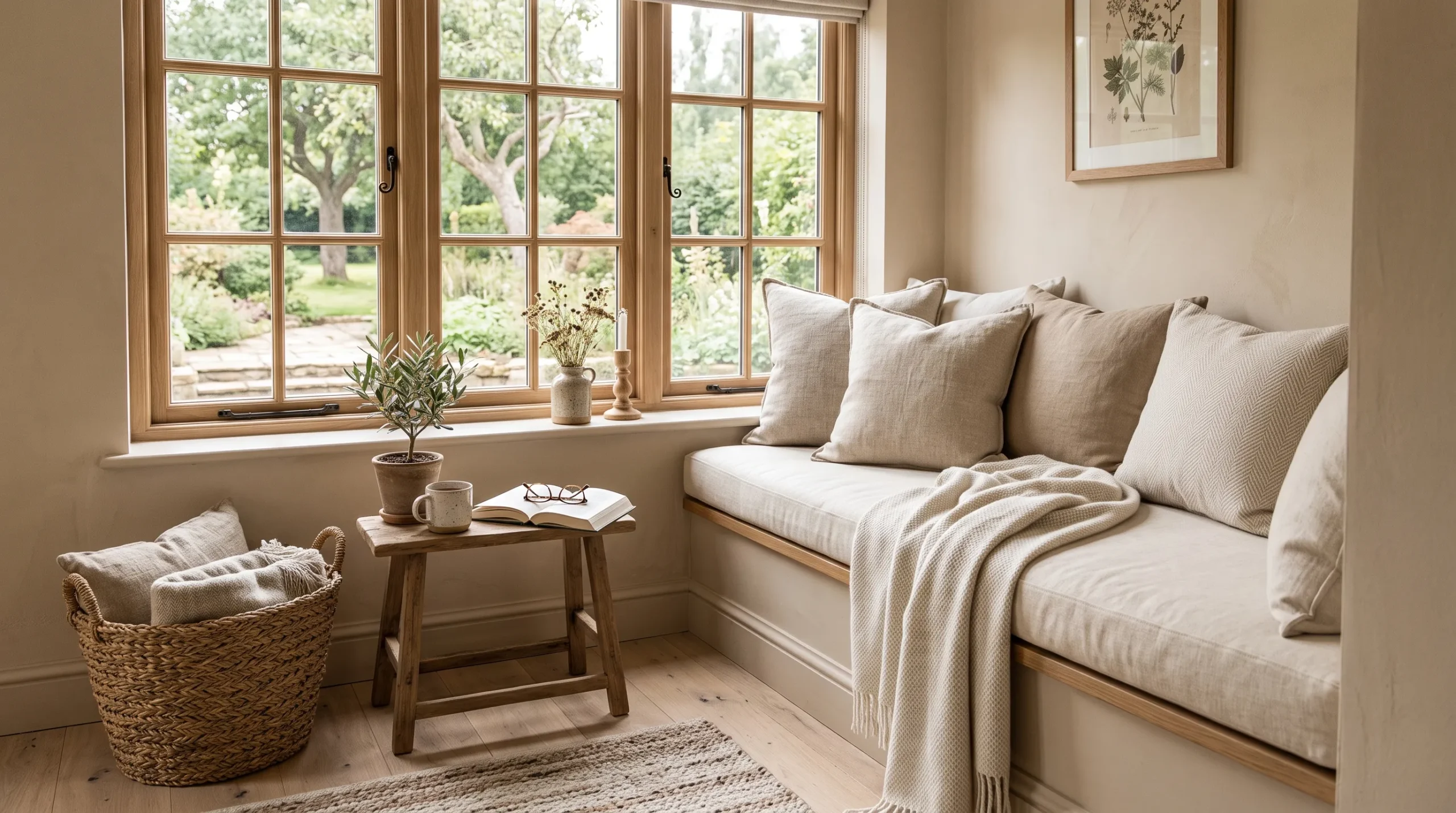
A sunny window can completely change the feeling of a reading corner. A built-in or freestanding bench beneath the glass creates a dedicated spot without taking up much floor space. Choose a deep cushion in cream, beige, or soft gray, then layer it with two or three textured pillows for comfort. A slim wooden table beside the seat gives you somewhere to place a book or mug. Keeping the styling simple works especially well here because the natural light already becomes the main visual feature.
For smaller homes, this setup can make an awkward window area feel intentional instead of forgotten. Add a woven basket underneath the bench for blankets or extra books, and choose lightweight linen curtains that soften bright sunlight without blocking it completely. The combination of warm wood, natural textiles, and daylight creates a relaxed atmosphere that makes reading feel like an easy part of the daily routine. This is one of those reading nook ideas that improves both function and appearance because the same compact area provides comfortable seating, practical storage, and a beautiful focal point.
2. Built In Bookshelf Nook
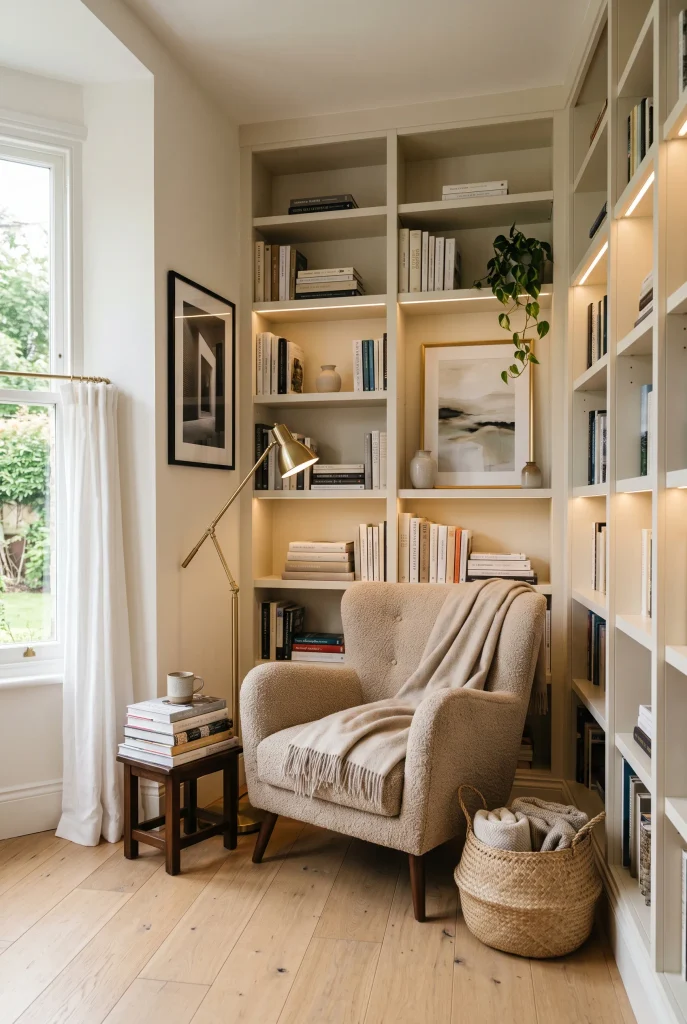
- Built-in shelves make books part of the room’s visual design.
- An armchair creates a comfortable reading zone without requiring major furniture.
- Warm wood and brass details add character without making the space feel busy.
- Lower shelves can hold baskets for practical hidden storage.
Few things make a reading corner feel more complete than having your favorite books within arm’s reach. A built-in bookshelf creates a natural backdrop while giving the space a clear purpose. Place a comfortable armchair between the shelves or slightly forward from them, leaving enough room to move around comfortably. Keep the shelving balanced with a mix of upright books, small stacks, framed artwork, and a few decorative objects. This approach keeps the display personal without making it look overly styled. A warm floor lamp or brass wall light can finish the setup beautifully.
The biggest advantage is that the shelving does more than store books; it visually defines the entire nook. If a full built-in unit is outside your budget, freestanding bookcases can create a similar effect when positioned carefully around a chair. Use matching baskets on lower shelves to hide blankets, notebooks, or everyday items. A small side table nearby provides another practical surface. Keeping the chair slightly separated from the shelving helps the area feel like a dedicated retreat rather than simply a book storage wall.
3. Cozy Corner Chair
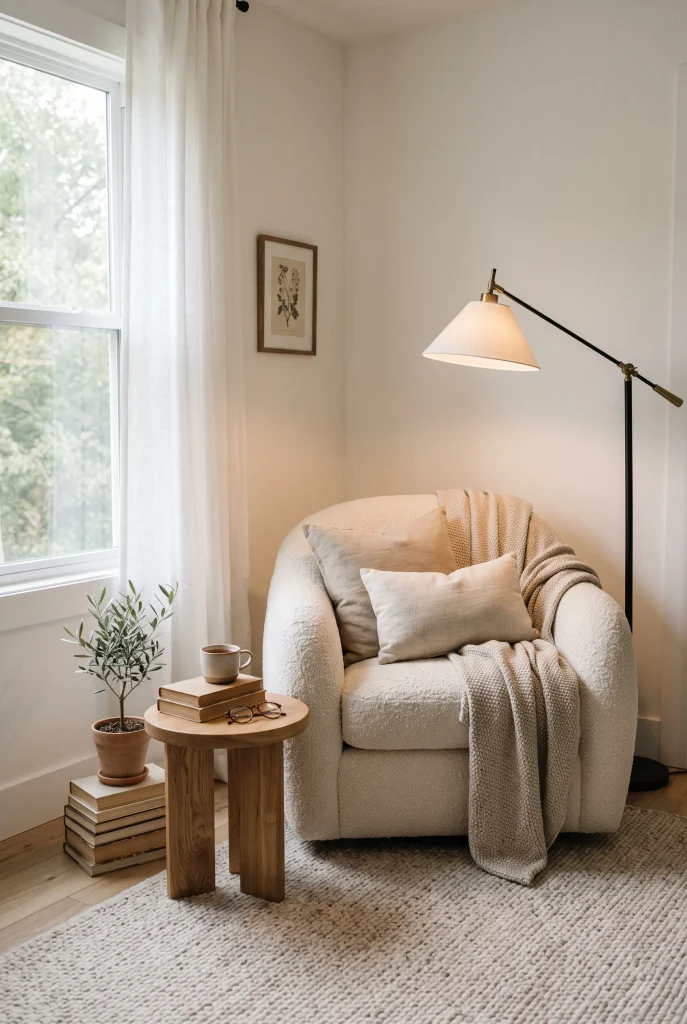
- An oversized chair can create a reading nook even without built-in features.
- A soft rug visually separates the corner from the rest of the room.
- A nearby lamp makes the space useful after sunset.
- Keep the surrounding decor minimal so the chair remains the focal point.
You do not need a dedicated room to create a reading space that feels special. An empty corner can become a comfortable retreat with one supportive armchair, a small table, and good lighting. Choose a chair with enough depth to sit comfortably while reading, then soften it with a textured throw and one lumbar pillow. A round oak table keeps the arrangement compact and provides space for books or a cup of tea. Add a soft rug underneath to visually anchor everything and make the corner feel separate from the surrounding room.
Lighting makes this simple setup much more functional. Position a slim floor lamp beside the chair so the light falls naturally over your shoulder without creating harsh shadows on the pages. During the day, keep nearby surfaces uncluttered and let natural light brighten the corner. At night, use a warm bulb for a softer atmosphere. Neutral fabrics, pale wood, and woven textures work especially well when you want a calm, timeless look. This setup is also easy to change later, making it practical for renters or anyone who enjoys refreshing their decor.
4. Alcove Reading Corner
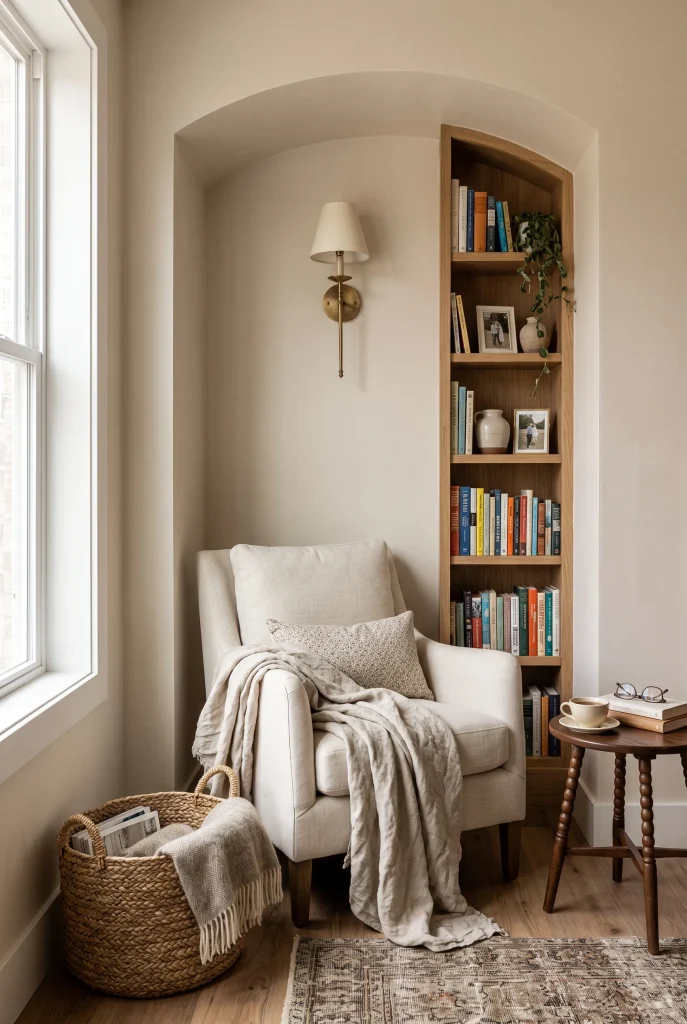
- A shallow alcove can become a purposeful reading zone without using much floor space.
- A narrow shelf provides storage while keeping the walkway clear.
- Wall-mounted lighting saves valuable surface area.
- Soft neutral textures make the small space feel warm and inviting.
An unused alcove can become one of the most inviting spots in the home with just a few thoughtful pieces. Place a compact upholstered chair inside the nook and add a narrow bookshelf or floating shelves nearby. Keeping the furniture proportional to the space prevents the corner from feeling cramped. Soft cream upholstery, warm wood, and woven accents create a comfortable visual balance. If the alcove has a nearby outlet, add a wall sconce instead of a floor lamp. This keeps the floor open while giving you focused light for reading.
The beauty of this setup is how naturally it fits into rooms that already have unused architectural spaces. A hallway end, bedroom recess, or living room corner can all work with the right proportions. Add a small cushion, lightweight throw, and a basket for books or magazines. Avoid filling every available surface because a little breathing room makes the nook appear larger. A successful small reading corner should feel intentional rather than crowded, with one comfortable seat and just enough supporting decor to make the area useful.
5. Bedroom Reading Corner
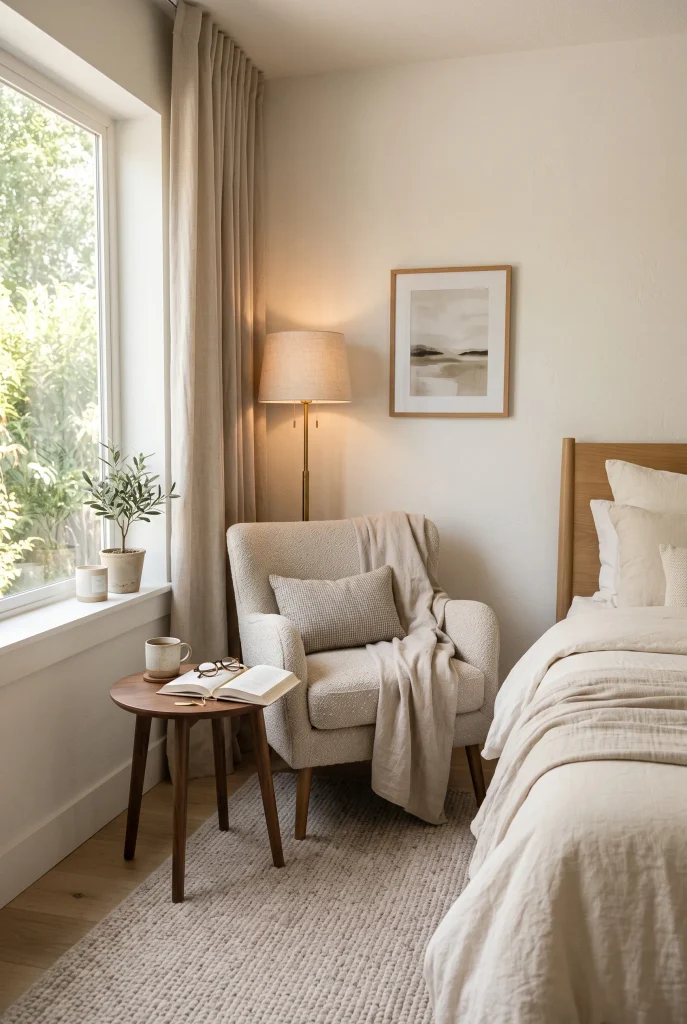
- A bedroom corner can provide a quiet alternative to reading in bed.
- An upholstered chair creates comfortable seating without adding visual heaviness.
- A compact table keeps books and personal items organized.
- Warm lighting helps the corner feel relaxing during evening hours.
A quiet bedroom corner can become the perfect place to slow down before bedtime. Instead of placing another large piece of furniture in the room, choose a compact armchair with a supportive back and soft upholstery. Position it near a window if possible, then add a small walnut or oak table for your current book and reading glasses. A neutral rug underneath can visually connect the chair with the rest of the bedroom. Keep colors close to your existing bedding so the nook feels like part of the room rather than a separate decorating project.
Good lighting is especially important when the nook will be used at night. A slim floor lamp beside the chair provides focused illumination without flooding the entire bedroom with bright light. Add a soft throw for cooler evenings and a small basket nearby for books you are currently reading. This arrangement can also help create a gentle boundary between sleeping and relaxing areas. Even a very simple bedroom corner feels more inviting when the chair faces slightly into the room rather than being pushed completely against the wall.
View: 21 Kitchen Cabinet Organization Ideas to Maximize Space
6. Library Wall Nook
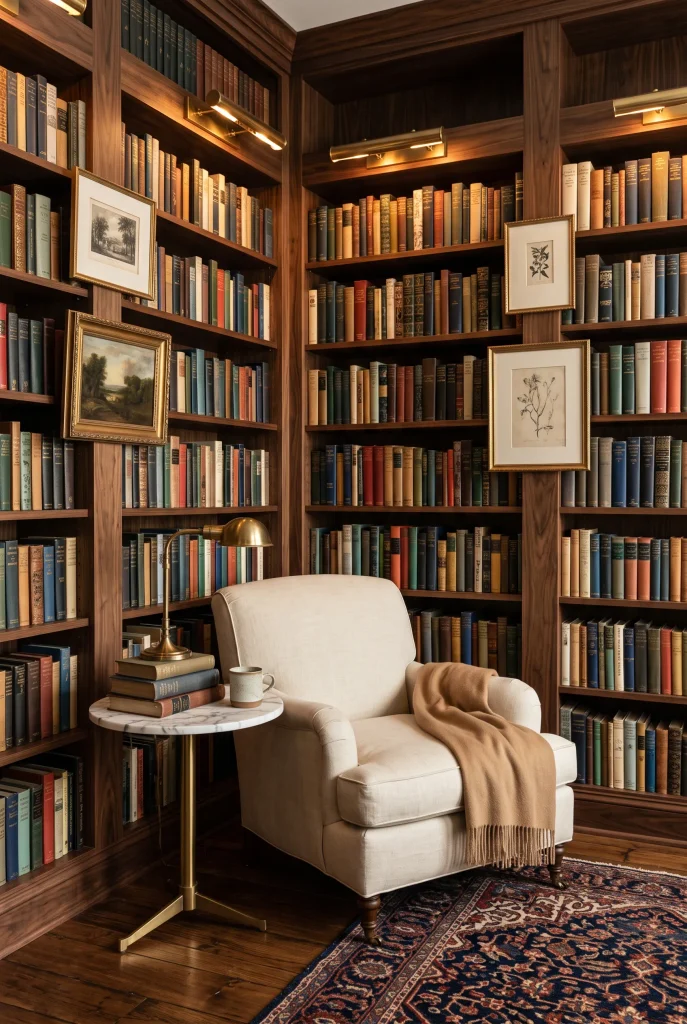
- A full library wall creates a dramatic backdrop for a dedicated reading area.
- Floor-to-ceiling shelves maximize vertical storage.
- A comfortable lounge chair keeps the arrangement focused on reading.
- Brass lighting and warm wood add a polished, timeless finish.
Turn an entire wall into a book-filled backdrop and let the seating remain intentionally simple. Floor-to-ceiling shelving makes use of vertical space while giving the room a strong architectural feature. Arrange books by a mixture of height and orientation rather than making every shelf perfectly uniform. A deep cream or taupe chair placed slightly in front of the shelving creates a comfortable focal point. Add a compact marble or wood table beside it for essentials. This combination makes the reading area feel substantial without requiring several pieces of furniture.
A library wall also gives you plenty of opportunities to personalize the space without overwhelming it. Mix books with a few framed photographs, ceramic pieces, or small objects that have meaning to you. Keep the majority of the shelves dedicated to books so the purpose remains clear. Picture lights or adjustable wall sconces can highlight the shelving while providing a warm glow around the chair. For homes with limited floor space, going upward with storage can be especially useful because it adds substantial capacity without expanding the footprint of the reading area.
7. Under Stair Nook
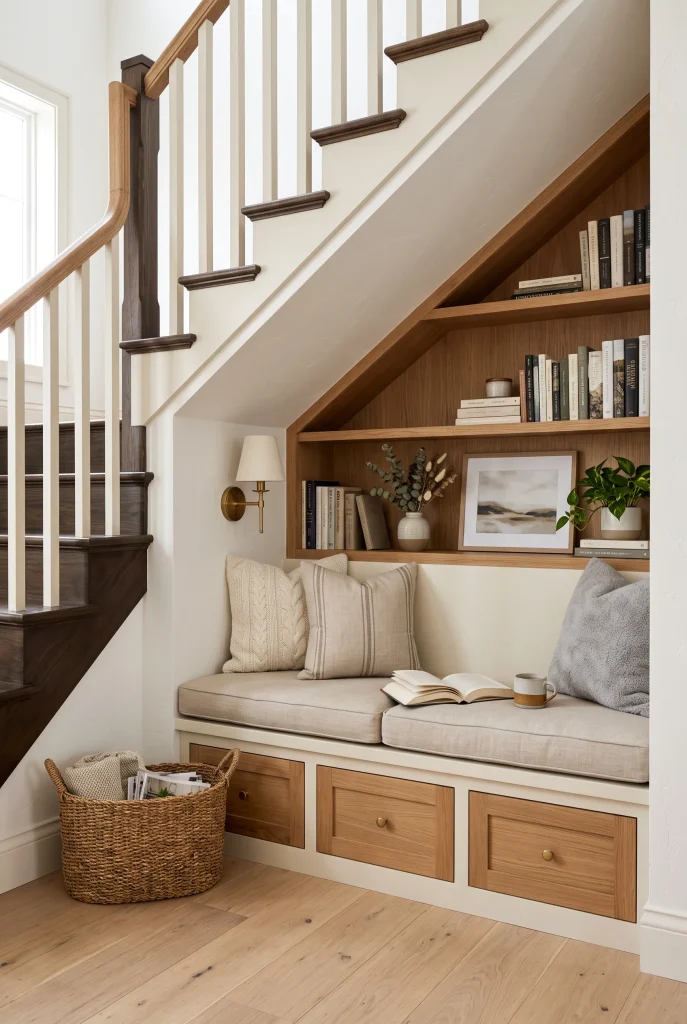
- The space beneath the stairs becomes useful instead of staying visually empty.
- Built-in seating makes the most of an awkward architectural area.
- Drawers or baskets provide convenient storage for books and blankets.
- Warm lighting makes the compact corner feel intentional and comfortable.
The space beneath a staircase often feels too awkward for regular furniture, but it can be surprisingly useful as a compact reading retreat. A built-in bench fitted to the available width creates comfortable seating while using space that might otherwise go unused. Add a few cushions in cream, beige, or muted earth tones to soften the area. Open shelves can hold favorite books, while drawers underneath provide hidden storage for blankets and everyday clutter. A wall-mounted brass or black reading light keeps the arrangement practical without taking up valuable floor space.
Because the ceiling height changes beneath the stairs, furniture proportions matter more than decoration. Keep the seating low and use the taller end of the space for shelving or vertical storage. Light-colored walls can help the nook feel brighter, especially when natural light is limited. A small textured rug can visually define the seating area without making it feel crowded. These reading nook ideas work particularly well in family homes because the finished space can serve as a quiet reading corner while also providing useful storage in an otherwise difficult-to-furnish part of the house.
8. Floating Bench Nook
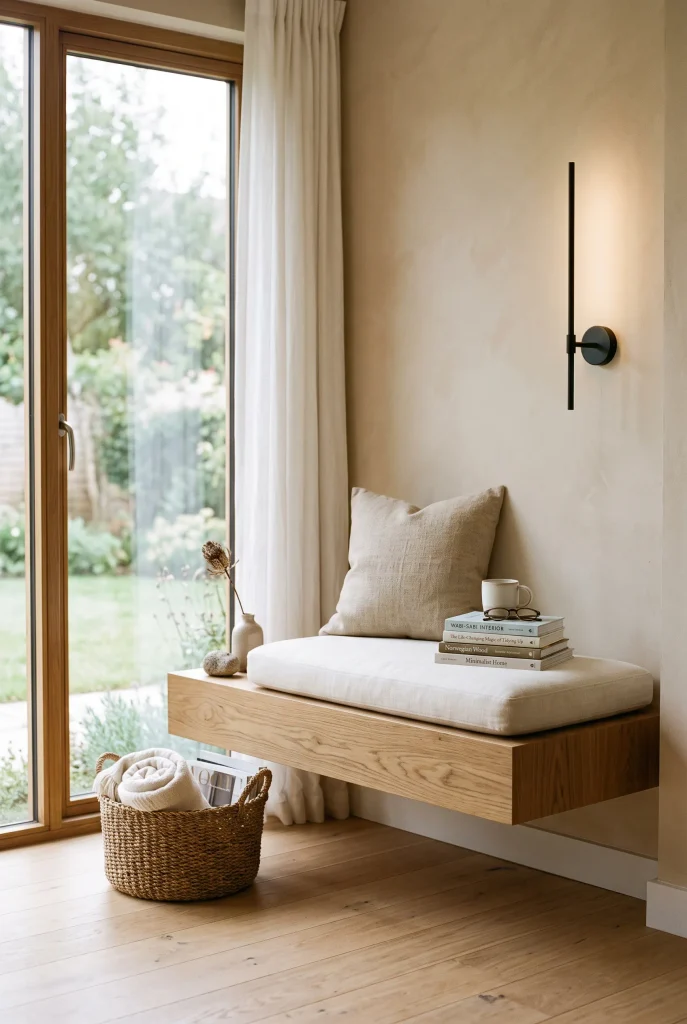
- A floating bench keeps the floor visually open and makes a small nook feel larger.
- Thick cushions turn the simple platform into comfortable seating.
- Wall-mounted lighting preserves the clean floor area.
- Minimal styling keeps the arrangement airy and uncluttered.
A floating bench creates a clean reading area while making a small room appear more spacious. Mount a sturdy wood bench along a suitable wall and top it with a thick upholstered cushion for comfort. The open space underneath keeps the floor visible, which can make the corner feel less crowded than a traditional chair arrangement. Add one or two pillows in natural linen and place a slim wall sconce above or beside the bench. The result is simple, modern, and functional without requiring a large furniture footprint.
This setup works especially well in narrow bedrooms, compact living rooms, and transitional spaces where a full chair may interfere with movement. Use the open area underneath for a small basket or leave it completely clear for an even lighter appearance. Warm oak, cream fabric, and soft beige walls create a calm palette that suits many interiors. If the bench is near a window, sheer curtains can filter the daylight and make the space more comfortable throughout the day. The key is to keep accessories limited so the floating structure remains the main visual feature.
9. Bay Window Retreat
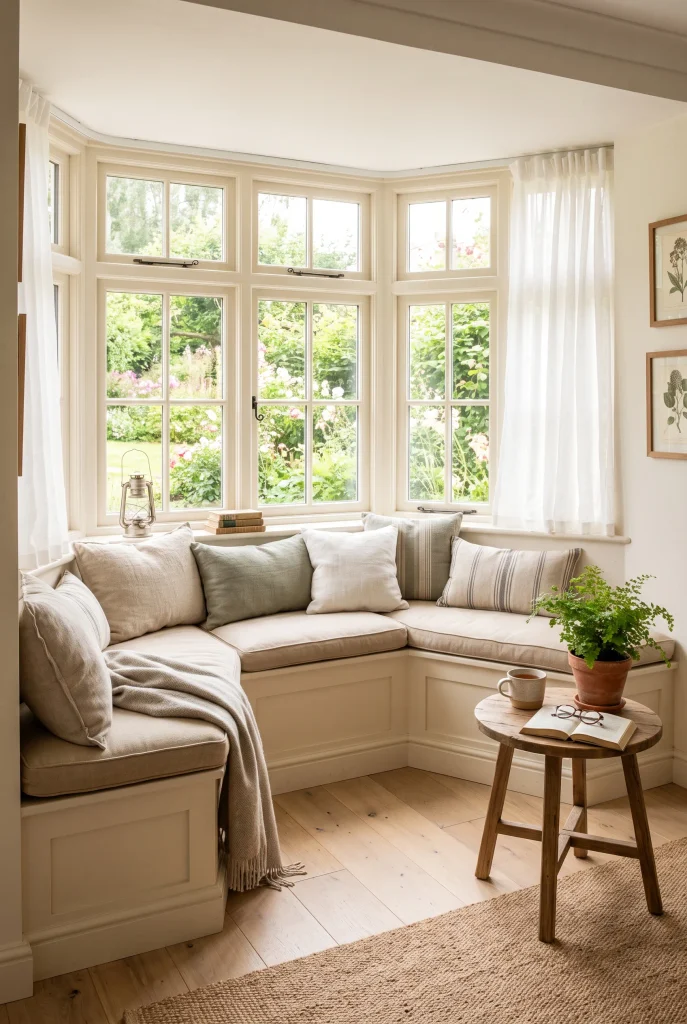
- A bay window naturally creates a defined space for reading and relaxing.
- Built-in seating provides generous comfort without occupying the main room.
- Sheer curtains soften sunlight while preserving the bright atmosphere.
- A small plant adds freshness without cluttering the window area.
A bay window already has the shape of a natural retreat, so turning it into a reading corner can feel effortless. Start with a fitted bench cushion in a durable cream or oatmeal fabric, then layer a few pillows for back support. The curved or angled shape of the window can become the visual focus, especially when the surrounding decor stays simple. A small round table can sit near the edge for books and drinks without interrupting the seating area. Keep the floor finish warm and light to reflect daylight and make the nook feel welcoming.
Comfort becomes even more important when the space is designed for longer reading sessions. Choose cushions with enough support rather than relying only on decorative pillows. Sheer curtains can filter harsh afternoon sunlight while maintaining the connection with the outdoors. A small potted plant or woven basket can add texture without taking attention away from the window. For homes with limited seating, this type of retreat can also work as an extra place to sit when guests arrive, giving the area more everyday value beyond its primary reading purpose.
10. Ladder Shelf Nook
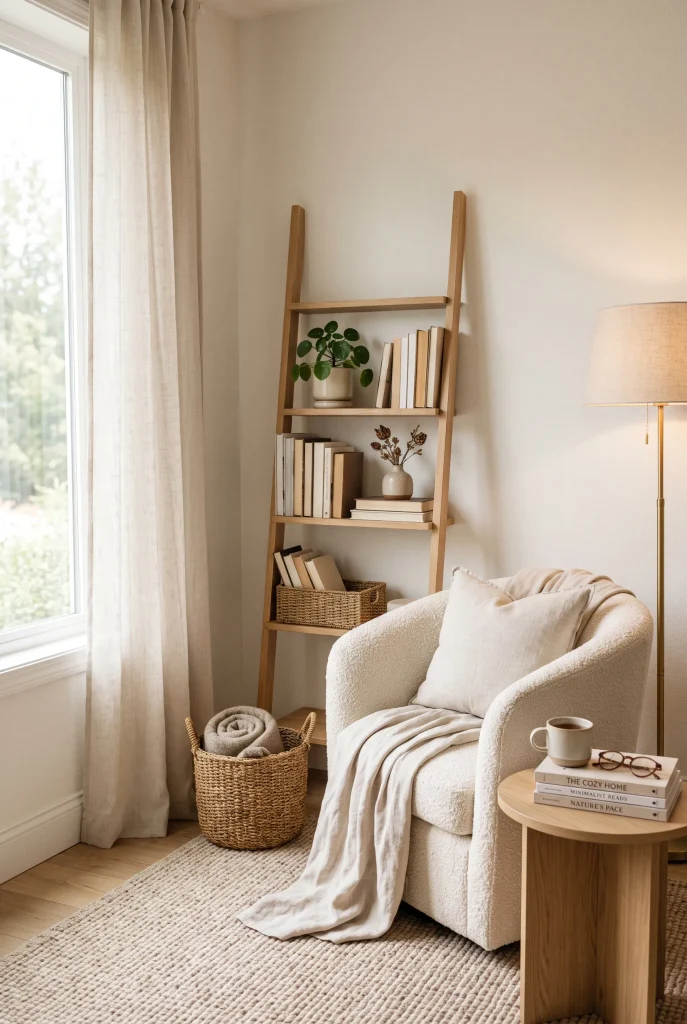
- A ladder shelf adds vertical storage without making the corner feel bulky.
- An armchair provides comfortable seating while keeping the footprint compact.
- Lower baskets can hide blankets, magazines, and reading accessories.
- The open shelving keeps the arrangement light and visually airy.
A ladder shelf can turn a small unused corner into a practical reading station without overwhelming the room. Choose a narrow wood shelf with several levels, then place it beside a comfortable armchair. Use the upper shelves for a few favorite books and simple decorative pieces while keeping heavier baskets or larger books toward the bottom. This arrangement creates useful vertical storage while leaving plenty of open floor around the chair. A small round table can complete the setup, giving you a convenient place for a mug, glasses, or your current book.
The open design of a ladder shelf is especially helpful when the reading area sits in a compact room. Unlike a bulky bookcase, its angled profile keeps the wall feeling more open and allows light to move through the space. Stick with a restrained palette of warm wood, cream upholstery, and soft beige textiles for a calm appearance. A nearby floor lamp can provide focused evening light without requiring electrical changes. For renters, this is one of the easiest reading nook ideas to recreate because the furniture can be moved or rearranged whenever the room layout changes.
11. Floor Cushion Nook
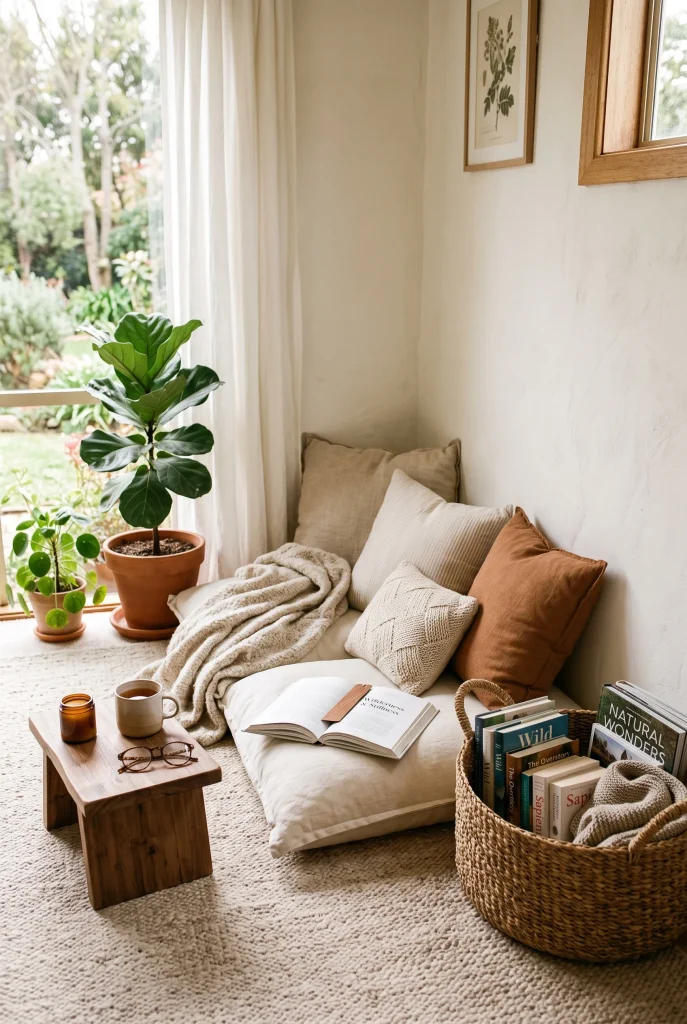
- Floor cushions create a relaxed reading spot with very little furniture.
- A low table keeps books and drinks within easy reach.
- Layered textiles add softness and visual warmth.
- The flexible setup can be rearranged whenever the room needs a refresh.
A floor cushion setup brings a relaxed, casual feeling to a reading corner without requiring a traditional chair. Start with a thick floor cushion or oversized meditation-style cushion that provides enough support for comfortable sitting. Layer it with a couple of smaller pillows and place everything on a soft area rug. A low wooden table can hold books, a reading lamp, or a drink while keeping the entire arrangement close to the floor. This approach works beautifully in bedrooms, playrooms, or quiet corners where a more formal seating arrangement might feel too heavy.
The key to making a floor reading space comfortable is choosing supportive materials rather than relying on thin decorative cushions. Look for substantial padding and washable covers if the area will receive regular use. Keep a woven basket nearby for books and blankets so the corner stays organized between reading sessions. Warm neutrals, natural fibers, and light wood create a peaceful atmosphere, while a small plant can bring a fresh touch. This setup also gives you flexibility because the cushions can be moved aside whenever you need the floor for another activity.
12. Fireplace Reading Spot
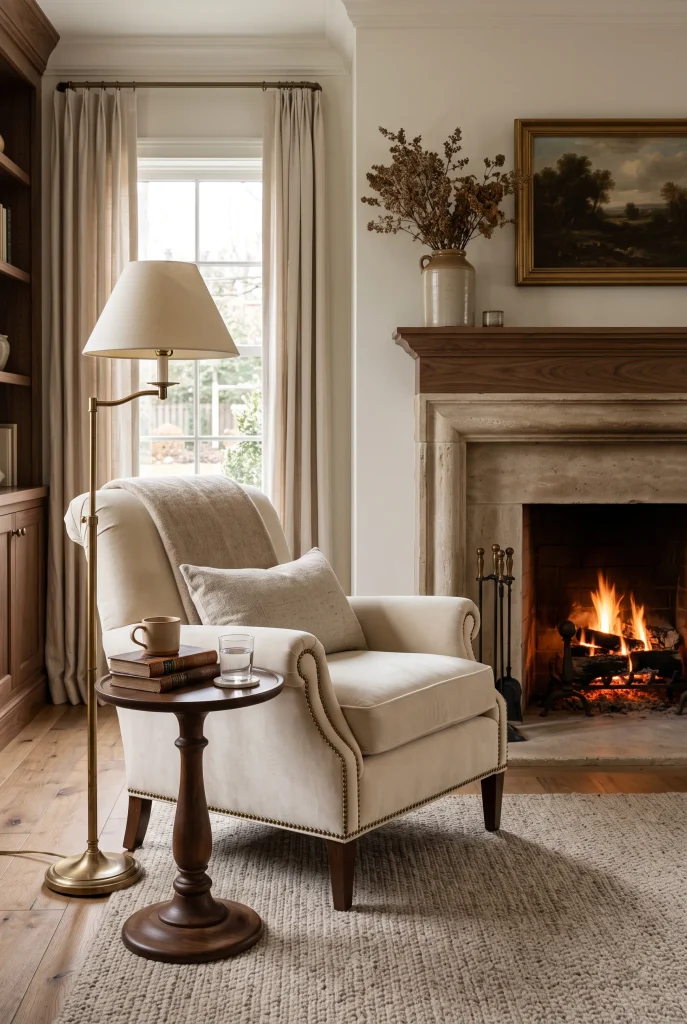
- A fireplace naturally creates a warm focal point for a reading corner.
- Positioning the chair beside the hearth keeps the space comfortable without blocking the fireplace.
- Stone, wood, and soft textiles add rich visual texture.
- A nearby lamp provides practical reading light after dark.
A fireplace can give a reading corner an instant sense of warmth and purpose. Instead of placing a chair directly in front of the hearth, position it slightly to one side so the fireplace remains visible and the seating area stays comfortable. Choose an upholstered chair in cream, taupe, or warm gray, then pair it with a compact wood table. A soft wool or woven rug can define the area and add another layer of texture. Keep the mantel styling restrained so the fireplace and reading chair work together as a balanced focal point.
Practical placement matters when designing a reading spot near a fireplace. Leave appropriate clearance around the hearth according to the fireplace manufacturer’s requirements, and avoid placing loose textiles where they could become a safety concern. Once the layout is established, focus on creating a comfortable visual connection between the chair and fire. A brass floor lamp or wall light can provide focused illumination for evening reading. In homes with an existing fireplace, this arrangement can turn an underused section of the room into a cozy destination without requiring major structural changes.
13. Daybed Reading Retreat

- A daybed gives you room to sit, stretch out, or change positions while reading.
- Layered pillows make the surface comfortable without looking overly styled.
- A small side table keeps essentials close without crowding the nook.
- Neutral linen textures create a relaxed, inviting atmosphere.
A daybed can make a reading corner feel more generous and comfortable than a standard armchair. Choose a compact design with a supportive mattress or cushion, then layer it with pillows that can be moved around as needed. Position the daybed near a window or along a quiet wall where it does not interrupt the main traffic path. A small wooden table beside one end gives you space for books and a drink. Keep the surrounding furniture minimal so the daybed remains the clear centerpiece of the reading area.
This arrangement is especially useful when one space needs to serve several purposes. During the day, the daybed can work as a relaxed reading seat, while later it can become a comfortable place to rest or lounge. Linen bedding, a textured throw, and a woven basket can make the setup feel warm without looking like a full bedroom. Add a floor lamp if natural light is limited. The layout should balance comfort with easy movement, so leave enough open space around the daybed to access it without squeezing between furniture.
14. Corner Bookshelf Seat

- A low bookshelf can double as a comfortable reading seat.
- Built-in storage keeps books organized while using the corner efficiently.
- A fitted cushion adds comfort and makes the furniture feel intentional.
- Simple styling keeps the compact arrangement visually clean.
A low bookshelf can do double duty when designed at the right height. Build or position sturdy shelving along two adjoining walls, then top the lower section with a properly supported cushion to create a compact seat. The shelves underneath can store books, baskets, and reading materials, keeping everything close at hand. Use cream upholstery and warm oak tones to give the arrangement a soft, timeless appearance. A small wall light above the seat can provide focused illumination while keeping the limited floor area completely open.
This design is particularly helpful in small rooms where every piece of furniture needs to earn its place. Instead of having a separate bookcase and chair, the shelving becomes part of the seating area and provides storage at the same time. Add a few pillows for back support, but avoid filling the seat with too many accessories. Compact built-in solutions work especially well in children’s rooms, hallways, and home libraries because they create a defined place to read while keeping books visible and easy to reach.
15. Moody Library Corner
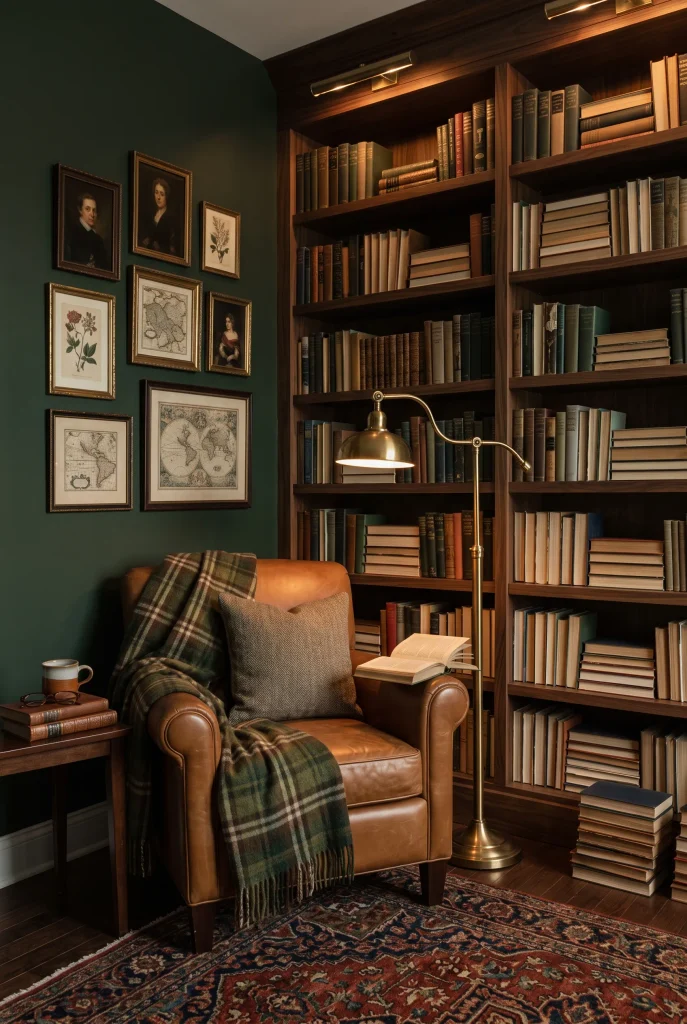
- Deep wall colors can give a reading corner a cozy, enclosed feeling.
- Dark walnut furniture adds warmth and visual depth.
- Brass lighting creates a soft contrast against moody surfaces.
- A patterned rug and vintage-style artwork add personality without overcrowding the space.
Rich colors can turn a simple reading corner into a space that feels intimate and distinctive. Paint the wall behind the chair in deep forest green, charcoal, or muted navy to create a darker backdrop without making the entire room feel heavy. Pair the wall with warm walnut shelving and a caramel leather or textured fabric chair. A traditional rug can add pattern underfoot, while a brass floor lamp introduces a warm point of light. Keep the accessories purposeful so the darker palette remains sophisticated rather than visually cluttered.
The secret to a successful moody corner is balancing dark surfaces with warm materials and focused lighting. Books naturally add color and texture, so you do not need many decorative objects to complete the shelves. Add one framed artwork or a small ceramic piece for personality, then let the collection of books provide most of the visual interest. A warm bulb is especially effective after sunset because it creates contrast against the deeper wall color. This style can make even a small corner feel like a private library retreat designed for quiet reading and unwinding.
16. Built In Window Bench
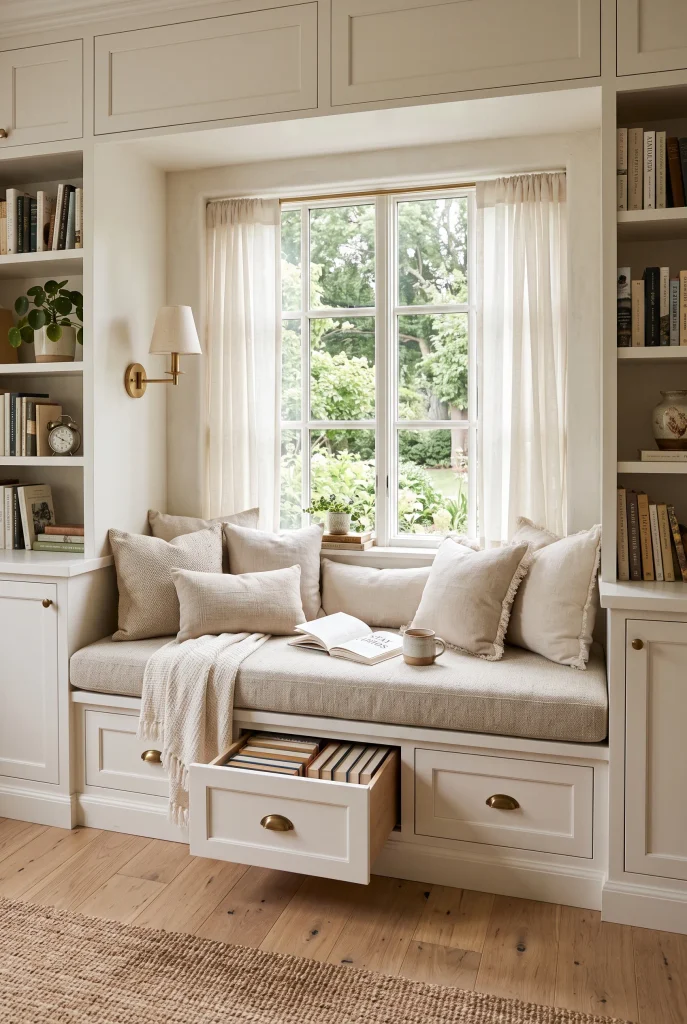
- A built-in bench creates dedicated seating without taking over the room.
- Lower drawers keep books, blankets, and reading accessories neatly organized.
- Sheer curtains soften strong daylight while keeping the nook bright.
- Neutral upholstery gives the built-in feature a timeless appearance.
A built-in window bench can turn an ordinary wall into a beautiful reading destination. Fit the bench beneath the window and use a thick cushion in oatmeal, cream, or soft beige to create comfortable seating. Add a few linen pillows for support, then use the space underneath for drawers or cabinets. This keeps books and blankets nearby without adding extra furniture. If the window receives strong afternoon sun, lightweight curtains can soften the brightness while preserving the natural light that makes the nook feel open and welcoming.
The design works particularly well when storage and seating need to share the same footprint. Keep the bench depth comfortable enough for sitting without extending too far into the room. A slim wall sconce can provide focused evening light while leaving the bench surface free for books and decorative accents. Choose durable upholstery if the seat will receive frequent use, especially in a family home. Warm wood, soft textiles, and simple hardware create a polished look that blends easily with transitional, cottage, Scandinavian, or organic contemporary interiors.
17. Hidden Closet Nook

- An unused closet can become a private reading retreat without expanding the room.
- Floating shelves provide book storage while preserving valuable floor space.
- A compact chair fits comfortably into the narrow footprint.
- Soft lighting makes the enclosed area feel welcoming rather than cramped.
An unused closet can offer the perfect footprint for a private reading corner. Remove unnecessary storage components and create a clean backdrop with warm white or soft beige walls. Depending on the closet dimensions, place a compact chair inside or build a narrow cushioned bench along the back wall. Floating shelves can hold books without reducing the available seating area. A wall-mounted reading light is another smart addition because it keeps the floor clear and gives you focused illumination in the smaller space.
Before furnishing the nook, make sure the closet has enough ventilation and comfortable access for regular use. If the space feels visually enclosed, keep the palette light and leave the doorway open rather than adding a heavy curtain or door. A small rug can soften the floor, while one or two cushions make the seat more inviting. This approach can be especially useful in homes where a spare room is not available. Instead of letting an unused closet collect miscellaneous items, you can turn the compact footprint into a purposeful space for reading, relaxing, and quiet downtime.
18. Garden View Nook
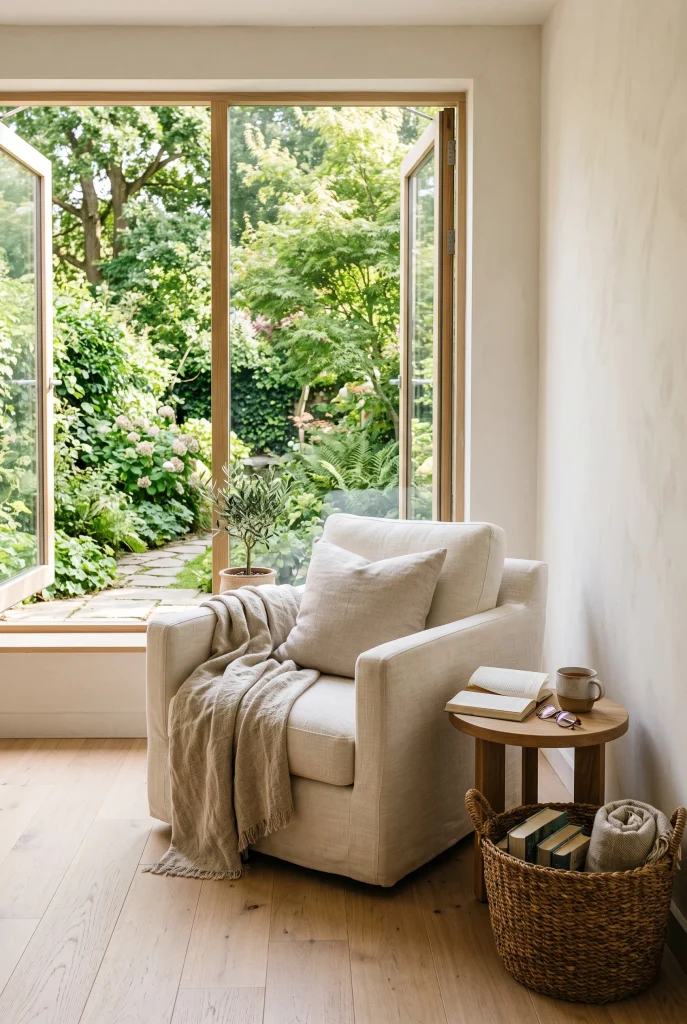
- A garden-facing position brings natural scenery into the reading experience.
- Large windows or glass doors provide abundant daylight.
- Natural wood and woven textures strengthen the connection with the outdoors.
- A simple furniture arrangement keeps attention focused on the view.
A reading chair facing the garden can make an ordinary corner feel connected to the outdoors. Place a comfortable armchair near a large window or glass door where you can enjoy natural light and greenery while reading. Keep the furniture arrangement simple so the outdoor view remains the main visual feature. A light oak side table, woven basket, and linen throw add warmth without competing with the scenery. If the area receives direct sunlight, adjustable curtains or shades can make the nook more comfortable throughout the day.
This arrangement works best when the furniture feels visually connected to the landscape outside. Natural materials such as oak, rattan, jute, linen, and cotton reinforce that connection while keeping the interior relaxed. Choose a supportive chair rather than one selected only for appearance, especially if you plan to spend long periods reading there. A nearby floor lamp can extend the usefulness of the space into the evening. Among different reading nook ideas, a garden-facing setup can also make a room feel brighter and more peaceful without requiring much decorative styling.
19. Wall Niche Nook

- A recessed wall niche can create a dedicated reading area without adding bulky furniture.
- Built-in shelves make use of otherwise unused vertical space.
- A cushioned bench provides comfortable seating while keeping the footprint compact.
- Warm neutral finishes make the niche feel connected to the surrounding room.
A recessed wall niche can become a naturally defined reading space with very little furniture. Fit a comfortable bench or compact upholstered seat inside the recess, then use the surrounding wall height for built-in shelves. Keep the shelving organized with books, a few small objects, and baskets for items you want nearby but out of sight. Cream upholstery against warm beige walls creates a soft visual transition, while natural wood introduces enough contrast to keep the area from looking flat. The recessed shape itself provides the architectural interest, so decoration can stay simple.
Lighting can make a major difference when the niche receives limited daylight. Install a compact wall sconce at a comfortable reading height, or use discreet recessed lighting if the area is being renovated. Add a textured pillow and lightweight throw for extra comfort, but avoid filling the seat with accessories. This type of corner is especially useful in homes with unusual wall layouts because it works with the architecture instead of fighting it. A small basket underneath the bench can also keep extra books and blankets organized without making the nook feel crowded.
20. Small Library Corner
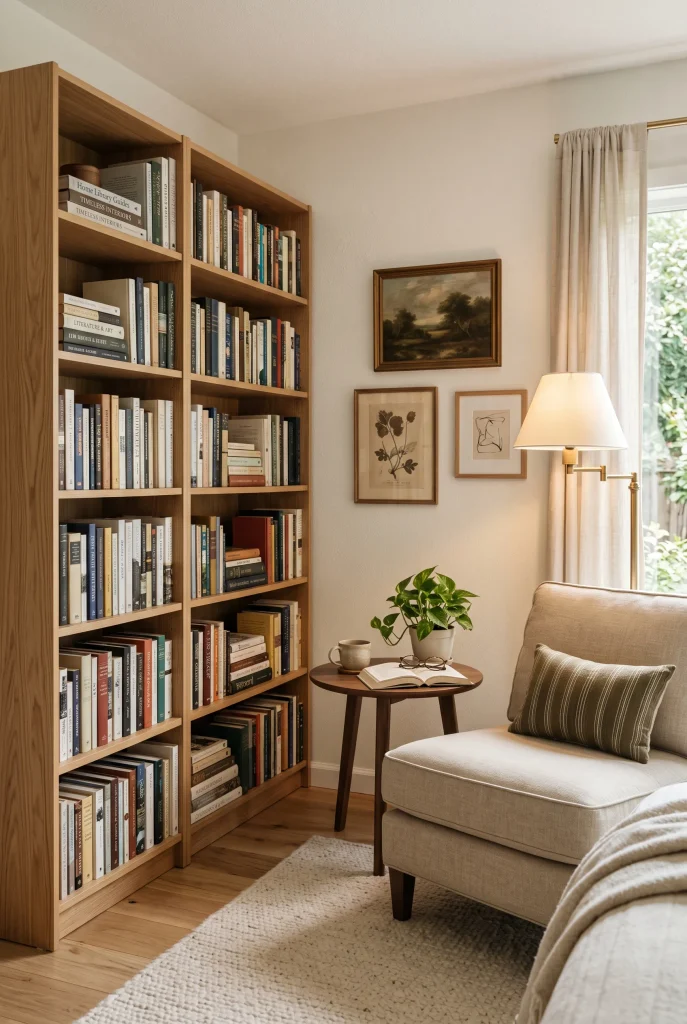
- A compact bookcase can provide substantial storage in a limited footprint.
- A comfortable chair makes the corner feel purposeful rather than purely decorative.
- A round side table reduces sharp visual lines in a tight space.
- Warm wood and soft textiles create a welcoming library atmosphere.
A small library corner proves that you do not need an entire room to enjoy a dedicated place for books. Start with one tall bookcase that uses vertical space efficiently, then position a comfortable chair beside it rather than directly in front. A compact round table can fit neatly beside the seat and provide space for your current book or reading accessories. Keep the wall color light to prevent the corner from feeling enclosed, especially when the bookcase is tall. A soft rug underneath can visually connect the pieces and make the area feel complete.
Organization becomes part of the design when your book collection is visible. Keep frequently read books within easy reach and use a few decorative objects sparingly to break up the shelves. Baskets on lower levels can hide less attractive items while keeping the overall display tidy. Add a warm floor lamp beside the chair for comfortable evening reading. This setup can work in a living room, bedroom, home office, or even a wide hallway. The goal is to create a useful little library without allowing the storage to overwhelm the surrounding room.
21. Cozy Loft Nook

- A sloped ceiling can make a loft corner feel intimate and distinctive.
- Low furniture works naturally beneath limited ceiling height.
- Floating shelves provide storage without making the area feel crowded.
- Warm wood and soft textiles emphasize the cozy character of the space.
A low-ceilinged loft corner can become an especially inviting place to read when the furniture follows the shape of the room. Choose a low-profile lounge chair or floor cushion that sits comfortably beneath the sloped ceiling. Install floating shelves along the taller wall for books, keeping the lower area open and easy to access. Warm wood, cream upholstery, and soft beige textiles create a relaxed palette that works beautifully with exposed beams or natural architectural details. A small brass lamp can provide focused light without competing with the cozy proportions of the space.
The unusual shape of a loft can actually become its biggest design feature. Instead of trying to make the nook feel like a standard room, emphasize its tucked-away character with comfortable textures and simple furnishings. A wool or woven rug can define the seating area, while a linen throw adds softness for cooler evenings. Keep the book display organized but relaxed, using a combination of upright rows and small stacks. With thoughtful proportions, even an awkward upper-level corner can become a comfortable retreat that feels separate from the busier areas of the home.
Conclusion
A thoughtful reading space can make everyday routines feel a little more relaxing and intentional. These reading nook ideas show how window seats, cozy chairs, built-in benches, bookshelves, alcoves, and even unused corners can become beautiful places to unwind. Focus first on comfort, then add practical lighting, useful storage, and textures that suit your style. You do not need a large room or major renovation to create something special. Save this post on Pinterest for your next decorating project, try one idea in your own space, and share it with someone who would love a cozy place to read more often.